Galápagos vs Cocos Island: Which Liveaboard Is Right for You
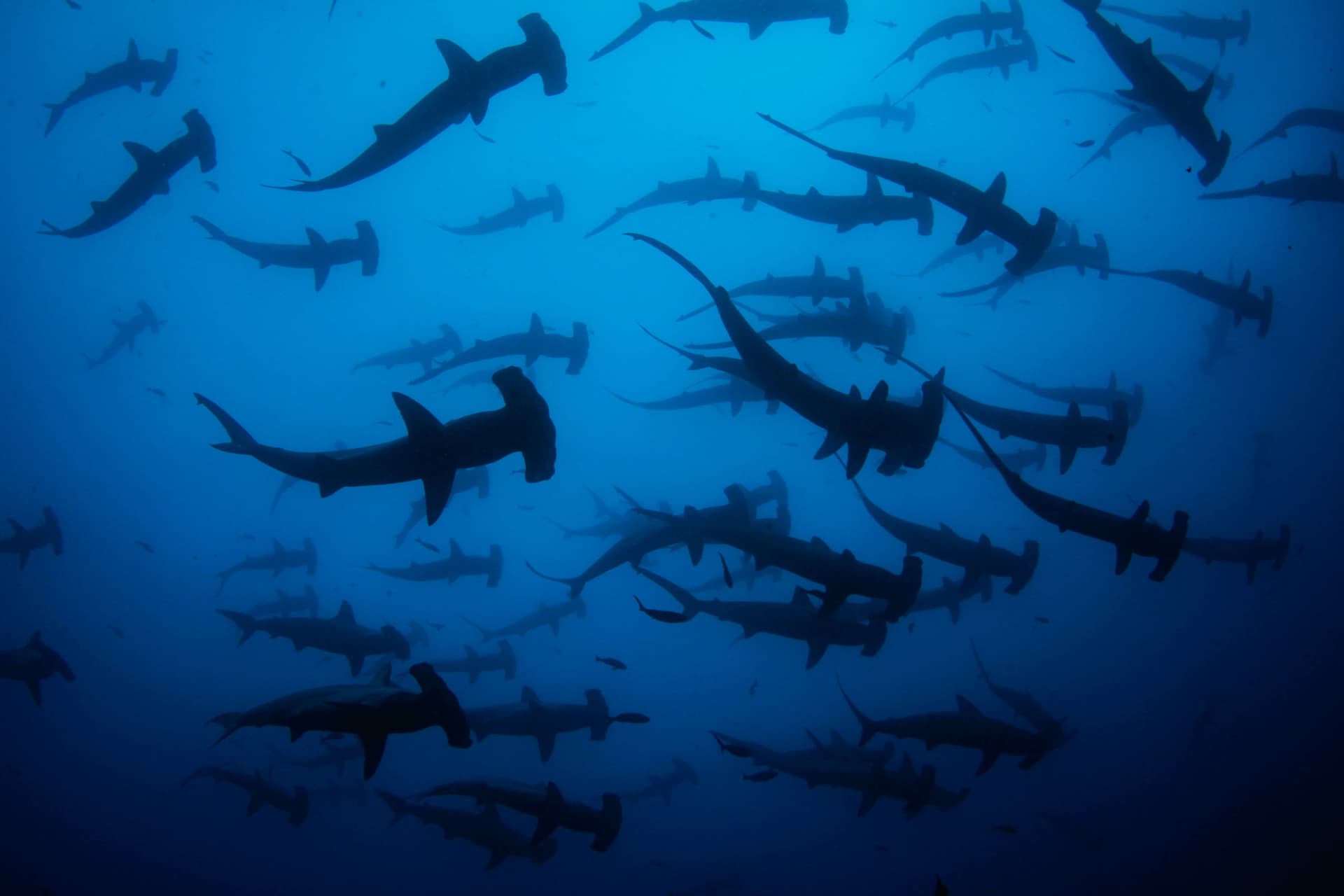
Cocos Island and the Galápagos get mentioned in the same breath because they share an ocean, a current system and a headline animal: the scalloped hammerhead. They are not the same trip. One is a long sea passage to a single uninhabited island where you dive a handful of sites for a week. The other is a moving tour of an archipelago, with colder water, more species and a couple of afternoons ashore.
This comparison uses the itineraries we book, our own season data and the prices we currently list.
The short answer
Choose Cocos if hammerheads are the point of the trip, you want as many dives as possible on the sites where they school, you prefer warm water, and a day and a half of open ocean each way doesn't worry you.
Choose the Galápagos if you want a broader cast (whale sharks in season, sea lions, marine iguanas, mola mola, mantas in the warm months), you would like to see the islands as well as the water, and you would rather spend seven nights on board than ten or eleven.
Getting there: two very different journeys
Cocos. You fly into San José, Costa Rica, arriving at least a day early, and transfer about two hours by road to Puntarenas. From there the boat sails roughly 300 nautical miles to the island, which takes 30 to 36 hours depending on the vessel and the sea state. Then the same again at the end. On a 10-night trip, about three of those nights are spent crossing.
That crossing is the price of admission. Cocos lies around 550 km offshore with no airstrip and nowhere to stay; only a small number of permitted liveaboards go there.
Galápagos. You fly into Quito or Guayaquil on mainland Ecuador, overnight there, then take a domestic flight to the islands. The itineraries we book board at San Cristóbal in the afternoon and disembark there on the morning of day eight.
After that, the sailing is a series of overnight passages instead of one long one. The big run is the night sail north to Wolf and Darwin, returning through the western islands. You will roll about at night, but you never spend a day and a half in open water with nothing to do.
Trip length and number of dives
A typical Cocos trip is 10 or 11 nights. On the 10-night format you get around seven full days at the island at three dives a day, so roughly 21 dives. Almost all are on hammerhead territory: Bajo Alcyone, Dirty Rock, Manuelita and their neighbours.
A Galápagos dive trip on our departures is 7 nights with up to 18 scheduled dives. The operator's park permit allows a maximum of three days at Darwin and Wolf, and weather can trim that. The rest are spread across a check dive, the central islands, and Fernandina and Isabela in the west.
So if hammerheads are the goal, Cocos gives you more than twice as many days on the sites that produce them. The Galápagos gives you up to three days of superb shark diving, then something quite different.
Night dives are the other split. Cocos boats run them, usually at Manuelita, where whitetip reef sharks hunt the reef in loose packs, using divers' torches to find fish in the rocks. The Galápagos itinerary we book has none: the currents mean the last dive of the day finishes in good daylight.
The diving itself
Cocos: depth, patience and cleaning stations
Most Cocos dives follow a pattern. Negative entry from the tender, drop to a ledge or seamount top at 25–30 m, find bare rock out of the current, and stay still. The hammerheads come in from the blue to cleaning stations, where barberfish and king angelfish pick parasites off them. Chase them and they leave. Settle down and breathe slowly, and they come close.
Bajo Alcyone is the famous one: a submerged seamount with its summit around 25–27 m and a shot line for the descent. Dirty Rock is a pinnacle off the northwest coast with most of the action at 27–30 m. Manuelita, off the northeast corner near Chatham Bay, is often the first and last dive of a trip, and tiger sharks have been seen there with some regularity in recent years. Galápagos and silky sharks, eagle and marble rays and big schools of jacks fill in around the hammerheads. Whale sharks do pass Cocos, but don't plan a trip around one.
The cost of that depth is bottom time. Nitrox is close to essential, and several boats include the fills.
Galápagos: current, cold and variety
Darwin and Wolf are hook-in dives. You go down quickly and hook onto volcanic rock along the wall at around 15–25 m while the current runs past and the hammerhead schools, Galápagos and silky sharks work the water in front of you. From June to October this is also prime whale-shark water, with large, mostly female animals cruising past Darwin. When the guide calls it, you unhook and swim alongside at a respectful distance, never in its path.
Then the trip changes character. At Cabo Douglas on Fernandina, marine iguanas graze algae in the shallows while sea lions and penguins zip around divers. Punta Vicente Roca on Isabela is known as "the Ice Box" for its thermoclines, and it is where mola mola turn up in the cooler months. Cabo Marshall gets mantas in the warm season. A typical morning is two dives back to back, with an hour or so on deck in your wetsuit between them.
Variety is the Galápagos' real advantage. Cold is its real cost: a dive that starts comfortable can end several degrees colder when a thermocline pushes up the wall.
Topside
The Galápagos itinerary we book includes two guided land visits: North Seymour for blue-footed boobies, frigatebirds and land iguanas, and the Santa Cruz highlands for giant tortoises.
Cocos has nothing comparable. Rangers permitting, you can go ashore at Chatham or Wafer Bay to visit the ranger station and walk to a waterfall. Otherwise, you are there to dive.
Side by side
| Cocos Island | Galápagos (Darwin & Wolf route) | |
|---|---|---|
| Gateway | San José, then road to Puntarenas | Quito or Guayaquil, then a domestic flight to San Cristóbal |
| Trip length | 10–11 nights | 7 nights |
| Crossing | 30–36 hours each way | Overnight passages between islands |
| Dives | About 21 on a 10-night trip | Up to 18 |
| Days on the main hammerhead sites | About 7 | Up to 3 at Darwin & Wolf |
| Night dives | Yes, usually at Manuelita | No |
| Water temperature | 26–28°C at the surface, cooler at depth | 21–25°C at Darwin & Wolf, colder in the west |
| Usual suit | 5 mm with a hood | 7 mm with a hood |
| Headline animals | Schooling hammerheads, whitetip night hunts, tiger sharks | Hammerheads, whale sharks (Jun–Oct), marine iguanas, sea lions |
| Land visits | Short ranger-station walk, if permitted | Two guided visits included |
| Park fee | $554 (10 nights) to $633 (11 nights) | $200 entry plus $20 transit card |
| Our fares per night | About $791–792 | $765–1,051 |
Water temperature and exposure suits
Our data puts Cocos at 26–28°C, and operators quote the surface at up to 29°C. Thermoclines can take several degrees off that on the deeper seamount dives, so a 5 mm full suit with a hood is the usual choice.
The Galápagos is a colder trip. Darwin and Wolf are the warmest sites in the archipelago at roughly 21–25°C, but the western islands can sit in the high teens and go lower in the cool season. A 7 mm with a hood is standard, and some divers add a hooded vest. Being cold across 18 dives costs you more than the extra kilos in your bag.
Experience level
Both are advanced trips, and on both the crew can keep you out of a dive.
For the Galápagos, the operator we book sets mandatory minimums: Advanced Open Water or equivalent, nitrox certification and 50 logged dives, with experience in strong current strongly recommended.
Cocos operators generally ask for Advanced Open Water and quote anywhere from 30 to 50 logged dives. Our honest threshold is 50 or more, with real drift and negative-entry experience. The bigger demand at Cocos is depth: repeated dives to 25–30 m, and blue-water safety stops when the current takes you off the rock. The Galápagos is harder physically, with the cold and the hook-in current.
Seasons
From our sightings data (see the hammerhead and whale shark pages):
Cocos. Hammerheads are possible all year and peak from June to October, in the wet season. That is also when the crossing is roughest and visibility lowest, often 10–15 m. December to May is drier and calmer, with clearer water and generally smaller schools.
Galápagos. Hammerheads at Darwin and Wolf are a year-round fixture, with the largest numbers from June to November on the cool current. Whale sharks peak from June to October, with May and November possible. That cool season, the garúa, also brings rougher seas and the coldest water. December to May is warmer and calmer, with mantas at Cabo Marshall and marine iguanas at their most active.
At both, the biggest animals come in the same months as the roughest conditions.
Cost per night
These figures come from the departures we currently list. They are from-prices per person sharing, in US dollars, and they change with dates and cabin.
- Galápagos, 7 nights: $5,355 to $7,357, or $765 to $1,051 per night. The lower end is the discounted December and January dates; the July whale-shark-season date sits at the top.
- Cocos: 10 nights from $7,920 and 11 nights from $8,702, both about $791–792 per night.
Per night, they are close, and the Galápagos can come in cheaper. In total, Cocos costs more because the trip is longer, and around three of those nights are spent at sea. Per dive, the gap mostly closes: roughly $300–410 per scheduled dive in the Galápagos against about $375 at Cocos on a 10-night trip.
Park fees are extra. Cocos Island National Park fees are charged per trip according to its length, currently $554 for 10 nights and $633 for 11 on the boat we book, and some operators add Costa Rica's 13% VAT on top. The Galápagos charges a $200 entry fee per foreign adult, paid in cash on arrival, plus a $20 transit control card bought at the mainland airport before you check in. Both fees have changed recently and can change again. Our Cocos and Galápagos cost guides itemise the rest.
Availability is the other practical difference. Cocos has a small permitted fleet and books out far ahead: at the time of writing, our first open Cocos dates are in May 2028. We have Galápagos departures from December 2026.
Seasickness
The Cocos crossing is 30–36 hours of open Pacific in each direction, and in the wet season it can be uncomfortable. Test your remedy at home first. The return crossing does have one benefit: it puts well over a day between your last dive and your flight home.
The Galápagos has shorter passages, mostly overnight, but there are several of them and the cool season brings choppier seas. On balance it is easier on a sensitive stomach. Our seasickness guide covers what actually works.
Who should choose which
Cocos suits you if:
- Hammerheads are the reason you dive, and you want a week of them, not three days.
- You like warm water and don't mind diving the same few sites again and again.
- You enjoy waiting on a rock for the animals to come to you.
- A long crossing sounds like reading time, not an ordeal.
The Galápagos suits you if:
- You want variety: whale sharks, sea lions, iguanas, penguins and mola mola as well as hammerheads.
- You can only take a week or so away.
- You want to see the islands as well as dive them.
- You are comfortable in cold water and strong current, or willing to build up to it.
Wait on both if you are newly certified, have never dived in real current or don't yet have the logged dives. A season of drift diving nearer home will make either trip better.
Can you do both?
Yes. Back to back is possible: Costa Rica and Ecuador are a regional flight apart, and the Cocos return crossing comfortably covers DAN's guidance of at least 18 hours before flying after multiple dive days. In practice most people do them a year or two apart, not least because Cocos books so far ahead.
If you are choosing which to do first, follow the animal you want most. Hammerheads: Cocos. Whale sharks: the Galápagos, between June and October.
If you want a second opinion on your dates and your logbook, our concierge will tell you what is genuinely available. Or browse the Galápagos departures and Cocos departures yourself.
Related Guides
Related Articles
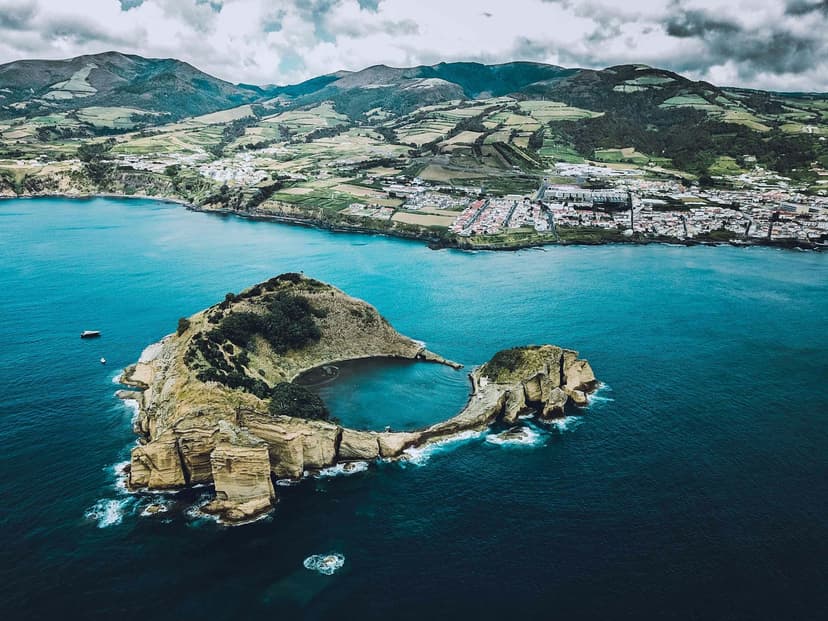
Diving the Azores: Megafauna in Europe's Biggest Marine Reserve
The Azores sit inside one of the largest marine protected areas on earth — 287,000 km² of Atlantic where blue sharks, mobulas, sperm whales and pelagic traffic converge. Here's why we think it's the most underrated diving in Europe.
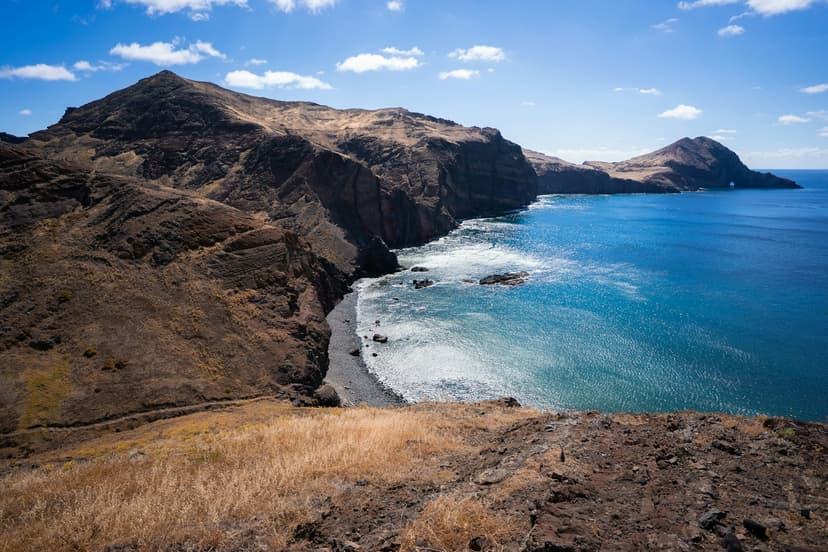
Diving Madeira: Monk Seals, Caves, and Year-Round Atlantic
Madeira has the oldest marine reserve in Portugal, one of the last wild populations of Mediterranean monk seals, and 18–23°C Atlantic water every month of the year. It is quietly one of the most consistent year-round dive destinations in Europe.
