Diving Madeira: Monk Seals, Caves, and Year-Round Atlantic
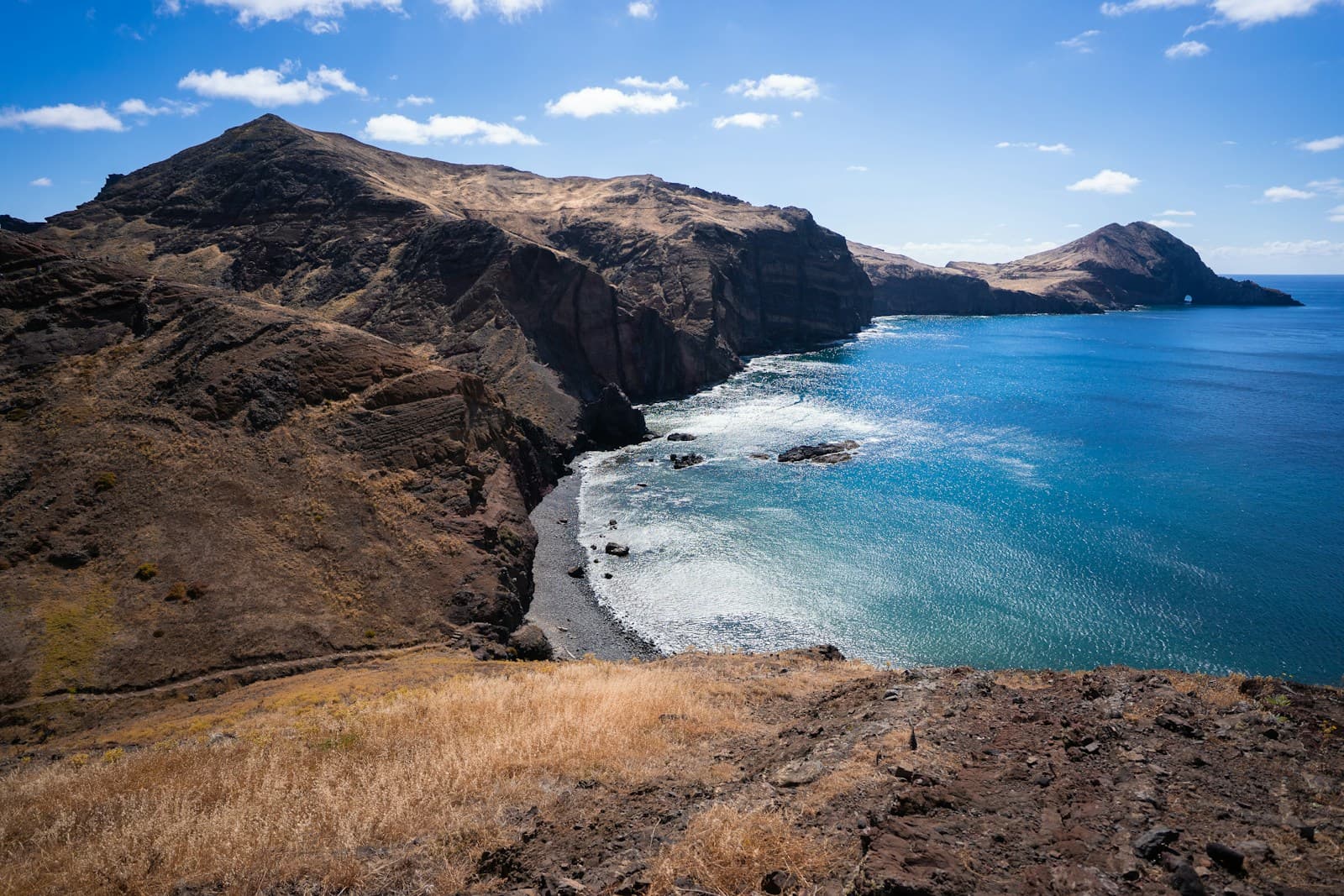
Madeira gets written up as a hiking island, a wine island, and — depending on the decade — a levada island, a food island, or a digital nomad island. It rarely gets written up as a dive island, which is an oversight we find increasingly hard to understand.
Two facts that should change how you think about Madeira if you dive:
One: the Garajau Partial Marine Reserve has been protected since 1986. That makes it the oldest marine protected area in Portugal, and one of the oldest in the eastern Atlantic. Nearly four decades of protection has produced the kind of large, unafraid resident fish you don't see elsewhere in European waters.
Two: water temperature ranges from roughly 18°C in late winter to 23°C in late summer, and visibility holds reasonable year-round. Mainland European diving goes cold and dark for six months of the year. Madeira essentially doesn't.
We haven't placed clients here yet. This is why we think we should.
What Madeira actually is
A volcanic island 1,000 kilometres southwest of Lisbon, closer to Morocco than to mainland Portugal. Funchal, the capital, sits on the south coast and is where most divers base themselves. The Desertas Islands — three uninhabited islets about 25 nautical miles southeast of Funchal — are the other destination that matters for this piece.
The island is the summit of a massive underwater volcanic structure that drops to thousands of metres just offshore. That geography produces the single defining characteristic of Madeira's diving: real wall and topography, reachable from the beach or a short boat ride.
You don't do this in the Algarve. You don't do this in the Canaries to the same degree. You do it here.
The Garajau reserve
The reserve covers a stretch of coast a few kilometres east of Funchal. Strict no-take protection has produced two specific things divers come for:
Huge dusky grouper. The Atlantic grouper (Epinephelus marginatus) is a fish that, in most of its range, got wiped out by spear fishing before you were born. Inside Garajau, they grew back. The resident grouper here are genuinely large — 20 to 40 kg animals that sit on the reef and watch you with the unhurried calm of a fish that has never had a reason to fear people.
Barracuda schools, stingrays, eagle rays, moray eels, octopi. The standard temperate Atlantic cast, but in densities you'll only see inside a long-protected reserve. Night dives here are particularly strong — the reef comes alive with hunting octopi and decorator crabs in a way that feels more like the Indo-Pacific than the Atlantic.
The dive sites themselves are mostly walls and rocky pinnacles between 10 and 30 metres, with occasional lava tubes and archways for divers who want to play with light. Most of them are accessible from shore or a five-minute boat ride, which makes dive logistics almost absurdly convenient compared to other European destinations.
The Desertas and monk seals
This is the part that turns a good destination into a rare one.
The Desertas Islands are home to a residual wild population of the Mediterranean monk seal — one of the rarest marine mammals on earth, with fewer than 700 individuals left globally. A small recovering population lives and breeds around the uninhabited Desertas, protected by a marine reserve that limits how close boats can approach.
You can dive from boats that operate in the permitted zones. Whether you'll see a monk seal is not a guarantee — the population is small and the animals are appropriately shy — but sightings are documented and do happen.
This is not something you can do in the Mediterranean anymore. It is barely something you can do anywhere. A monk seal encounter on a Desertas dive is a genuine life-list experience, and Madeira is one of the very few places on earth where it's even on the menu.
What the diving actually looks like
Three broad categories of sites, depending on where you base and what you want:
Garajau reserve (close to Funchal). Wall dives, 10–30 m. Resident grouper, barracuda, rays, eels. Year-round reliable.
West coast (Ribeira Brava area and west). Drop-offs, caves, lava tubes. More terrain-focused. Slightly more weather-dependent.
Desertas (boat day-trip from Funchal). Longer day, offshore feel. Chance at monk seals, plus cleaner offshore water and bigger pelagic visitors.
Night diving at Garajau is consistently one of the most underrated things on the island's menu. Most operators will do it on request, and most divers don't ask.
When to go
The honest answer is any month of the year, with different weeks giving you different payoffs.
- April through October — peak visibility (20–30 m on good days), warmest water (21–23°C by August), most reliable weather.
- November through March — cooler (18–19°C), slightly less consistent viz, fewer crowds, lower prices. Real diving, just sharper wetsuit-wise.
- Atlantic storm windows — January and February can blow sites out for days at a time. Not a trip-breaker, but build flex into winter plans.
Most photographers prefer September and October — the water has peaked warm, light angles are lower, and tourist traffic drops off. If you're choosing between Madeira in late summer and Madeira in peak July, late summer is the better dive week.
What it costs
Current published rates from Madeiran dive operators, as of early 2026:
- Single guided shore or boat dive: €40–€65
- Two-dive boat package: €75–€110
- Desertas day-trip (2 dives, long boat ride, monk seal zone): €140–€210
- 6-day unlimited diving package: €300–€520 (dives only, no accommodation)
- Week-long land-based package (4-star hotel + daily diving + breakfast): €850–€1,600 depending on season and hotel tier
This is one of the most affordable serious dive destinations in Europe, especially in shoulder seasons. A week of solid diving here is routinely cheaper than a week in the Mediterranean, with arguably better marine life.
Who it's for
Divers of almost any experience level, which is why we expect Madeira to become a much bigger piece of our destination mix over time. Garajau is approachable for comfortable Open Water divers. The walls and caves reward anyone with drift or overhead experience. Desertas is reasonable for advanced divers who want a real day-at-sea feel without committing to a full liveaboard route.
Photographers — especially macro and wide-angle shooters who don't need tropical colour — will find Madeira rewarding. The protected grouper and resident species are uniquely approachable.
Couples where one person dives and the other doesn't: Madeira arguably has the strongest non-diver support of any destination we'd recommend. The island itself is an A-tier European vacation. Your non-diving partner doesn't spend the week in a resort pool.
Who it's not for
Divers looking for schooling pelagics and big shark action. That's the Azores or Cape Verde, not Madeira. The diving here is about resident life, topography, and reliability — not pelagic spectacle.
Divers who need bathtub water. 18°C in February is real. Bring the right wetsuit or skip winter.
Why we think this belongs on our list
Three reasons.
First, it's year-round. European liveaboard and boat-diving destinations are almost all seasonal. Madeira diving actually works in March. For clients trying to dive during awkward windows — school holidays, off-peak work travel — it's a rare option that doesn't require flying to the Red Sea.
Second, it's protected. The combination of Garajau's nearly 40 years of no-take status and the Desertas monk seal reserve puts Madeira alongside destinations like Palau and Bonaire in terms of long-term marine protection per kilometre of coastline. This is increasingly rare and increasingly valuable.
Third, it's our region. We're Portuguese-based. Madeira is our water. Not including it in our active destination mix would be a failure of our own positioning. We plan to fix that.
How to start planning
Tell us how long you have, when you can travel, and whether the monk seal day at Desertas is something you'd sacrifice a different dive to prioritise. From those three inputs we can build a Madeira week that either stays coastal-and-affordable or includes the offshore experience that most visitors miss.
- A Boutique Liveaboard Agency, On Purpose — How we work with clients.
- Diving the Azores: Megafauna in Europe's Biggest Marine Reserve — The other Portuguese Atlantic option.
- Cape Verde for Divers: Whales, Sharks, and the Atlantic Crossroads — The warmer pelagic option south of here.
- Europe's Best Liveaboard Destinations for 2026: Ranked and Compared — Where Madeira sits in the broader picture.
Related Articles
%20-%20Large.jpg&w=828&q=75)
Best Time to Dive: A Season-by-Season Guide
When to visit the world's top liveaboard destinations for the best conditions and marine life encounters.
Galápagos Diving: What to Expect on Your First Trip
Hammerhead highways, curious sea lions, and currents that demand respect — here's what awaits in the enchanted islands.