Your First Galápagos Liveaboard: Flights, Park Rules, the Week and How to Prepare
A first Galápagos dive trip has more moving parts than most liveaboards. There are two flights before you reach the boat, two government charges, a biosecurity check on your luggage, a national park with its own rules, and diving that asks more of you than a warm reef does. None of it is difficult once you know the sequence. Most of the stress comes from finding it out on the day.
This guide covers the practical side: getting there, what each day on board looks like, the rules, how to prepare your diving and what to pack. The diving at Darwin and Wolf itself, site by site, is in our Darwin & Wolf site guide, and the best month for what you want to see is in the Galápagos season guide.
First, check you meet the minimums
The Galápagos trips we sell ask for Advanced Open Water or equivalent, nitrox certification and at least 50 logged dives, and strongly recommend experience in strong current. These are mandatory, and the crew can keep you out of the harder dives if your skills don't match your logbook. Advanced Open Water can't be done on board. Nitrox can, but only if you register for the course and finish the e-learning before you arrive.
If you are short on dives or current experience, plan a build-up trip first. There is more on that below.
Getting there
Step one: mainland Ecuador
Every route goes through Quito (UIO) or Guayaquil (GYE). Fly in at least one night before the island flight, and two is better. The island flights leave in the morning, and a delayed connection or a lost bag the day before is easy to fix with a spare day and often impossible without one. Our guide to connecting flights explains the logic.
Quito sits high in the Andes, at around 2,800 m. Arriving there is fine. The point to remember is at the end of the trip: an overnight in Quito after a week of diving is an altitude exposure, so keep the usual gap between your last dive and going up.
Step two: the island flight
The trips we sell board in San Cristóbal, so you fly into San Cristóbal airport (SCY). Some other boats use Baltra (GPS), next to Santa Cruz, so check your booking before buying the ticket. LATAM and Avianca fly to both islands from Guayaquil, and Quito flights often stop in Guayaquil on the way. From Guayaquil the flight takes around two hours.
Embarkation is in the early afternoon, timed to the morning arrival of a specific flight. Book that flight, or an earlier one. The transfer from San Cristóbal airport to the boat is included.
The Galápagos is one hour behind mainland Ecuador. Set your watch on landing; boarding times are local.
The airport sequence
| Step | Where | What happens |
|---|---|---|
| Transit Control Card (TCT) | Online before you travel, then the Governing Council counter at Quito or Guayaquil airport | Pre-register online, then pay the US$20 and collect or validate the card before check-in |
| Biosecurity check | Mainland airport, before check-in | Checked bags are scanned and sealed. Declare any food |
| Island flight | Guayaquil to San Cristóbal | Around two hours |
| Park entrance fee | On arrival at San Cristóbal | US$200 per foreign adult, in cash US dollars |
| Second inspection | San Cristóbal arrivals | Bags may be inspected again before you leave the airport |
Allow at least two hours at the mainland airport before your flight, more in busy months. Neither fee is included in any liveaboard fare. Carry the park fee in clean, untorn bills. Fees and procedures change from time to time, so check them again a few weeks before you fly.
What you can't bring
The islands are strict about anything that could carry seeds, insects or disease. Leave behind fresh fruit and vegetables, seeds, raw nuts, plants, soil and fresh animal products. Packaged, sealed snacks are normally fine, but declare them. Rinse and dry your dive kit at home: mud on boots or sand in fin pockets is exactly what the inspectors look for.
The week, day by day
This is the operator's sample schedule for the 7-night trips we sell. The order and the sites change with the park permit, the weather and the sea, so read it as the shape of the week rather than a promise.
| Day | Where | What it feels like |
|---|---|---|
| 1 | San Cristóbal | Board early afternoon, briefings, lunch. A short check dive in a sheltered bay, maximum 9 m |
| 2 | Baltra and North Seymour | A morning dive, a guided walk among blue-footed boobies and frigatebirds, an afternoon dive. Overnight crossing north |
| 3–5 | Wolf and Darwin | Up to four dives a day in two back-to-back pairs. The demanding diving of the trip |
| 6 | Fernandina and Isabela | Cold, green water in the west. Marine iguanas feeding at Cabo Douglas |
| 7 | Cousin's Rock and Santa Cruz | A morning dive, then giant tortoises in the Santa Cruz highlands and a stop in Puerto Ayora |
| 8 | San Cristóbal | Breakfast and off the boat by 08:30 |
A few details that first-timers rarely know in advance:
- Use the check dive. It is short and shallow for a reason. Get your weighting right for a 7 mm suit in salt water, practise your gloves-on gear handling and deploy your surface marker once. Day three is not the day to discover you are four kilos light.
- Back-to-back dives. The two morning dives, and the two afternoon ones, run with a surface interval of an hour to an hour and a half. You stay on the dive deck, often in your wetsuit, with snacks and hot drinks. Bring a warm hooded layer that you don't mind getting wet.
- No night dives. Strong currents mean the last dive of the day finishes in good daylight. Evenings are for logbooks, dinner and sleep.
- The crossings. From the central islands to Wolf is usually 14 to 18 hours through the night, and the run back south to the western islands is another long one. Equatorial swell on the beam is a slow, deep roll, rougher in the cool season from about June to November. Take your seasickness remedy with dinner before you sail, stow camera housings on the floor, and drink plenty: you arrive at Wolf and dive the same morning.
- The two land visits are the only time you go ashore on most of the week. They are short, guided and on marked trails.
- The last day. The final dive is on the morning of day seven, which leaves more than 24 hours before a flight on day eight. If you have a few hours before your transfer, the Interpretation Centre in Puerto Baquerizo Moreno is about ten minutes' walk from the pier.
The park rules that apply to you
Everything you see, above water and below, is inside the Galápagos National Park and Marine Reserve. The rules are enforced, and the guides take them seriously.
- Always with a guide. Every dive group and every land visit is led by a naturalist guide licensed by the national park.
- Two metres from wildlife. Keep at least 2 m from animals on land, even when they walk up to you, and don't touch or feed anything. Sea lions are curious underwater; let them come and go on their own terms.
- No flash on wildlife. The park bans flash photography of wildlife, so keep it off on the land visits. If you shoot with strobes underwater, ask the cruise director what is allowed before your first dive.
- Stay on the trails and take nothing away. Shells, lava, sand and black coral all stay where they are, and buying souvenirs made from them is banned too.
- No smoking anywhere in the park.
How to get ready
The water, the current and the entries are what catch first-timers out. You can prepare for all three before you go.
Cold water. Surface temperatures run from about 18–23 °C in the cool season, colder in the west, to the mid and high 20s in the warm months, and thermoclines can take several degrees off at depth. If all your diving has been in a 3 mm suit, do some dives in a 7 mm with a hood before the trip. You will need more weight, your trim changes and your air consumption goes up in the cold. Our wetsuit and drysuit guide helps with the choice.
Current. The skill that matters most is holding still on a rock in current while breathing slowly. Drift dives in the Red Sea, Komodo or anywhere with tidal current build it. Ten current dives in the months before the trip are worth more than a long gap followed by a busy week.
Negative entries. At Darwin and Wolf you roll off the tender with an empty BCD and go straight down. Practise it on any trip that allows it: mask on, regulator in, gear checked before the roll, and down without stopping to fiddle.
Your surface marker. Be able to deploy a delayed surface marker buoy from depth, alone, without losing position. You will do your safety stop drifting in blue water.
The rest:
- Get your regulator serviced and dive with your own computer, so you know how it behaves.
- Finish the nitrox e-learning early if you still need the certification.
- Buy dive insurance that covers evacuation from remote areas. Darwin and Wolf are a long way from medical help. Our dive insurance guide explains what to look for.
- Plan your flight home with DAN's guidance in mind: at least 18 hours after multiple days of diving before flying.
What to pack
Pack in a soft bag and keep your kit as light as you reasonably can; domestic flights have their own baggage limits. Our liveaboard packing guide has the general list. For the Galápagos, add these:
- 7 mm wetsuit and a hood, plus a vest for the cool season if you feel the cold
- Thin gloves. The operator advises them at Wolf, where you hold sharp, barnacle-covered rock
- Dive computer, delayed surface marker buoy and reel, and a reef hook if you know how to use one
- A spare mask and strap, because nothing on board is spare in the north
- Seasickness remedy that you have tested at home, for the overnight crossings
- A warm fleece and a light waterproof. Deck mornings in the cool season are grey and misty
- Walking shoes or sandals with grip for the land visits, a sun hat and sunglasses
- Reef-safe sunscreen and a refillable water bottle
- Cash in US dollars for the park fee and crew tips, in small bills
- Plug adapter if needed. Ecuador uses the same sockets as North America, at 120 V
Common questions
Is the national park fee included in the fare?
No. The park entrance fee and the Transit Control Card are government charges that you pay yourself, outside the fare: the card at the mainland airport before you check in, and the park fee in cash when you land in the islands. The amounts and the order are in the airport sequence above. Check both again a few weeks before you fly, because they change from time to time.
San Cristóbal or Baltra?
San Cristóbal (SCY) for the trips we sell: the boat boards there and the airport transfer is included. Baltra (GPS), next to Santa Cruz, is on a different island, and some other boats board there. Look at the boarding port on your booking before you buy the island flight.
How many nights should I arrive before the boat?
At least one night in Quito or Guayaquil before the island flight, and two if you are coming off a long-haul journey or travelling with checked dive kit. Boarding is timed to the morning flight on the day the boat sails, so you don't need a night in San Cristóbal, though arriving there a day early gives you one more margin against a delayed flight.
Ready to look at dates
These are the next Galápagos sailings with space, taken from our live calendar:
| Date | Destination | Route | Nights | From |
|---|---|---|---|---|
| 30 Nov 2026 | Galápagos | Darwin & Wolf | 7 | €5,208 |
| 21 Dec 2026 | Galápagos | Darwin & Wolf | 7 | €5,208 |
| 28 Dec 2026 | Galápagos | Darwin & Wolf | 10 | €9,483 |
| 7 Jan 2027 | Galápagos | Darwin & Wolf | 7 | €4,696 |
Our Galápagos sailings are Darwin and Wolf trips, with the dates and fares on the Galápagos calendar. If you would like a second opinion on whether your diving is ready, or which month suits you, ask us here.
Related Guides
- Darwin & Wolf: Sites, Season and the Liveaboard: The sites, the crossing and how the hook-in dives run.
- When to Dive the Galápagos: Month by Month: Water, visibility and species for every month.
- Galápagos Liveaboard Costs: Fare, fees, flights and extras, itemised.
- Seasickness on Liveaboards: What works for the overnight crossings.
Related Articles
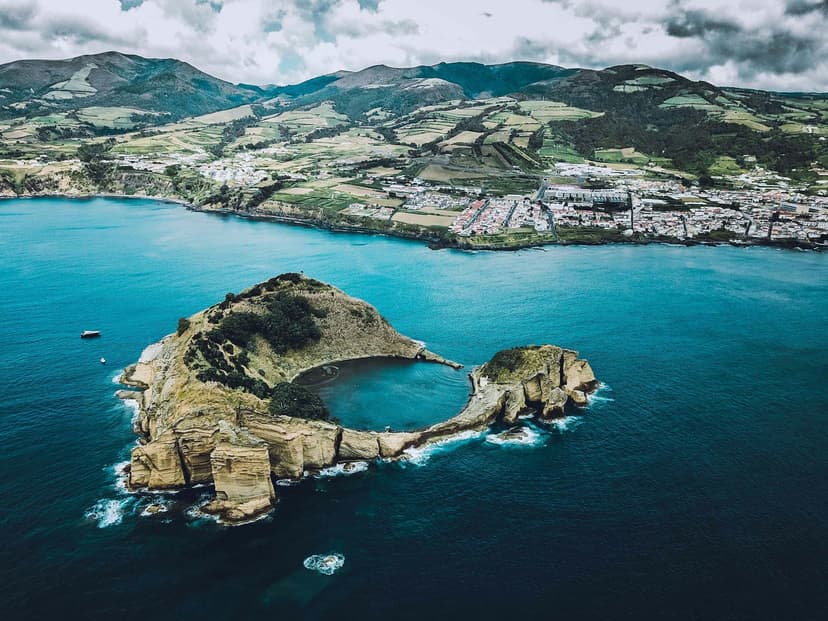
Diving the Azores: Blue Sharks, Mobulas and the North Atlantic's Largest Protected Network
In 2024 the Azores created the largest network of marine protected areas in the North Atlantic, about 287,000 km² of ocean that blue sharks, mobulas and sperm whales pass through. Here is why we think it is the most underrated diving in Europe, island by island and month by month.
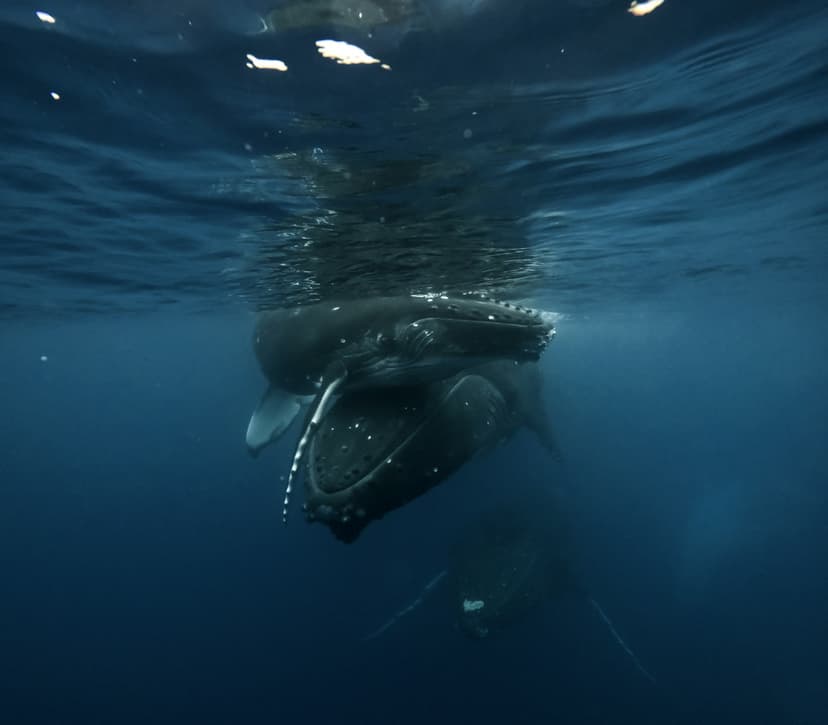
Cape Verde for Divers: Whales, Sharks, and the Atlantic Crossroads
Cape Verde sits where African, European and equatorial currents meet. The result: humpback whales in spring, juvenile lemon sharks in water you can wade into, nesting loggerheads in summer, and warm-water Atlantic diving most Europeans have never seriously considered.