When to Dive the Galápagos: Month by Month
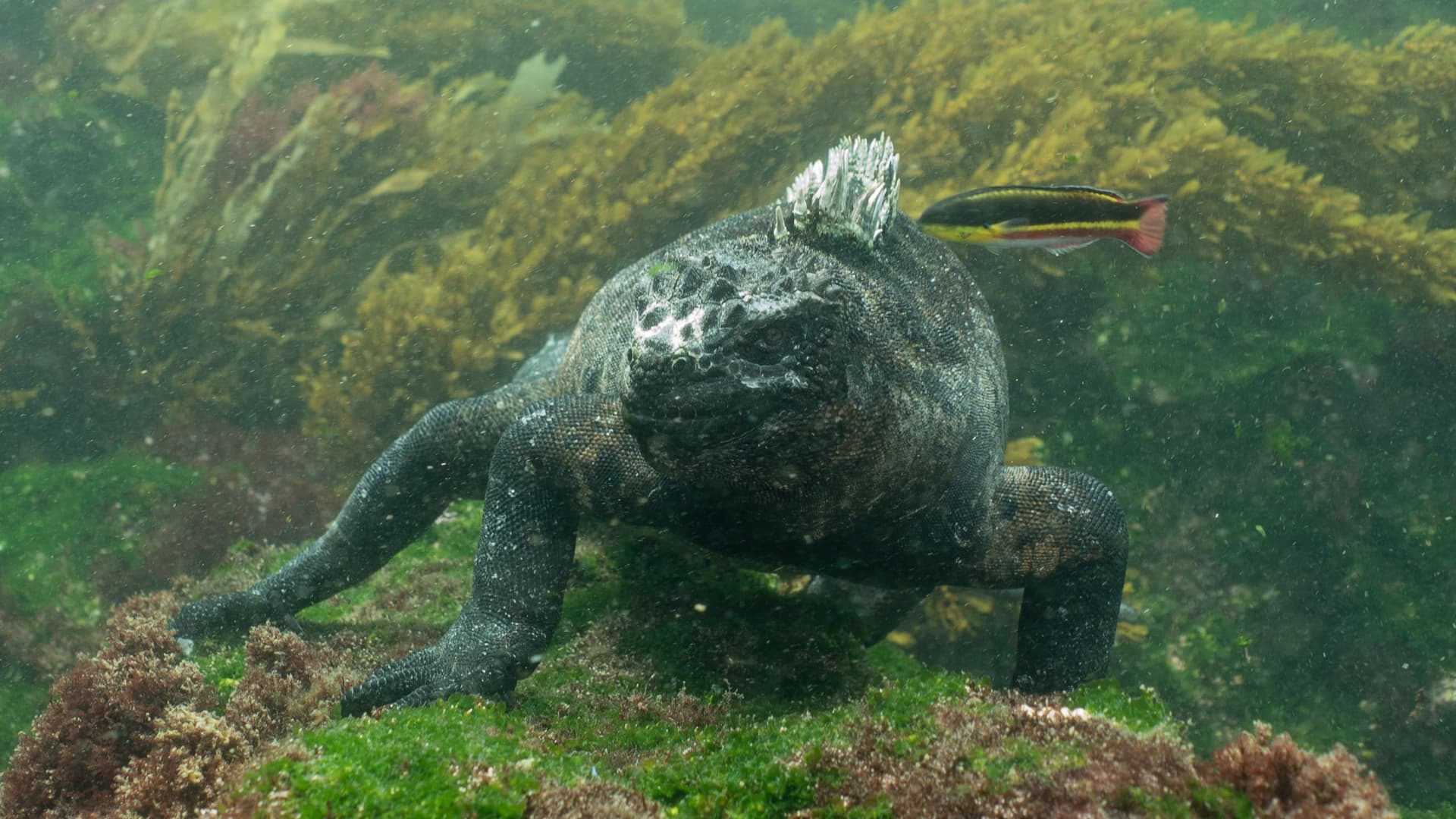
Photo: Sodacan, CC BY-SA 4.0
There is no bad month to dive the Galápagos, but there are two very different trips. One is warmer, calmer and clearer. The other is colder, greener and rougher, and it is the one that puts whale sharks on the far northern walls. Most divers only get one go at this place, so it pays to know which trip you are booking.
This guide covers the two seasons, a month-by-month table, how to choose by goal, and the practical rules that shape every Galápagos dive trip.
The short answer
For whale sharks: June to October, on a liveaboard that goes to Darwin and Wolf.
For the biggest hammerhead schools: the cool season, June to November. Hammerheads are at Darwin and Wolf all year, though.
For calmer seas, warmer water and better visibility: December to May, with February to April usually the warmest.
For marine iguanas feeding underwater: December to May, on routes that include the western islands of Fernandina and Isabela.
For a first Galápagos trip: the warm season, unless whale sharks are the whole point.
The two seasons
The Galápagos sits on the equator, but the water is not tropical in the way the Red Sea or the Maldives is. Several ocean currents meet here, and which one dominates decides almost everything about your trip.
Warm season: December to May
From around December the cool Humboldt influence weakens and warmer water moves in from the north. The surface typically sits in the mid-20s °C, and February to April is usually the warmest stretch. The trade winds ease, the sea flattens out and the overnight crossings are kinder. Visibility tends to be at its best, often 20 m and more on a good day at the northern sites.
Topside it is hot and sunny, with short tropical showers. This is the season for long, comfortable surface intervals and photographers who want blue water behind their subjects.
What you give up: the plankton is lower, so whale sharks are essentially absent and the hammerhead schools, while still there, are usually not at their largest. Giant mantas and mobulas tend to show more in this half of the year, particularly towards April and May.
Cool season: June to November
From June the cold, nutrient-rich water of the Humboldt and the upwelling of the deep Cromwell current take over. Surface temperatures drop to roughly 18–23 °C, with August and September usually the coldest. Plankton blooms turn the water green and visibility often falls to 10–20 m.
The southeast trade winds pick up. Expect choppier seas, more swell on the long crossing north, and grey skies with the light mist the islanders call garúa. It is cooler on deck too, which surprises people who packed for the equator.
This is the season the big animals come for. The food in the water draws the largest hammerhead schools, and from June the whale sharks pass Darwin and Wolf. Out west, around Punta Vicente Roca and Cabo Douglas, the cold upwelling is also the best bet for mola mola, though nothing about the sunfish is guaranteed in any month.
Thermoclines and exposure protection
The surface figure only tells part of the story. Thermoclines are a feature of Galápagos diving all year, and on the western sites they can drop the water to around 15 °C or lower. You can descend through 24 °C water in March and still hit a cold layer at 20 m.
For that reason most operators recommend a 7 mm wetsuit with a hood in any season, and many divers add a vest or a semi-dry in the cool months. Darwin is usually the warmest site on the route and the western sites the coldest. Thin gloves are worth packing as well: the rock at Darwin and Wolf is covered in barnacles, and you will be holding on to bare rock in current.
Month by month
Temperatures below are typical surface ranges for the central and northern sites. The western islands run colder, and thermoclines can take any month several degrees lower at depth.
| Month | Water | Conditions | What's best |
|---|---|---|---|
| January | 23–26 °C | Warm season, calm seas, good visibility | Hammerheads at Darwin and Wolf, marine iguanas, sea lion youngsters in the water |
| February | 24–27 °C | Usually the warmest water, calm, clear | Marine iguanas at their most active, hammerheads, rays |
| March | 24–27 °C | Warm and clear, occasional swell in the west | Hammerheads in clear water, marine iguanas, turtles |
| April | 23–26 °C | Warm, calm, transition starting late in the month | Mantas and mobulas, marine iguanas, hammerheads |
| May | 22–25 °C | Transition; cooler water arriving, seas building | Mantas, first whale sharks possible at Darwin, last of the iguana peak |
| June | 20–24 °C | Cool season begins, plankton up, visibility down | Whale sharks at Darwin, hammerhead schools growing |
| July | 19–23 °C | Cool, choppier, garúa skies | Whale sharks and big hammerhead schools at Darwin and Wolf |
| August | 18–22 °C | Among the coldest months, roughest crossings | Whale sharks, hammerheads, mola mola in the west |
| September | 18–22 °C | Cold, green water, strong currents | Whale sharks, hammerheads, mola mola, sea lion pups ashore |
| October | 19–23 °C | Still cool, slowly settling | Last of the whale shark peak, hammerheads, mola mola |
| November | 20–24 °C | Transition back towards warm | Whale sharks possible, hammerheads still strong |
| December | 22–25 °C | Warm season returns, seas calming | Hammerheads, marine iguanas, clearer water |
A few notes on the table. Galápagos sea lions are resident all year; most pups are born late in the cool season, roughly August to October, so you see youngsters around the rocks through the turn of the year. Whale shark sightings outside June to October happen but are not something to plan around. And every year is shaped by the wider Pacific: an El Niño year brings warmer water and fewer plankton feeders, while a La Niña year can stretch the cold season.
Choosing by what you want to see
Whale sharks
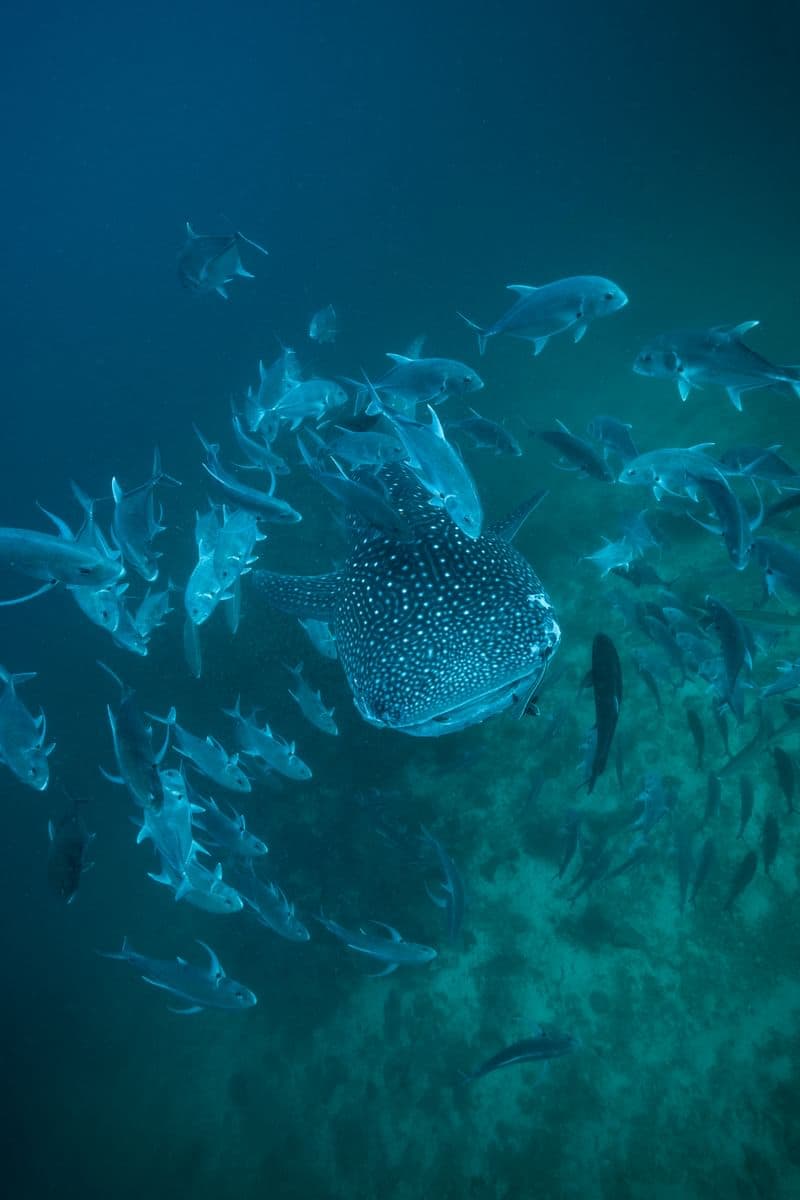
Book June to October, and make sure the itinerary includes Darwin. This is where the large, mostly female whale sharks pass along the walls, usually seen in the blue off the rocky shelf rather than at the surface. July to September tends to be the most dependable stretch. Our month-by-month odds are on the whale shark page.
Be honest with yourself about the trade. You will be diving in green, 19–22 °C water after a rough crossing, with current that rarely lets up. Divers who come for the whale sharks almost never regret it, but it is not a holiday in the easy sense.
Hammerhead numbers
Scalloped hammerheads are at Darwin and Wolf every month of the year, so you do not need to time a trip around them. If you want the largest schools, the cool season is when they tend to be biggest, with hundreds of animals on a good dive. The warm season trades some of that scale for clearer water, which many photographers prefer. The hammerhead page has the odds, and our Darwin & Wolf site guide explains how the dives actually run.
Closer in, Gordon Rocks off Santa Cruz is the central islands' best hammerhead site, with demanding current in any season.
Calmer seas and warmer water
Come between December and May, and aim for February to April if water temperature matters most to you. The crossing to Darwin and Wolf is a long overnight run, and in the warm season it is usually far more comfortable. Visibility is better, the surface intervals are pleasant, and you will spend less energy fighting the cold. This is also the window for marine iguanas grazing on algae in the shallows of Fernandina and Isabela, a sight you will find nowhere else on earth.
First-timers
If this is your first Galápagos trip and you have the experience to go (see below), the warm season is usually the gentler introduction. Calmer seas make the crossing easier, warmer water makes repeated dives less tiring, and the hammerheads are still there. Our first-trip guide covers what the days feel like, and the Darwin and Wolf deep dive explains the far north in detail.
Practical notes
Darwin and Wolf are liveaboard only
Wolf lies roughly 190 km northwest of Isabela, and Darwin about 40 km beyond that. Day boats from the inhabited islands do not reach them, so a liveaboard is the only way to dive the far north. Boats follow itineraries licensed by the national park, which is why routes vary between operators and seasons. Darwin's Arch, the rock bridge in older photos, collapsed in May 2021; the dive site remains and the animals did not leave with it.
Experience needed
Liveaboard operators running Darwin and Wolf commonly ask for Advanced Open Water and around 50 logged dives as a minimum, and some require nitrox certification. Treat that as the floor. The dives involve negative entries from a tender, descending quickly to a rock ledge, holding position in strong current on bare rock (never on coral or animals) and drifting off into blue water for the safety stop. Recent current diving matters more than total numbers. A delayed surface marker buoy is non-negotiable.
Every dive group is led by a guide certified by the Galápagos National Park. Listen to the briefings: they know which way the current is running that morning, and they will call the dive if it is not safe.
Park fees and entry rules
Since August 2024 the Galápagos National Park entrance fee for foreign adult visitors has been US$200, with a reduced rate for children under 12. It is paid on arrival at Baltra or San Cristóbal airport and is never included in a liveaboard fare. Bring cash in US dollars; card payment, where it is offered, may carry a surcharge.
Before that you need the Transit Control Card (TCT), US$20, bought at the Galápagos Governing Council counter at Quito or Guayaquil airport before you check in for the island flight. Allow extra time for the queue and the biosecurity check on your luggage. Fees and rules do change, so check them again with your operator a few weeks before you fly. Our Galápagos cost guide puts these into a full budget.
Insurance
Darwin and Wolf are a long way from a recompression chamber or a hospital. Dive insurance that covers evacuation from remote areas is essential, not optional.
Our Galápagos departures
The dates we currently list are all 7-night Darwin & Wolf trips, running in December, January, March, April and July. Prices run from US$5,355 to US$7,357 per person sharing, which works out at roughly US$765 to US$1,050 a night. December and January sit in the warm season, March and April in its calmest, clearest stretch, and July is whale shark season at Darwin. Prices are from, change with dates and cabin, and exclude the park fee and TCT. Current availability is on the Galápagos calendar, and the Galápagos destination page has the wider overview.
If you have a month in mind and are not sure it fits what you want to see, tell us your dates and we will tell you honestly what the water is likely to be doing.
Related Guides
- Galápagos vs Cocos Island: Which Liveaboard Is Right for You
- Diving the Galápagos: Hammerheads, Iguanas, and the Crossing to Darwin & Wolf — The full picture of the far north.
- Galápagos Diving: What to Expect on Your First Trip — How the days, dives and briefings work.
- Galápagos Liveaboard Costs — Fare, fees, flights and the rest, itemised.
- Hammerhead Season Around the World — How the Galápagos compares with Cocos and the Red Sea.
Related Articles
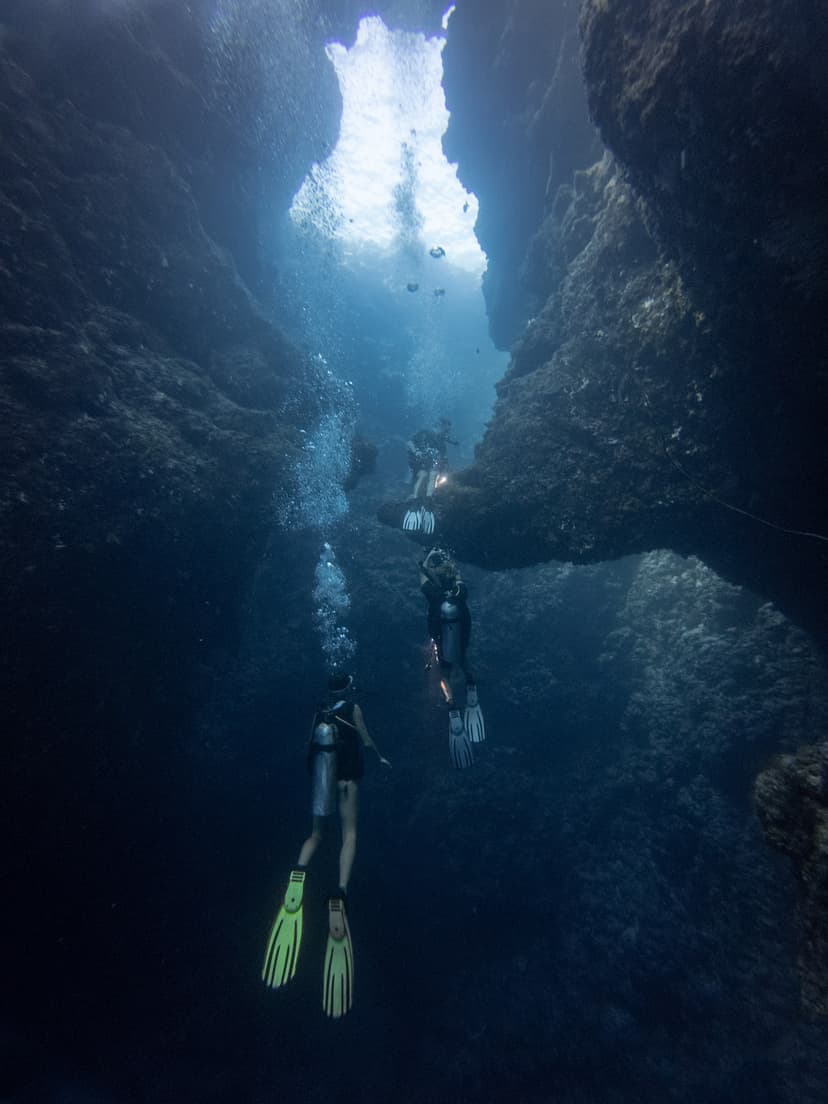
Diving the Galápagos: Hammerheads, Iguanas, and the Crossing to Darwin & Wolf
The Galápagos is not a beginner liveaboard. It is a demanding, weather-dependent, expensive trip to the best pelagic diving on earth. Here is exactly what to expect, what it costs in 2026, and whether you are ready for it.
How to Choose the Right Liveaboard for Your Level
Budget or luxury? Small or spacious? Here's how to find the floating home that fits your diving style.
