Diving the Galápagos: Hammerheads, Iguanas, and the Crossing to Darwin & Wolf
Every serious diver has the Galápagos on their list somewhere. Most of them are wrong about what it is.
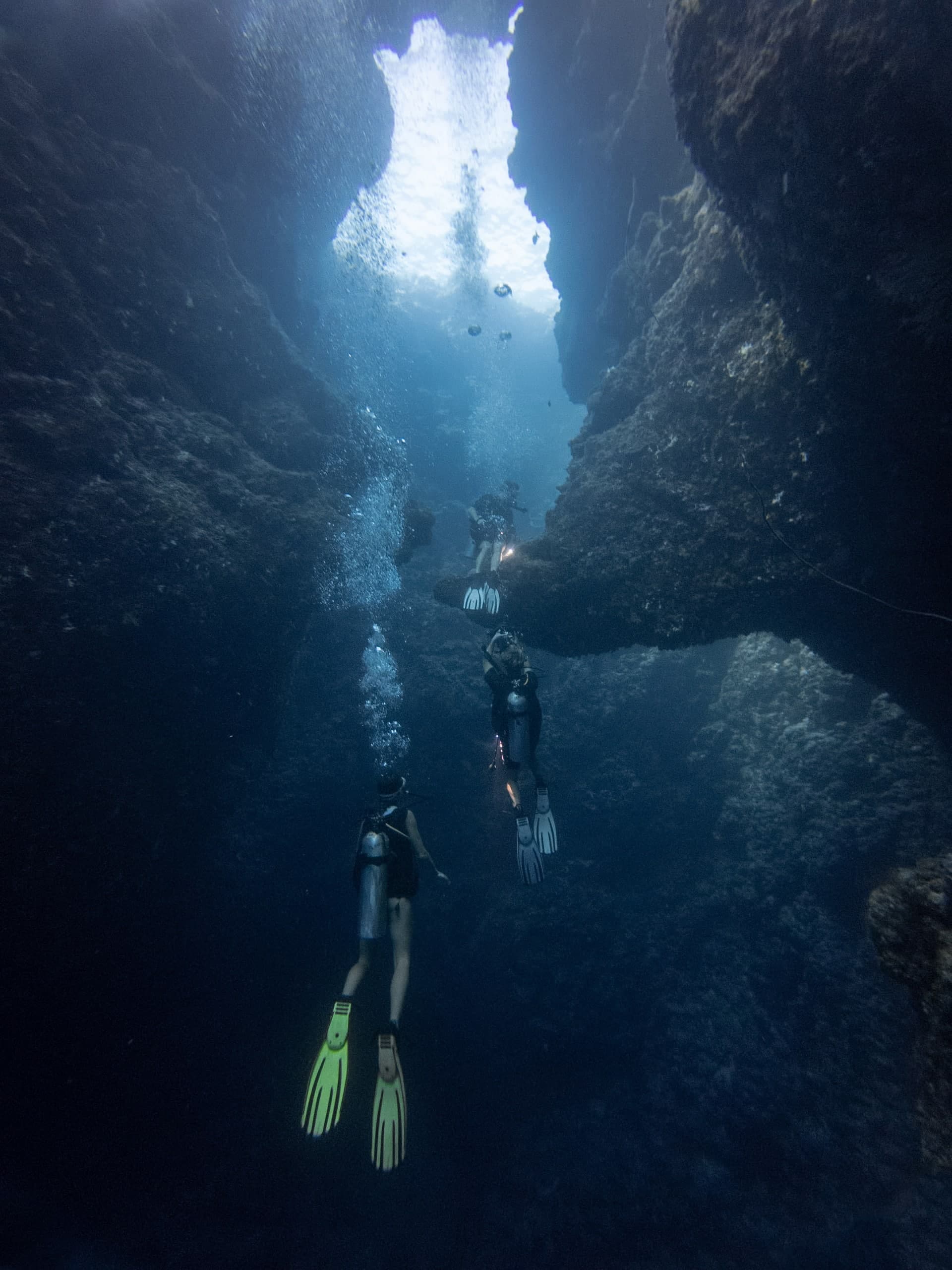
The popular image — warm reefs, easy wall dives, friendly sea lions — is a mash-up of Galápagos footage filmed across three different islands in three different seasons. The reality is colder, stronger, more demanding, and ultimately more rewarding than that. Getting to the iconic diving (Darwin and Wolf) requires a twelve-hour overnight crossing on a liveaboard that will roll you around like laundry. The current at the best dive sites can push you at a walking pace. The water is often 22°C at the start of a dive and 18°C by the end of it, when a cold thermocline slices through the action.
Those conditions are exactly why the diving is what it is.
The short answer to "is it worth it?"
If you've got the logged dives (100+ in varied conditions is roughly the threshold), the comfort with current and cold water, and the budget, yes — unambiguously yes. For pelagic encounter volume, nothing else at this price point comes close.
If you're an intermediate diver with 50 dives in warm calm water hoping to tick Galápagos off your list: book Socorro or Cocos instead, build up experience, come back to Galápagos in three years. It will still be there.
What the Galápagos are for divers
Thirteen major volcanic islands and over 100 islets, 960 kilometres off the coast of Ecuador, straddling the equator. The Galápagos Marine Reserve (1998) and the adjacent Hermandad Marine Reserve (added 2022) together protect roughly 198,000 square kilometres of ocean — one of the largest no-take marine protected areas in the world.
The archipelago sits at the junction of the cold nutrient-rich Humboldt Current from the south, the warm Panama Current from the north, and the deep-water upwelling of the Equatorial Undercurrent. That's what makes the diving extraordinary. It's also what makes it unpredictable.
For divers, the archipelago breaks into two categories:
Central/southern islands — Santa Cruz, San Cristóbal, Santa Fe, Floreana, Española. Approachable diving from day-trip boats or the first days of a liveaboard route. Sea lions, turtles, sharks, rays, excellent shallow diving.
Far north — Darwin and Wolf. Uninhabited. Accessible only by liveaboard. This is where the hammerhead schools, whale sharks, and the genuinely iconic Galápagos dive experiences happen. The crossing from Puerto Ayora (Santa Cruz) to Wolf is typically 12–14 hours; Wolf to Darwin is another 4–6.
You can dive the central islands without a liveaboard. You cannot dive Darwin and Wolf without one. That's the key fact that drives every other decision about this destination.
What you'll actually see
Scalloped hammerhead sharks. Large schools at Darwin and Wolf, especially May through November when the nutrient-rich cooler water arrives. Hundred-plus animals in a single sighting is common; 300+ happens on the right day.
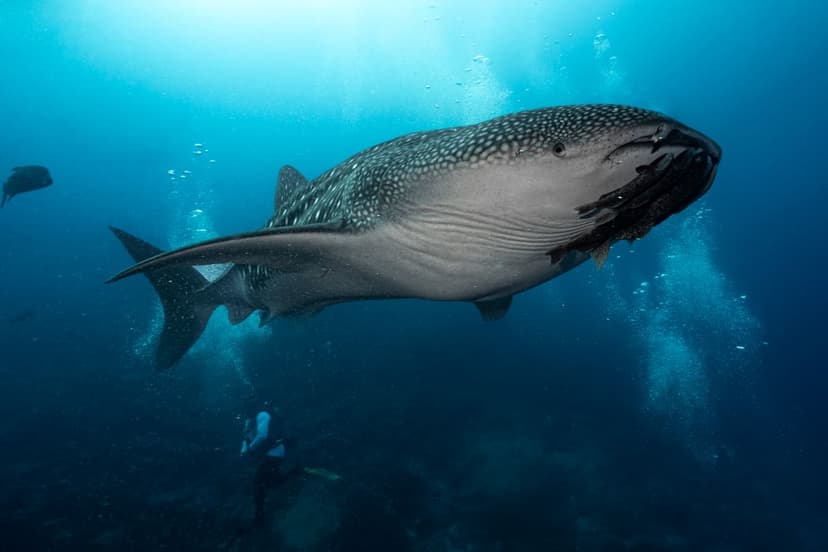
Whale sharks. Darwin in particular, June through November. Unusually, the whale sharks that visit Galápagos are predominantly mature pregnant females — the only place in the world where this specific demographic aggregates. This is genuinely scientifically significant, and the encounters reflect it.
Galápagos sharks, silky sharks, blacktips, Galápagos sea lions (in quantity, and enthusiastic), mantas, mobulas, mola molas (central islands, cooler water), marine iguanas (Cabo Marshall — the only marine iguana on earth, and they feed underwater).
The supporting cast: eagle rays, turtles in numbers, huge schools of reef fish, tuna, jacks, plus extraordinary terrestrial wildlife on the days you spend above water.
The two seasons
There are essentially two Galápagos diving seasons, and they deliver very different trips:
Cool/nutrient-rich (May/June to November). 18–24°C water, plankton blooms, reduced visibility (10–20m), but the pelagic action peaks. Whale sharks at Darwin, biggest hammerhead schools, highest encounter rates with large animals. Full 7mm wetsuit or semi-drysuit territory.
Warm/calmer (December to May). 24–28°C water, better visibility (20–30m), quieter on the pelagic front but more reliable conditions for photography and longer dive comfort. Manta and mobula encounters peak in the central islands. 5mm wetsuit is fine for most divers.
Most photographers planning a Galápagos trip optimise for June–November if they're after the iconic schooling-hammerhead images; for calmer conditions and easier photography, late March or April is the stronger pick.
What the trip actually looks like
A standard liveaboard itinerary:
- Day 0: fly to Baltra or San Cristóbal. Transfer, board boat at Puerto Ayora or Wreck Bay.
- Days 1–2: central islands diving — check-out dives, warmer conditions, approachable sites.
- Day 3 (overnight): crossing to Wolf. 12+ hours. This is the point in the trip where seasickness remedies pay off.
- Days 4–5: Darwin and Wolf. This is why you came. Expect 3 dives per day, often with significant current.
- Day 6: crossing back, usually to Cabo Marshall or Punta Vicente Roca.
- Day 7: central island diving on the way back, sometimes with a volcanic underwater landscape day.
- Day 8: disembark.
Some operators run 10-day variants that add extra Darwin/Wolf days. The price jump is roughly proportional.
Critical logistical detail: flights to the Galápagos are separate and not cheap. Return flights from Quito or Guayaquil run US$500–US$700 per person, plus US$200 in entrance fees (park entry, migration, transit card) that operators often do not include in the base liveaboard price.
What it costs, honestly
Real ranges based on operator-published rates in early 2026:
- 7-night liveaboards (mid-tier): US$5,500–US$7,500 per person, double occupancy
- 7-night liveaboards (premium): US$7,500–US$10,000+
- 10-night extended itineraries: US$7,000–US$11,500
- Park/entry fees (additional): US$200 per person
- Ecuador domestic flights (additional): US$500–US$700
- International flights to Ecuador: US$900–US$1,500 from Europe
Total realistic cost for a European diver on a mid-tier 7-night Galápagos trip in 2026: €6,500–€8,500 all-in. This is not a cheap trip.
Who it's for
Advanced divers with 100+ logged dives, comfortable with current, cold water, blue-water conditions, and surface swells of 2+ metres. Open-water certification alone is not enough; every reputable operator enforces experience minimums. Nitrox is strongly recommended (often required) for the deeper multi-day schedules.
Pelagic-focused divers whose life list has shark schools or whale sharks on it. If you're going to spend €7,000+ on a dive trip, this one delivers on a scale that few others can match.
Divers building toward the apex destinations of Cocos, Malpelo, or Antarctic diving. The Galápagos is the right stepping stone before any of those — similar cold-water blue-diving environment, slightly more forgiving.
Who it's not for
New divers. We've said it three times now because it matters. The operators will tell you the same thing. A Galápagos trip attempted too early is a bad week, sometimes a dangerous one, and an expensive one.
Divers who need calm conditions, warm water, or predictable itineraries. The weather at Darwin has cancelled entire days on trips we've heard about. Schedules are suggestions; ocean conditions are the actual decision-maker.
Photographers expecting Raja Ampat-style colour. The Galápagos palette is blues and greys. Pelagic action, not coral.
How to start planning
We'd want to know three things before recommending a specific operator or itinerary:
- Your logged dive count and cold-water experience.
- Which of the pelagic encounters is your priority (whale sharks vs hammerheads).
- Your comfort with long overnight crossings.
From those, we'd narrow down to the right boat tier and the right season.
Tell us about your dive history →
- A Boutique Liveaboard Agency, On Purpose — Why we turn down bookings that won't work.
- Essential Safety Guide for Liveaboard Diving — Especially relevant for Galápagos conditions.
- Europe's Best Liveaboard Destinations for 2026: Ranked and Compared — If Galápagos is out of reach, where to go in our region.
Related Articles
%20-%20Large.jpg&w=828&q=75)
Best Time to Dive: A Season-by-Season Guide
When to visit the world's top liveaboard destinations for the best conditions and marine life encounters.
Galápagos Diving: What to Expect on Your First Trip
Hammerhead highways, curious sea lions, and currents that demand respect — here's what awaits in the enchanted islands.