Galápagos Liveaboard Costs: the Full, Honest Budget for the Trip of a Lifetime
A 7-night Galápagos dive liveaboard costs $9,000 to $12,000 all-in once you add everything up: roughly $6,400–7,140 for the boat itself on the Galapagos Master (luxury vessels run $6,195–8,795), around $220 in mandatory park fees, $1,200–2,500 in international and domestic flights, and another $800–1,500 in tips, gear, fuel surcharges and hotel nights that almost nobody budgets for. It is the most expensive trip in our catalogue, and for the right diver it is worth every euro. This guide itemizes the whole thing so nothing surprises you at the boat's checkout desk.
The headline number: what the boat itself costs
The liveaboard fare is the biggest line, but it is not the whole story — treat it as roughly 65–70% of your final spend.
- Galapagos Master, 7 nights: ~$6,400–7,140 depending on cabin and departure date. This is the workhorse of the fleet — 16 divers, purpose-built for the Darwin and Wolf itinerary, and the boat most of our guests end up on.
- 10-night itineraries: ~$8,500–9,500 on the same vessel. More time at Darwin and Wolf, which is where you actually came to dive.
- Luxury boats (Galapagos Sky, Aggressor III, Calipso, Tiburon Explorer): $6,195–8,795 for 7 nights. You are paying for bigger cabins, better food and smaller groups — not better diving. Everyone anchors at the same two rocks.
Occasional flash discounts of 20–25% appear on undersold departures, usually inside the 90-day window. They are real, but relying on one is a bad strategy for reasons we cover in the booking-window section below.
If you want to see what is actually available on real dates, our live departure calendar for the Galápagos shows current boats and fares.
Park fees and paperwork: $220 that is not optional
Ecuador raised the Galápagos National Park entrance fee in 2024, and plenty of older blog posts still quote the old number. The current figures:
- Park entrance fee: $200 per foreign adult ($100 for children under 12), paid in cash on arrival at Baltra or San Cristóbal airport. Bring clean US dollar bills — there is no card machine that you should count on.
- Transit Control Card (TCT): $20, obtained at Quito or Guayaquil airport before your Galápagos flight. Budget 30–45 extra minutes at the mainland airport for the queue.
That is $220 per person, non-negotiable, and your liveaboard fare never includes it. The fee funds park management and the strict visitor caps that keep the archipelago what it is — which, as we will get to, is also exactly why the trip costs what it does.
Getting there: the flight stack
There is no direct international flight to the Galápagos. Everyone routes through mainland Ecuador, which means two separate bookings:
- International flights to Quito (UIO) or Guayaquil (GYE): from Europe, expect €800–1,400 return depending on season and routing. From Lisbon or Porto you will typically connect through Madrid or Amsterdam.
- Domestic flight Quito/Guayaquil to Baltra (GPS): roughly $220–400 return on Avianca or LATAM. Quito departures usually stop in Guayaquil anyway.
- A mandatory hotel night on the mainland, because the Baltra flights leave early morning and no sane diver connects same-day off an intercontinental red-eye. Budget $80–150 for a decent Quito airport hotel, and seriously consider two nights before the boat — it protects you against lost bags, and it gives you 24 hours at altitude-then-sea-level before repetitive diving.
Flight stack total: realistically $1,200–2,500 per person from Europe, including the buffer night.
The costs nobody puts in the brochure
This is where honest budgeting separates from marketing. On top of the fare and fees:
- Fuel surcharge: ~$27 per night on the Galapagos Master ($189 for 7 nights), payable before travel. Other boats bake it in or charge similar.
- Crew and guide gratuities: plan on 10% of the cruise fare. Galápagos dive guides are among the best-trained in the world — park rules require a certified dive guide in the water with every group — and the working standard is $10–20 per day for the guide plus $20–50 per day for the crew pool. On a $7,000 trip, $500–700 per person is normal, in cash.
- Gear rental, if you need it: ~$225/week for a full set, plus ~$60 for a dive computer. Nitrox: ~$150 for the week — worth it for the repetitive 25–30m profiles.
- Exposure protection. Galápagos water runs 19–25°C (66–77°F) depending on season, with thermoclines that can drop dive sites like Punta Vicente Roca into the low teens. You want a 7mm suit with hood and gloves, full stop — divers in 5mm routinely end dives early at Darwin in the cool season. If you own a 7mm, bring it. If you are buying one, add €300–500; renting on the boat works but book it in advance.
- Travel and dive insurance covering diving to 40m and remote evacuation: €100–200. The nearest chamber is on Santa Cruz; the nearest serious hospital is a mainland flight away. Do not skip this.
Hidden-cost subtotal: $1,200–1,900 per person. Add it to the fare, fees and flights and you land squarely in the $9,000–12,000 range we opened with.
Why it costs this much — and why that is the point
The Galápagos is not expensive because operators are greedy. It is expensive because of deliberate scarcity:
- The park caps liveaboard permits. Only a small, fixed fleet of dive boats is licensed to visit Darwin and Wolf. No new permits means no price competition from new supply — and it means the sites are never crowded.
- Everything is remote. Fuel, food and parts travel 1,000 km from the mainland. Crews rotate by air. A boat operating 970 km offshore at Darwin burns serious diesel getting there.
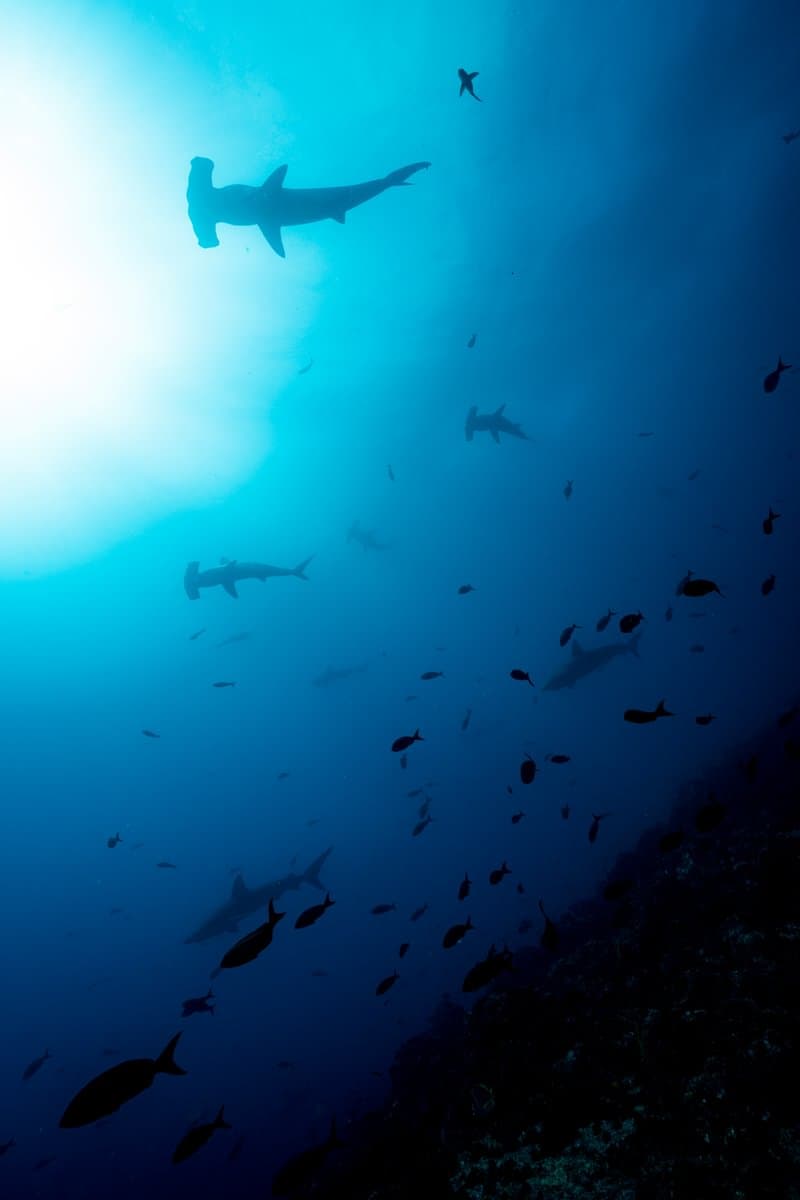
- Regulation is heavy and real. Mandatory dive guides, strict itinerary licensing, no-take zones, and the park fee itself. This is the machinery that keeps schooling hammerheads, whale sharks and mantas reliably at the same two seamounts year after year.
You are not paying a luxury premium. You are paying the cost of keeping one of the last genuinely wild dive destinations wild.
Galápagos vs Cocos vs Socorro: where should your money go?
All three eastern Pacific giants sell the same core promise — big animals, hammerhead walls, real current. The honest comparison:
- Cocos Island costs slightly less all-in (typically $7,500–10,000 — our Cocos cost guide breaks it down) with arguably denser hammerhead schools, but it is a 36-hour crossing each way and there is nothing but diving.
- Socorro is the value play at $4,500–7,000 all-in — the best giant-manta and humpback interaction on Earth, but fewer hammerheads and no whale sharks on the scale of Darwin.
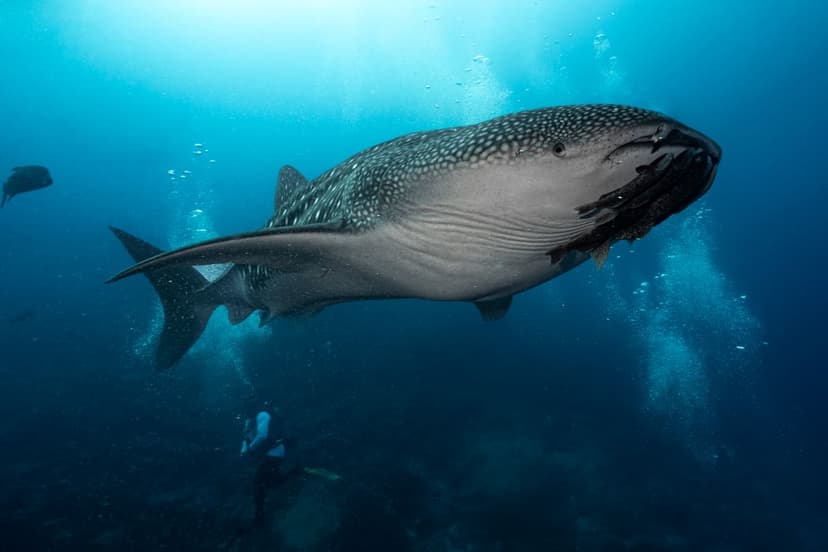
- The Galápagos is the only one of the three where the topside is a destination in itself — marine iguanas, sea lions on the dive deck, penguins on the equator — and the only one with a realistic whale-shark near-guarantee at Darwin from June to November.
Who should NOT book the Galápagos: divers with fewer than 50 logged dives, anyone uncomfortable with negative entries and ripping current, and anyone whose budget makes $10,000 a stretch that would hurt. Book Socorro first, get your current legs, and come back. The archipelago is not going anywhere — that is what the $200 fee is for.
If you decide it is your trip, our guide to what Darwin and Wolf actually deliver in the water covers the diving itself in detail.
When to book: this one genuinely sells out
The permit-capped fleet means supply cannot expand, so demand does the queuing:
- Whale-shark season (June–November) sells out 12–18 months ahead on the popular boats. If you want a specific cabin class on a specific boat in August, you are booking next year, not this one.
- Warm season (December–May) — manta-heavy, calmer seas, better visibility, slightly easier to book at 6–12 months out.
- Last-minute discounts exist but are a gamble. The 20–25% flash deals appear on undersold shoulder-season departures. If your dates are flexible and your gear bag is packed, they are real savings; if you need a specific season, waiting usually just means losing the trip.
A deposit typically holds your spot at booking, with balance due 90–120 days out — which conveniently matches when you should be booking flights.
If you would rather not juggle boat availability, flight timing and cabin categories across a dozen operator websites, that is precisely the work our concierge does — we monitor the Galápagos fleet's availability continuously, we know which boats fit which divers, and our commission comes from the operator, not from your pocket.
The bottom line
Budget $9,000–12,000 per person for a 7-night Galápagos liveaboard from Europe: ~$7,000 boat, ~$220 park fees, ~$1,500–2,500 flights and mainland nights, ~$1,200–1,900 in tips, surcharges, gear and insurance. It is the most expensive line in our catalogue and, for an experienced diver who wants schooling hammerheads and whale sharks the size of buses, the one trip our returning guests most often call the best money they ever spent underwater.
Related Guides
Related Articles
%20-%20Large.jpg&w=828&q=75)
Best Time to Dive: A Season-by-Season Guide
When to visit the world's top liveaboard destinations for the best conditions and marine life encounters.
Galápagos Diving: What to Expect on Your First Trip
Hammerhead highways, curious sea lions, and currents that demand respect — here's what awaits in the enchanted islands.