What a Cocos Island Trip Really Costs (and Why It Sells Out a Year Ahead)
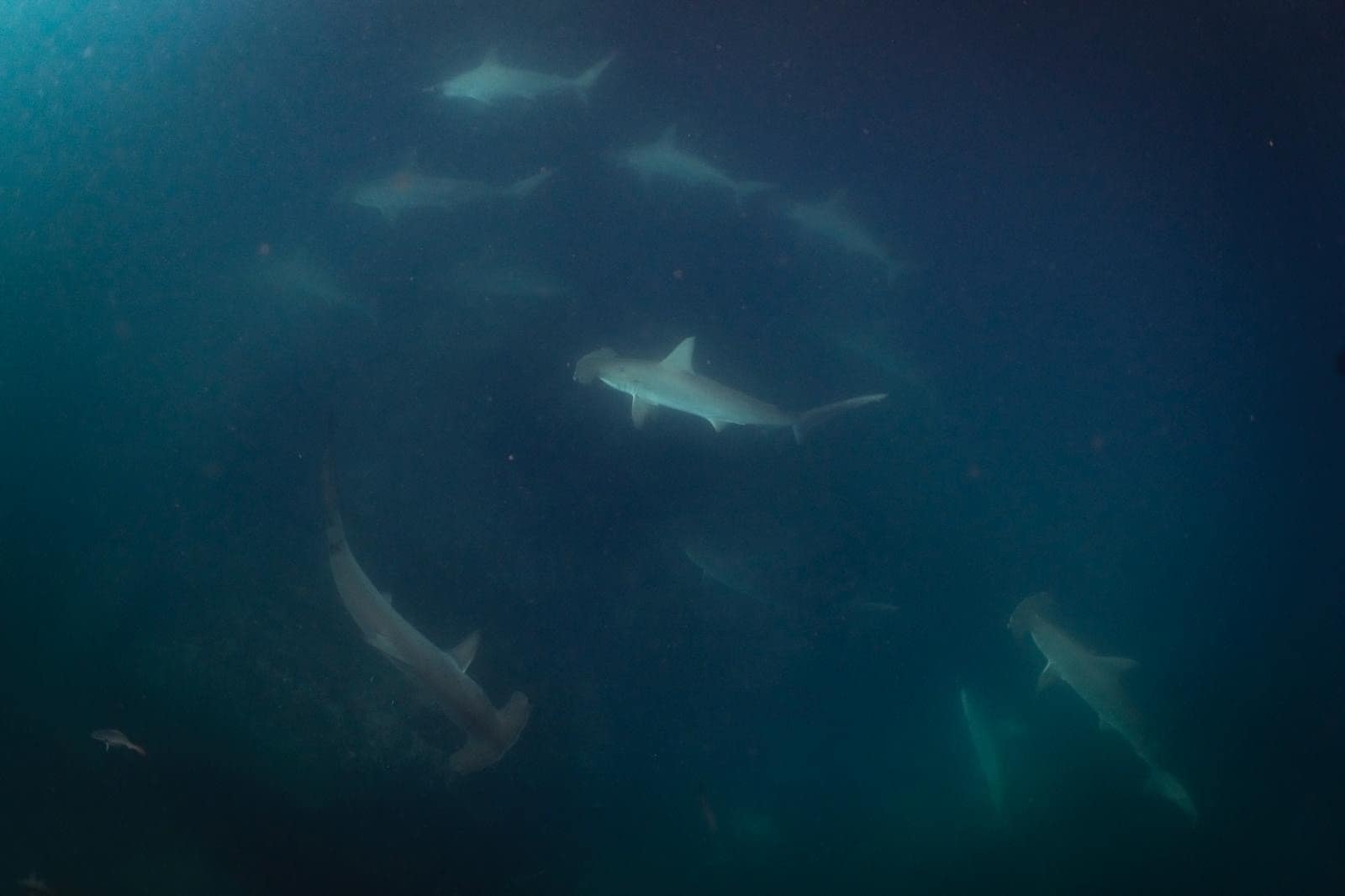
Cocos Island is the trip divers save for. Three hundred miles off Costa Rica's Pacific coast, no airstrip, no resort, no day boats — just a handful of liveaboards, a 36-hour crossing, and schooling hammerheads in numbers most divers only see once in their lives.
It is also one of the easiest trips to budget badly. The headline fare is only the beginning, and by the time you add park fees, flights, and everything else, the real number is meaningfully higher than the brochure suggests. Here is the full breakdown — every line item, no rounding down — plus the booking reality nobody warns you about: when we last checked live availability, there were only two bookable departures before mid-2027. This is a destination you plan a year out or not at all.
The headline number: the liveaboard fare
Only a small fleet of vessels holds permits to operate at Cocos Island, and every itinerary is a 10 or 11-night round trip from Puntarenas — there is no shorter option, because roughly three of those nights are spent crossing open ocean.
Current fares for the boats we work with run roughly $7,250 to $8,855 per person for 10–11 nights, depending on the vessel, cabin category, and season. Older listings and discounted repositioning trips occasionally dip lower, but for a standard cabin on a well-run boat in the season you actually want, budget in that band.
What the fare includes is genuinely a lot: all diving (typically 3 dives a day at the island, around 20+ dives per trip), full board, cabin accommodation, tanks and weights, and usually the transfer between San José and the port at Puntarenas. What it does not include is everything below.
The costs on top of the fare
This is where Cocos budgets quietly grow by $1,500 or more. None of these are optional in practice.
- National park fee: ~$490–550 for the trip. Cocos is a strictly protected national park and UNESCO site; the fee is charged per person for the full stay and is subject to Costa Rica's 13% VAT. It is collected by the operator and is not negotiable.
- Nitrox: $100–150 for the trip on most boats — and at Cocos you want it. Dive sites like Bajo Alcyone are seamounts where the action sits at 25–30 metres; nitrox is the difference between watching hammerheads and watching your no-deco time. One operator group includes unlimited nitrox in the fare — worth asking about when comparing boats.
- Gear rental: ~$330 for the trip if you need a full set. Most divers at this level bring their own; if yours is due for a service, do it well before departure, because there is no dive shop 36 hours from shore.
- Crew gratuities: $300–500. A Cocos crew works hard — pangas, currents, long days — and 5–10% of the fare is the customary range. Budget for it honestly rather than deciding on the last night.
- Dive insurance: $50–150. Evacuation coverage (DAN or equivalent) is mandatory with every operator. Cocos is one of the most remote dive destinations on earth; this is not a formality.
- Fuel surcharge: $140–180 on some vessels, announced with the booking. Ask before you commit so it does not arrive as a surprise.
Running total so far: roughly $1,400–1,850 on top of the fare, before you have left home.
Getting to Costa Rica
Cocos is one of the few far-flung liveaboard destinations that is actually easy to reach — the gateway is San José (SJO), a major international airport with direct connections across North America and Europe.
- From the US: round trips commonly run $300–700 depending on city and season. East coast and Texas hubs are cheapest.
- From Europe: direct flights from Madrid, plus one-stop routings from most capitals, typically land at €700–1,100 return booked a few months out. Booking a year ahead — which, as you will see, you should be doing anyway — puts you at the low end.
- Pre-trip hotel: 1 night minimum, ~$100–180. Every operator requires you in San José the night before departure. Given what the trip costs, do not gamble on a same-day connection. Many divers add a night on the back end too — arriving off a 36-hour return crossing and going straight to a red-eye is nobody's idea of a good time.
- Transfers: the San José–Puntarenas leg (about 2 hours by road) is included by most operators. Confirm it; a private transfer is $100+ if not.
The 36-hour crossing, honestly
Puntarenas to Cocos is roughly 300 nautical miles of open Pacific, and the crossing takes 32–38 hours each way depending on the boat and the sea state. That is a day and a half out, a day and a half back — nearly three of your ten nights are spent in transit.
Two honest notes. First, the crossing can be rough, particularly in the rainy season when the diving is at its best. If you are prone to seasickness, come prepared with medication that you have tested before — patches, tablets, whatever works for you — because the boat is not turning around. Second, the crossing is also part of the trip's character: briefings, nitrox courses, camera setup, and the slow build of anticipation as the island's silhouette finally appears. Divers who have done it tend to talk about that first sight of Cocos the way summit hikers talk about the final ridge.
The crossing is also exactly why no cheaper version of this trip exists. There is no flying in, no land option, no three-night taster. The remoteness is the price of admission — and the reason the hammerhead schools at Cocos still look like they did decades ago.
The real total
Put it together for one diver in a standard cabin, 10–11 nights:
- Liveaboard fare: $7,250–8,855
- Park fee (incl. VAT): ~$490–550
- Nitrox: $100–150
- Gratuities: $300–500
- Insurance: $50–150
- Flights: $300–700 (US) / €700–1,100 (Europe)
- Hotels and incidentals: $150–350
Realistic all-in: roughly $8,700–10,500 from North America, or $9,300–11,300 from Europe. If someone quotes you a Cocos trip meaningfully below that, look hard at what is missing — usually the park fee, an old fare, or a cabin you would not want for eleven nights.
For context, that is broadly the same league as Galápagos and above Socorro. It is expensive because it is scarce: a handful of permitted boats, around 20 divers each, at one of the only places on the planet where scalloped hammerheads still school in the hundreds.
Why it sells out a year ahead
This is the part that catches even experienced liveaboard divers off guard. When we last pulled live availability across the Cocos fleet, only two departures were bookable before mid-2027. Everything else — every prime rainy-season week, every holiday date — was gone.
The math explains it. A few permitted vessels, each carrying around 20 divers, each running roughly 25 trips a year, gives Cocos a total annual capacity in the low thousands — for the entire world. Compare that with the tens of thousands of divers who put Cocos on their list every year, add repeat guests who rebook their favorite week before they even disembark, and the calendar simply evaporates.
Three practical consequences:
- Book 12–14 months out for a choice of dates and cabins. At 9 months you are choosing from leftovers; inside 6 months you are hoping for a cancellation.
- The best-value cabins go first. Late bookers do not just get fewer dates — they get the premium suites or the below-deck singles, nothing in between.
- Last-minute deals barely exist here. Cancellation spots occasionally surface, but Cocos is not a destination where waiting saves money. Fares have only moved in one direction.
If your window is flexible, aim for the June–November rainy season — rougher crossings and lower visibility, but the plankton blooms that pull in the biggest hammerhead schools and, in recent years, remarkable tiger shark activity at Manuelita. December–May brings calmer seas and easier conditions with somewhat smaller aggregations. Check what is actually bookable on our live departure calendar before you fall in love with a specific month.
Who Cocos is for — and who should wait
Radical honesty, because this trip is too expensive to get wrong.
Cocos rewards you if you have solid experience in current — most operators recommend Advanced certification and 25–50 logged dives as a floor, and we would put the honest comfort threshold higher: 50+ dives with real exposure to drift diving, negative entries, and blue-water safety stops. The signature dives are washing-machine seamounts where you descend quickly, hook into rock at 25–30 metres, and hold position while sharks parade past. Confident buoyancy and calm air consumption are not nice-to-haves.
You should wait if you are newly certified, have never dived in strong current, get badly seasick with no proven remedy, or need warm-water hand-holding. There is no shame in any of that — but a $10,000 trip where you sit out the best dives is a bad purchase. Build experience somewhere like the Red Sea or Komodo first, and come to Cocos when you can enjoy it. It will still be there, and the hammerheads — protected inside one of the Pacific's oldest marine parks — will still be schooling.
How to book it smart
A few things we tell every diver who asks us about Cocos:
- Decide the season first, then chase dates. Rainy season for maximum shark action, dry season for comfort. Locking this down early is what gets you a real choice of departures.
- Compare boats on what is included, not the sticker fare. Nitrox, gear, transfers, and surcharge policies shift the true cost by $500+ between vessels.
- Pay the deposit the day you decide. Cocos operates on deposits of roughly 20–25%, and holds are short. A week of deliberation regularly costs divers their date.
- Insure the trip itself, not just the diving. With a booking made a year out and strict cancellation terms, trip cancellation coverage is cheap protection on a five-figure commitment.
If you would rather not monitor cabin charts across half a dozen operators yourself, that is quite literally what we do all day. Tell our concierge your season, budget, and experience level, and we will tell you — honestly — which boats still have space, which cabin is worth the difference, and whether you should book Cocos now or spend this year building the dives that will make it worth every dollar.
Related Guides
Related Articles
%20-%20Large.jpg&w=828&q=75)
Best Time to Dive: A Season-by-Season Guide
When to visit the world's top liveaboard destinations for the best conditions and marine life encounters.
Galápagos Diving: What to Expect on Your First Trip
Hammerhead highways, curious sea lions, and currents that demand respect — here's what awaits in the enchanted islands.