Manuelita
The first dive of almost every Cocos Island liveaboard trip, and often the last — Manuelita earns that place.
Manuelita is the small islet off the northeast corner of Cocos Island, and it may be the most complete single dive site in the eastern Pacific. In one panga ride from your liveaboard you can drop onto a shallow coral garden thick with whitetip reef sharks, then swing around the point to a current-raked wall where scalloped hammerheads queue at cleaning stations. It is the site divers picture when they picture Cocos, and it holds up to the reputation. Here is what Manuelita diving actually delivers, and how to dive it well.
Quick answer: Manuelita is a combination coral-garden reef, drop-off wall and shark cleaning station in Cocos Island. Best season: June–December (rainy season) for the biggest hammerhead aggregations and whale sharks Aug–Oct; December–May for calmer seas and better visibility. Level: Advanced — Advanced Open Water plus solid current and surge experience; roughly 50+ logged dives recommended. Depth: 6–30 m on the inside garden; the outside wall drops to around 50 m. Typical visibility: Around 10–25 m in the rainy season; often 30 m+ in the December–May dry season.
Facts verified September 2026
What makes Manuelita a Cocos Island signature
Manuelita is a bare, roughly 150-metre islet sitting a few hundred metres off Cocos Island's north coast, just outside Chatham Bay where the liveaboards anchor. That geography is the whole story. The island splits the site into two very different personalities, and you can dive both without a long boat ride: a protected, shallow coral garden on the sheltered inside, and an exposed wall and cleaning-station zone on the outside where the open Pacific pushes past.
It works because Manuelita sits at a crossroads of clean oceanic water and structure. The reef gives reef fish, turtles and resting sharks a home; the deeper flanks give pelagics a reason to slow down. Scalloped hammerheads come in from the blue to be cleaned, whitetips stack up in the shallows, and the whole thing is close enough to the boat that it usually opens and closes a Cocos Island liveaboard trip. If you only dived one site here, this is the one that shows you why Cocos is a UNESCO-listed, no-take marine park worth crossing an ocean for.
What you'll see underwater
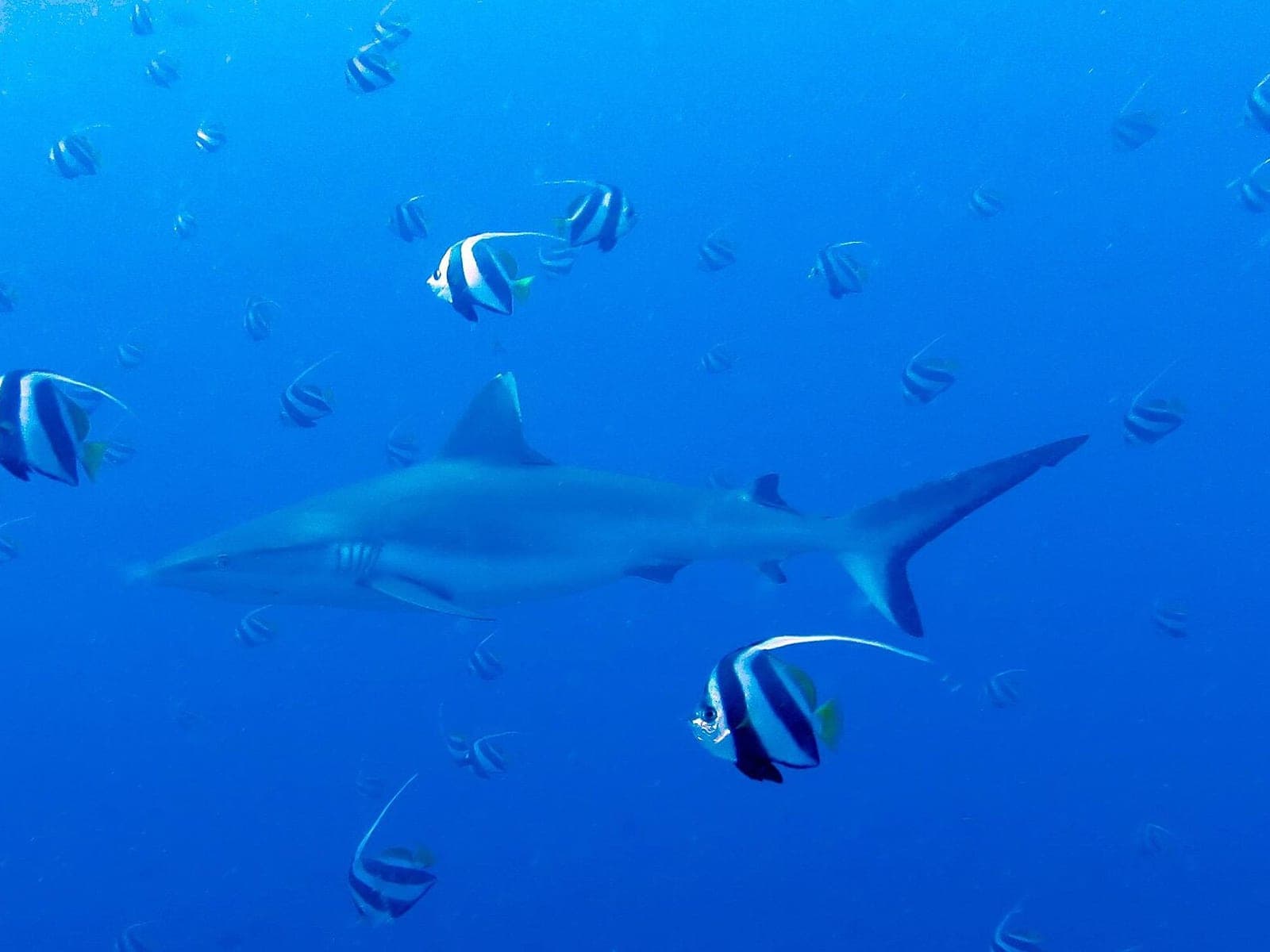
The headline act is the scalloped hammerhead. On the outside, king angelfish and barberfish work cleaning stations at around 25–30 metres, and hammerheads drift in one after another to hang in the current and be groomed. Tuck low against the reef, control your bubbles, and you can watch the queue for as long as your gas and the current allow.
The supporting cast is enormous, and it changes between day and dusk:
- Whitetip reef sharks — by the dozen in daylight, draped over the sand and ledges of the inside garden
- Tiger sharks — resident since the mid-2000s and now a regular sighting, comfortably outsizing the hammerheads
- Marbled rays, green turtles and big schools of jacks, mutton snapper and blue-striped snapper
- Reef detail on the garden: frogfish, spiny lobster, soldierfish and goatfish for the macro-minded
- Whale sharks and mantas passing through on the rainy-season nutrient upwellings, roughly August to October
Conditions and who it's for
Manuelita is honestly two dives in terms of difficulty. The inside coral garden is the gentlest diving at Cocos — shallow, sheltered and forgiving, and often used as the check-out dive of the trip. The outside is a different animal. Surge in the shallows can be moderate to strong, the current mid-channel runs hard, and the exposed northern tip can turn into a washing machine where up and down stop meaning much. Stay in against the island and out of the middle and you keep control.
This is advanced diving, not because any single skill is exotic but because you need to be calm in current and surge, comfortable with a negative entry, and able to hold position at a cleaning station without kicking up the reef or spooking the sharks. Cocos is a liveaboard-only, remote site with no recompression chamber on the island, so it rewards divers who self-manage gas and depth. Nitrox is a real advantage for the repetitive, moderately deep profiles. Newer divers can enjoy the garden fully; the wall is for those with the dives to back it up.
When to dive it
Cocos has no bad season, only trade-offs. The rainy season, roughly June to December, brings the nutrient-rich upwellings that pull in the largest hammerhead schools and give you the best odds on whale sharks and mantas from August to October. The price is rougher surface crossings and visibility that tightens to around 10–25 metres.
The dry season, December to May, flips that: calmer seas, easier crossings and visibility that often opens past 30 metres, with hammerheads still present in good numbers year-round. Water sits between about 24 and 30°C throughout, though thermoclines on the deeper outside dives can feel markedly colder, so plan your exposure protection for the bottom of the range. Whichever window you choose, book well ahead — Cocos liveaboard berths for the whale-shark months go 9–12 months out.
How you actually dive it
You dive Manuelita from a panga launched off your anchored liveaboard, a two-minute run from Chatham Bay. Most trips run a negative entry: roll in, dump air and get down together before the current has a say, then descend along the reef to the cleaning stations. On the outside, the plan is usually to work down-current in the lee of the island, hook or hold position low at a station, then drift the wall back. On the inside garden you can potter — the shallow depth means long, relaxed bottom times among the whitetips and turtles.
One important, honest caveat on access. Manuelita was historically the classic Cocos night dive, famous for hundreds of whitetips hunting in a frenzy of light and teeth. That experience has been curtailed under current marine-park rules, and night diving is not something you can count on here anymore. Treat any night-dive promise with scepticism and confirm what is actually permitted for your dates, because the park regulations govern this site and they change. What is not in doubt is the daytime diving, which is world-class on its own.
Faneca dives Manuelita on our Cocos Island liveaboards — it is the anchor site of every itinerary, dived on the first and often the final day — though access is remote and seasonal, so talk to our concierge about the best departure dates for hammerhead schools or whale sharks.
Manuelita: common questions
What is the best season to dive Manuelita?
June–December (rainy season) for the biggest hammerhead aggregations and whale sharks Aug–Oct; December–May for calmer seas and better visibility
What experience level do I need for Manuelita?
Advanced — Advanced Open Water plus solid current and surge experience; roughly 50+ logged dives recommended
How deep is Manuelita?
6–30 m on the inside garden; the outside wall drops to around 50 m
What marine life will I see at Manuelita?
Scalloped hammerheads, whitetip reef sharks, tiger sharks, marbled rays, green turtles, mutton and blue-striped snapper, jacks; whale sharks and mantas in season
