Cocos Island liveaboard diving at a glance: trips from €6,921 per person · best months Summer and Autumn · advanced · known for sharks, pelagics, currents. 14 listed departures.
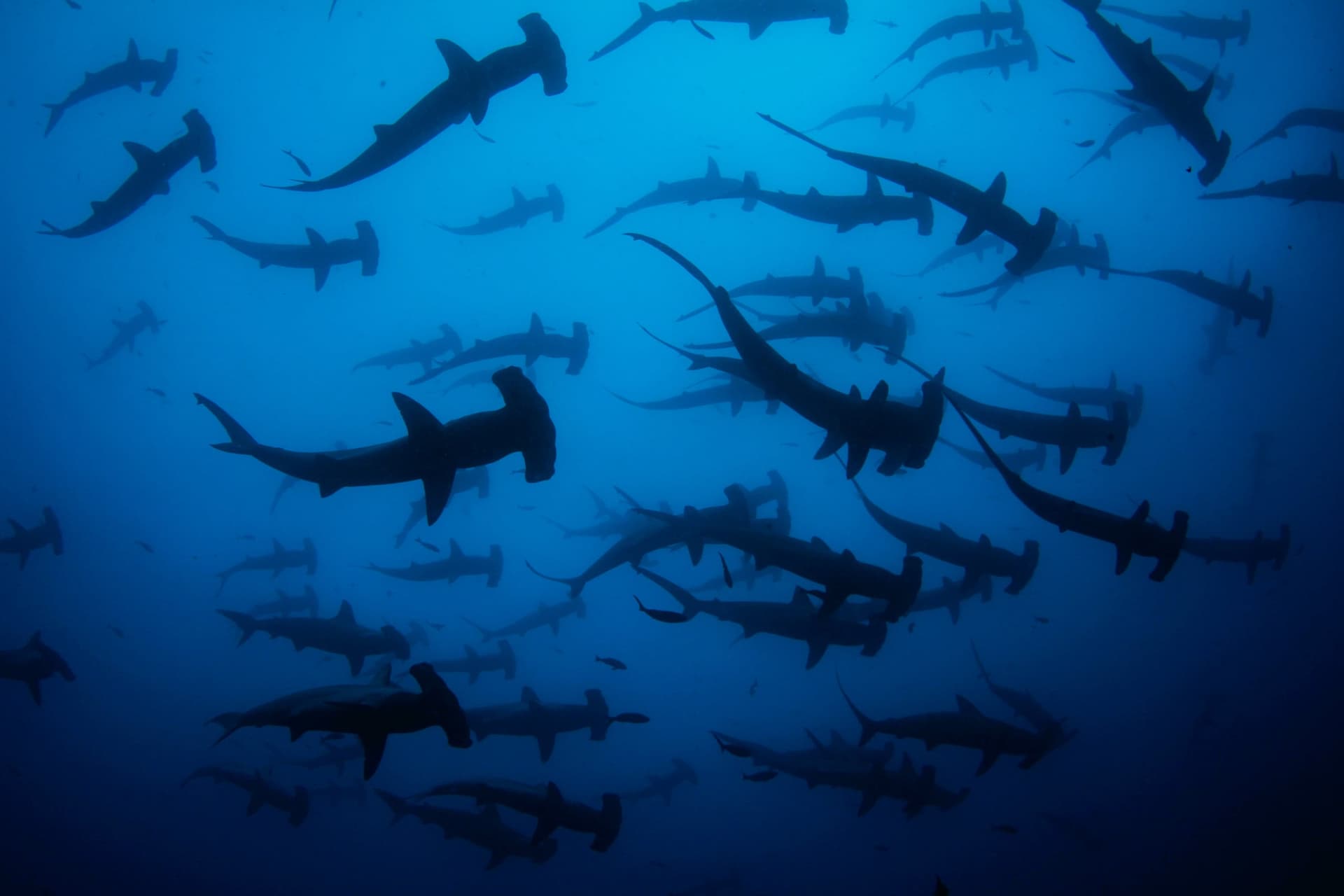
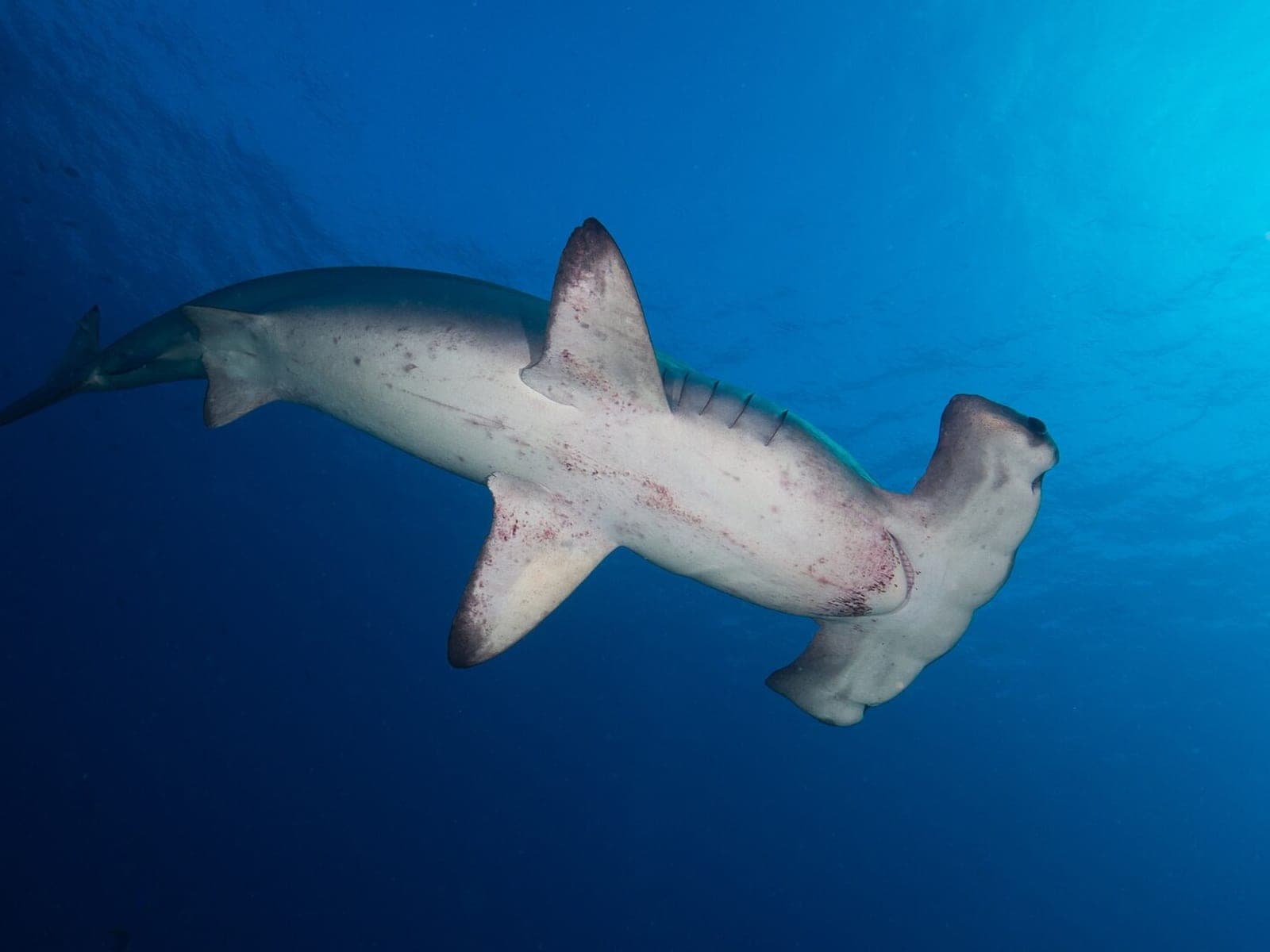
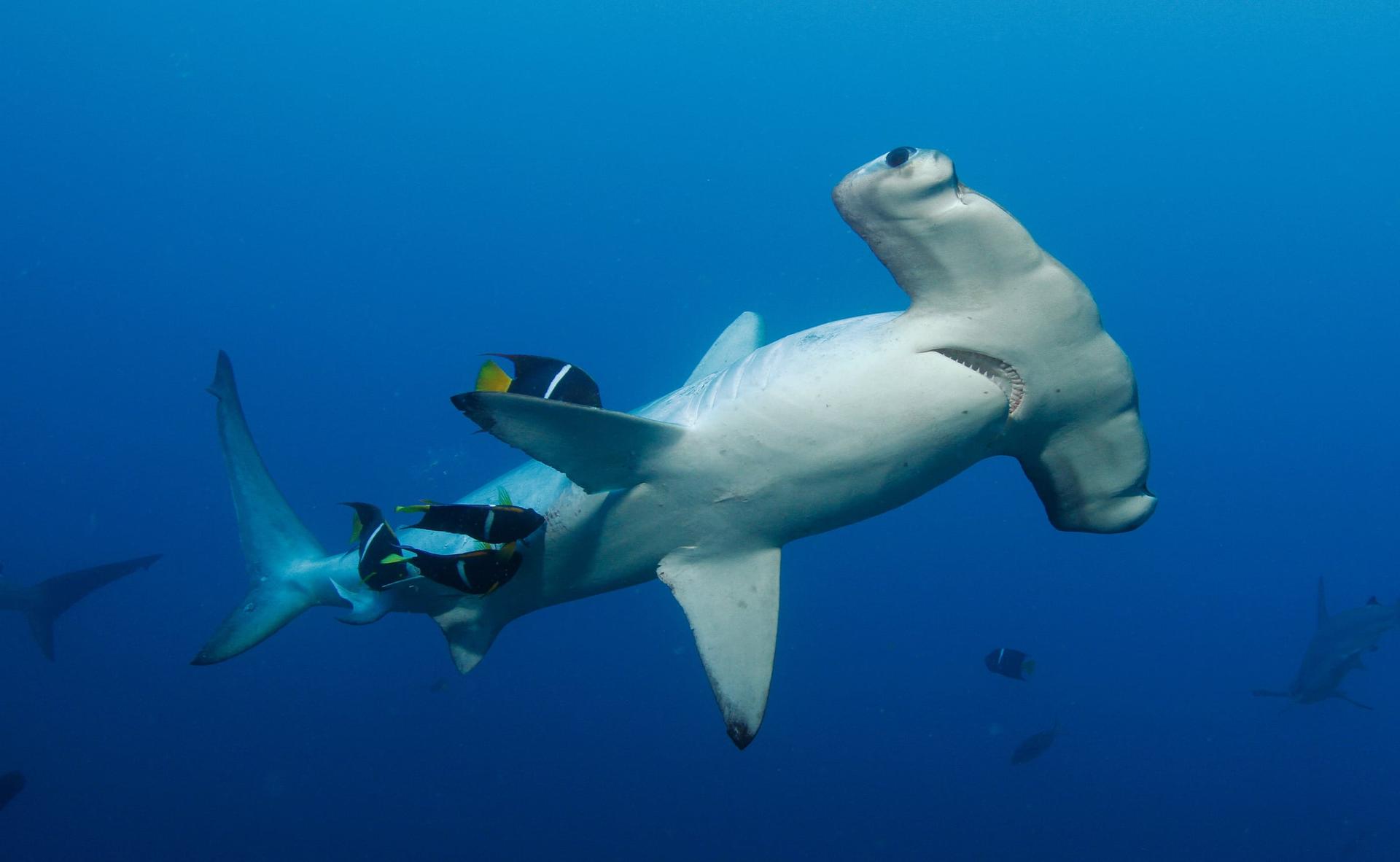
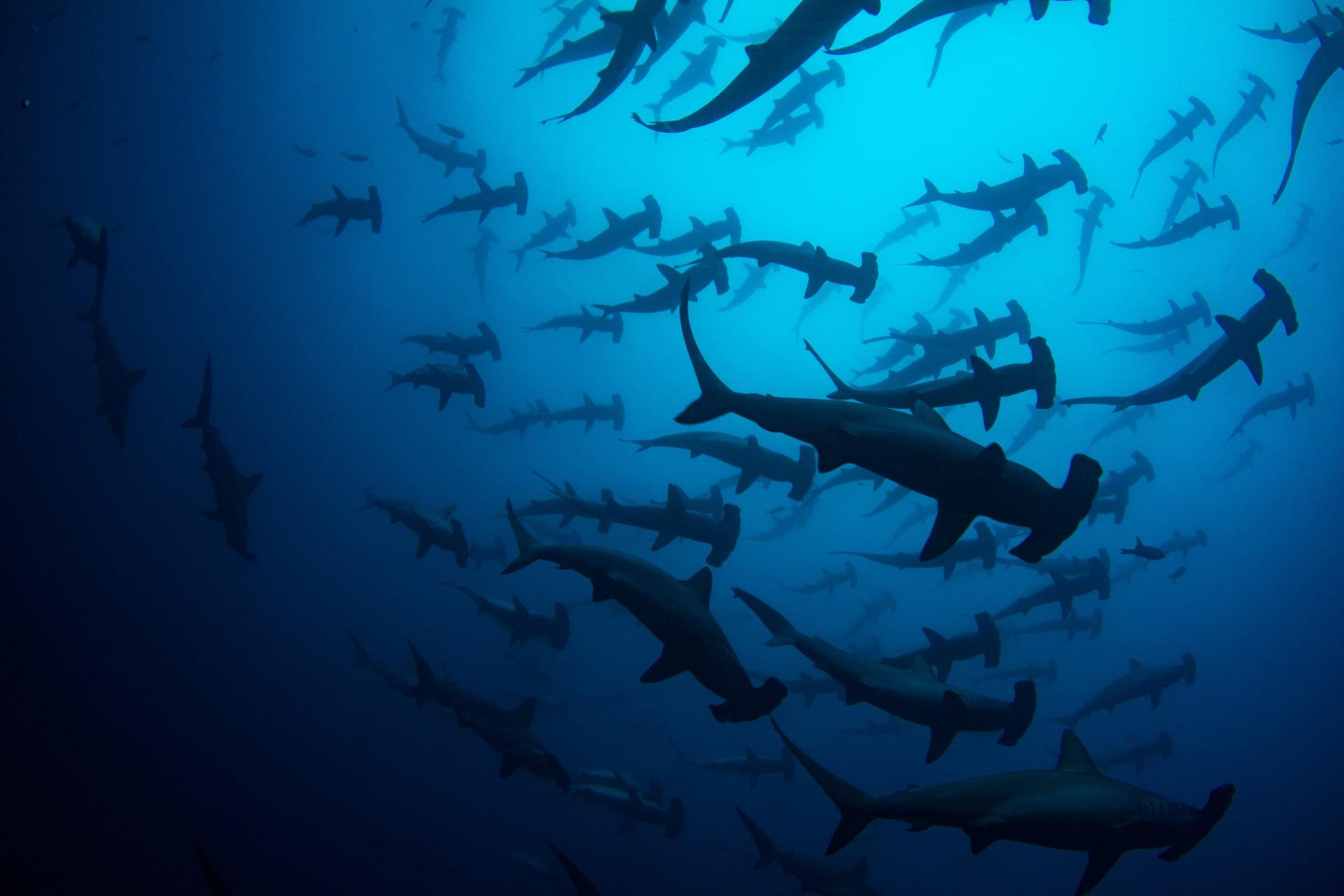
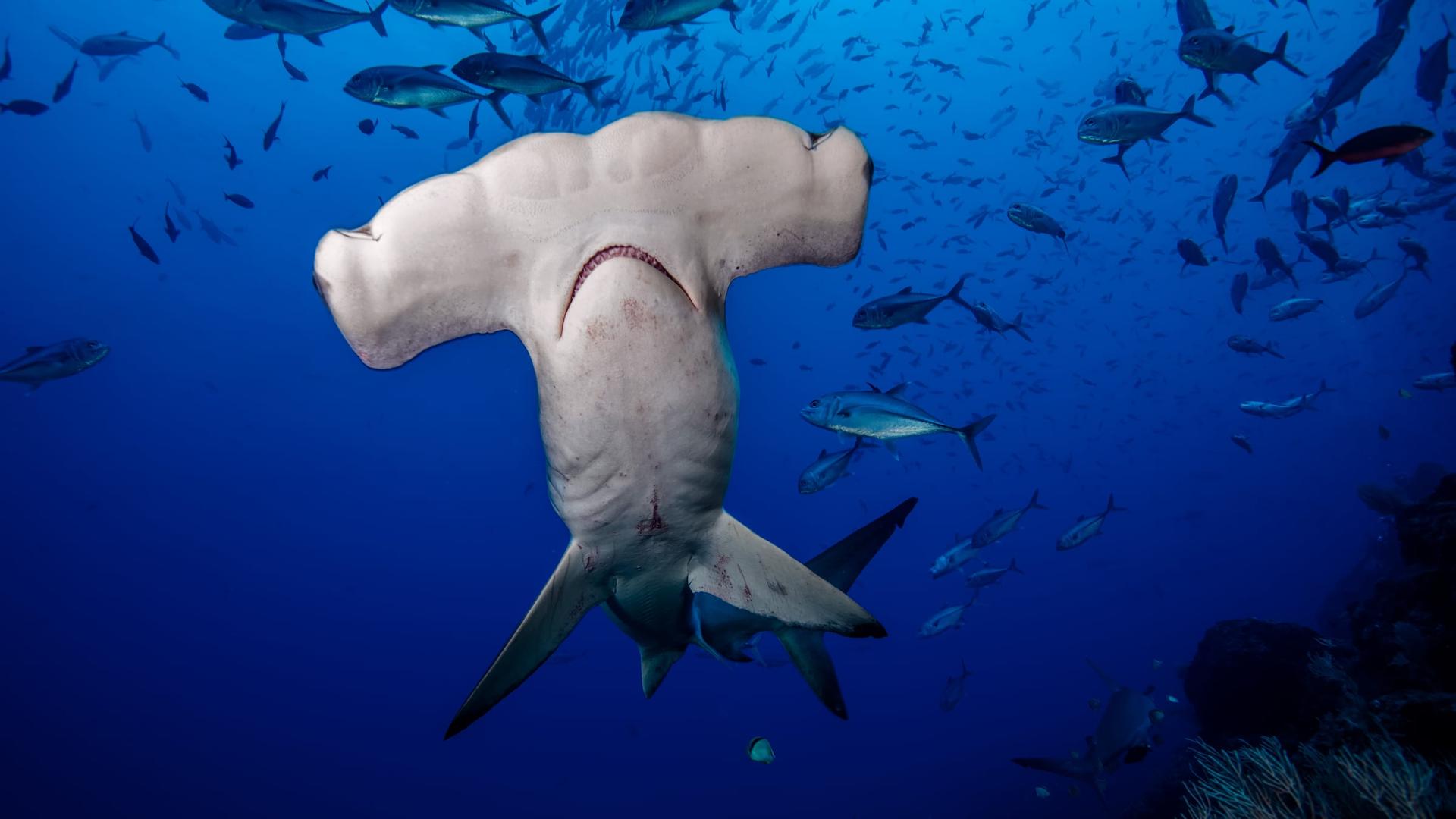
Cocos Island liveaboard diving is about sharks. Isla del Coco is an uninhabited, rain-soaked island more than 500 km off Costa Rica's Pacific coast, a national park since 1978 and a UNESCO World Heritage Site since 1997. Scalloped hammerheads gather here in the hundreds, coming in from the blue to be cleaned by barberfish and king angelfish at seamounts and rocks such as Bajo Alcyone and Dirty Rock. Whitetip reef sharks are on almost every dive, Galápagos and silky sharks work the edges, and tiger sharks turn up regularly around Manuelita. Add marble and eagle rays, big schools of jacks and, mostly in the wet season, whale sharks and mantas.
There is no airstrip, nowhere to stay and no day boat, so only a liveaboard gets you there. Our trips are 10, 11 and 13 nights, starting and ending in Puntarenas on Costa Rica's Pacific coast. You fly into San José and arrive at least a day before the boat sails. On departure morning the operator collects you from a set list of San José hotels for the 2.5 to 3-hour drive to the dock. The crossing to the island takes 32 to 36 hours each way, so about three nights of every trip are spent at sea. That still leaves around 21 dives on a 10-night trip, 24 on 11 nights and 30 on 13. The day runs to three dives from large skiffs, with the guides choosing sites around the island by current and conditions, and there are usually one or two walks ashore.
Cocos is for experienced divers. The boat we sell asks for Advanced Open Water or equivalent and at least 50 logged dives, plus Nitrox certification on 13-night trips. Most dives are at 18 to 30 m in open ocean: a negative entry, a descent in the blue, then holding still on the rock beside a cleaning station while the sharks come in. Currents can be strong and change within a few hours. Dives are limited to 30 m with no decompression stops, because the nearest recompression chamber is in San José, about 36 hours away by sea. Nitrox is included, and if you aren't certified you can take the course on board during the crossing. If your logbook isn't there yet, tell us and we'll suggest a trip that builds the experience first.
Summer, Autumn
sharks, pelagics, currents
advanced
Cocos Island liveaboard prices by route
From our live calendar: per person sharing, the lowest cabin, in euros, before park fees, nitrox and tips. Other currencies are shown as a guide at today's rate; you always pay in euros.
| Route | Nights | From | Per night | Sails |
|---|---|---|---|---|
| Cocos Island | 10–13 | €6,921 | €692 | May, Jun, Jul, Aug, Sep, Nov, Dec (14 dates) |
See every Cocos Island date and hold a place free for 72 hours →
Cocos Island liveaboards: the boats we sell
One boat has open Cocos Island dates with us. Facts are from the operators; prices are the lowest confirmed cabin on our live calendar, per person sharing, in euros.
Sea Hunter
Welded steel cruiser · 36 m
Up to 20 guests · 10 en-suite cabins with own air-con, incl. 2 upper-deck suites
Advanced divers with 50 logged dives who are comfortable holding position in open-ocean current at 25-30 m.
- You need
- Advanced Open Water, 50 logged dives. 13-night trips also need nitrox certification. Deep Diver strongly recommended. Dives to 30 m, no decompression.
- Nitrox
- included
- Included
- all meals and drinks, including beer, nitrox fills, tanks and weights, 3 dives a day at the island, daily housekeeping and laundry
- Extra
- Cocos park fee US$554 (10 nights) / US$633 (11) / US$791 (13), rental gear (US$90 per item on 10 nights), possible fuel surcharge, paid on board, crew tips, dive insurance with evacuation (compulsory)
- Sails from
- Puntarenas
From €6,921 · 14 dates
See Cocos Island dates →Cocos Island liveaboard season, month by month
Best time to dive Cocos Island
Cocos can be dived all year and its hammerheads stay all year, but the island has two seasons. From about June to November is the wet season: heavy rain (the island gets around 7,000 mm a year), rougher crossings, stronger currents and plankton-rich water, with visibility often 10–20 m. It is also when the biggest hammerhead schools gather, peaking from roughly June to October, and when whale sharks are most likely. From about December to May the seas calm down, visibility often reaches 20–30 m and hammerheads come in smaller, steadier groups rather than walls. The surface is about 24–29°C all year, slightly cooler in the wet season. Thermoclines at depth can drop it to around 20–22°C, occasionally lower, and they are sharper in the wet season, which is why most divers wear a 5 mm. The boat we sell runs Cocos from May to December, so our trips cover the end of the dry season and the whole wet season.
What you'll see in Cocos Island — and when
Want to plan around a specific animal? Try the Marine Life Finder.
What you'll dive in Cocos Island
- Bajo Alcyone: a seamount topping out at around 25 m, where hammerheads school in the hundreds
- Dirty Rock: cleaning stations off the northwest coast, with hammerheads, Galápagos sharks and huge schools of jacks
- Manuelita: a sheltered coral garden full of whitetip reef sharks, and an outer channel where tiger sharks are often seen
- Big and Small Dos Amigos: a rock arch full of fish, and a cleaning station at 24–27 m that draws hammerheads
- Silky sharks, marble and eagle rays, dolphins, and whale sharks and mantas mostly from June to November
- Usually one or two walks ashore on an uninhabited island of rainforest and waterfalls
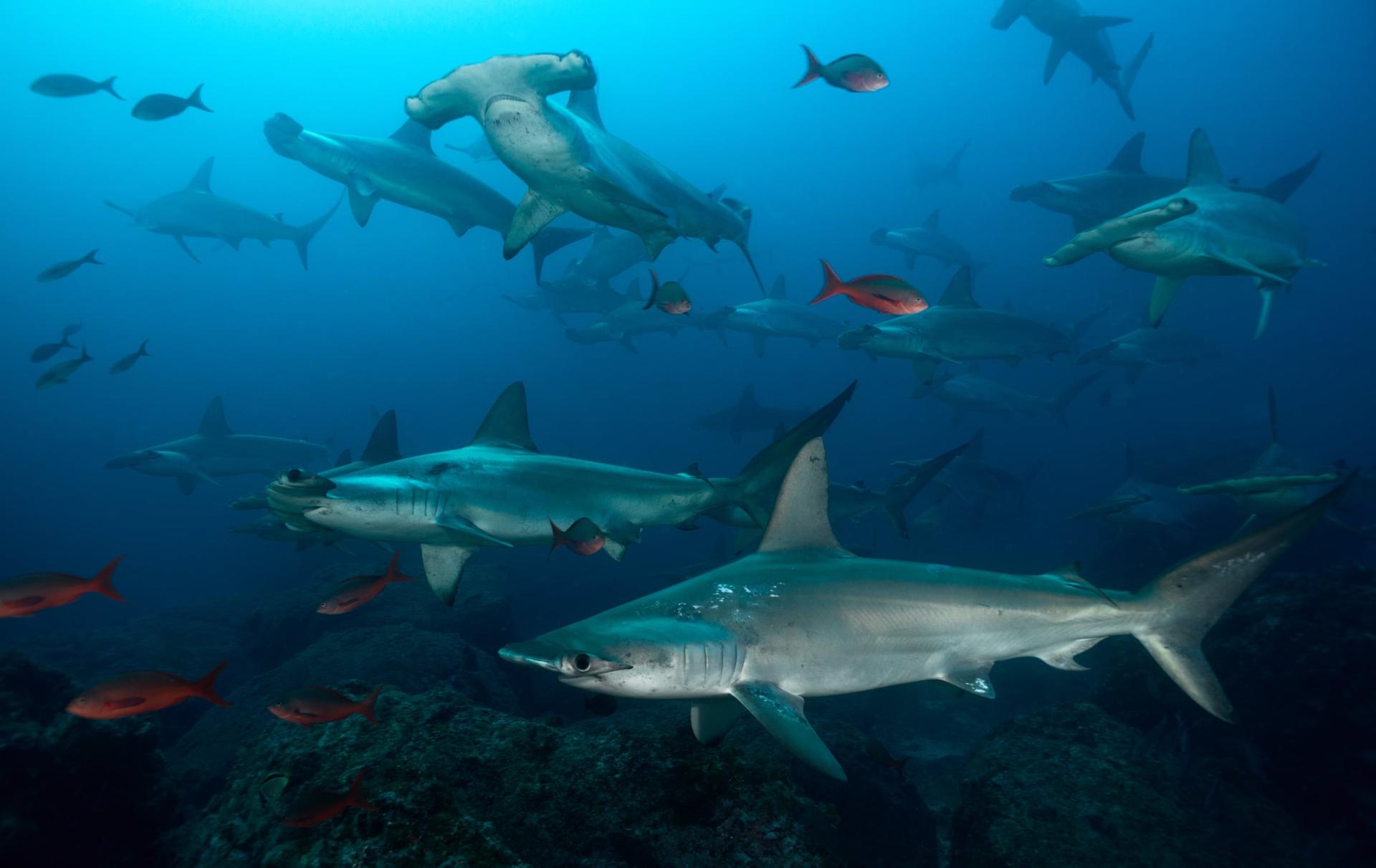
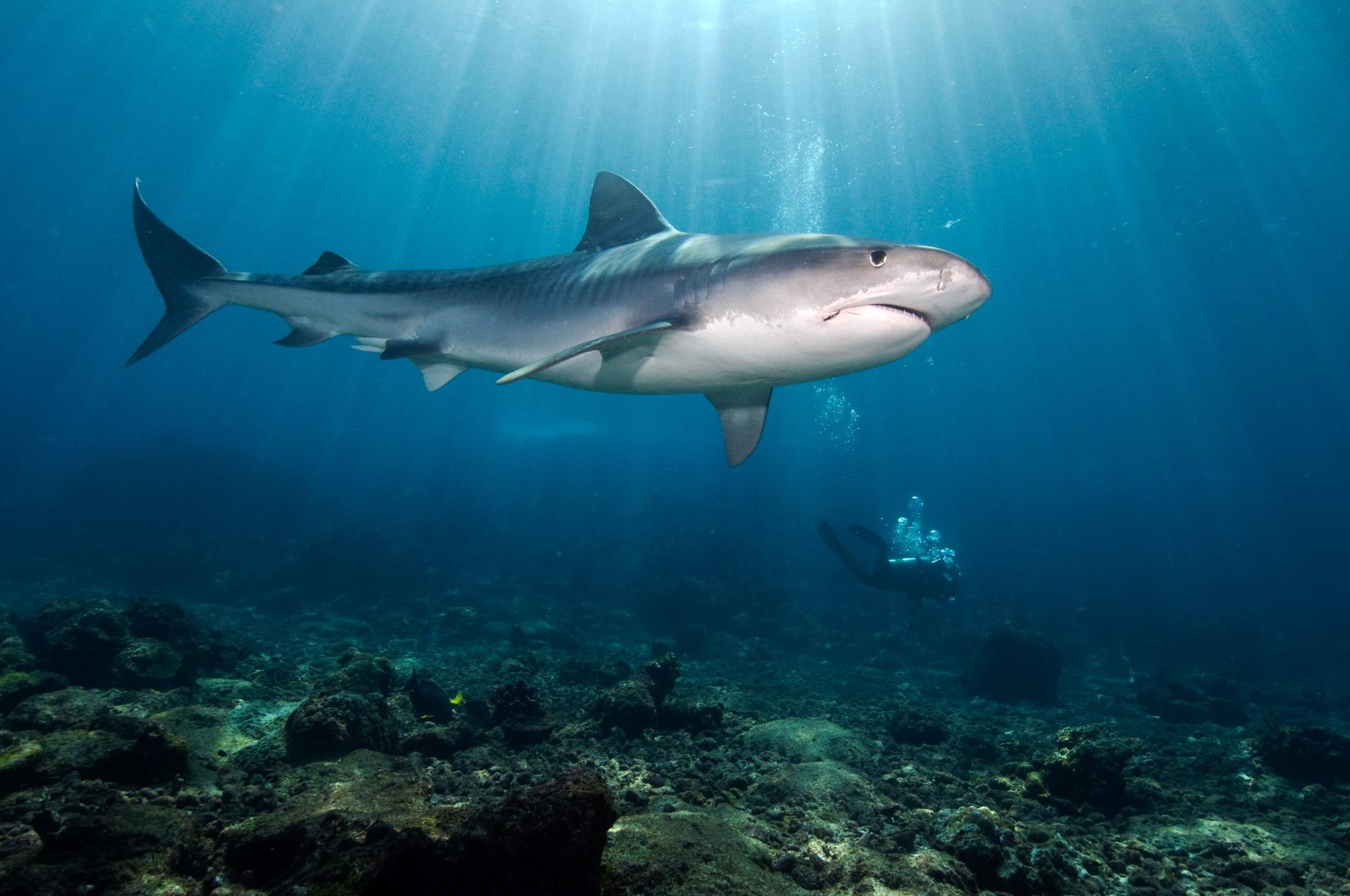
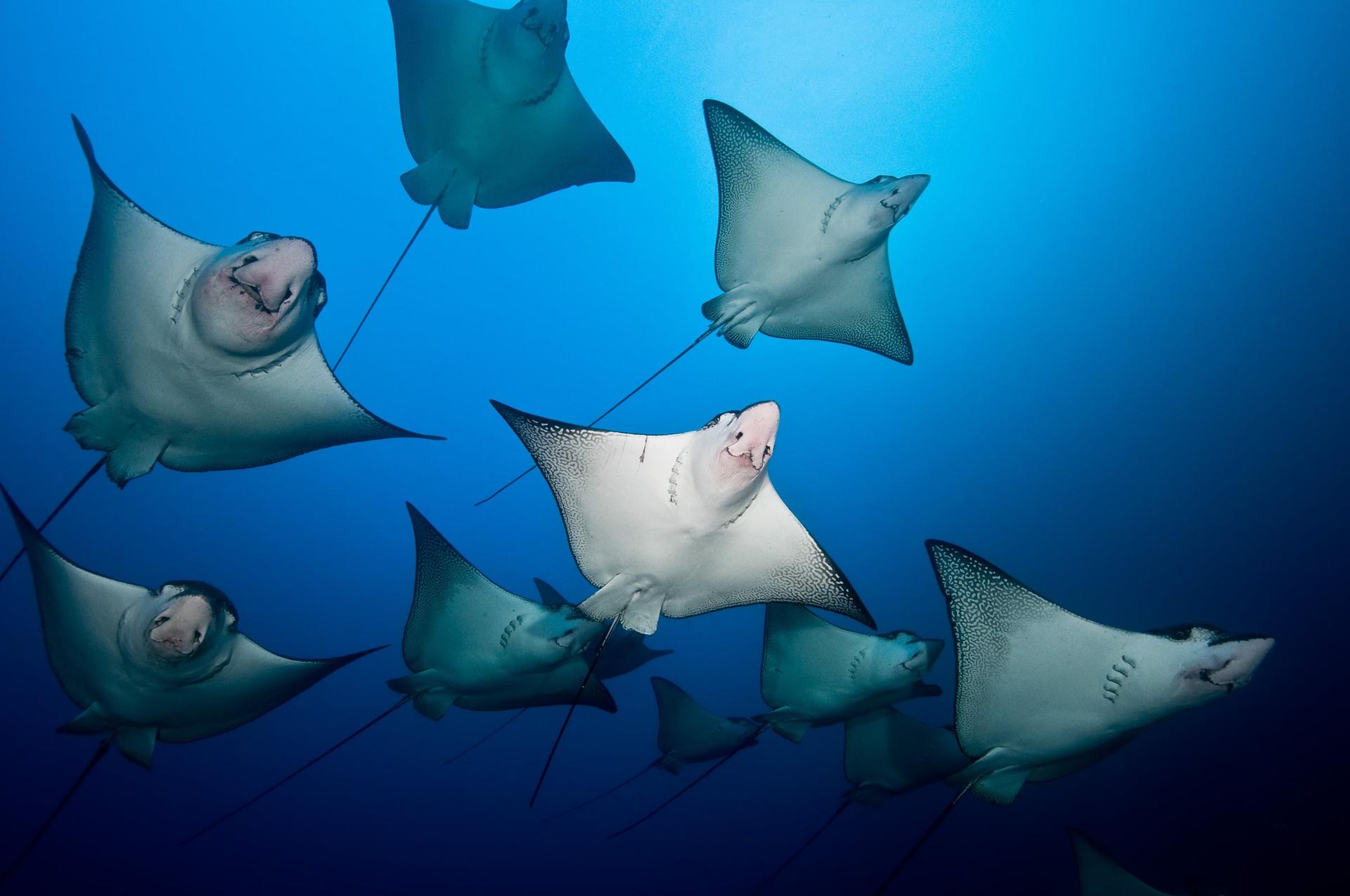
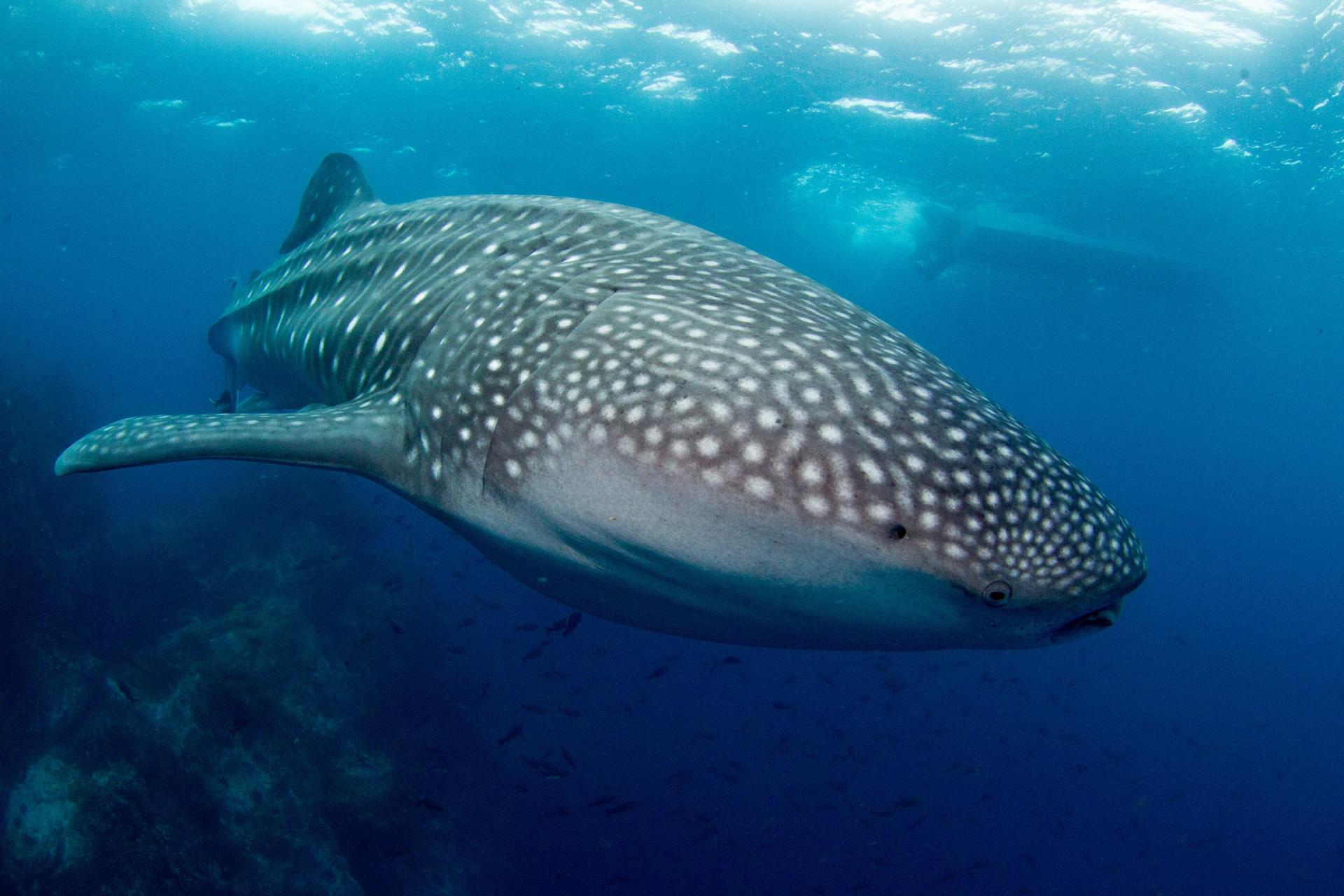
The marquee sites you'll dive
Read before you go
Galápagos vs Cocos Island: Which Liveaboard Is Right for You
Two Eastern Pacific shark trips with very different shapes. An honest comparison of the crossings, the diving, the seasons, the fees and the real cost per night, and who should book which.
When to Dive Cocos Island: Wet Season, Dry Season and the Hammerhead Math
Cocos Island seasons explained honestly: wet-season hammerhead schools vs dry-season comfort, month-by-month conditions, the 32 to 36-hour crossing, and booking lead times.
Cocos Island: The Definitive Guide to Hammerhead Heaven
Cocos Island is 32 to 36 hours of crossing each way for the chance to dive with schools of hundreds of hammerheads. Here is everything you need to know to decide if the trip is right for you, how it compares to Galápagos, and what it actually costs.
What a Cocos Island Trip Really Costs (and Why It Sells Out a Year Ahead)
The honest all-in budget for a Cocos Island liveaboard: fare, park fee, flights, the 32 to 36-hour crossing, and why the good dates are gone well over a year out.
Cocos Island diving — common questions
How do you get to a Cocos Island liveaboard?
Fly to San José (Juan Santamaría International Airport, SJO) and arrive at least a day before the boat sails. Airport transfers and hotel nights aren't part of the trip. On departure morning, usually between 8:00 and 13:00, the operator collects you from a set list of San José hotels and drives you about 2.5 to 3 hours to the dock in Puntarenas, then brings you back to San José after breakfast on the last day. The operator recommends one more night on land before you fly home, in case of delays. Costa Rica asks every visitor for a valid passport and a return or onward ticket. Citizens of the US, Canada, the EU and many other countries need no visa for a tourist stay; check the rules for your passport.
What do you pay locally on a Cocos Island liveaboard?
The Cocos Island National Park fee is charged per person per trip and depends on its length: US$554 for 10 nights, US$633 for 11 and US$791 for 13. It is paid before the trip, not on board. The operator's own terms list the road and boat transfer from San José at US$100 per person; we confirm on your booking whether your fare already covers it. If Costa Rica's diesel price passes a set level, the operator can add a fuel surcharge, announced 60 days before departure and paid on board. Meals, drinks including beer, nitrox, 12-litre tanks and weights are included. Rental gear is extra (on a 10-night trip, US$90 each for a 5 mm wetsuit, a BCD or a regulator, and US$120 for a nitrox computer), and crew tips are not included. Dive-specific insurance that covers evacuation is compulsory; a general travel policy with diving cover isn't accepted.
How experienced do I need to be, and what wetsuit should I bring?
The boat we sell asks for Advanced Open Water or equivalent and at least 50 logged dives, plus Nitrox certification on 13-night trips, and the operator strongly recommends the Deep Diver specialty. Expect negative entries, descents in open water, and long waits holding position on rock at 25–30 m while current runs past; conditions can change within a few hours. A dive computer is compulsory, and every diver is given a large surface marker buoy, a whistle, a light and a GPS locator. The surface is about 24–29°C, but thermoclines can be several degrees colder. The operator recommends a 5 mm full wetsuit and says a hood isn't needed, though divers who feel the cold often add one. The boat's 12-litre tanks have yoke valves, so bring a DIN adaptor if your regulator is DIN.
Why do Cocos Island trips book up so far ahead?
Only a few liveaboards dive Cocos, each takes about 20 divers, and the boat we sell runs its Cocos trips only from May to December. Many guests come back and rebook their favourite weeks early, and the peak hammerhead months from June to October go first. 2027 is all but full, with only the odd last place, our first sailing with wider space is in May 2028, and 2029 dates are open across the season. If a particular month matters to you, plan 18 months to two years ahead. You can hold a place free for 72 hours while you arrange flights and time off.
How much does a Cocos Island liveaboard cost?
Our listed Cocos Island liveaboards currently run from €6,921 to €9,929 per person sharing, for 10–13 nights (about €692 a night at the lower end). Park fees, nitrox, equipment rental, crew tips and flights are usually extra. Live prices and dates are on our Cocos Island calendar.
How long is a Cocos Island liveaboard?
The trips we list run 10 to 13 nights. Longer itineraries reach more remote sites and give you more dives for the travel time.
When do Cocos Island liveaboards run?
We currently list Cocos Island departures in May, Jun, Jul, Aug, Sep, Nov, Dec. Availability changes week to week; the calendar shows every listed date with space.
How do I book a liveaboard trip to Cocos Island?
Start by reaching out through our concierge service with a short brief — your dates, experience, and what you want from the trip. We'll shortlist trusted boats, check availability, and come back to you personally.
Bookable Cocos Island dates
Ready to dive Cocos Island?
Trips from €6,921 per person
Share a short brief and we'll shortlist trusted boats, check availability, and come back to you personally.