Do You Need Dive Insurance for a Liveaboard?
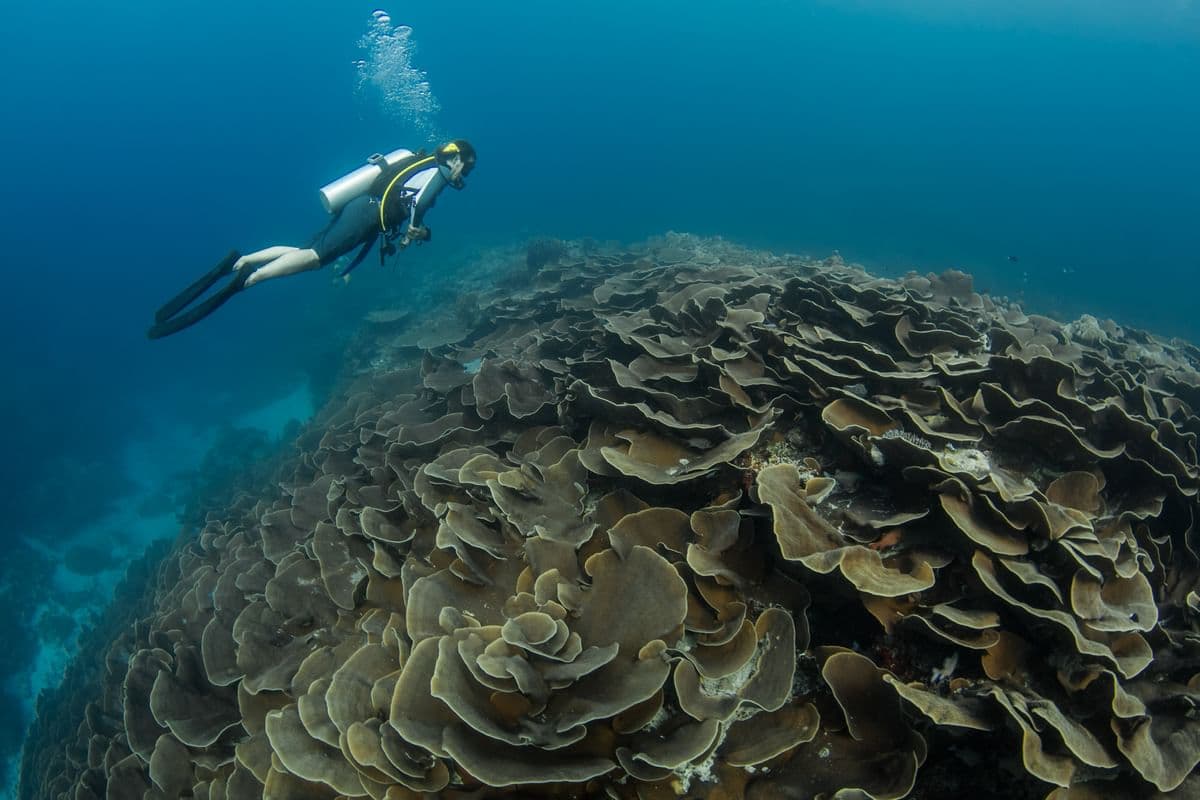
Short answer: yes. On many boats it isn't optional anyway. Many operators will not let you dive until someone has seen proof of dive accident cover, and on the most remote itineraries that check happens before the first dive.
The longer answer is more useful, because "dive insurance" covers three quite different products, and the gap between them is where divers get caught. This guide explains what each one pays for, where ordinary travel insurance stops, and what to have with you on the boat if something goes wrong.
What dive accident insurance actually covers
Dive accident insurance exists for one job: paying for the treatment and transport that follow a diving injury. The core of a good policy looks like this:
- Hyperbaric treatment. Recompression in a chamber for decompression illness or arterial gas embolism, plus the physician and hospital charges around it. A serious case rarely ends with one session.
- Emergency evacuation. Getting you from the boat to the nearest suitable chamber or hospital. That can mean a speedboat, a helicopter, a fixed-wing air ambulance, or several of those in sequence.
- Follow-up and logistics. Extra nights ashore when you can't fly, a changed flight home, sometimes the cost of a companion staying with you.
- 24-hour medical assistance. A hotline staffed by people who understand diving medicine and can talk to the crew, the chamber and the hospital on your behalf.
Some plans add lost or damaged dive equipment after a covered accident, disability and death benefits, and limited non-diving medical cover while abroad.
What dive accident insurance usually does not do is refund your trip. If you break a leg two weeks before departure, that is a travel insurance claim, not a dive insurance one.
Why a liveaboard makes evacuation the big number
On a day boat, an injured diver is often back at the jetty within the hour and in a chamber the same day. A liveaboard changes the geography. The boat may be a full night's steaming from the nearest port, with no airstrip in between, and the chamber may be a domestic flight beyond that.
Some examples from destinations we sell:
- Cocos Island is a 36-hour crossing from the Costa Rican coast. Once you are at Cocos, the first leg of any evacuation is often the voyage itself.
- Socorro sits roughly a day's crossing south of Cabo San Lucas, in open Pacific water.
- The Galápagos northern sites, Darwin and Wolf, are an overnight run from the central islands. Operators there describe some sites as a full day's sail from the nearest chamber, on Santa Cruz.
- Egypt's deep-south routes can put you many hours by boat from the nearest chamber, even though the Red Sea coast as a whole is well served.
Cost estimates for these evacuations vary widely, so treat any single figure with caution. DAN's own guidance states that an emergency medical evacuation starts at around US$25,000 and can cost much more. One case DAN has described publicly, a diver moved by helicopter from a Fijian island to Suva and then by air ambulance to Australia, came to more than US$110,000 for the two flights. Distance, aircraft type, medical crew and the number of legs all push the bill up. Chamber treatment on top of that is billed per session, and a bad bend can need several.
The honest summary: evacuation is the line on the bill that most people cannot pay out of savings, and it is exactly the line that standard travel cover handles worst for divers.
What travel insurance often excludes
Plenty of travel policies say they "include scuba diving". Read the wording, because the inclusion is usually narrow:
- Depth caps. DAN notes that most travel policies which cover diving at all exclude dives deeper than 30 m (100 ft). Some set the limit shallower. A single dive past the limit can be enough for a claim to be refused, even if the injury followed a later, shallower dive. That has happened in at least one published complaints case.
- Certification-level limits. Some insurers cap depth at your qualification: 18 m for an entry-level open water diver, 30 m with an advanced card. If you are certified to 18 m and the itinerary includes 28 m walls, you are effectively uninsured on those dives.
- Uncertified or unsupervised diving. Try-dives are often covered only under direct instruction, and some policies require you to dive with a guide or a certified buddy.
- Gas and technique. Policies are frequently silent on nitrox, and decompression diving, rebreathers and technical gas mixes are commonly excluded. If nitrox is part of your plan and the wording doesn't mention it, ask the insurer in writing.
- Flying after diving. Some policies exclude claims if you fly within a set period after your last dive, commonly 24 hours.
- Pre-existing conditions. An undeclared medical condition can invalidate a claim. Declare everything, even if it feels unrelated to diving.
- Diving as the main purpose. A few policies cover diving only as an incidental activity. A week on a liveaboard is not incidental.
None of this makes travel insurance useless. You still need it, for different reasons.
Three ways to get covered
1. Dedicated dive accident insurance. Sold by specialist dive insurers, either per trip or annually. It is built around chamber treatment and evacuation, with depth limits set for divers (or none on higher tiers). It typically does not cover trip cancellation, so it is usually paired with a travel policy.
2. Travel insurance with a diving add-on. One policy for everything: cancellation, baggage, general medical and diving. This can work well, provided the diving section matches your trip on depth, certification, gas and evacuation limits. Check that the evacuation limit isn't cut by a lower sub-limit for "hazardous activities".
3. Membership schemes, mainly DAN. Divers Alert Network is a non-profit dive safety organisation that runs as a family of independent regional bodies: DAN America, DAN Europe, DAN Asia-Pacific, DAN Japan and DAN Southern Africa among them. You join the one that covers where you live, and the products differ between regions:
- DAN Europe (for residents of Europe, the Mediterranean and Red Sea countries, the Middle East and nearby regions) sells membership plans that combine dive accident insurance with the membership. DAN Europe states that membership also includes travel insurance for medical emergencies abroad, including evacuation and repatriation, for trips of up to 30 days on most plans. Its higher sport plans state no depth or breathing-gas restrictions; check the entry plan's limits if you dive deep or use mixed gas.
- DAN America separates the two. Membership includes emergency evacuation and travel assistance, with published limits of up to US$150,000 on the regular level and US$500,000 on the enhanced level. Dive accident insurance, which covers chamber treatment and hospital charges, is bought separately on top of membership, and DAN describes it as secondary cover. DAN America also sells separate travel protection for trip cancellation.
DAN runs 24-hour emergency hotlines, funds dive-medicine research and offers a medical information line for non-emergency questions. DAN is not the only good option, though, and the best choice depends on where you live, what you dive and what your travel policy already covers. Compare the wording, not the brand.
Cancellation and curtailment: the part divers forget
Liveaboard fares are usually paid well in advance, and boats sail with or without you. Our own terms are clear: bookings are non-refundable from confirmation, a common arrangement for liveaboards, because operators pay park fees, permits and cabin allocations forward at confirmation.
That makes travel insurance with trip cancellation and curtailment the only realistic way to recover the cost if you fall ill before departure, a family emergency stops you travelling, or you have to leave the trip early. Points to check:
- The cancellation limit covers the full trip cost: fare, flights, hotel nights and any park fees paid in advance.
- Cover starts when you pay, not when you travel. Buy it at the time of booking.
- Curtailment pays for the unused part of the trip if you are evacuated or sent home.
- Missed departure is covered. A liveaboard leaves on a fixed day; a delayed connection can mean missing the whole trip.
Weather is a separate question, and operators handle it differently. There's more on that in what happens if weather cancels your liveaboard.
Operators that require proof of cover
Requirements are set by the operator, not by us, and they vary by region and fleet. As a general pattern:
- Remote Pacific itineraries. Cocos and Galápagos operators commonly make dive accident insurance with evacuation cover a condition of diving, and some ask to see it before the first dive. Socorro operators often ask for it too.
- Several large fleets make both dive insurance and travel insurance a condition of booking on every trip they run.
- Egypt varies by operator. Some require proof of dive and travel insurance at check-in, with recompression and air evacuation named explicitly.
Some operators also ask that your policy covers the depths in the itinerary and matches your certification level. Check the certification requirements by destination alongside the insurance terms, as the two are often linked.
A checklist before you buy
| Check | What good looks like | Why it matters on a liveaboard |
|---|---|---|
| Hyperbaric treatment | Covered, with no low per-session cap | A serious bend can need several treatments |
| Emergency evacuation | High limit, air ambulance and helicopter named | Remote boats can mean multi-leg transfers |
| Depth limit | At or beyond your planned maximum, and your cert level | One dive over the limit can void a claim |
| Nitrox and gases | Nitrox explicitly included; tech covered if you need it | Many policies are silent; silence is not cover |
| Geography | Your destination and the waters you'll cross | Some plans exclude regions or charge more |
| Trip cancellation | Covers the full non-refundable cost | Liveaboard fares are usually paid in full in advance |
| Curtailment and missed departure | Both included | Boats sail on a fixed date |
| Pre-existing conditions | Declared and accepted in writing | An undeclared condition can invalidate a claim |
| 24-hour assistance | A dive-medicine hotline, not just a call centre | The crew needs someone to talk to at 3 a.m. |
| Flying after diving | No exclusion, or one you can live with | Some policies set a 24-hour window |
Notes for EU, UK and US travellers
EU and EEA residents. The European Health Insurance Card is valid in the EU, Iceland, Liechtenstein, Norway, Switzerland and the UK. The European Commission states plainly that it is not an alternative to travel insurance: it doesn't cover private healthcare or return flights home. It is no help at all in Egypt, the Maldives, Indonesia, Mexico or Ecuador.
UK residents. The NHS is equally clear that the GHIC is not a replacement for travel insurance and does not cover medical repatriation or treatment in a private facility. It works mainly in the EEA plus a short list of other places, and it is no use in Egypt, the Maldives, Indonesia or the eastern Pacific.
US residents. Medicare states that it usually doesn't cover health care while you're travelling outside the US, with narrow exceptions. Many private health plans also limit overseas or diving-related claims. Check yours before you rely on it.
What to have with you on the boat
Insurance only helps if the people handling the emergency can reach your insurer quickly. Before you sail:
- Write down your policy number and the insurer's emergency number, and give a copy to the cruise director at check-in. Keep a second copy in your dive log or with your certification card.
- Save the numbers offline on your phone. Offshore there is usually no mobile signal; the crew will rely on the boat's radio or satellite link.
- Know the sequence. DAN's advice is to call local emergency services first, then call DAN. In practice on a liveaboard, the crew starts oxygen and first aid and contacts their own shore support while someone calls your insurer. Dive insurers ask to be contacted as early as possible, because they coordinate and approve the evacuation and treatment.
- Carry your medical form and a list of medications, and tell the crew about any condition that matters.
There is more on how crews actually manage an incident at sea in our guide to emergency procedures on remote liveaboards.
The bottom line
Buy dive accident cover with a serious evacuation limit, and buy travel insurance with cancellation that matches the full value of the trip. Check depth, certification level and nitrox against the itinerary you have actually booked, not a generic one. Then put the numbers somewhere the crew can find them.
If you're weighing a remote trip and want to know what the operator will ask for before you commit, our concierge can check the boat's requirements for you.
