Galápagos Liveaboard or Land-Based Diving? How to Choose
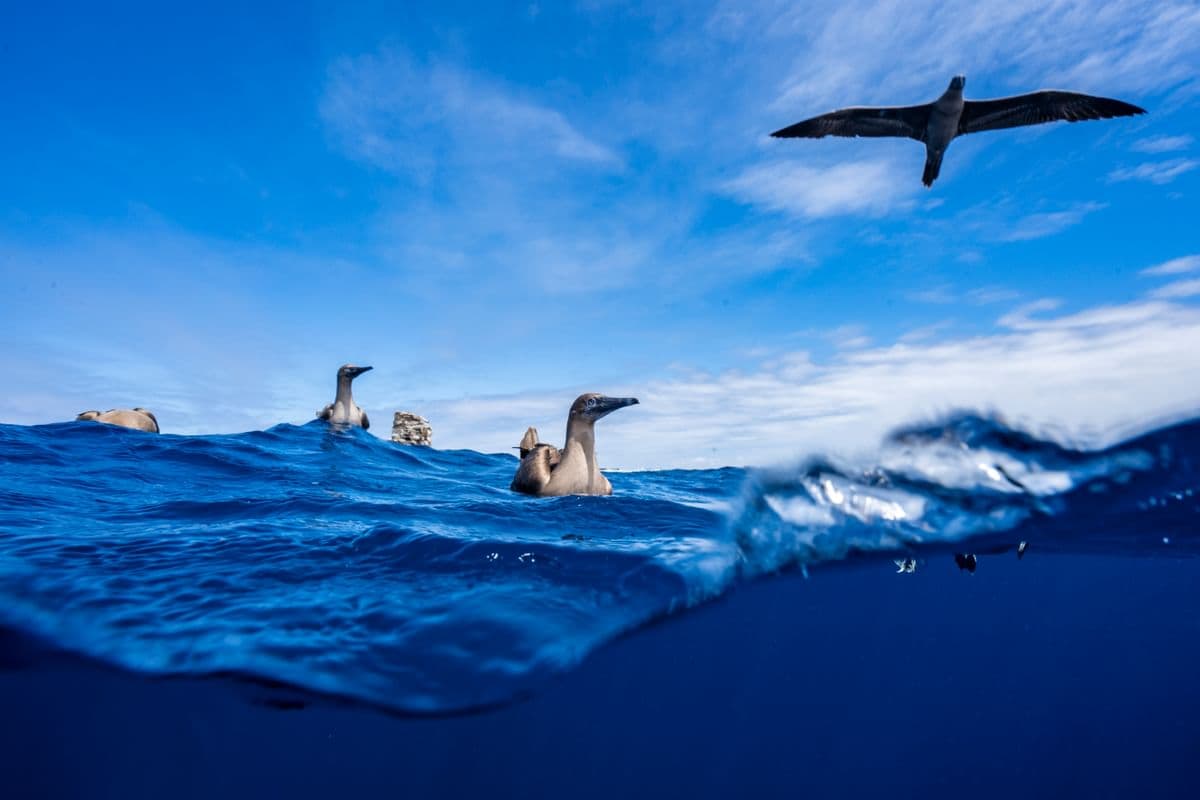
The Galápagos can be dived two ways, and they are two different trips. A dive liveaboard goes to Darwin and Wolf, in the far north, where the hammerhead schools and the whale sharks are. Land-based diving means a hotel on Santa Cruz or San Cristóbal and a day boat to the central sites. Day boats cannot reach the north.
So the choice turns on two things: whether Darwin and Wolf are the reason for the trip, and whether your diving is ready for them. This guide goes further than the Galápagos line in our general guide to liveaboard or resort diving. For a good many travellers the land-based trip is the right one, and we say where.
The short answer
| Dive liveaboard | Land-based day diving | |
|---|---|---|
| Where you dive | Darwin and Wolf, plus central and, on most routes, western sites | Central sites within a day boat's reach of Santa Cruz or San Cristóbal |
| What you are likely to see | Schooling hammerheads all year. Whale sharks at Darwin, mainly June to November. Galápagos and silky sharks, sea lions, and marine iguanas feeding underwater on routes that go west | Sea lions, turtles, rays, whitetip reef and Galápagos sharks. Hammerheads at Gordon Rocks and sometimes at Kicker Rock |
| Dives a day | Up to four at Darwin and Wolf, fewer on other days | Usually two |
| What operators typically ask for | Advanced Open Water and 50 logged dives, up to 100 on some boats, often a nitrox card, and experience in current and cold water | An Open Water card for the easier sites. About 25 to 30 logged dives and a recent dive for Gordon Rocks |
| Time on land | Two short guided visits on the week we sell | Every afternoon and every non-diving day |
| How the bill is built | One fare for the cabin, meals and diving, from €4,696 per person. Park fee, fuel surcharge, nitrox and tips are added | A hotel by the night, meals in town, and each diving day paid as a two-dive trip. The park fee applies too |
The fare is today's lowest in our calendar for a confirmed sailing with space, per person sharing a cabin.
Take the liveaboard if the hammerhead schools and whale sharks are the point of the trip and you meet the requirements. Dive from land if you are not there yet, if you are travelling with a non-diver, if you have less than a full week, or if you want the islands as much as the water.
What only the liveaboard reaches
Darwin and Wolf are two small islands at the northern edge of the archipelago, a long overnight crossing from the central islands. There is no landing for visitors and no day boat. Every dive there is made from a liveaboard that holds a national park permit for the route.
Scalloped hammerheads school in the current along the walls all year, in their largest numbers from June to November. Whale sharks pass the reef at Darwin in the cool season, most reliably from June to October. Galápagos and silky sharks are there in every month. A seven-night trip spends two to three days in the north, with up to four dives a day.
Most routes also go west, to Fernandina and Isabela, where the water is coldest. Marine iguanas feed underwater at Cabo Douglas, most easily watched from December to May, and ocean sunfish are a chance at Punta Vicente Roca in the cool season. Day boats from the towns do not normally reach these sites either. Routes vary by boat and week: our Galápagos liveaboards page has the detail.
The week has its costs beyond the fare: two short land visits, long crossings that can be rough from June to November, and on most boats no night dives.
What land-based diving gives you
Day diving runs from two towns, and you dive only the sites within reach of the island you sleep on.
From Santa Cruz, the day boats go to North Seymour, Mosquera, Daphne and Gordon Rocks, and on some days further, towards Bartolomé or Floreana. North Seymour and Mosquera are where operators usually take divers first: sandy slopes with garden eels, whitetip reef sharks, rays, turtles and sea lions. They are open to Open Water divers, though the current can be strong on some days. Gordon Rocks is the demanding one, a flooded crater with strong, shifting current and surge. Day operators commonly ask for about 25 to 30 logged dives and a recent dive before they take you there, and some want Advanced Open Water.
From San Cristóbal, the dive is Kicker Rock, León Dormido in Spanish: two walls and a channel with Galápagos sharks, rays, turtles and, now and then, hammerheads. Day operators take certified divers there with modest minimums. We would still call it an intermediate dive. Isla Lobos, closer to the harbour, is shallower and easier, with sea lions.
Sea lions join many of these dives, and marine iguanas sit on the shore of the inhabited islands. Gordon Rocks is the central islands' most reliable hammerhead site, sometimes with schools, but the large schools are in the north. A whale shark in the central islands is rare luck.
The limits are these:
- Two dives a day, with the surface interval on a small boat.
- Time in transit. For the northern Santa Cruz sites you cross the island by road to the Itabaca Channel and board there. Kicker Rock is 45 minutes to an hour and a half by boat each way, depending on the boat and the sea.
- The sea decides. The operator confirms the site on the day, and swell or current can change the plan at short notice. Keep a spare day.
- One island at a time. Changing island means a public speedboat, about two hours between Santa Cruz and San Cristóbal, with your bags and your dive kit.
In return you get the islands: afternoons and non-diving days are free for the giant tortoises in the Santa Cruz highlands and the walks and beaches near the towns, and a non-diver can do all of it with you.
The water is cold either way
Around the central islands the surface is about 25 to 28°C at its warmest, from February to April, and about 20 to 23°C at its coldest, from August to October. Darwin and Wolf run a degree or two warmer. The west is colder, down to about 17°C in the cool season, and thermoclines can drop to 16 to 18°C at depth in any month.
On a liveaboard a 7 mm wetsuit with a hood is the usual choice all year. For day diving a 5 mm with a hood is a sensible minimum, and 7 mm in the cool months. Our Galápagos season guide goes month by month.
A naturalist cruise is not a dive trip
Most visitors see the Galápagos on a naturalist cruise: a ship with guides that lands on a different island each day. These ships do not run dives. Diving in the marine reserve is licensed separately, and a vessel on a cruise permit cannot offer it. The dive liveaboards are a small, separate fleet with their own permits and itineraries, and they are allowed only a few land visits.
If you want the land wildlife in full and some diving, the workable plan is a naturalist cruise with day dives from Santa Cruz or San Cristóbal before or after it. If you want Darwin and Wolf, it is a dive liveaboard. Every dive in the reserve, from a liveaboard or a day boat, is led by a guide licensed by the national park.
Which suits you
You are ready for Darwin and Wolf. Boats typically ask for Advanced Open Water and at least 50 logged dives, and some ask for 100, more often in the cool season. A nitrox card is often required. The number matters less than what is behind it: negative entries, holding position on rock in current, sending up a surface marker buoy from depth, and staying comfortable in a 7 mm suit over three or four dives a day. If that describes you, take the boat: June to November for whale sharks and the largest schools, December to May for warmer, calmer, clearer water.
You are not ready yet. Dive from land first. A few days at North Seymour, Mosquera and Kicker Rock in cold, moving water is real preparation, and you still see sharks, rays and sea lions. Then come back for the north. Our requirements guide compares routes, and your first Galápagos liveaboard lists what to practise.
You are travelling with a non-diver. Land-based. On a Darwin and Wolf week a non-diver gets two land visits and a lot of open sea. From a hotel they have the islands every day, and at Kicker Rock snorkellers often share the boat with the divers, in their own group with their own guide.
You are short on time. Land-based. Almost all the liveaboard trips we list are seven nights on fixed dates, with a night on the mainland before the island flight. Four or five days in the islands leave room for two or three days of day diving.
Combining land days and a boat week
The land days belong before the boat.
Arrive early. The trips we list board at San Cristóbal. Two or three nights there first give you a margin against a late flight or a missing bag, and time for a day dive at Kicker Rock. On that dive you sort out your weighting in a thick suit and feel the cold water before the demanding days.
Or start on Santa Cruz. See the tortoises in the highlands, dive North Seymour or, if you have the dives, Gordon Rocks, then take the public speedboat to San Cristóbal the day before the boat sails, not the same morning.
Afterwards, mind the flight. DAN's guidance is to wait at least 18 hours before flying after several days of diving. On the week we sell, the last dive is on the morning of day seven and you leave the boat on day eight, so the interval is kept. If you add day dives after the boat, leave a full day without diving before you fly. Quito is at about 2,800 m, so a night there counts as going to altitude: keep the same interval.
What it costs, in words
A liveaboard fare covers the cabin, the meals and the diving. Outside it are your flights, the national park entrance fee paid in cash on arrival, the Transit Control Card paid at the mainland airport, a fuel surcharge, nitrox, any rental gear and crew tips. Our Galápagos cost guide itemises them, and the first-trip guide gives the two government charges and the airport sequence.
A land-based trip is built from a hotel by the night, meals in town, each diving day paid as a two-dive trip, and land tours paid separately. The park fee and the transit card apply to every visitor. A few days of land-based diving cost far less than a liveaboard week, but there is no land-based price for Darwin and Wolf, because no day boat goes there.
Galápagos dates with space
The next sailings with space, live:
| Date | Destination | Route | Nights | From |
|---|---|---|---|---|
| 30 Nov 2026 | Galápagos | Darwin & Wolf | 7 | €5,208 |
| 21 Dec 2026 | Galápagos | Darwin & Wolf | 7 | €5,208 |
| 28 Dec 2026 | Galápagos | Darwin & Wolf | 10 | €9,483 |
| 7 Jan 2027 | Galápagos | Darwin & Wolf | 7 | €4,696 |
| 29 Mar 2027 | Galápagos | Darwin & Wolf | 7 | €5,367 |
| 12 Apr 2027 | Galápagos | Darwin & Wolf | 7 | €4,696 |
Every date is on the Galápagos calendar.
Four short questions
Can you dive Darwin and Wolf on a day trip?
No. Only liveaboards with a park permit for the route dive them.
Can a newer diver dive the Galápagos?
From land, yes, at the easier central sites with an Open Water card. The liveaboards to Darwin and Wolf typically ask for Advanced Open Water and at least 50 logged dives.
Will I see hammerheads on land-based dives?
Possibly, at Gordon Rocks above all, and more so from June to November. The large schools are at Darwin and Wolf.
Can I dive from a naturalist cruise?
No. Cruise ships on a naturalist permit do not run dives. Add day dives from Santa Cruz or San Cristóbal before or after the cruise.
Tell us your logged dives, your dates and who is travelling through the concierge, and we will say in writing whether the boat fits yet, and which month.
Related Guides
Related Articles
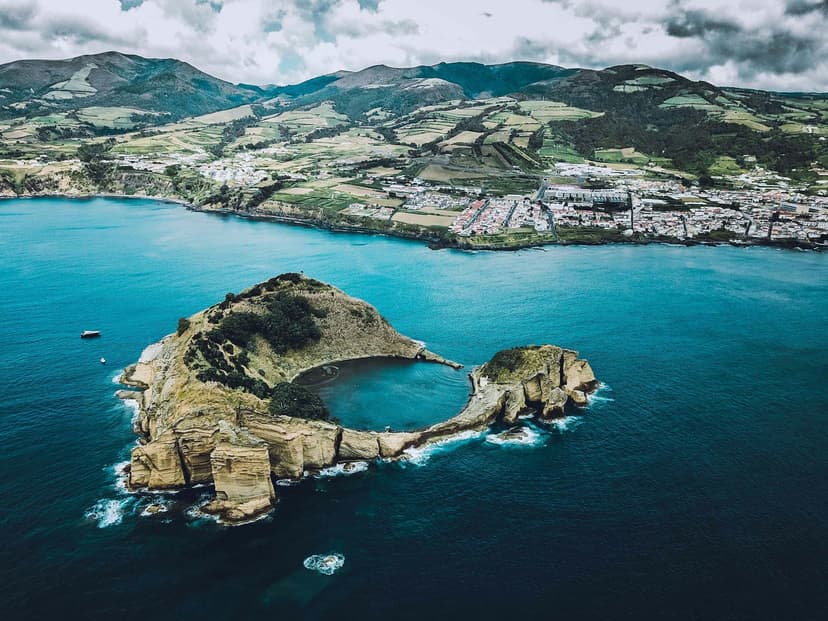
Diving the Azores: Blue Sharks, Mobulas and the North Atlantic's Largest Protected Network
In 2024 the Azores created the largest network of marine protected areas in the North Atlantic, about 287,000 km² of ocean that blue sharks, mobulas and sperm whales pass through. Here is why we think it is the most underrated diving in Europe, island by island and month by month.
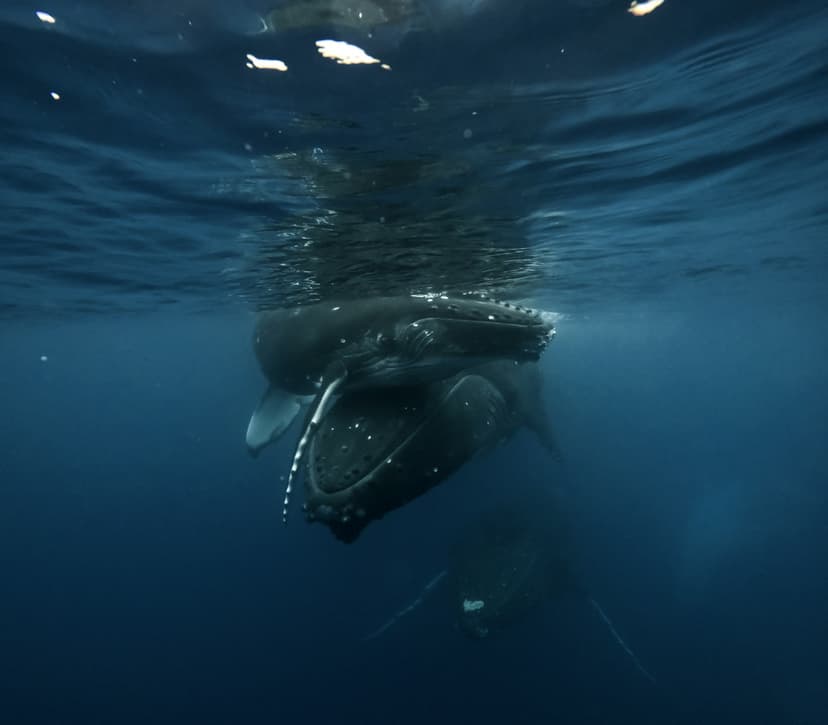
Cape Verde for Divers: Whales, Sharks, and the Atlantic Crossroads
Cape Verde sits where African, European and equatorial currents meet. The result: humpback whales in spring, juvenile lemon sharks in water you can wade into, nesting loggerheads in summer, and warm-water Atlantic diving most Europeans have never seriously considered.