Solomon Islands Diving Guide: Wrecks, Reefs, Seasons and the Two Boats
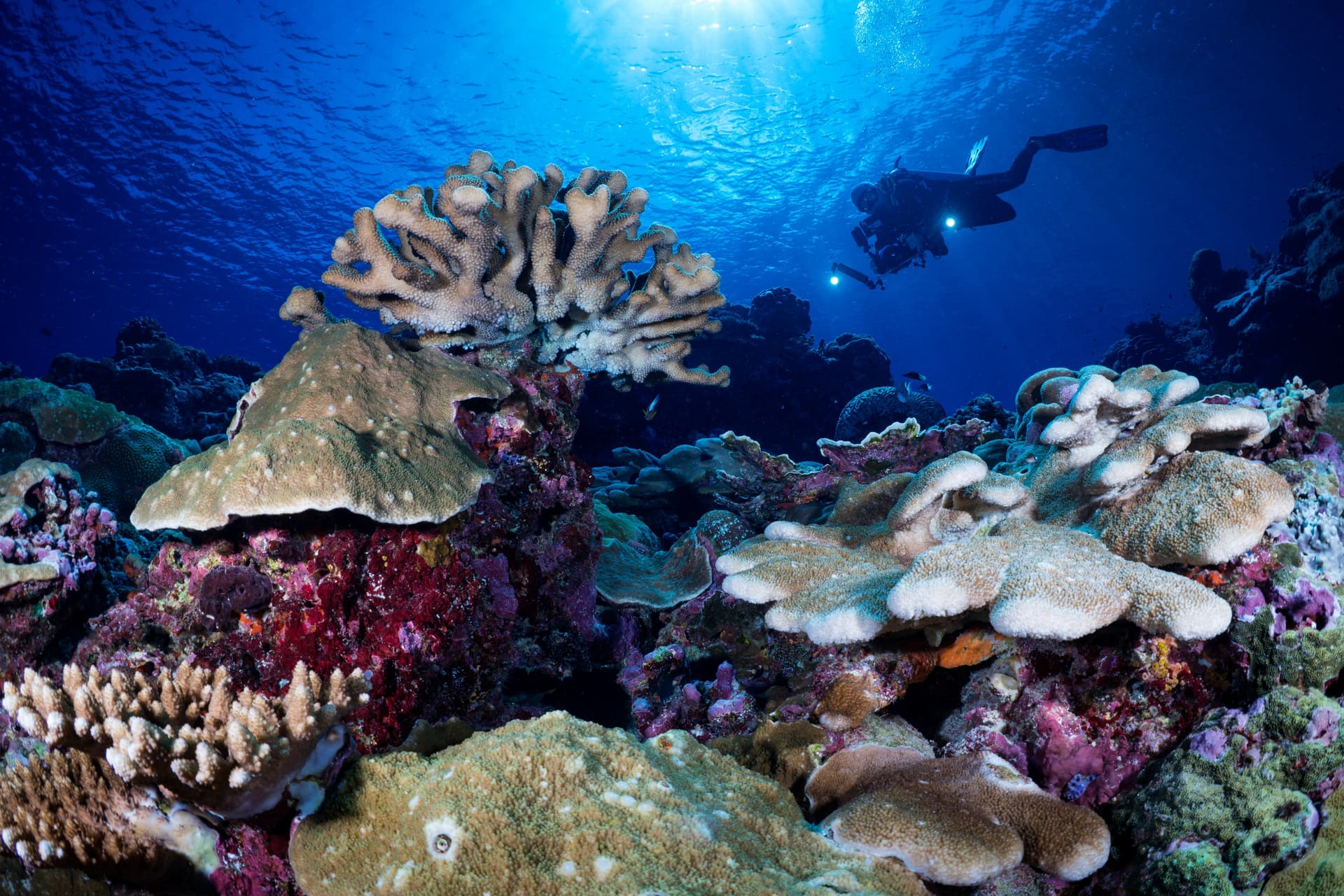
There is a particular kind of diver who keeps circling the Solomon Islands. They've done the Maldives, maybe Raja Ampat, and now they're hunting the place before the place got popular — reefs that were never crowded, wrecks nobody has stripped, and a boat small enough that the crew knows your name by day three. If that's you, this is your guide. Solomon Islands diving (which in practice means liveaboard diving) is one of the last genuinely uncrowded frontiers in the tropical Pacific, and it rewards divers who do their homework while quietly disappointing the ones who don't. My job here is to be the honest spine of the whole subject: what the diving is really like, the very short list of boats, what it actually costs, what you need to book it, and — the part the booking aggregators skip — who this trip is for and who should book somewhere else.
I run a small agency. I don't make more money if you pick the Solomons over anywhere else, so I've no reason to sell you the postcard. Let me give you the real one.
Here for dates and fares rather than background? See Solomon Islands liveaboard dates and prices: every departure we currently hold, with routes and trip lengths.
What Solomon Islands liveaboard diving is actually like
Start with geography, because it explains everything. The Solomon Islands sit in the western Pacific on the eastern edge of the Coral Triangle — roughly a thousand islands scattered across a swathe of ocean east of Papua New Guinea and northeast of Australia. There's almost no dive infrastructure: a handful of resorts, one or two proper liveaboards, and then a great deal of water, reef, and jungle-fringed island with nobody on it.
That lack of infrastructure isn't a bug. It's the entire reason the diving is what it is. Places get loved to death when they're easy to reach. The Solomons are not easy to reach, so the reefs have been left largely alone, the fish aren't skittish, and you can run a full ten-night trip and see another dive boat exactly never. The trade-off is real, and you should feel it in your bones before you book: this is remote, the seas can be lumpy between sites, and if something goes wrong medically you are a long way from a hyperbaric chamber. This is not a beginner's shakedown cruise dressed up as an adventure.
What you get in exchange is a spread of diving very few single destinations can match. On one day you can drift a reef pass thick with grey reef sharks in the morning, hunt world-class muck for a pygmy seahorse or a mimic octopus after lunch, and drop onto a WWII shipwreck lying where it sank in 1943 before dinner. The variety is the pitch. If you want the head-to-head with its more famous cousin, I've written a full Solomon Islands vs Raja Ampat breakdown — the short version is that Raja edges it on sheer fish density, while the Solomons win on wrecks, solitude, and that end-of-the-earth feeling.
For individual sites, our dive-site guides to Leru Cut, Grand Central Station, Devil's Highway and Twin Tunnels go deeper than I can here without this turning into a book.
The very short list of boats
Here's the fact that surprises most people researching Solomon Islands liveaboard options: there are essentially two mainstream boats. Not two dozen. Two. This is a tiny market, and pretending otherwise does you no favours. Getting the choice between them right matters more here than in any crowded destination, because there's no "book the next one down the list" — the next one down the list is the same two boats on different dates.
MV Bilikiki
The Bilikiki is the grande dame of Solomons diving. She's been running these waters for decades, is affiliated with the Emperor group, and has a homely, lived-in, unpretentious feel. The vibe is relaxed rather than polished — comfortable and characterful rather than boutique-hotel-afloat. Crucially, Bilikiki accepts Open Water certified divers, which makes her the more welcoming option for people who are confident but not yet deep into their logbook, or for mixed-ability buddy pairs.
What divers love about Bilikiki is the crew and the ease. She's been doing this so long that the operation runs like water finding its level. What you're not getting is the last word in modern fit-and-finish. If cabin luxury sits high on your list, keep reading.
Solomons Master
Solomons Master is run by Master Liveaboards and was refitted in 2016, so she's the more polished, more modern of the two — better-finished cabins, a more contemporary "premium liveaboard" feel throughout. The important operational detail: she leans toward divers with around 50 logged dives. That's not always a hard, published wall, but it tells you who the boat is really built for — divers with some current-and-drift experience under their weight belt.
So the real decision is rarely about the diving itself, which is drawn from the same extraordinary region. It's about you: your logged-dive count, your appetite for polish versus character, and your budget. I've put the two side by side in Bilikiki vs Solomons Master — if you're down to these two (and you are, because they're the list), read that before you put a deposit anywhere.
The third boat quietly leaving the room
You may still see references to a third vessel, Solomons PNG Master. Treat that with caution as you plan for 2026 and beyond: that boat is rebranding to Pacific Master and shifting its focus toward the Truk Lagoon and Bikini wreck-diving circuit rather than the Solomons. So the practical, honest count of boats dedicated to Solomons diving is back to two. Availability is genuinely tight as a result, and good weeks — especially in the prime season — sell out a year or more ahead. You can see what we currently have live on the departures calendar, and if the dates you want aren't showing, that's exactly the kind of thing to raise with us early rather than late.
What you'll actually dive
The marketing word for the Solomons is "biodiversity" — true, and also useless, because everywhere in the Coral Triangle claims it. Here's the specific version.
Reefs, macro, and muck
The hard-coral reefs are in genuinely excellent shape — this is one of the places you still surface grinning about coral cover rather than lamenting bleaching. Visibility on the good sites in the good months runs to a very pleasant range, though it swings with plankton and rain. Overlaid on that is some of the best muck and macro diving in the Pacific: the Solomons are a legitimate critter destination, not just a big-animal one. Pygmy seahorses, ornate ghost pipefish, nudibranchs, and a long roll-call of cephalopods keep macro shooters happy for entire trips. If you dive with a camera, this is a place that pays back patience.
Mantas on the Devil's Highway
The Solomons hold their own on manta diving. The signature is a site network divers call the Devil's Highway — a drift where, in the right conditions, mantas work the current. Let me hedge honestly here, because the internet won't: mantas are wild animals feeding wherever the plankton is, and no boat can guarantee them on your week. What I can tell you is that the Solomons are a credible manta destination, that the drift itself is a thrilling dive regardless, and that if a near-guaranteed manta fix is your single non-negotiable, you should weigh the Maldives alongside it. For the wider picture on where and when these animals show up, our manta ray sightings page tracks it across destinations.
Sharks at Uepi
For shark divers, the marquee sites cluster around Uepi and the passes of Marovo Lagoon. Grey reef sharks are the reliable staple on the reef passes, hanging in the current the way they do everywhere they're left alone. The bigger prize is hammerheads, a real possibility here — again, hedge your expectations, but the window is roughly May through August, when conditions line up. Schooling hammerheads are never a sure thing anywhere on Earth; the Solomons give you a legitimate shot without the crowds you'd fight for them elsewhere. Our hammerhead sightings page has the seasonal detail, and the broader sightings tracker is worth a look for planning around what you most want to see.
The wrecks of Iron Bottom Sound
This is the Solomons' trump card, and the reason a certain kind of diver books nothing else. The stretch of water off Guadalcanal known as Iron Bottom Sound holds one of the greatest concentrations of WWII wreckage on the planet — ships and aircraft that went down during the brutal 1942–43 Guadalcanal campaign, still lying where they sank. Diving them is sobering in the best sense: history you can swim through, much of it draped in coral and patrolled by fish that have made a battleship home. Depth and penetration vary enormously by wreck, and the deeper ones are firmly technical-diver territory, but there's genuine wreck diving here for recreational divers too. I've catalogued the sites in a dedicated WWII wreck diving atlas — if wrecks are your reason for coming, that's the piece to read next.
What it really costs
Let's talk money without the vagueness. A typical Solomons trip is a ten-night charter — longer than the seven-night norm you'll see in the Red Sea or Maldives, a function of how remote the diving is and how much water there is to cover. Expect roughly the following, all-in for the boat, before international flights:
| Item | Realistic range (USD) |
|---|---|
| 10-night charter (cabin, all diving, full board) | ~$4,500 – $7,000+ |
| Nitrox (if not included) | ~$150 – $250 |
| Marine park / area fees | ~$100 – $300 |
| Crew gratuities (customary) | ~10% of fare |
| Gear rental (per item, if needed) | varies — bring your own |
So the boat portion alone lands most divers somewhere in the $5,000–8,000 range once you add the extras — and that's before you've bought a single flight. This is not a budget destination, and I won't pretend otherwise. For a full line-by-line breakdown — including how cabin choice, season, and single-supplement pricing move the number — see our Solomon Islands liveaboard cost guide. If that figure made you wince, it's a fair signal to read is the Solomon Islands worth it for diving before you commit — an honest gut-check, not a sales pitch.
The Solomons are expensive for a reason that's also the reason to go: almost nobody is there. You're paying for solitude and pristine reef, not a marble lobby. If solitude isn't worth a premium to you, that's genuinely useful to know before you book.
Getting there — the logistics nobody sugarcoats
The diving is remote; the getting-there is the price of admission. You fly into Honiara (airport code HIR), the capital on Guadalcanal, and the two sane routings are via Brisbane, Australia or via Nadi, Fiji. From most of the world that means a long-haul to Brisbane or Fiji, an overnight or a tight connection, and then a shorter international hop into Honiara on a limited schedule.
A few honest planning notes:
- Flight frequency into Honiara is thin. Don't assume a same-day connection; build in at least one buffer night in Brisbane or Nadi on the way in, and ideally on the way out too. Missing your boat's departure because of a cancelled regional flight is a real risk here, not a hypothetical.
- Check visa and entry requirements for the Solomon Islands and your transit country — Australia's transit-visa rules in particular catch people out.
- Baggage allowances on the regional legs are tighter than on the long-haul carriers, and dive gear adds up fast. Confirm before you pack.
- Factor a rest night into your budget and your sanity. Nobody dives well jet-lagged and frazzled off a 30-hour door-to-door.
None of this is a reason not to go. It's a reason to plan the flights before you fall in love with a departure date. This is exactly the kind of thing worth handing to us — lining up the boat, the timing, and the connections so they actually work is most of what a good agency is for. Start a conversation through our concierge enquiry and we'll build the whole thing backwards from the dates that work.
Diving Solomon Islands requirements
Let's be concrete about the diving Solomon Islands requirements, because this is where the two-boat reality bites and where people get an unwelcome surprise at the deposit stage.
- Certification. Bilikiki accepts Open Water divers, which makes her the accessible option. Solomons Master leans toward around 50 logged dives. So your certification and, more importantly, your recent dive count directly shape which boat you can realistically book. If you're Open Water with a modest logbook and your heart is set on the Solomons, Bilikiki is your boat.
- Experience, honestly assessed. Regardless of card, this is a destination with real current on the reef passes and drift diving at the marquee sites. You want to be genuinely comfortable in current and doing negative-entry descents, not just technically certified. If your last dive was three years ago on a calm reef, book a refresher and a few local dives before you fly halfway around the world.
- Nitrox. Strongly recommended given the dive frequency and the depth of some sites. Bring your Enriched Air certification; it changes your bottom-time math meaningfully over a ten-night trip.
- Insurance. Non-negotiable, and I mean it. Given the remoteness and the distance to a chamber, dedicated dive insurance with emergency-evacuation cover (DAN or equivalent) is essential. Don't skip this to save a few dollars.
- Deep/tech ambitions. Many of the best Iron Bottom Sound wrecks sit deep. If penetrating them is your goal, you'll need the appropriate technical training and a boat/itinerary that supports it — flag this at booking, not on arrival.
If you're unsure whether your experience fits, that's a five-minute conversation, not a reason to talk yourself out of the trip. Tell us your cert level and rough dive count and we'll tell you straight which boat fits.
When to go
The Solomons dive year-round — there's no season when the boats stop. But conditions aren't uniform, and calm surface and clear water tend to trade against each other across the calendar. The clearest water runs roughly June to September, with August bringing the strongest trade-wind chop on the open crossings. The best balance of calm seas, clear water and comfort is April to June and October to November, which is where I point most first-timers. May to August overlaps with the better hammerhead odds at Uepi, and the Devil's Highway mantas are most reliable from roughly May to October. December to March is the wet season: the calmest surface and the fewest boats, but heavy rain, softer visibility and the cyclone window. Water sits at about 27–30°C all year, so a 3mm suit covers every month. The prime weeks book out furthest ahead. Our Solomon Islands diving season guide breaks it down month by month if you're trying to match your trip to a particular animal or condition.
Beyond the brochure: lagoons, reef owners and the practical stuff
Two older overview pieces of ours covered some of this ground. I've folded the parts worth keeping in here, so this is the one page to read.
Marovo Lagoon, the Russell Islands and the cast people forget
Marovo Lagoon, in the Western Province, is usually described as the world's largest saltwater lagoon, ringed by a double barrier reef, and it sits on UNESCO's tentative World Heritage list. The channels between its inner and outer reefs make current-swept walls in the 15–25 m range where pelagics come in off the blue, while the shallow gardens inside are some of the healthiest coral in the Pacific. Elsewhere, the Russell Islands and Mary Island add swim-throughs, caverns and big schools: bumphead parrotfish in herds, grey reef sharks and silvertips on the outer points, turtles asleep under table coral. Survey work in the Solomons has recorded close to 500 hard-coral species, which puts the country in the same conversation as Raja Ampat and Papua New Guinea.
The supporting cast is what makes a week here feel different: dugongs in the Marovo shallows, mandarinfish at dusk in sheltered bays, eagle rays on the walls, and mangrove channels where juvenile fish shelter in the roots and, now and then, a saltwater crocodile makes an appearance. They're generally not interested in divers. Your heart rate will disagree.
Reefs with owners
Most reefs in the Solomons are under customary ownership, and many villages manage their own water through tambu areas: community-declared no-take zones. Diving here supports a model where the people who live beside a reef decide how it's looked after. Ashore, ask before photographing people and follow your crew's lead on local custom. Under water, the same respect applies to the wrecks: they're war graves. Photos, not souvenirs.
Practical notes
- Water temperature: about 27–30°C all year. A 3mm suit is standard; some divers get by in a rash guard.
- Money: the Solomon Islands dollar (SBD). Card acceptance is limited outside Honiara and ATMs are scarce, so carry some cash, with Australian or US dollars as the easiest backup.
- Language: English is the official language; Solomon Pijin is what you'll hear most, alongside roughly 70 local languages.
- Connectivity: mobile coverage is patchy outside the towns. Tell people at home you'll be offline on the boat.
- Domestic flights: some itineraries start or finish in the Western Province, which means a Solomon Airlines hop from Honiara to Munda or Gizo. Schedules move, so build in slack.
- Health: malaria is present in the Solomons. See a travel doctor about prophylaxis well before you go; our is it worth it piece covers the malaria-and-diving question properly.
- Entry: many nationalities get a visitor permit on arrival, but check the current rules for your passport and for your transit country.
Who this trip is for — and who it isn't
Here's the part I promised, and the part most guides won't write plainly.
Book the Solomon Islands if you are: an experienced, confident diver who's done a liveaboard or two and wants something wilder; a wreck obsessive who's read about Iron Bottom Sound for years; a macro shooter chasing world-class muck without the crowds; someone who genuinely values solitude and pristine reef over polish and convenience, and who has the budget and the patience for the flights. If you tend to finish a normal reef trip feeling like the reef was a bit tame and a bit busy, the Solomons are calling you.
Look elsewhere if you are: a brand-new or long-lapsed diver who wants an easy, forgiving first liveaboard (the remoteness and current argue against it); a traveller who wants short flights and minimal hassle; someone on a tight budget for whom $5,000-plus of boat cost before flights is a stretch that would sour the trip; or a non-diving partner expecting a beach-resort holiday with a bit of snorkelling. On that last point — the Solomons can absolutely be a spectacular trip for a diving couple, but it's a diving trip first, and it works best when both of you are in the water. If your other half doesn't dive, the isolation cuts the other way.
If you're weighing the Solomons against somewhere gentler and more connected, that's a legitimate call, and I'd rather you make it now than at the deposit stage. Send us a short brief and we'll give you a fast, honest sanity-check on whether this is your destination or whether somewhere like Raja Ampat or the Red Sea fits you better right now.
And if it is your destination — if the two-boat reality, the ten-night commitment, the price, and the flights all read as features rather than warnings — then the Solomon Islands will give you a trip you talk about for the rest of your diving life. Tell us your dates and your logbook through the concierge, and we'll match you to the right boat on the right week and handle the awkward flight puzzle so you can just show up and dive.
Related Guides
- Solomon Islands liveaboard dates and prices — every departure we currently hold, with routes and trip lengths
- When to dive the Solomon Islands — sea state, visibility and wildlife, month by month
- Solomon Islands vs Raja Ampat — the honest head-to-head for divers deciding between the two frontiers
- Bilikiki vs Solomons Master — the two-boat decision, unpacked in detail
- Solomon Islands liveaboard cost — the full line-by-line budget breakdown
- Solomon Islands WWII wreck diving atlas — every major wreck in Iron Bottom Sound
- Is the Solomon Islands worth it for diving? — the gut-check before you commit
Related Articles
%20-%20Large.jpg&w=828&q=75)
Best Time to Dive: A Season-by-Season Guide
When to visit the world's top liveaboard destinations for the best conditions and marine life encounters.
Galápagos Diving: What to Expect on Your First Trip
Hammerhead highways, curious sea lions, and currents that demand respect — here's what awaits in the enchanted islands.