Leru Cut
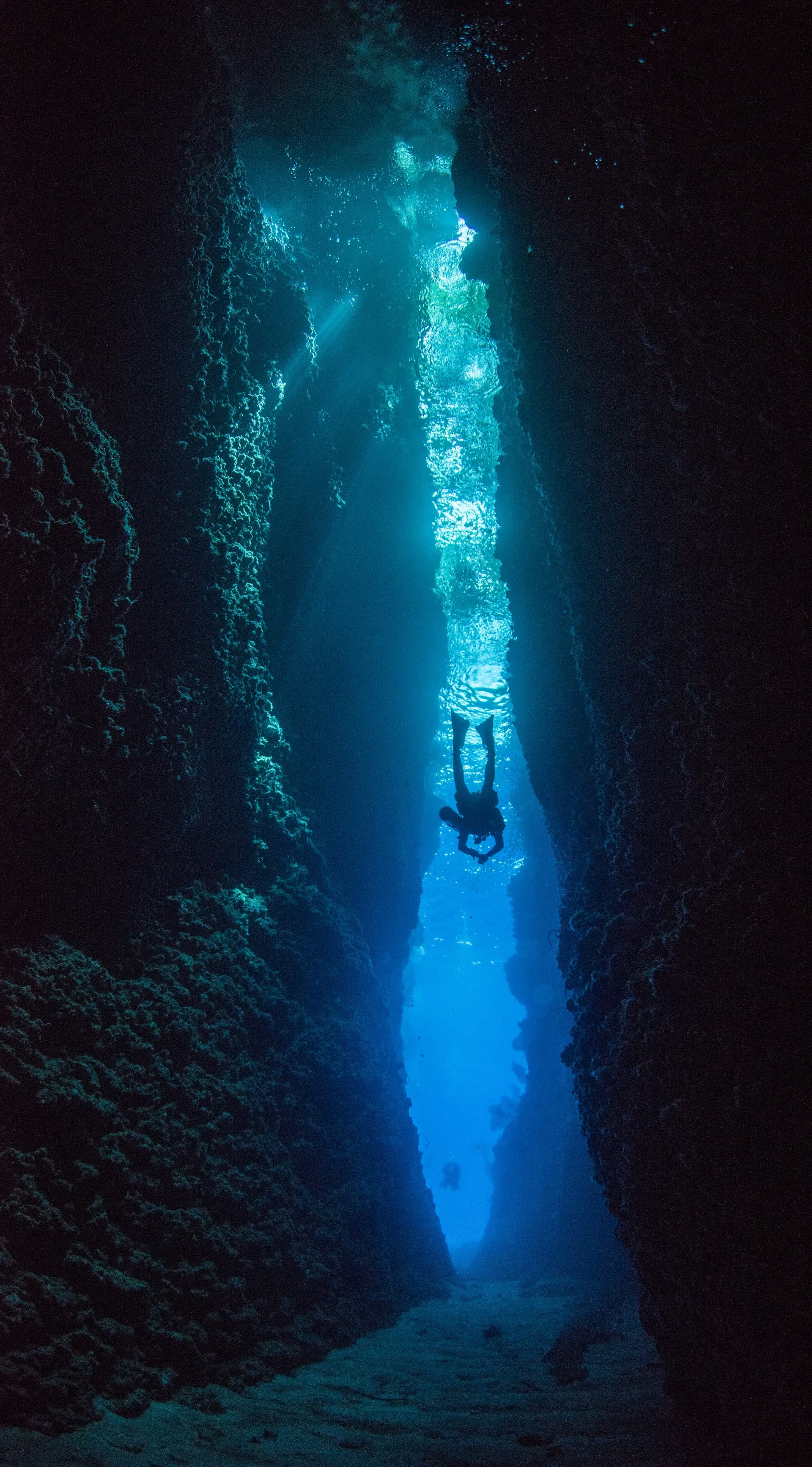
A jungle-walled fissure in the Russell Islands where the midday sun pours through in solid shafts — the single most photographed scene in Solomon Islands diving.
Leru Cut is not a dive you go to for big animals or a wall of soft coral. It is a dive you go to for light. This narrow crack slices roughly 100 metres straight into Leru Island in the Russell Islands, its vine-draped rock walls opening to the sky above so that, at the right hour, the sun drops into the channel in near-solid beams. It is one of those rare Solomon Islands sites where the photograph you have seen in a hundred magazines turns out to be entirely real, and easier to reach than you would expect. Leru Cut is a shallow, undemanding liveaboard dive that trades adrenaline for pure atmosphere, and it remains the destination's signature image for good reason.
Quick answer: Leru Cut is a boat dive from a liveaboard; jungle-walled canyon/fissure with light beams in Solomon Islands. Best season: Year-round; calmest seas and clearest water roughly April to November. Level: Open Water and up — an easy, shallow dive. Depth: 5m at the mouth, ~11m average, 23m maximum outside the cut. Typical visibility: Typically 15-30m, best on the outer reef.
Facts verified September 2026
What makes Leru Cut special
Most great dives are defined by what lives on them. Leru Cut is defined by architecture and light. The cut itself is a fissure that reaches back into the island for around 100 metres, in places barely wide enough for two divers to pass abreast, with sheer rock walls that climb out of the water and are hung with jungle vines and roots. Because the top of the passage is open to the air, the whole channel behaves like a natural cathedral: when the sun is high, it sends shafts of light angling down through the water and lighting the suspended particles, and you finning through them like a figure in a stage spotlight.
The interior is honestly rather bare — a sandy floor, little coral, and almost no fish once you are deep inside. That is not a flaw, it is the point. Leru Cut is a slow, contemplative dive where the payoff is the play of light on stone and water, and the sense of swimming into the heart of a rainforest island. Follow the cut to its far end and you can surface in a still, tree-shaded pool with the jungle closing overhead, then turn and drift back out toward the blue.
What you'll see
Set your expectations correctly and Leru Cut delivers. The marine life gathers at the mouth of the cut and along the outer reef rather than deep inside the fissure, so the richest fish action bookends the dive.
Outside and around the entrance you can expect the classic Solomon Islands reef community:
- Reef fish along the outer walls: butterflyfish, angelfish, hawkfish, parrotfish, rabbitfish and anemonefish
- Well-camouflaged scorpionfish tucked against the rock — look before you place a hand
- Clouds of fusiliers streaming over the reef, with snapper and trevally patrolling the edge
- The occasional grey reef shark cruising the deeper water just off the entrance
- Gorgonian fans and coral heads on the outer reef where photographers hunt for macro subjects
Conditions and who it's for
This is one of the most accessible signature dives in the Solomon Islands. Maximum depth outside the cut is around 23 metres, but the dive through the fissure sits comfortably in the 5-15 metre range, and current inside the channel is usually negligible. That combination makes Leru Cut suitable for divers of almost any certification level, including relatively new Open Water divers, and a gentle, no-stress dive for photographers who want to concentrate on their images rather than fight the conditions.
Two honest caveats. First, the passage is genuinely narrow, so good buoyancy matters — you do not want to be finning into a rock wall or kicking up the sandy bottom and killing the visibility for the divers behind you. Second, the light show is entirely weather- and time-dependent: on an overcast day the beams simply do not form, and the interior can feel dim and featureless. Come with the right expectations and it is magic; come expecting a coral-and-sharks spectacle and you may wonder what the fuss is about.
When to dive it
Two clocks matter here: the time of day and the time of year. The sunbeams are the whole reason to dive Leru Cut, and they only form when the sun is high enough to drop light straight into the channel — roughly 11am to 2pm. A good liveaboard crew schedules the site around that midday window and picks a bright, clear day for it, which is one more reason to dive it from a boat that knows these waters.
Seasonally, the Solomon Islands is a year-round destination with warm water around 27-30C and no true off-season. Conditions are generally calmest and visibility clearest from around April to November, while the wetter months toward the start of the year can bring more cloud and run-off — less ideal when your dive depends on strong overhead sun. Liveaboards run through most of the year, so the practical advice is to aim for a settled, sunny spell and let the crew choose the day.
How you actually dive it
Leru Cut is a boat dive reached by liveaboard — there is no shore access or day-boat infrastructure out in the Russell Islands, so in practice you dive it as part of a Solomon Islands liveaboard itinerary that cruises this island group. You will typically drop just outside the entrance, spend a little time on the outer reef with the fish, then turn into the cut and follow the sandy floor back into the island as the walls close in and the light beams begin.
At the far end, many divers surface briefly in the jungle-shaded lagoon to take in the surreal, rainforest-enclosed pool before dropping back down and returning the way they came. Bring a wide-angle setup: this is a landscape dive, and the frame you want is a lone diver silhouetted in a shaft of sunlight against the dark canyon walls. Keep your fins high and your movements slow to protect the visibility, and give the photographer in your group the space to get the shot everyone came for.
Faneca dives Leru Cut on our Solomon Islands liveaboard itineraries aboard the Bilikiki and Solomons Master, which cruise the Russell Islands and schedule the site for the midday light — the only practical way to reach this remote fissure, and best booked for the settled, sunny months when the beams are at their strongest.
Leru Cut: common questions
What is the best season to dive Leru Cut?
Year-round; calmest seas and clearest water roughly April to November
What experience level do I need for Leru Cut?
Open Water and up — an easy, shallow dive
How deep is Leru Cut?
5m at the mouth, ~11m average, 23m maximum outside the cut
What marine life will I see at Leru Cut?
Reef fish (butterflyfish, angelfish, anemonefish, parrotfish, scorpionfish), fusiliers, snapper and trevally outside; occasional grey reef sharks in deeper water
