Is the Solomon Islands Worth It for Diving? An Honest Cost, Effort & Safety Reality Check (2026)
Every page that ranks for this question sells you the Solomons, and every one of them says yes. Of course it does — the site is usually run by someone who wants you on the boat. So let's do the thing the forums won't and the brochures can't afford to: weigh it honestly, name the downsides in plain numbers, and then answer the real question — is the Solomon Islands worth it for diving? — not with a blanket yes, but with a yes or no that depends on which kind of diver you actually are. We don't own the boats, so we have no reason to flatter them. Here's the unvarnished version.
The honest answer, up front
For the right diver, the Solomon Islands is one of the best liveaboard decisions you'll ever make. For the wrong diver, it's an expensive, long-haul way to feel out of your depth. This is not a destination that's good for everyone, and the internet pretending otherwise is exactly why nervous divers either overcommit or get scared off entirely.
So we'll do it properly. First the case for — the reefs, honestly, are absurd. Then the case against — the haul, the scarce dates, the malaria question, the hyperbaric-chamber problem, and yes, the negative trip report that did the rounds in late 2025. Then a clear verdict, sorted by diver type, so you can find yourself in the list and stop reading the moment you have your answer.
What you're actually paying for: the reefs
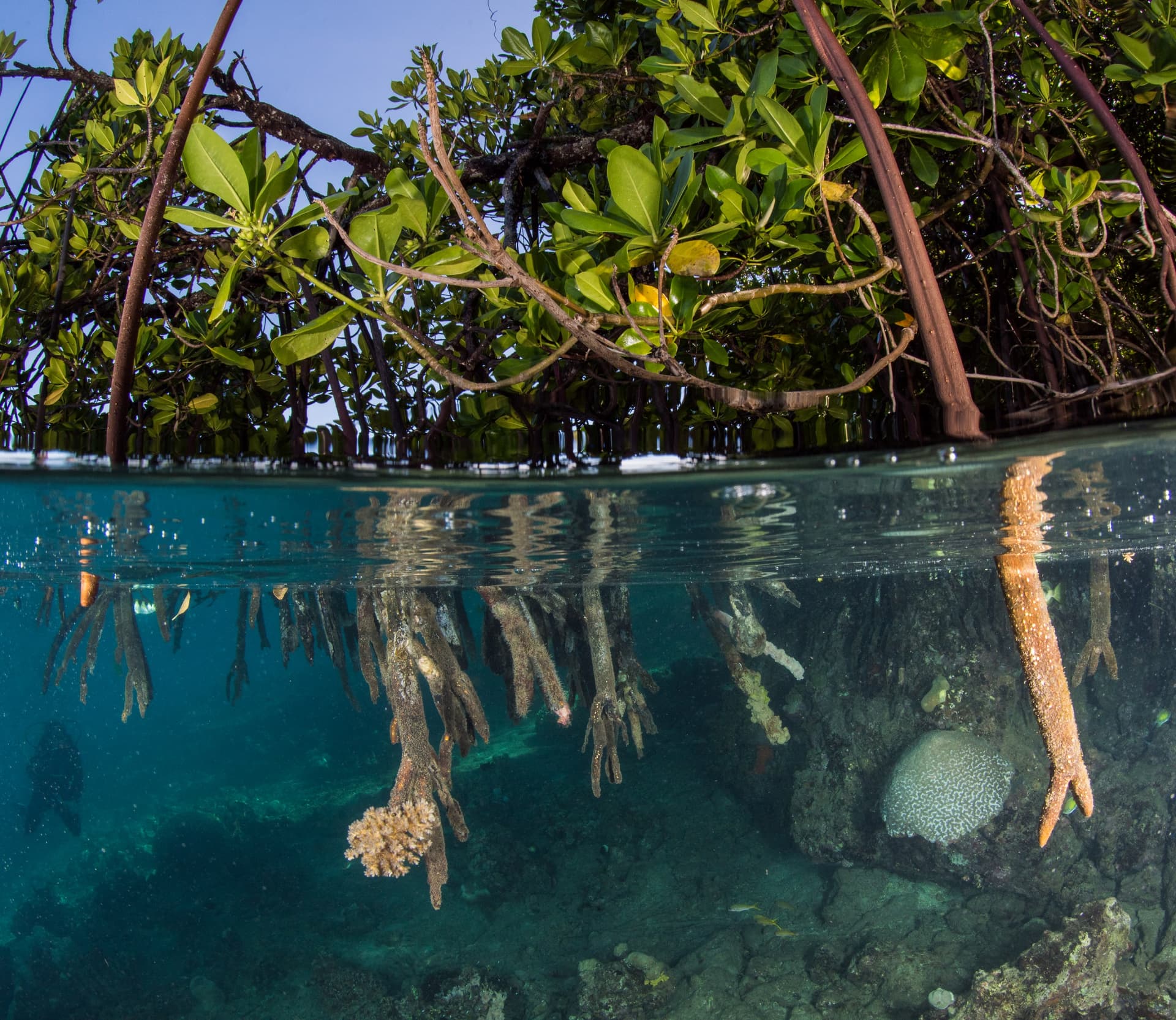
Strip away the logistics and the reason the Solomons keeps pulling experienced divers back is embarrassingly simple: it looks like the Coral Triangle did thirty years ago, before the crowds and the anchor damage and the bleaching headlines. You'll dive world-class sites and see no other boat. Not a quiet one. No other boat.
What's down there, concretely:
- Hard coral in genuinely rude health — walls and slopes of staghorn and plate coral so dense they read as topography, not decoration. This is the headline, and it's real.
- Big stuff on the reef. Grey reef and whitetip sharks are a regular fixture at the passes and drop-offs; manta ray encounters happen at known cleaning and feeding stations, though — as anywhere — they're wildlife, not a scheduled act, so hedge your expectations.
- Macro that will fill a memory card. The muck and reef critters here are a photographer's excuse to never surface — pygmy seahorses, nudibranchs, mandarinfish, the full parade.
- WWII history you can actually swim through. This was the Guadalcanal campaign; the seabed is littered with wrecks and downed aircraft. Our WWII wreck-diving atlas maps what's reachable and at what depth, and the broader Solomon Islands liveaboard diving overview covers how a typical week strings the reefs, walls, and wrecks together.
The full site-by-site breakdown lives in our Solomon Islands diving guide and on the destination page. The point here is narrower: the quality is not in dispute. Everyone who's been agrees the diving is exceptional. The honest debate is entirely about what it costs you — in money, in days, and in risk tolerance — to get to it. So let's cost those out, one by one.
The trade-offs, named plainly
The haul is brutal, and there's no way around it
There's essentially one gateway. You fly to an Australian east-coast hub (usually Brisbane) or route via Nadi in Fiji, then take a separate hop of roughly 3.5 hours into Honiara (airport code HIR). From Europe you're looking at somewhere around two-plus days of transit each way, and the long-haul arrival rarely connects cleanly onto the same-day Honiara flight — with only a handful of flights a week on that leg, most European divers eat a night in Brisbane on the way out and sometimes a second on the way home.
This isn't a footnote. It reshapes the whole trip. Once you've paid to cross the planet, adding nights is the cheapest diving you'll do all year — which is why the Solomons rewards a 9-to-13-night itinerary and quietly punishes anyone trying to squeeze it into a short window. If your annual leave can't absorb a two-week block, this destination is fighting you before you're even wet.
Two boats, so dates are scarce and book out
Be realistic about supply. There are effectively two liveaboards working these waters — the long-running Emperor Bilikiki and the Solomons Master — plus the occasional repositioning cruise. That's it. Compared with a destination like Raja Ampat, where a dozen boats compete for your booking, the Solomons runs on a thin schedule that fills months ahead, especially in the calmer mid-year window.
Practically, that means you plan around their calendar, not yours. If you're weighing the two hulls against each other, we broke them down honestly in Bilikiki vs Solomons Master; to see what's genuinely open before you fall for a specific week, check the live departures calendar rather than a brochure listing sailings that sold out a year ago.
Malaria and diving: the question you must not skip
Here's one the sell-you-the-boat pages tend to soft-pedal. Malaria is present in the Solomon Islands, and prophylaxis is generally advised. That's not a reason to cancel — it's a reason to plan the medical side as carefully as the dive side.
The wrinkle specific to divers is the choice of antimalarial, because some drugs carry side-effect profiles that matter underwater:
- Mefloquine (Lariam) has a known association with neurological and psychiatric side effects — dizziness, vivid dreams, anxiety — that are genuinely undesirable at depth, and many dive physicians steer divers away from it for that reason.
- Doxycycline is a commonly chosen alternative for divers, though it has its own considerations — notably photosensitivity, and you'll be on a sun-blasted deck all week.
We're a dive agency, not a clinic, so treat this as a flag, not a prescription: book a consultation with a travel-medicine or dive doctor well before you travel and let them weigh your history against current guidance. The right answer is personal, and it's theirs to give, not ours. What matters here is simply that malaria is a real planning item for the Solomon Islands — not a box you tick on the plane.
Diving safety and the hyperbaric-chamber problem
This is the single most important paragraph in the article, so read it twice. Recompression capability in Honiara is limited and, by multiple accounts, unreliable. Plan on the assumption that a serious case of decompression sickness means a medical evacuation — likely to Australia — not a short drive to a working chamber.
Sit with what that implies, because it should change how you actually dive:
- Dive conservatively and mean it. Pad your safety stops, run nitrox on air tables where sensible, keep ascent rates slow, and don't chase the deepest wreck on the last dive of the trip. Remoteness is not the place to test your limits.
- Carry serious dive-and-evacuation insurance — DAN-style cover, not a generic travel add-on. A policy that explicitly covers scuba and emergency evacuation is the line item that makes the rest of the budget sane. When the nearest reliable chamber is a flight away, on a remote destination like this, this is non-negotiable.
- Self-sufficiency is a prerequisite, not a bonus. Good buoyancy, comfortable air consumption, and the discipline to call a dive are baseline requirements here in a way they simply aren't on a resort reef with a chamber twenty minutes up the road.
None of this makes the Solomons "dangerous" for a competent diver who plans well — thousands dive it safely every season. But it does make it unforgiving of the diver who treats safety as someone else's job. If that's a category you might slip into on a bad day, the honest read is that this destination will expose it.
The Solomons Master trip report you may have seen
If you've been down the forum rabbit hole, you may have run into a negative Solomons Master trip report that circulated in late 2025 — complaints spanning service and operational issues on a specific set of sailings. We're not going to pretend it doesn't exist, because burying it is exactly the brochure behavior this article is meant to counter.
Our honest read: a single bad report is a data point, not a verdict, and boats have good stretches and rough ones — crew changes, a mechanical run of bad luck, a mismatch between guest and vessel. It's a genuine reason to choose your hull carefully and read recent, dated reviews before committing, not a reason to write off the destination. We keep our Bilikiki vs Solomons Master comparison current precisely so you're picking on today's information, not a five-year-old glossy. If a specific week worries you, ask us — we'd rather move you to a better-fitting boat than watch you have someone else's bad trip.
The Solomon Islands liveaboard cost, in one line
We've written the full, line-by-line breakdown elsewhere, so here's just the honest headline: a realistic all-in cost for one diver from Europe in 2026 lands somewhere around USD 7,500–11,500 — and a large slice of that is flights and hotels, not the boat. The cruise itself is often the cheaper half once you've paid to cross the planet.
That's a real range, not a teaser rate, and it's a legitimate part of the "is it worth it" calculation — for many divers the airfare alone is the deciding factor. The complete anatomy of it, including the cash-on-arrival kastom fees and the ambush Brisbane overnight, is in how much a Solomon Islands liveaboard costs. Read that before you enquire, not after.
So, is the Solomon Islands worth it for diving? A verdict by diver type
Here's the part the ranking pages skip — an actual answer, and it's not the same answer for everyone. Find your row.
| Diver type | Worth it? | Why |
|---|---|---|
| Experienced, self-sufficient diver who values wilderness over comfort | Emphatic yes | This is the trip you've been saving the big money for. Untouched reef, no crowds, and you have the skills to dive it conservatively. |
| Keen photographer (reef or macro) | Yes | The coral health and critter density are worth the airfare on their own. Just build the long itinerary so you actually get the dives. |
| WWII / wreck enthusiast | Yes | Guadalcanal's seabed is a genuine bucket-list layer on top of the reefs. Few places combine both this well. |
| Nervous newcomer or low-hours diver | Not yet | The remoteness, the chamber problem, and the self-sufficiency bar make this the wrong place to build confidence. Get a safety net under you somewhere easier first. |
| Comfort-first traveler who wants spa, nightlife, and polish | No | The Solomons is gloriously, deliberately not that. You'll spend a fortune to be underwhelmed topside. |
| Anyone on a tight schedule (under ~9 nights available) | No | The transit maths ruins it. Save it for a year you can give it two weeks. |
| Tight budget where flights alone blow the plan | No | Be honest with yourself. There are extraordinary reefs — Raja Ampat among them — that cost far less to reach. |
If you landed on a "no," that's not a failure — it's the article doing its job. And it doesn't mean never; it often means not this year, or not this boat. If you're torn between this and the obvious alternative, Solomon Islands vs Raja Ampat walks the trade-off: Raja is easier, cheaper to reach, and busier; the Solomons is harder, wilder, and lonelier in the best sense.
How to de-risk it if you go
If you're a "yes" and you're doing this, tilt the odds properly in your favor:
- Give it the time. Book 9-plus nights so the brutal airfare amortises across more dives.
- Sort the medical side early. See a dive doctor about malaria prophylaxis and confirm your DAN-style evacuation cover before you pay a deposit.
- Choose the hull on current information, not a legacy reputation — recent dated reviews only.
- Dive like the chamber is far away, because it is. Conservative profiles, padded stops, no last-dive heroics.
- Let someone cost the awkward bits up front. The surprise Brisbane night and the cash-only arrival fees are the most common budget gaps we see.
That last one is genuinely what we're for. Booking through us costs the same as booking direct — our edge is telling you the parts the brochure leaves blurry, and building a real all-in total for your dates and home airport with the overnights already priced in. If you want that, tell us your plans and we'll give you the honest number and an honest fit assessment — including, if the answer is "not this trip," saying so.
The Solomons isn't worth it for everyone, and anyone who tells you it is hasn't costed the flights or read the trip reports. Done with eyes open — right diver, right length, real budget, conservative diving — it's one of the last liveaboards on earth where you pay for genuine wilderness and actually get it.
Related Guides
- How Much Does a Solomon Islands Liveaboard Cost? — the full line-by-line 2026 budget, including the ambush fees
- Solomon Islands vs Raja Ampat — the honest trade-off between the two Coral Triangle heavyweights
- Bilikiki vs Solomons Master — choosing between the only two boats, on current information
- Solomon Islands Liveaboard Diving — how a typical week strings reefs, walls, and wrecks together
- Solomon Islands Destination Overview — sites, seasons, and how to enquire
Related Articles
%20-%20Large.jpg&w=828&q=75)
Best Time to Dive: A Season-by-Season Guide
When to visit the world's top liveaboard destinations for the best conditions and marine life encounters.
Galápagos Diving: What to Expect on Your First Trip
Hammerhead highways, curious sea lions, and currents that demand respect — here's what awaits in the enchanted islands.