When to Dive the Seychelles: Month by Month
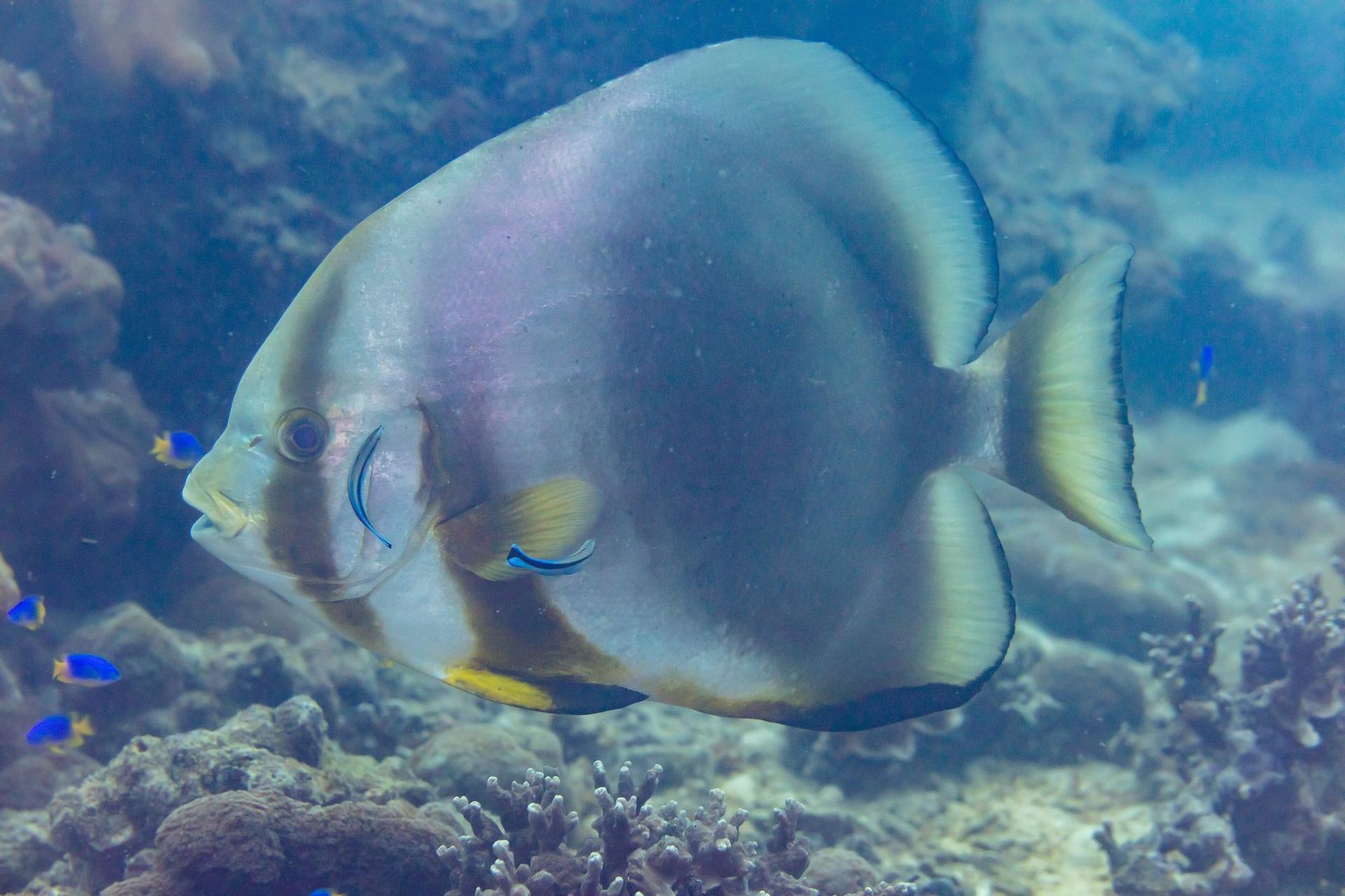
Photo: Diego Delso, CC BY-SA 4.0
The Seychelles can be dived in every month. The water is warm all year and the turtles do not leave. What changes is the wind. Two monsoons take turns over the islands, and between them come two short calm spells when the sea goes flat and the water is at its clearest.
Most of the Seychelles sailings we sell are cruises of six or seven nights around the inner islands of Mahé, Praslin and La Digue. They are island weeks with diving added: you buy the diving as a package on top of the cruise fare, the tanks are filled with air only, and you can plan on one or two dives a day. They are not dive-intensive liveaboards. The exception is the two-week expedition to the Aldabra group, which sails only a few times a year and asks for more experience.
The short answer
- Calmest seas and clearest water: April to May and October to November, the two gaps between the monsoons.
- North-west monsoon, roughly December to March: the warm, wet season. Lighter winds, more rain, and often the lowest visibility of the year in January and February.
- South-east trades, roughly May to October: steady wind, a choppier sea and the coolest water, with July and August the windiest months.
- Whale sharks: possible off Mahé from August to November, most often in September and October. Treat one as a bonus.
- Outer islands: Aldabra expeditions sail between October and May, outside the strongest trades.
How the year works
The inner islands lie between four and five degrees south of the equator, so the calendar is set by the direction of the wind, not by summer and winter.
The north-west monsoon, roughly December to March. The wind is lighter and comes from the north-west. This is the hot, wet season, with January usually the wettest month. The inner islands lie outside the main cyclone belt, so the rain comes as heavy showers. The water is about 28–30°C. Showers and plankton can cut visibility around the inner islands to 10–15 m, and January and February are often the murkiest months.
The south-east trades, roughly May to October. The wind turns south-east and blows steadily, at its strongest in July and August. This is the drier, cooler half of the year. The sea is choppier and the surface water cools to about 26–28°C in July and August; some dive guides quote about 25°C. Plankton thickens in the cooler water, so visibility is often reduced, and exposed sites can be out of reach on windy days.
The two calm windows, April to May and October to November. As one wind dies and before the next sets in, the sea usually flattens. These weeks tend to bring the clearest water of the year, often 20–30 m on the better sites, and the easiest access to exposed rocks and pinnacles.
The wind also decides which side of an island is comfortable. In the trades, crews tend to work the northern and western sides of the islands, in the lee of the south-easterly. In the north-west monsoon the wind is lighter and the choice matters less. On a cruise the captain decides, and in the trade-wind months one of the itineraries we sell starts from Praslin instead of Mahé.
Month by month
Water temperatures are typical surface ranges for the inner granitic islands around Mahé. Turtles, eagle rays, stingrays, reef sharks and schooling snappers and fusiliers are on the granite in every month, so the last column lists only what changes.
| Month | Water | Wind and sea | Visibility | What is in season |
|---|---|---|---|---|
| January | 28–29°C | North-west monsoon: light winds, the wettest month | Often the lowest of the year | Hawksbill turtles nesting ashore; outer-island expeditions |
| February | 28–30°C | North-west monsoon: light winds, showers | Often low | Hawksbill nesting; outer-island expeditions |
| March | 29–30°C | Monsoon fading, longer calm spells | Improving | Last hawksbill nests; outer-island expeditions |
| April | 29–31°C | Calm window: often the flattest seas | Usually the clearest | Warmest water of the year; outer-island expeditions |
| May | 29–30°C | Calm early, trades arriving later | Good early, then falling | Last outer-island expeditions |
| June | 27–29°C | South-east trades: steady wind, dry weather | Reduced by plankton and chop | Dry, cooler days ashore |
| July | 26–28°C | Trades at their strongest, choppy | Often reduced | Coolest water of the year |
| August | 26–27°C | Trades still strong, choppy | Often reduced | First whale sharks possible off Mahé |
| September | 26–28°C | Trades easing late in the month | Plankton-rich, improving late | Whale sharks possible, most often now |
| October | 27–29°C | Calm window opening | Recovering, often good | Whale sharks possible, most often now; first hawksbill nests; outer-island expeditions |
| November | 28–30°C | Calm, showers increasing | Usually good | Whale sharks possible; hawksbill nesting; outer-island expeditions |
| December | 28–30°C | North-west monsoon sets in, rain | Variable, lower after rain | Hawksbill nesting; outer-island expeditions |
The table describes a typical year. The winds do not change on a fixed date, and a calm window can arrive a few weeks early or late.
December to March. Warm water, light winds and showers. Visibility is the weak point, most of all in January and February. Hawksbill turtles are nesting on the beaches, and this is the heart of the outer-island season.
April and May. The first calm window. April often brings the flattest sea, the clearest water and the warmest water of the year. By late May the trades are starting.
June to September. The windy months. The cruises still sail and dive, with choppier passages, cooler water and more plankton. The crew chooses sites in the lee, and an exposed rock may be dropped from the plan.
October and November. The second calm window. The sea settles, visibility recovers, whale sharks are still possible and the first hawksbills come ashore to nest.
What you see and when
Whale sharks. Whale sharks gather to feed off the western side of Mahé, usually between August and November and most often in September and October. They were seasonally common until about 2009. Sightings fell steeply in the years that followed, and regular monitoring stopped for a time. The Marine Conservation Society Seychelles, which studies them, recorded more sightings again from 2022 to 2025, and in 2023 it logged 46 sightings of 33 individual sharks. That is a recovery from a low point, not a dependable season, and the inner-island cruises spend most of the week around Praslin and La Digue, away from that coast. If one appears, stay out of its path and do not touch or chase it. Our whale shark calendar shows where the odds are higher.
Turtles. Green and hawksbill turtles are on the reefs all year. Hawksbills come ashore to nest on inner-island beaches from about October to March, with most nests around November to January. In the Seychelles they nest mostly in daylight, which is unusual for sea turtles, so keep well back from any turtle on a beach. Green turtles nest mainly in the outer islands. Aldabra is one of the largest green turtle rookeries in the western Indian Ocean, and nesting there goes on all year. The sea turtle calendar has the month-by-month odds.
Reef sharks, rays and the granite. None of this is seasonal. Whitetip reef sharks, eagle rays and big stingrays are around the boulders in every month. Two sites north and north-west of Mahé show what the rock holds. Shark Bank is a deep granite pinnacle in open water for Advanced divers, known for eagle rays and large stingrays. Brissare Rocks is a shallower granite massif covered in schooling snappers and fusiliers. Both are exposed and easiest to reach in the calm windows. The cruises dive the same kind of granite around Praslin, La Digue and the Sister Islands.
Coral. Mass bleaching in 1998 and 2016 killed much of the coral around the inner islands, and it has been growing back since. Come for the rock, the fish and the turtles, not for wall-to-wall coral.
Manta rays. Do not plan an inner-island week around mantas. The Manta Trust reports few sightings around the populated inner islands. The known gatherings of reef mantas are to the south-west, around D'Arros and St Joseph in the Amirantes, and they are also recorded feeding off Aldabra. The manta ray calendar lists the destinations where they are dependable.
The inner islands and the outer islands
The inner islands are granite and sit on a shallow bank. The 7-night cruises sail in every month, and diving is one part of the week, alongside island walks and beach days. The boats typically ask for Open Water certification, beginners can try an intro dive, and non-divers are welcome on board. Most sites are moderate in depth, but current picks up on the more exposed rocks, so carry a surface marker buoy.
The outer islands we sell are the Aldabra group: Aldabra itself, with Cosmoledo, Astove and Assumption, coral atolls more than 1,000 km south-west of Mahé. Aldabra has been a UNESCO World Heritage Site since 1982 and is managed by the Seychelles Islands Foundation. Expeditions there last two weeks and sail between October and May. The foundation tells visiting boats to expect the north-west monsoon, with calmer seas and frequent rain, and the weather decides the route.
The diving is a different order of difficulty: fast tidal channels at the Aldabra passes, a sheer drop at Astove Wall and remote reef at Cosmoledo. Boats typically ask for Advanced Open Water, at least 30 logged dives and drift experience. The foundation allows only Advanced divers in Aldabra's Main Channel, does not open it on spring tides, and permits no night dives, no baited dives and no touching or chasing animals. Tanks are filled with air only. You are a long way from a hospital, so you need insurance that covers evacuation from remote areas, and you bring your own equipment.
The inner islands suit divers of any level, mixed groups and anyone who wants island days as well as dives. The outer islands suit experienced divers who are comfortable in current and want two weeks where very few people dive.
What is sailing
The inner-island cruises sail all year, and the outer-island expedition only on a handful of dates. For the cheapest inner-island cruise with space, of six or seven nights, the fare per person sharing a cabin is currently €1,152. That is the cruise fare only: the dive package, rental equipment, and the park fees and tourism levy paid on board all come on top.
| Date | Destination | Route | Nights | From |
|---|---|---|---|---|
| 26 Dec 2026 | Seychelles | Inner islands cruise (dive package extra) | 7 | €2,834 |
| 9 Jan 2027 | Seychelles | Inner islands cruise (dive package extra) | 7 | €1,985 |
| 9 Jan 2027 | Seychelles | Inner islands cruise (dive package extra) | 7 | €1,481 |
| 16 Jan 2027 | Seychelles | Inner islands cruise (dive package extra) | 7 | €1,985 |
| 16 Jan 2027 | Seychelles | Inner islands cruise (dive package extra) | 7 | €1,717 |
| 23 Jan 2027 | Seychelles | Inner islands cruise (dive package extra) | 7 | €1,587 |
Routes, what the fare includes and what you pay on board are on our Seychelles liveaboards page, and every date is on the Seychelles calendar.
Choosing your month
Best visibility and calm seas: April, the first half of May, October and November.
Warm water: March to May, when the surface reaches 29°C and more. November to February is nearly as warm, with more rain. If you feel the cold, avoid July to September.
Quieter islands: June and September. Visitor numbers usually dip in June, after Europe's winter-sun months, and again in September before the October rise. You trade that for wind in June and plankton in September.
Travelling with a non-diver: any month works, because the cruise is built around island days. The calm windows give the easiest passages and the best snorkelling. June to August is the driest time for walks ashore, at the cost of a livelier sea. Our guide to diving with a non-diver partner covers what to ask before you book.
Four short questions
What is the best month overall? October or April. Both fall in the calm windows, with flat seas and the clearest water. October adds a chance of whale sharks and the first nesting hawksbills, and April has the warmest water. November and early May are close behind.
Is it diveable in July and August? Yes. The cruises sail and dive through the trades. Expect choppier passages between islands, water of about 26–28°C, lower visibility and a crew that keeps to the sheltered sides. If you are prone to seasickness, choose another month, or read our seasickness guide first.
Do I need a wetsuit, and how thick? A 3 mm full suit suits most divers all year on one or two dives a day. In July to September, when the water is coolest, divers who feel the cold may want a thin hooded vest underneath. The rental suits on the inner-island cruises are shorties, so bring your own full suit if you prefer one. On the outer atolls cool thermoclines at depth are common, so pack a hood or a 5 mm suit.
Liveaboard or resort? It depends on how much of the week you want to spend diving. The inner-island boats are cruises with a dive package, and Aldabra can only be reached by boat. Our Seychelles liveaboard vs resort guide sets out the choice.
Tell us your dates, what is in your logbook and whether everyone in your party dives, and our concierge will reply in writing with the sailings that fit.
Related Guides
Related Articles
Diving the Azores: Blue Sharks, Mobulas and the North Atlantic's Largest Protected Network
In 2024 the Azores created the largest network of marine protected areas in the North Atlantic, about 287,000 km² of ocean that blue sharks, mobulas and sperm whales pass through. Here is why we think it is the most underrated diving in Europe, island by island and month by month.
Cape Verde for Divers: Whales, Sharks, and the Atlantic Crossroads
Cape Verde sits where African, European and equatorial currents meet. The result: humpback whales in spring, juvenile lemon sharks in water you can wade into, nesting loggerheads in summer, and warm-water Atlantic diving most Europeans have never seriously considered.