Brissare Rocks
A granite tower a few kilometres off Mahé, so thick with fish you sometimes lose sight of your buddy behind the shoals.
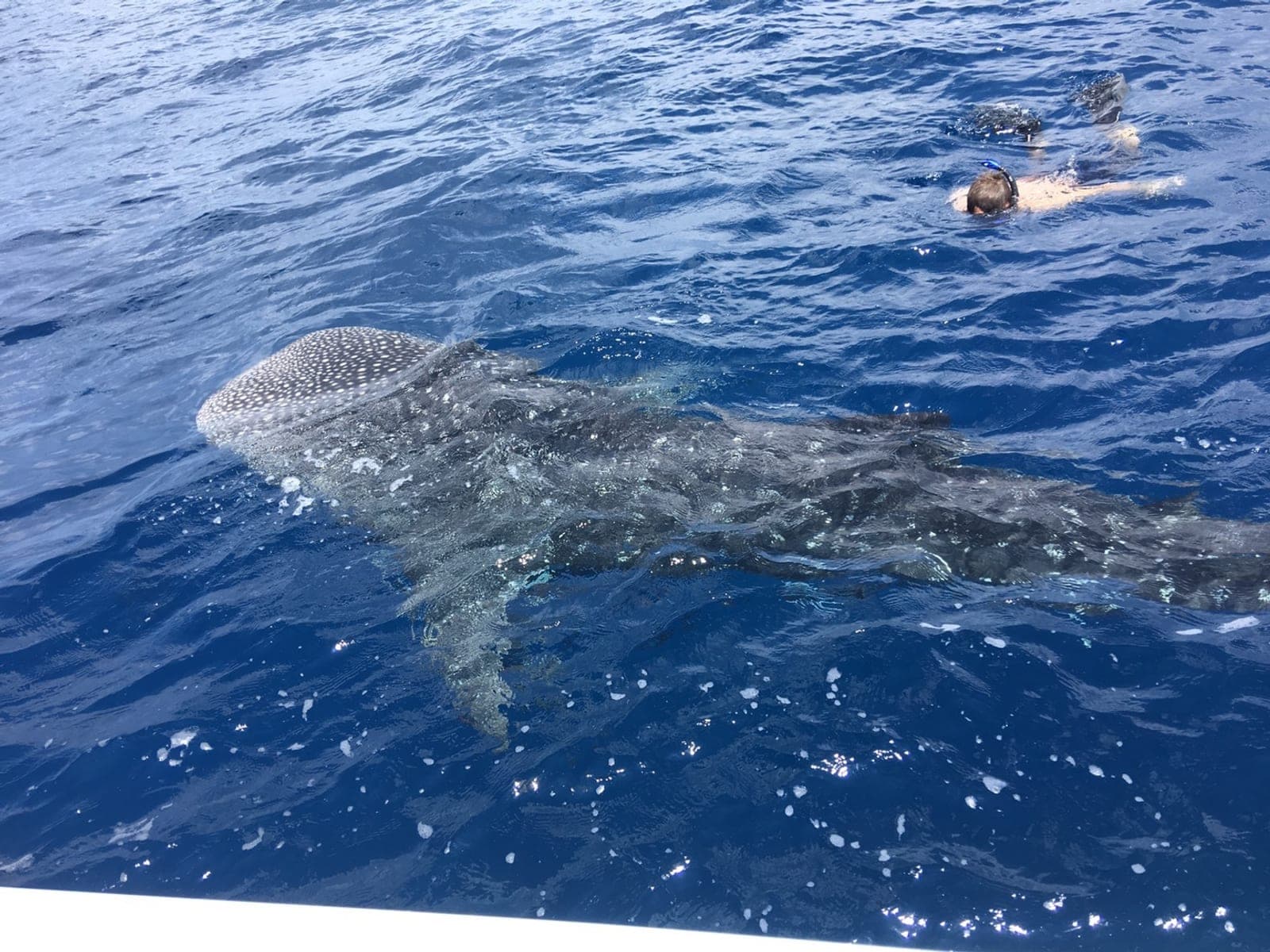
Ask the Mahé dive crews to name their favourite inner-island site and Brissare Rocks comes up again and again. It is a classic Seychelles granite pinnacle: an underwater massif rising out of the blue to within a few metres of the surface, draped in fan corals and fire coral and absolutely swarming with reef fish. On a good day, diving Brissare Rocks feels less like a reef dive and more like swimming through a living wall of snapper and fusilier, with eagle rays cruising the edges and, in the right season, the outside chance of a whale shark drifting past. It is one of the most rewarding dives you can do without leaving the inner islands.
Quick answer: Brissare Rocks is a boat dive on a granite pinnacle / reef in Seychelles. Best season: Sept–May overall; Oct–Nov for whale-shark odds with recovering visibility. Level: Easy to intermediate — current-dependent. Depth: 5–30 m (coral gardens to ~20 m; pinnacle base near 30 m). Typical visibility: 15–25 m in the calm season; 8–12 m during the SE monsoon.
Facts verified September 2026
What makes Brissare Rocks special
The Seychelles inner islands are geologically unusual — they are the peaks of an ancient granite microcontinent, not a volcanic or coral archipelago. That granite is the whole story here. Brissare Rocks is a submerged pinnacle of that same rock, rising from around 30 metres to within a few metres of the surface, its boulders and fissures encrusted with white fan corals and swathes of fire coral. The structure does what good pinnacles always do: it interrupts the current, concentrates nutrients, and pulls in fish in numbers you rarely see on a flat reef.
What sets it apart from the average Mahé dive is sheer density of life. The rock is often smothered in fish — shoals of red snapper and fusiliers, clouds of wrasse and surgeonfish over the top, with the whole column stratified by depth. It sits far enough offshore that it stays comparatively lightly dived, so encounters here feel wilder and less rehearsed than the sites closer to the harbour.
What you'll see
Brissare is a fish dive first and a big-animal dive second — but it delivers on both. The reef fish are the constant; the pelagics and rays are the reason you keep coming back. Expect the life to layer itself by depth as you descend the pinnacle.
Realistic sightings on a typical dive:
- Dense shoals of fusiliers, red snapper, wrasse and surgeonfish over the top of the pinnacle
- Groupers and lionfish holding in the mid-water shadows and overhangs
- Some of the largest moray eels in the area tucked into the granite fissures
- Eagle rays cruising the edges, plus hawksbill turtles and passing barracuda
- White fan corals and fire coral carpeting the rock (look, don't touch the fire coral)
- Seasonally, the big draw: whale sharks and the occasional manta, arriving with the plankton-rich water
Conditions, and who it's for
Honest version: Brissare suits confident beginners through to experienced divers, but the current is the variable that decides which. On a slack day it is a relaxed, shallow-to-mid reef dive that a newer diver will handle comfortably. When the current is running — and it often does, which is exactly what pulls in the bigger fish — it becomes an intermediate dive that rewards good buoyancy, a sensible air plan and the discipline to stay in the lee of the rock. This is not a technical site, but it is not a swimming-pool site either.
The other honest note is visibility. In the calm northwest-monsoon months you'll typically get 15–25 metres. During the southeast monsoon the same plankton that brings the filter feeders knocks clarity down to roughly 8–12 metres and stirs up the surface. Water temperature sits around a warm 28–30°C for much of the year, dipping to about 25°C in the windier July–August stretch — a 3mm suit is plenty for most divers.
When to dive Brissare Rocks
The site is generally dived from roughly September to May, when sea conditions on this exposed northern position are workable. The two monsoon seasons give you a genuine trade-off rather than a simple 'best month'.
For the best water clarity and the calmest, easiest diving, aim for the northwest-monsoon window from around November to April. For the marine megafauna — whale sharks and mantas move through Mahé's waters roughly from August or September into November, with the sharpest peak in October and November — you accept lower visibility in exchange for the chance of the big encounter. October and November are the sweet spot many divers target: the inter-monsoon lull brings recovering visibility while the whale-shark odds are still live. As always with whale sharks, treat them as a bonus and not a booking guarantee — numbers swing year to year with the plankton.
How you actually dive it
Brissare Rocks is a boat dive from Mahé, run as an inner-island day trip — typically a 20-to-30-minute ride out to the pinnacle north of the island. There is no liveaboard involved for this one: Seychelles liveaboards run to the remote outer atolls like the Aldabra group, a completely different and permit-heavy expedition. Brissare belongs to the accessible inner-island day-diving scene, which is part of its appeal — world-class granite diving without the long crossing.
The practical approach is a negative or prompt descent onto the top of the pinnacle before any current can push you off it, then work the structure at your chosen depth, using the rock as shelter and letting the fish come to you rather than chasing them. Because the top sits so shallow, your safety stop is effectively part of the dive — hang over the summit in the shoals and watch the show while you off-gas. A surface marker buoy is worth carrying given the offshore position and variable current.
Faneca includes Brissare Rocks on our Seychelles trips as an inner-island day dive off Mahé, run by boat rather than liveaboard — best paired with the Oct–Nov window if you're chasing the whale sharks, with the honest caveat that the season's visibility and the big-animal encounters are never guaranteed.
Brissare Rocks: common questions
What is the best season to dive Brissare Rocks?
Sept–May overall; Oct–Nov for whale-shark odds with recovering visibility
What experience level do I need for Brissare Rocks?
Easy to intermediate — current-dependent
How deep is Brissare Rocks?
5–30 m (coral gardens to ~20 m; pinnacle base near 30 m)
What marine life will I see at Brissare Rocks?
Fusiliers, snapper & wrasse shoals, groupers, lionfish, giant morays, eagle rays, hawksbill turtles, barracuda; seasonal whale sharks & mantas
