What Truk Lagoon Costs: Budgeting the World's Greatest Wreck Diving
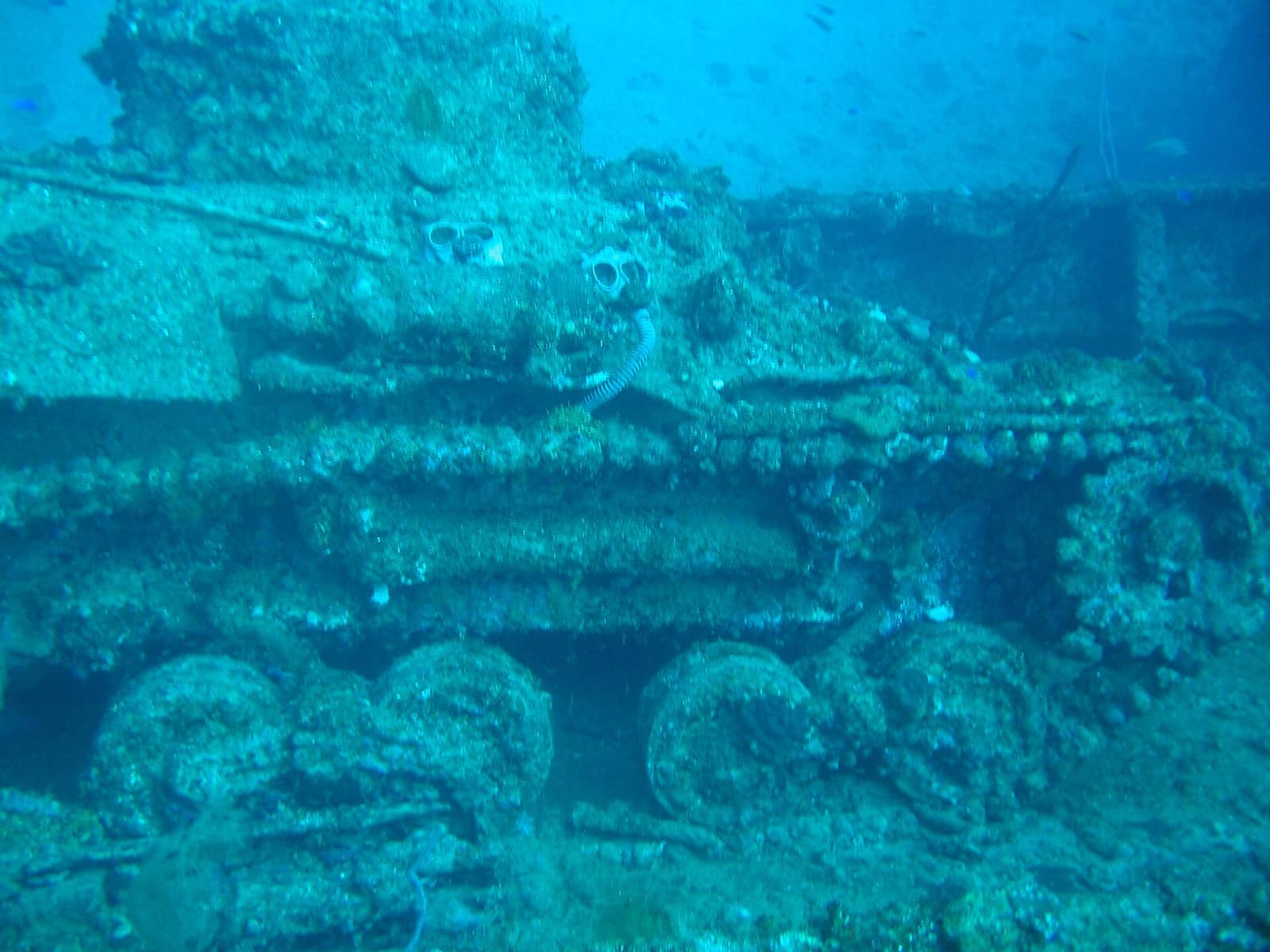
Budget $7,000–10,000 all-in from Europe for a Truk Lagoon liveaboard trip. The boat itself — Pacific Master, the only liveaboard permanently based in the lagoon — runs $3,240–5,300 for 8–10 nights depending on season and itinerary length, and the flights are the other big line: $1,500–2,500 return from Europe, because Chuuk sits at the end of one of the most remote air routes on the planet. It is a lot of money. It is also, dive for dive, one of the best-value weeks in diving once you understand what you are paying for — more than 40 intact WWII wrecks inside one sheltered lagoon, dived back to back with no long crossings.
This is the honest breakdown: every line item, where the traps are, and who should put their money somewhere else.
The liveaboard fare: $3,240–5,300
Our live Truk Lagoon departures on Pacific Master currently range from $3,240 for an 8-night autumn sailing — the cheapest way onto the boat all year — up to around $5,300 for the longest peak-season itineraries. The spring (April–May) 9- and 10-night trips sit in the middle at $3,645–4,050.
A few things worth knowing before you anchor on a number:
- Per-night maths favours the longer trips. A 10-night itinerary at $4,050 is $405 a night; the 8-night at $3,240 is also $405 a night. You are not paying a premium for extra nights — you are simply buying more of the lagoon. Given what the flights cost (next section), squeezing the trip to save $800 on the fare is usually false economy.
- Season drives price. December–April is the dry season — calmest seas, best visibility, highest fares. The autumn shoulder is cheaper and still dives well; Truk is a sheltered lagoon, not an open-ocean crossing, so "off season" here is far more forgiving than it is at, say, Socorro.
- The fare covers diving, meals, and accommodation. It does not cover nitrox, permits, port fees, rental gear, alcohol, or tips. Those are real money in Truk — itemised below.
Truk is a wreck destination, full stop. If you are on the fence about whether that suits you, read our guides to the Fujikawa Maru and the Nippo Maru first — if those pages do not quicken your pulse, save your $8,000 for a reef destination.
Getting there: the real cost of Truk
Chuuk International (TKK) is served almost exclusively by United, and there are two ways in:
- Via Guam. The standard route from Europe: fly to an Asian hub (Tokyo, Seoul, or Manila), connect to Guam, then take the short United hop to Chuuk. This is the fastest and most reliable option.
- Via Honolulu on the Island Hopper. United flight 154 — Honolulu, Majuro, Kwajalein, Kosrae, Pohnpei, Chuuk, Guam — is one of aviation's legendary routes, currently transitioning to new 737 MAX 8 aircraft with Starlink Wi-Fi. It runs roughly three times weekly westbound and takes most of a day. Slower, but if you are the kind of person who dives WWII wrecks for fun, a five-stop Pacific milk run may be a feature rather than a bug.
Budget $1,500–2,500 return from Europe depending on season, routing, and how far ahead you book. The Guam–Chuuk leg alone typically runs $500–1,000 return, which is why "cheap flight to Guam plus separate ticket" rarely works out cheaper than a through fare.
Two logistical points that catch Europeans out:
- You need an ESTA (or US visa) — Guam and Honolulu are US territory, and there is no way into Chuuk that avoids US immigration.
- Build in a buffer night on each end. United's Micronesia schedule is thin; if a flight cancels, the next one may be two days later. A missed liveaboard departure in Chuuk is not recoverable. Add $150–300 for a Guam or Chuuk hotel night each way and treat it as insurance, not waste.
For the seasonal side of timing your booking, see our month-by-month Truk guide.
On-the-ground extras: permits, fees, nitrox, tips
This is where Truk budgets quietly grow by $700–1,000. Line them up now so nothing surprises you on disembarkation day:
- Port and park fees: roughly $195–250 depending on itinerary length, paid on board. This bundles the Chuuk state dive permit (about $50) with port charges.
- Chuuk departure tax: $30, paid at the airport in cash on the way out.
- Nitrox: budget $150–250 for the trip — and treat it as essential, not optional. Truk's signature wrecks sit deep: the deck of the Nippo Maru at 30m, the San Francisco Maru — the famous "million dollar wreck" with tanks on her deck — at 50m to the sand. You will be doing three to four repetitive dives a day in the 25–40m band all week. On air, your no-deco times collapse by day three; on nitrox, you actually get to see what you flew across the world for. This is the single worst place in diving to economise.
- Rental gear: about $340 per week if you need a full set; a dive computer alone is around $12 a day. If you own gear, bring it.
- Crew gratuities: 10% of the fare is the working norm — call it $350–500. Pacific Master's crew brief every wreck's history before you drop; they earn it.
- Alcohol, soft drinks, Wi-Fi, laundry: modest, but call it another $100–200 for a typical guest.
Realistic extras total: $800–1,300 on top of the fare and flights.
The honest total
For a mid-range spring 10-night trip from Europe:
- Liveaboard fare: $4,050
- Flights: $2,000
- Buffer nights and airport costs: $400
- Permits, port fees, departure tax: $280
- Nitrox: $200
- Tips and onboard extras: $550
- Travel and dive insurance (DAN or equivalent — non-negotiable at these depths and this remoteness): $150–250
Total: roughly $7,700. Book the autumn 8-night sailing and fly smart and you can land near $7,000; take the longest peak-season itinerary in a better cabin and you will brush $10,000. There is no realistic way to do Truk by liveaboard from Europe for $5,000, and anyone telling you otherwise has forgotten the flights.
How Truk compares: Bikini and Coron
Bikini Atoll is the step up — at roughly double the money. The Marshall Islands' ghost fleet (aircraft carrier Saratoga, battleship Nagato) is the only wreck diving on earth that out-guns Truk, but it is a technical-diving expedition: decompression procedures required, fares far higher, logistics harder, and a season measured in weeks. Truk gives you perhaps 80% of the wreck-diving experience at half the total cost, with no technical certification required — the best of the lagoon, including the Shinkoku Maru's coral-smothered decks, is honest recreational diving on nitrox. If you are weighing the two seriously, our Truk vs Bikini comparison goes deep on it.
Coron is the budget alternative. The Philippines' WWII wreck bay offers a genuinely good fleet of Japanese wrecks, dived from cheap day boats and beach resorts, with flights from Europe at a fraction of Micronesia prices. A week in Coron can cost $1,500–2,500 all-in. The wrecks are fewer, shallower-visibility, and less intact than Truk's — but if $8,000 is simply not happening this year, Coron is the honest answer, not a consolation prize.
Who should not book Truk
- Divers with fewer than ~50 dives. The depths, the repetitive profiles, and the overhead environments make this a poor place to be building basic skills. Get comfortable at 30m elsewhere first.
- Anyone who is lukewarm about wrecks. There are no manta cleaning stations here, no hammerhead schools. It is ships, history, and the coral that has claimed them. Magnificent — if that is your thing.
- Travellers who cannot spare the days. Door to door from Europe you need 13–15 days minimum. Truk on a 9-day window means diving jet-lagged and flying out exhausted.
- The $5,000 budget. It will not stretch. Coron now, Truk in two years, is a better plan than a compromised Truk trip.
Booking it
If Truk is the trip, the sequence matters: secure the cabin first, then the flights — Pacific Master sailings are the fixed point, and United's fares only get worse as the date approaches. Our live Truk Lagoon calendar shows current sailings and prices, and every booking through us costs you exactly what booking direct would — the operator pays our commission, not you. If you want help matching a sailing to your dates, routing the flights, and getting the nitrox and buffer nights right, talk to our concierge — Truk logistics are precisely the kind of thing we exist for.
Related Guides
Related Articles
%20-%20Large.jpg&w=828&q=75)
Best Time to Dive: A Season-by-Season Guide
When to visit the world's top liveaboard destinations for the best conditions and marine life encounters.
Galápagos Diving: What to Expect on Your First Trip
Hammerhead highways, curious sea lions, and currents that demand respect — here's what awaits in the enchanted islands.