Truk Lagoon vs Bikini Atoll: Choosing Your WWII Wreck Liveaboard
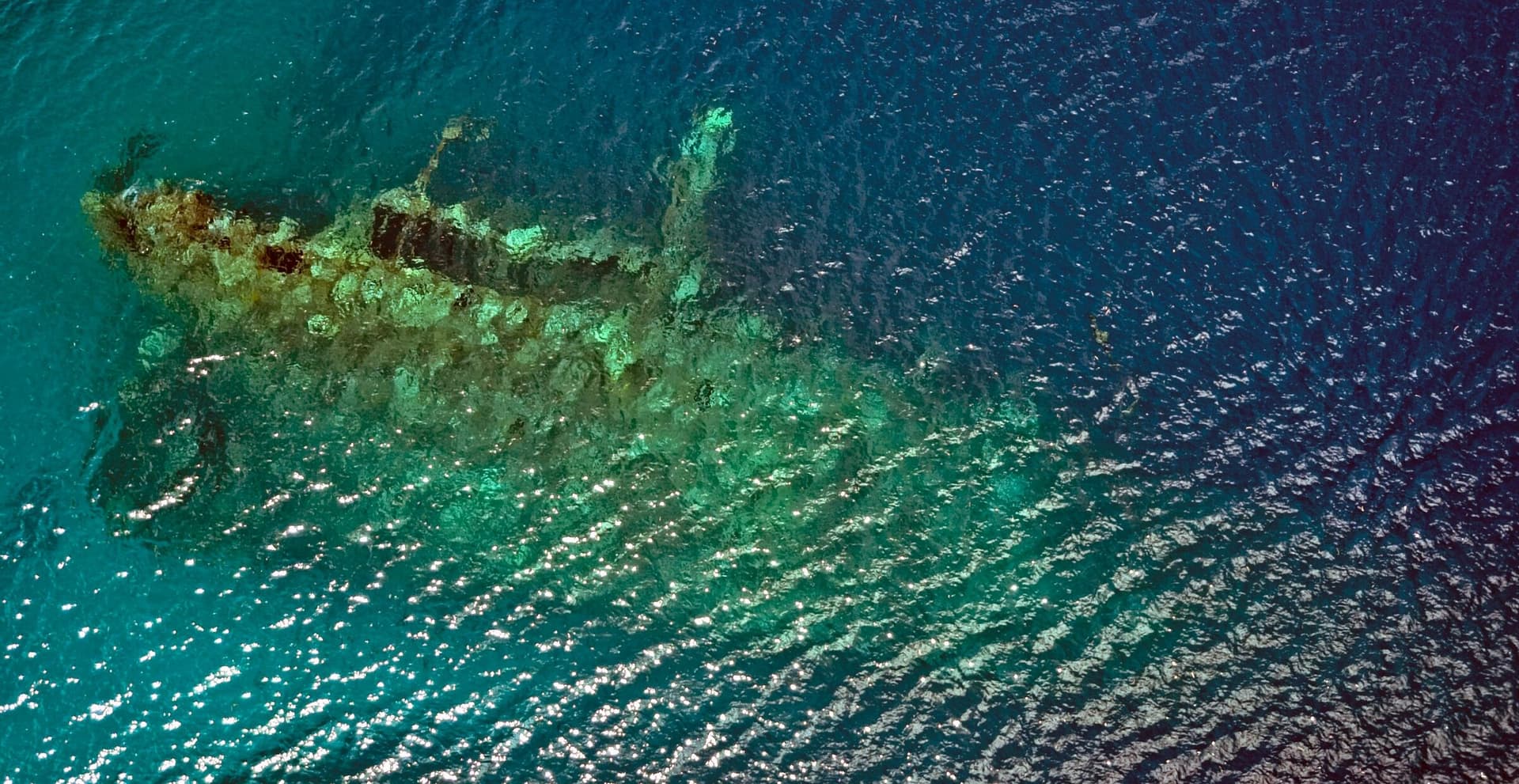
If you've started typing "truk lagoon vs bikini atoll wreck diving" into a search bar, let us save you some agonising: in almost every case, the honest answer is Truk first. These two destinations get lumped together because both are Pacific lagoons full of warships sunk in the 1940s, but they sit on opposite ends of the diving difficulty spectrum. One is a reachable, coral-clad, mostly-recreational pilgrimage. The other is a deep, decompression, technical expedition to nuclear-sunk capital ships at the end of a brutal logistics chain. Let's name the tradeoffs out loud.
We're an independent agency — we don't own these boats, and we charge the same as booking direct — so our only job here is to stop you booking the wrong trip. This is a certification-and-depth reality check, not a beauty contest.
The one-paragraph honest summary
Truk Lagoon (Chuuk, Micronesia) is the world's greatest recreational wreck site that also happens to offer world-class technical diving. Most of its famous "Ghost Fleet" sits in 18–40 m, divable on a single tank with an Advanced Open Water card and good experience. Bikini Atoll (Marshall Islands) is a technical-only destination: its capital ships rest around 48–55 m, every dive is a decompression dive, and the access alone — through a US military base, then a 24–30 hour open-ocean crossing — filters out the casual. If you have to ask whether you're ready for Bikini, you aren't yet. That's not gatekeeping; it's the gate.
Side-by-side: the gulf in one table
| Truk Lagoon | Bikini Atoll | |
|---|---|---|
| What's down there | ~60+ Japanese merchant/naval ships, 200+ aircraft (the "Ghost Fleet") | US & Japanese capital ships sunk by 1946 nuclear tests — incl. carrier USS Saratoga, battleship IJN Nagato |
| Typical depths | Mostly 18–40 m; deeper wrecks 40–64 m | Mostly ~48–55 m (157–180 ft) |
| Minimum cert (recreational) | Advanced Open Water + Deep speciality, ~50 logged dives | Not possible — no recreational diving here |
| Minimum cert (technical) | Tec/extended-range for the deep wrecks | PADI Tec 50 / TDI Adv Nitrox & Deco or equivalent, 100+ logged dives, wreck experience |
| Decompression | Optional — many dives are no-stop | Mandatory on essentially every dive |
| Gas | Air or nitrox fine for most; trimix for deep wrecks | OC divers dive air/nitrox (no helium supplied); trimix is CCR-only, normoxic cert required |
| Getting there | International hub → Guam → Chuuk | International hub → Majuro/Kwajalein (US military base, entry letter required) → 24–30 hr boat crossing |
| Nearest chamber | On-island / regional | 30 hours to two days away |
| Rough liveaboard price | ~US$2,300–8,600 per trip (varies wildly by boat/length) | ~US$7,750+ recent reference, plus O2/Sofnolime consumables for CCR |
| Who it's for | Keen recreational → technical wreck divers | Seasoned technical/deco divers only |
Prices and requirements move around — treat the figures above as a sense of scale, not a quote. Confirm current rates and the operator's exact prerequisites with us before you commit; fees and cert minimums change season to season.
Truk Lagoon: the reachable pilgrimage
Truk Lagoon is the trip most wreck-curious divers should do, full stop. In February 1944, Operation Hailstone caught the Imperial Japanese fleet at anchor, and the lagoon swallowed dozens of ships in a matter of days. Eighty years on, those hulls have become artificial reefs draped in soft coral, with cargo holds frozen mid-mission.
The genius of Truk is its range. The same liveaboard, on the same day, can drop recreational divers onto a 20-metre wreck while the tech contingent descends to 60. The boat moors directly over the site, so you ride the line straight down.
The crowd-pleasers (recreational, ~18–40 m):
- Fujikawa Maru — the lagoon's most beloved wreck. Holds packed with fighter-plane fuselages, propeller blades, gas masks and shell casings, all under a blanket of soft coral and fish.
- Shinkoku Maru — a former oil tanker that starts shallow (~11 m) and is so encrusted with soft coral it reads as a reef. The kind of wreck you'll want to dive three times.
- Nippo Maru — a perennial favourite, complete with a tank on deck, artillery and a wheelhouse you can drift through.
The deep prizes (technical, 40–64 m):
- San Francisco Maru — "the Million Dollar Wreck." Battle tanks on the foredeck, holds full of mines, bombs and shells. The deck sits around 50 m, the seabed near 63 m — a genuine extended-range, deco-and-trimix dive, not an AOW lark.
- Aikoku Maru, Oite and others round out the deep card for qualified tech teams.
What you need: operators typically ask for Advanced Open Water (or equivalent) with around 50 logged dives, and a Deep speciality is strongly preferred for the 40-metre sites. Nitrox isn't mandatory but is highly recommended — it buys you bottom time and a safety margin you'll be grateful for. A torch is mandatory for any penetration, and there are usually none to rent on board, so bring your own. Water is a balmy 28–30 °C — a 3 mm or 5 mm suit does the job.
Honest caveat: Truk is "recreational" but it is deep recreational. Many of the best dives flirt with 40 m, and even the shallow wrecks reward divers comfortable with overhead orientation, currents and silt. If your logbook is thin or you haven't dived in a year, do a refresher and a deep course before you fly. We'll happily talk you through the realistic prep — see our full Truk Lagoon wreck diving guide for the wreck-by-wreck breakdown.
Logistics: standard routing is international hub → Guam (GUM) → Chuuk (TKK), with the Guam leg around 90 minutes. Flights are infrequent, so a missed connection can cost a full day. Build in a buffer day at each end — missing a liveaboard departure is a real and expensive risk. Best diving conditions run roughly October to April (drier), though the Ghost Fleet dives year-round.
Bikini Atoll: the deep technical expedition
Bikini Atoll is a different animal entirely. This is where the US conducted the 1946 Operation Crossroads nuclear tests, deliberately sinking a fleet of captured and surplus warships. The result is, frankly, the most extraordinary deep-wreck site on Earth — and one of the least accessible.
The headliners:
- USS Saratoga — an 888-foot aircraft carrier, one of the largest divable wrecks anywhere, sitting upright. You can fin over the flight deck and into hangars still holding aircraft and ordnance.
- IJN Nagato — the Japanese battleship that was Admiral Yamamoto's flagship at Pearl Harbor, now resting upside down in around 170 ft (~52 m).
- Plus USS Arkansas, USS Lamson, USS Anderson and the submarine USS Apogon.
These wrecks sit roughly 48–55 m down. There is no shallow option, no "easy day." Every dive is a decompression dive, with substantial bottom time and long stops. This is why Bikini is a pilgrimage divers train years for.
The Bikini prerequisites checklist
Operators enforce these — divers who can't demonstrate the skills on the mandatory check-out dive on day one are not permitted to continue. Be honest with yourself against this list:
- Open-circuit: minimum PADI Tec 50 or equivalent (TDI Advanced Nitrox & Deco Procedures, IANTD Tech Nitrox, NAUI Tech Nitrox & Deco, ANDI Technical Nitrox).
- Closed-circuit (CCR): minimum normoxic trimix-level certification (e.g. TDI Air Diluent / Helitrox 45 m or equivalent). Trimix is supplied for CCR divers only — helium supply on the boat is limited, so open-circuit divers dive air or nitrox at these depths, which is a serious consideration in itself.
- At least 100 logged dives with genuine wreck-diving experience.
- Overhead/penetration: any wreck penetration requires cave or other overhead-environment certification and experience — these are silty, deep, complex interiors.
- Rock-solid buoyancy, trim and ascent-rate control. Not "I did a course once." Current, demonstrable, on-the-day skill.
If you're staring at that list wondering where to start, our honest primers will help: is technical diving for you? and what to weigh up before any deep-diving liveaboard. The fuller picture lives in our Bikini Atoll nuclear wreck diving guide.
The access chain (this is the part people underestimate)
Bikini is liveaboard-only, and the route there is half the difficulty:
- Fly into the Marshall Islands (typically via Honolulu/Majuro).
- Transit via Kwajalein, a US military base — you must present a confirmation letter from your liveaboard to be permitted entry, then take army transport to the embarkation point.
- Endure a 24–30 hour open-ocean crossing to the atoll. It can be rough.
Once there, you're in one of the remotest dive locations on the planet. The nearest hyperbaric chamber is 30 hours to two days away. Boats cap guest numbers (often 10–12, or up to ~18 depending on the vessel and trip type) partly to make room for the mountain of technical kit and redundant safety equipment a responsible operation demands.
A genuine time-sensitivity caveat
Bikini's diving future is not guaranteed. As of the 2026 season, the single operator is still running seasonal trips, but 2027 trips have been cancelled and operations beyond that are uncertain. If diving the nuclear fleet is on your life list, this is not a "someday" trip to leave indefinitely. Talk to us about the realistic window — and please don't let urgency push you onto these wrecks before your training and experience are genuinely ready. The atoll has been there since 1946; it'll forgive you for taking another two years to qualify properly.
So which one is yours?
- Newer to wrecks, or fewer than ~100 solid dives? → Truk. No contest. It is one of the best dive trips on Earth and it's achievable this year.
- A keen recreational wreck diver wanting "more"? → Truk — then add the deep wrecks once you've earned the tech tickets. Truk is the natural training ground for Bikini.
- A current, experienced technical/deco diver with wreck-penetration training and the logbook to back it? → Bikini is the summit. Build it as a serious, deliberate expedition.
The clean rule: Truk teaches you the depth, the deco discipline and the wreck instincts that Bikini then demands. Doing Truk first isn't a consolation prize — it's the correct order of operations.
Either way, we'll give you the unvarnished version: the right cert path, a realistic budget, the buffer days, and an honest read on whether this season is your season. No upsell — same price as booking direct, just better advice.
Related Guides
- Truk Lagoon wreck diving guide — the Ghost Fleet, wreck by wreck.
- Bikini Atoll nuclear wreck diving — Saratoga, Nagato and the deep technical reality.
- Technical diving: is it for you? — an honest first look at going beyond recreational limits.
- Deep-diving liveaboard considerations — what to weigh up before booking any deep, remote trip.
Related Articles
%20-%20Large.jpg&w=828&q=75)
Best Time to Dive: A Season-by-Season Guide
When to visit the world's top liveaboard destinations for the best conditions and marine life encounters.
Galápagos Diving: What to Expect on Your First Trip
Hammerhead highways, curious sea lions, and currents that demand respect — here's what awaits in the enchanted islands.