Diving the Seychelles: Granite Reefs, Island Cruises and the Outer Atolls
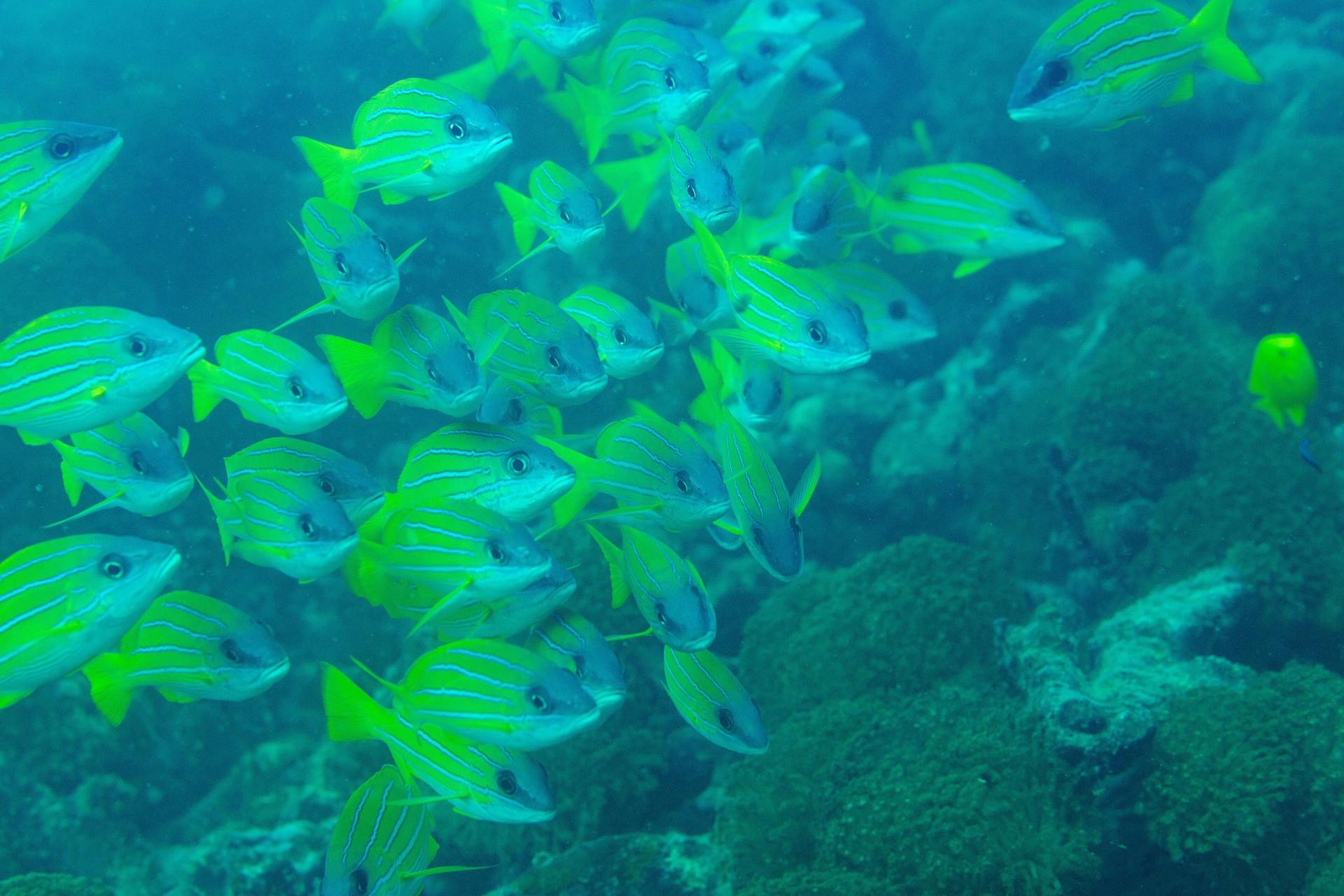
Photo: Diego Delso, CC BY-SA 4.0
The Seychelles is two dive destinations under one flag. Around Mahé, Praslin and La Digue you dive granite: boulders, gullies and pinnacles busy with fish and turtles, at moderate depth, in warm water, on trips that suit almost any diver. More than 1,000 km to the south-west lie the coral atolls of the Aldabra group, reached only by a two-week expedition for experienced divers.
This is the overview. Two companion guides go deeper, one on the season, month by month and one on the choice between a boat and a room on land.
What the diving is
Rock, not reef. The inner islands are granite, the peaks of an old fragment of continent, and the same rock carries on under the surface. A typical site is a pile of house-sized boulders or a pinnacle rising from sand, cut by gullies, arches and swim-throughs, with hard and soft coral growing on the stone. The islands stand on a broad, shallow bank, so most dives are at moderate depth. The deep sites are isolated pinnacles, not walls.
The fish. Schools of bluestripe snappers and fusiliers hang over the rock, with batfish, emperor angelfish, lionfish, groupers and moray eels among the boulders. Eagle rays and large stingrays are regular, whitetip reef sharks rest in the gullies, and Napoleon wrasse turn up on the better sites.
Turtles. Green and hawksbill turtles are on the inner-island reefs all year. Hawksbills also nest on the beaches, mostly in daylight, from about October to March. Keep well back from any turtle, in the water or on the sand.
The coral. Mass bleaching in 1998 killed around 90 per cent of the live coral on the inner-island reefs. Recovery was slow and uneven, and a second event in 2016 cut coral cover on the reefs scientists monitor by about 70 per cent within a year. It has been growing back since. Come for the rock, the fish and the turtles, not for wall-to-wall coral.
Conditions. The water is warm in every month, about 26°C at its coolest and 30°C or more at its warmest. Visibility varies more than in most tropical destinations, from 10–15 m in the murkiest weeks to 20–30 m on the better sites in the calm months.
The inner islands, by area
North and north-west Mahé. Many of the main island's dive centres work from this coast. Close to shore are shallower granite sites such as L'Ilot, a small islet ringed by boulders and soft coral, and the bays of the Baie Ternay Marine National Park. Further out are the sites experienced divers ask for. Shark Bank is a deep granite pinnacle in open water, for Advanced divers, known for eagle rays and large stingrays. Brissare Rocks is a shallower granite massif covered in snappers and fusiliers. The wreck of a naval tanker that struck an uncharted rock in 1970 lies at about 30 m and is also an Advanced dive. All three are exposed, and the wind decides whether a boat goes.
Praslin, La Digue and the islands between. The granite here is spread over a scatter of small islands and rocks. Ave Maria Rock, between the two main islands, is a shallow site with dense fish life. The Sister Islands and Coco Island are similar, and good for snorkellers too. Marianne, to the east, is known for grey reef sharks and for current, and suits experienced divers. This is the area the island cruises spend most of their week in, and their days ashore are here as well: giant tortoises on Curieuse, seabirds on Aride and the coco de mer palms of the Vallée de Mai on Praslin.
Whale sharks. Whale sharks feed off Mahé's western side between August and November, most often in September and October. Sightings fell steeply after about 2009 and have picked up in recent years. One is possible, and it is not a season to count on. If you meet one, stay out of its path and do not touch or chase it.
The outer islands
The outer islands are coral, not granite, and they are spread across a very large area of ocean. The ones we sell are the Aldabra group: Aldabra itself, with Cosmoledo, Astove and Assumption.
Aldabra is a raised coral atoll, a UNESCO World Heritage Site since 1982, managed by the Seychelles Islands Foundation. UNESCO records it as home to the largest population of giant tortoises in the world, and it is one of the main green turtle nesting sites in the western Indian Ocean. It has no hotel. Visitors arrive by boat, with the foundation's permission, and live on board.
The diving is of a different order from the inner islands:
- The Aldabra passes. The lagoon fills and empties through a few channels, and the drift through the Main Channel on a rising tide is the dive the atoll is known for, with turtles, big groupers and reef sharks.
- Astove Wall. A near-vertical drop from the shallows into very deep water, with green turtles, reef sharks and potato groupers.
- Cosmoledo. A large, little-dived atoll with tidal channels and a wide outer slope.
The foundation's rules apply to every visiting boat. Only divers with an Advanced certification may dive the Main Channel, and it is not dived on spring tides. Each group goes in with one of the foundation's divers as well as the boat's own guide. Night dives and baited dives are not allowed, and nor is touching or chasing animals.
Manta rays belong in this section too. The known gatherings of reef mantas in the Seychelles are in the Amirantes, and they are recorded feeding off Aldabra. They are not something to plan an inner-island week around.
When to go, in brief
The wind sets the calendar. The two calm windows between the monsoons, April to May and October to November, usually bring the flattest seas and the clearest water. The south-east trades blow from about May to October, strongest in July and August, with chop, cooler water and more plankton. The north-west monsoon, from about December to March, is warm and wet, and often has the lowest visibility of the year around the inner islands.
The inner islands are dived in every month. Aldabra expeditions sail a few times a year between October and May. The season guide has the table of months, water temperatures and what is in season.
Three ways to dive it
From land. Mahé, Praslin and La Digue all have dive centres, and rooms from large hotels to guesthouses. Day boats usually run two dives in the morning. This gives the most diving and the widest choice of sites.
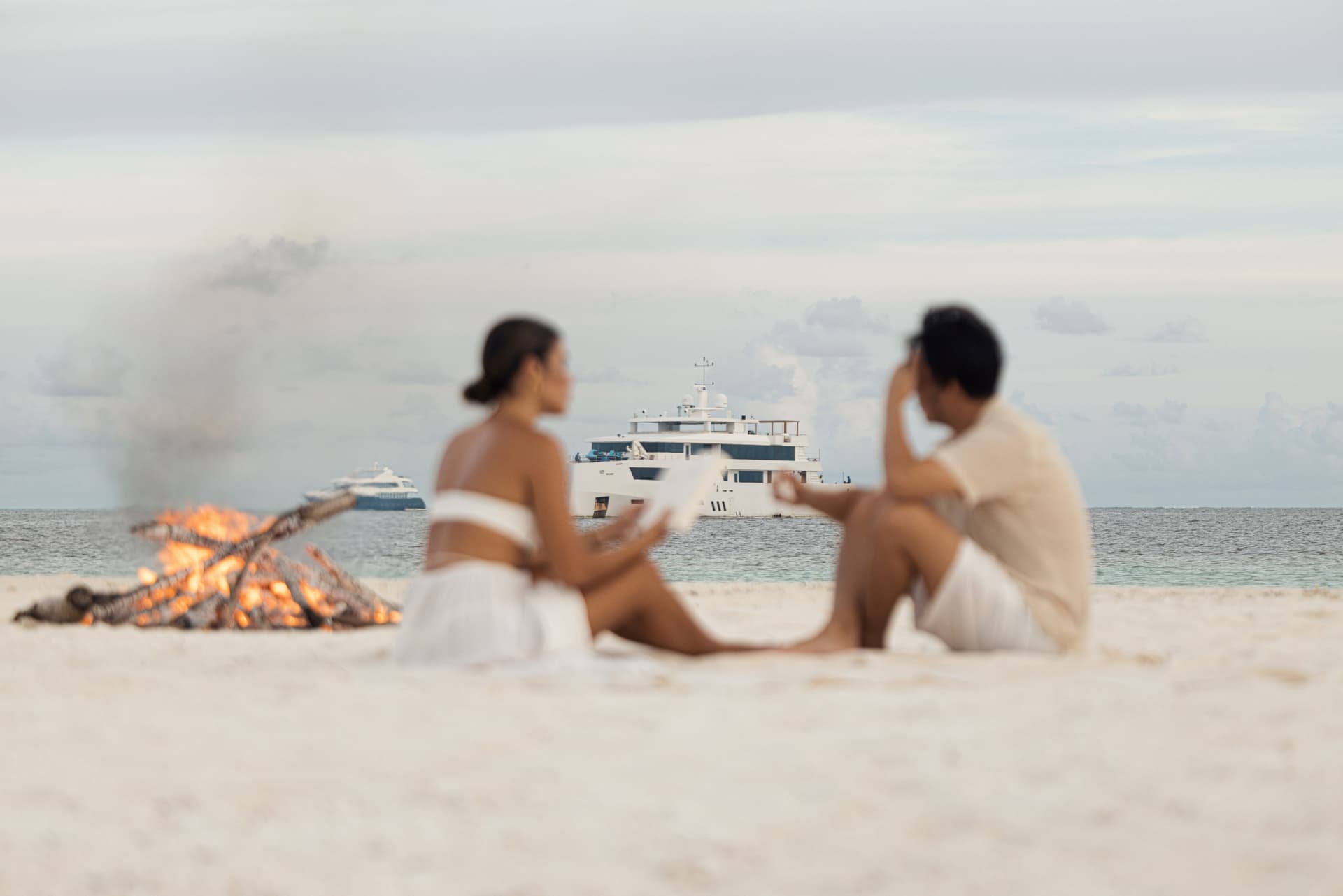
On an island cruise. Most of the Seychelles sailings we sell are seven-night cruises around the inner islands, with an island visit most days. Diving is a paid package on top of the cruise fare, the tanks are filled with air only, and you can plan on one or two dives a day. Non-divers are welcome.
On the expedition. Two weeks on a small yacht to the Aldabra group, with about 28 dives.
Which one fits depends on how much of the week you want to spend under water and who is travelling with you. Our Seychelles liveaboard vs resort guide works through that choice.
What it asks of you
The inner islands. Boats typically ask for Open Water certification, and beginners can try an intro dive. Most sites are at moderate depth. Current picks up on the exposed rocks, so carry a surface marker buoy, and leave the deep pinnacles and the wreck to Advanced divers. Travel and dive insurance is compulsory on the cruises we sell.
The Aldabra group. Boats typically ask for Advanced Open Water, at least 30 logged dives and drift experience. The channels run fast, cool thermoclines are common at depth, and you are a long way from a hospital. You need insurance that covers evacuation from remote areas, and you bring your own equipment. Our guide to dive insurance for liveaboards explains what to check in a policy.
A 3 mm full suit suits most divers around the inner islands. For the outer atolls pack a hood or a 5 mm suit.
Getting there and paperwork
Flights. International flights land at Seychelles International Airport on Mahé. From Europe most routes involve one change, in the Gulf, Istanbul or East Africa, and a few European cities have direct flights, some of them seasonal. Timetables change from season to season, so check before you plan around one. We do not sell flights, but we will tell you which arrival days fit a sailing. Plan to land at least the day before a boat leaves.
Entry. You do not need a visa. Every visitor does need a Seychelles Travel Authorisation, applied for online before travel on the government's own site, seychelles.govtas.com. You can apply up to 30 days before you arrive, and you will be asked for your return or onward ticket and proof of accommodation. A fee is charged for each traveller. Other websites sell the same authorisation for more, so use the official one. A visitor's permit is issued free on arrival.
Flying home. DAN's guidance is to wait at least 18 hours after several days of diving before you fly. Leave your last day dry.
What is sailing
The inner-island cruises sail all year and the Aldabra expedition on a handful of dates. Today's lowest fare for a confirmed inner-island cruise with space is €1,152 per person sharing a cabin. That is the cruise fare: the dive package, rental equipment, and the park fees and tourism levy paid on board come on top.
| Date | Destination | Route | Nights | From |
|---|---|---|---|---|
| 26 Dec 2026 | Seychelles | Inner islands cruise (dive package extra) | 7 | €2,834 |
| 9 Jan 2027 | Seychelles | Inner islands cruise (dive package extra) | 7 | €1,985 |
| 9 Jan 2027 | Seychelles | Inner islands cruise (dive package extra) | 7 | €1,481 |
| 16 Jan 2027 | Seychelles | Inner islands cruise (dive package extra) | 7 | €1,985 |
| 16 Jan 2027 | Seychelles | Inner islands cruise (dive package extra) | 7 | €1,717 |
| 23 Jan 2027 | Seychelles | Inner islands cruise (dive package extra) | 7 | €1,587 |
Routes, what each fare includes and what you pay on board are on our Seychelles liveaboards page, and every date is on the Seychelles calendar.
Four short questions
Is the Seychelles worth it for the diving alone?
For a diver who wants big walls, dense coral or four dives a day, other destinations do that better. For granite scenery, turtles, schooling fish and easy conditions, with islands worth seeing between dives, the inner islands are a good choice. The Aldabra group is a serious dive trip in its own right.
Can a beginner dive the Seychelles?
Yes, around the inner islands. Open Water certification is enough for most sites, and a non-diver can try an intro dive.
Do I need a liveaboard?
Only for the outer atolls. The inner islands can be dived from land or from an island cruise.
Are there sharks?
Whitetip reef sharks are seen around the inner islands, and grey reef sharks at Marianne. The outer atolls add grey reef and silvertip sharks. Whale sharks are possible off Mahé from August to November.
Tell us your dates, what is in your logbook and whether everyone in your party dives, and our concierge will reply in writing with the sailings that fit.
Related Guides
Related Articles
Diving the Azores: Blue Sharks, Mobulas and the North Atlantic's Largest Protected Network
In 2024 the Azores created the largest network of marine protected areas in the North Atlantic, about 287,000 km² of ocean that blue sharks, mobulas and sperm whales pass through. Here is why we think it is the most underrated diving in Europe, island by island and month by month.
Cape Verde for Divers: Whales, Sharks, and the Atlantic Crossroads
Cape Verde sits where African, European and equatorial currents meet. The result: humpback whales in spring, juvenile lemon sharks in water you can wade into, nesting loggerheads in summer, and warm-water Atlantic diving most Europeans have never seriously considered.