Socorro: The Definitive Guide to Giant Mantas and Humpback Whales
There is one thing Socorro does better than any other destination on earth, and it's worth a full paragraph to describe:
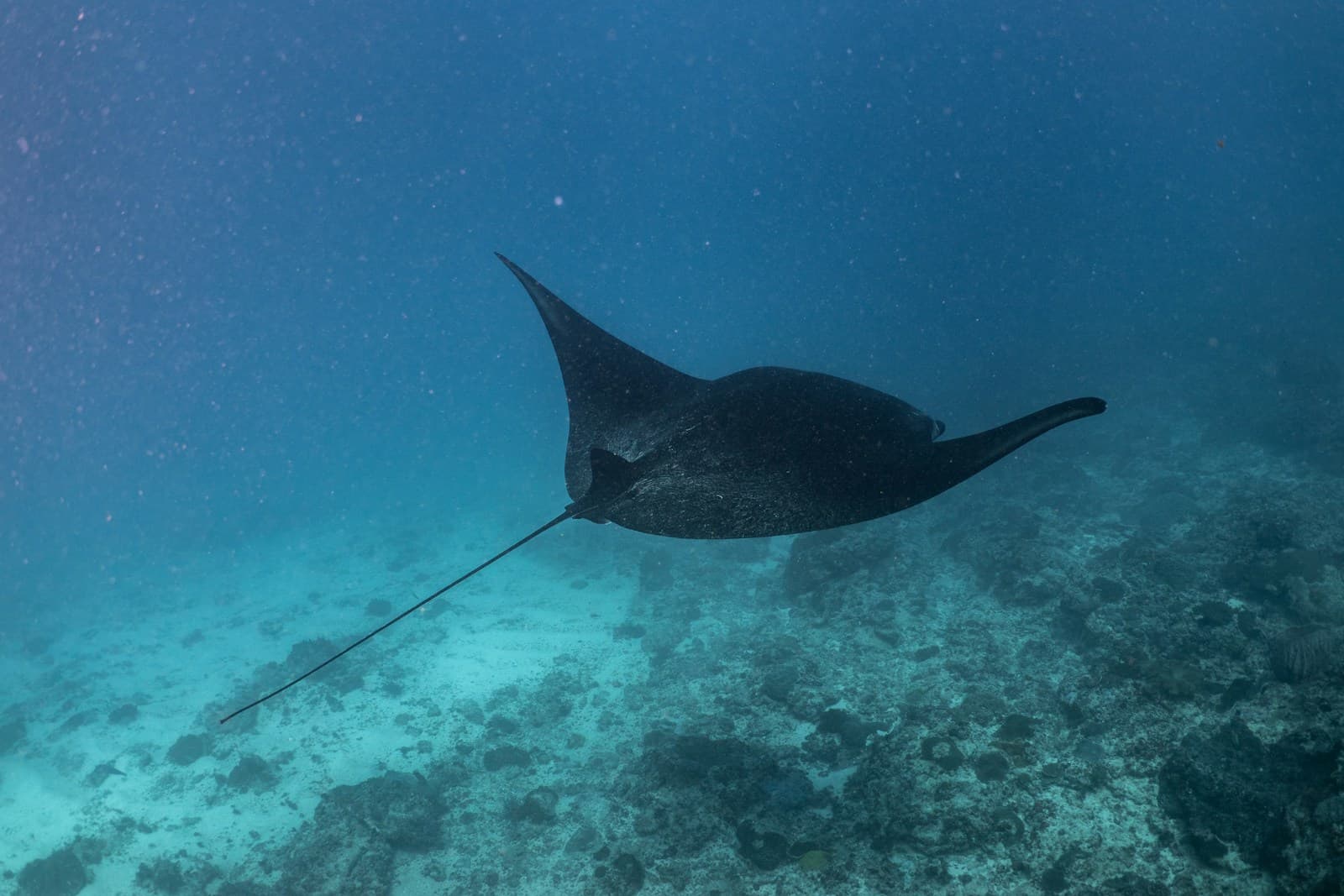
Between January and early April, you can dive at a site called The Boiler off San Benedicto Island, a seamount where oceanic giant manta rays — Mobula birostris, the largest ray species on the planet, with wingspans up to seven metres — come to be cleaned by clarion angelfish. The mantas at Socorro don't tolerate divers; they actively engage with them. Individual animals approach, circle, and hold position above the group to let the stream of bubbles clean their belly plates. You don't need a camera to remember it. Meanwhile, because the humpback whale breeding population is in the same water during these months, most dives have whale song audible through the dive. You hear it before you see the mantas.
That's the trip.
This post consolidates everything we'd tell a client considering Socorro: when to go for which experience, how the trip compares to Cocos and Galápagos, what it actually costs, and whether it's right for you.
What Socorro is
The Revillagigedo Archipelago — Socorro, San Benedicto, Clarion, and Roca Partida — four volcanic islands 390 kilometres southwest of Cabo San Lucas, Mexico. Sometimes called "Mexico's Galápagos," though that comparison undersells Socorro's specific pelagic character.
The archipelago was designated a UNESCO World Heritage Site in 2016 and a National Park in 2017, creating the largest marine protected area in North America at roughly 148,000 square kilometres, fully no-take.
Access is by liveaboard only. The crossing from Cabo San Lucas is 24–30 hours each way.
What you'll dive
Four main dive areas, each with a distinct character:
San Benedicto Island. Home to The Boiler — the legendary giant manta cleaning station and the reason most people book this trip. Also home to El Cañon, a plateau site with resident silky and galapagos shark schools.
Socorro Island. The main island of the archipelago. Sites include Cabo Pearce (friendly mantas, tiger shark encounters possible) and Punta Tosca (volcanic wall diving).
Roca Partida. A small rock rising 30 metres out of the ocean with sheer walls dropping to 200+ metres on all sides. Schooling hammerheads (seasonal), tuna, jacks, whitetip dens, and occasional whale sharks. One of the iconic blue-water dive sites in the Pacific.
Clarion Island. Farthest south, included on longer itineraries. Harder to reach weather-dependent.
The three things to come for
Giant mantas. Peak January–April. These are genuine oceanic mantas, not the smaller reef mantas you see in the Maldives or Komodo. The Boiler on the right day delivers multiple encounters per dive with animals that display clear individual personalities. You will recognise the same manta returning to you across multiple days.
Humpback whales. Same window (January–April) because the humpbacks are here to breed and give birth. You cannot scuba-dive with them — Mexican law — but you can hear them singing on every dive, and some operators offer permitted snorkel encounters on surface intervals when conditions allow.
Tiger sharks and silkys. Year-round resident populations. Tiger sharks at Cabo Pearce are increasingly reliable and have become one of the destination's draws. Silky shark schools at dawn or dusk are routine.
Also present, season-dependent: bottlenose dolphins (often engaging with divers), schooling hammerheads, whale sharks (November–May), manta rays at other sites, occasional false killer whales, and the full supporting cast of a Pacific pelagic ecosystem.
How Socorro compares to Cocos and Galápagos
All three are apex pelagic destinations in the eastern Pacific. None is interchangeable with the others.
| Socorro | Cocos | Galápagos | |
|---|---|---|---|
| Flight access | Mexico (SJD) | Costa Rica (SJO) | Ecuador (UIO + inter-island) |
| Crossing time | 24–30 hrs | 36 hrs | 12–14 hrs |
| Trip length | 8–11 days | 10 days | 7–10 days |
| Headline experience | Giant mantas + whale song | Hammerhead schools | Hammerhead schools + whale sharks |
| Water temp | 20–26°C (variable) | 25–28°C | 18–28°C (variable) |
| Current difficulty | Moderate–strong | Strong | Strong–very strong |
| Price (USD) | $3,500–$6,500 | $5,500–$8,500 | $5,500–$10,000 |
| Cold thermoclines | Sometimes | Rare | Frequent |
Simplified decision: if you want mantas and whale song, Socorro. If you want the maximum hammerhead school experience in warmer water, Cocos. If you want breadth (hammerheads + whale sharks + unique terrestrial ecosystem), Galápagos.
Socorro is usually the more approachable of the three for divers stepping up from warm-water destinations — shorter crossing than Cocos, warmer water than Galápagos, less extreme currents than either.
When to go
The Socorro dive season runs November through May. Outside this window, most operators are in dry dock or on other routes.
Within the season, three distinct experiences:
November–December (early season). Water warmer, fewer whales yet, mantas building to peak. Fewer boats, good value.
January–April (peak). This is the iconic Socorro trip. Humpback whales singing, giant mantas at peak activity, full complement of pelagic traffic. Prices peak. Book 12+ months ahead for the best operators and cabin categories.
Late April–May (end of season). Whales departing north, mantas still present, water cleanest and warmest of the season. Increasingly popular for photographers who want cleaner conditions.
Most first-time Socorro clients should target February or March — the intersection of whale song window, peak manta activity, and reasonable boat availability.
The trip itself
Standard 8-night itinerary:
- Day 0: fly to Cabo San Lucas. Transfer, hotel night, board boat next afternoon.
- Days 1–1.5: crossing to San Benedicto. 24–30 hours.
- Days 2–7: diving across San Benedicto, Socorro, and Roca Partida. Three to four dives per day.
- Days 8–9: return crossing.
- Day 9 (morning): disembark Cabo San Lucas, fly home.
Longer 11-night itineraries add Clarion and extra diving at each site.
Critical detail: Socorro dives are generally blue water dives at 15–30 metres, often on the tops of seamounts. Current varies by site and tide but is rarely extreme compared to Cocos or Galápagos Darwin. Nitrox is recommended.
What it costs
Real ranges from operator-published rates in early 2026:
- 8-night liveaboard (mid-tier): US$3,500–US$5,500 per person
- 8-night liveaboard (premium): US$5,500–US$7,500
- 11-night extended itineraries: US$5,000–US$8,500
- Marine park fees (additional): US$350–US$500 per person
- Flights to Cabo San Lucas: €900–€1,400 from Europe
- Pre/post hotel: €100–€250
All-in for a European diver on a mid-tier Socorro trip: €5,000–€7,500. Notably cheaper than Cocos or Galápagos.
Who it's for
Advanced divers with 50+ logged dives, comfortable with blue-water diving and moderate current. Socorro is arguably the most approachable of the three apex Pacific destinations for divers stepping up from Caribbean or Red Sea experience.
Photographers targeting mantas, humpback whales, or blue-water pelagic images. Socorro's manta encounters, when the conditions line up, are unmatched for production quality.
Divers specifically motivated by cetacean encounters. Diving with humpback song as a soundtrack is an experience that almost no other destination offers consistently.
Who it's not for
Divers who need consistently warm water. 20°C at Roca Partida at the wrong time of year is real. Bring the right wetsuit.
New divers (under 50 logged dives). The boats won't take you; the current would overwhelm you anyway.
Clients looking for reef-diving variety. Socorro is pelagic and volcanic. If you want coral, go to Raja Ampat.
How to start planning
Three questions we'd want answered:
- Primary target: mantas, whales, or both equally?
- Month flexibility: tight (single week) or flexible (can move within Jan–April)?
- Logged dive count and blue-water experience level?
From those we can recommend a specific season week and boat tier. Popular boats sell out 8–12 months ahead for peak season.
Tell us about your Socorro plans →
- Cocos Island: The Definitive Guide to Hammerhead Heaven — The natural comparison trip.
- Diving the Galápagos: Hammerheads, Iguanas, and the Crossing to Darwin & Wolf — The third apex Pacific destination.
- A Boutique Liveaboard Agency, On Purpose — How we think about apex destinations.
Related Articles
%20-%20Large.jpg&w=828&q=75)
Best Time to Dive: A Season-by-Season Guide
When to visit the world's top liveaboard destinations for the best conditions and marine life encounters.
Galápagos Diving: What to Expect on Your First Trip
Hammerhead highways, curious sea lions, and currents that demand respect — here's what awaits in the enchanted islands.