The Boiler
Diving The Boiler in Socorro is the closest most of us will ever come to being greeted underwater. Giant oceanic mantas here seek out divers, not the other way around.
The Boiler is a submerged volcanic pinnacle off San Benedicto Island in the Revillagigedo (Socorro) Archipelago, and it is arguably the finest place on the planet to share water with giant oceanic mantas. This dive site rewards the long liveaboard crossing with cleaning-station mantas that hover overhead, bottlenose dolphins that make repeated passes, and a supporting cast of sharks in clear blue water. Here is what to expect and how you actually dive it.
Quick answer: The Boiler is a submerged pinnacle / seamount — negative-entry, no anchoring inside the national park; dived around the rock in open water in Socorro (Revillagigedo). Best season: November to May; humpback whales January to April (peak mid-January to mid-April). Level: Advanced — AOW with roughly 50+ logged dives typically required by operators; comfort in current and blue water essential. Depth: Pinnacle rises from a base around 50 m (165 ft) to within 6-7 m (20 ft) of the surface; most diving is spent at 18-30 m. Typical visibility: Typically 15-50 m; often exceeds 30 m on clear days, reduced by spring plankton blooms.
Facts verified September 2026
What makes The Boiler special
The Boiler takes its name from the surface: swell breaks over the shallow crown of the pinnacle and churns the water into a roiling, boiling patch that marks the site from the deck of the boat. The rock itself is a submerged volcanic seamount, often described as a former hydrothermal vent, rising steeply from a base near 50 m to within about 6-7 m of the surface. That vertical relief, sitting in open ocean, concentrates life in a way few dive sites can match.
What sets it apart is the behaviour of the giant oceanic mantas. These are Mobula birostris, the largest ray in the world, with wingspans that routinely pass 4-5 m. At The Boiler they gather at cleaning stations where clarion angelfish pick parasites from their skin, and they are genuinely, unmistakably curious about divers. They hover in your exhaust bubbles, bank slowly overhead, and return pass after pass. Nobody chases them here. You hold position and let the animal decide, and it almost always does.
What you'll see underwater
The mantas are the headline, but The Boiler is a full-cast site. On a good day the water column is busy from the moment you drop.
Seasonality shapes the mix. Bottlenose dolphins are present year-round but most interactive from January to March, and humpback whales move through from January into April — you often hear their song through the whole dive even when you do not see them.
- Giant oceanic mantas — the signature encounter, at cleaning stations and in open water, frequently interacting directly with divers
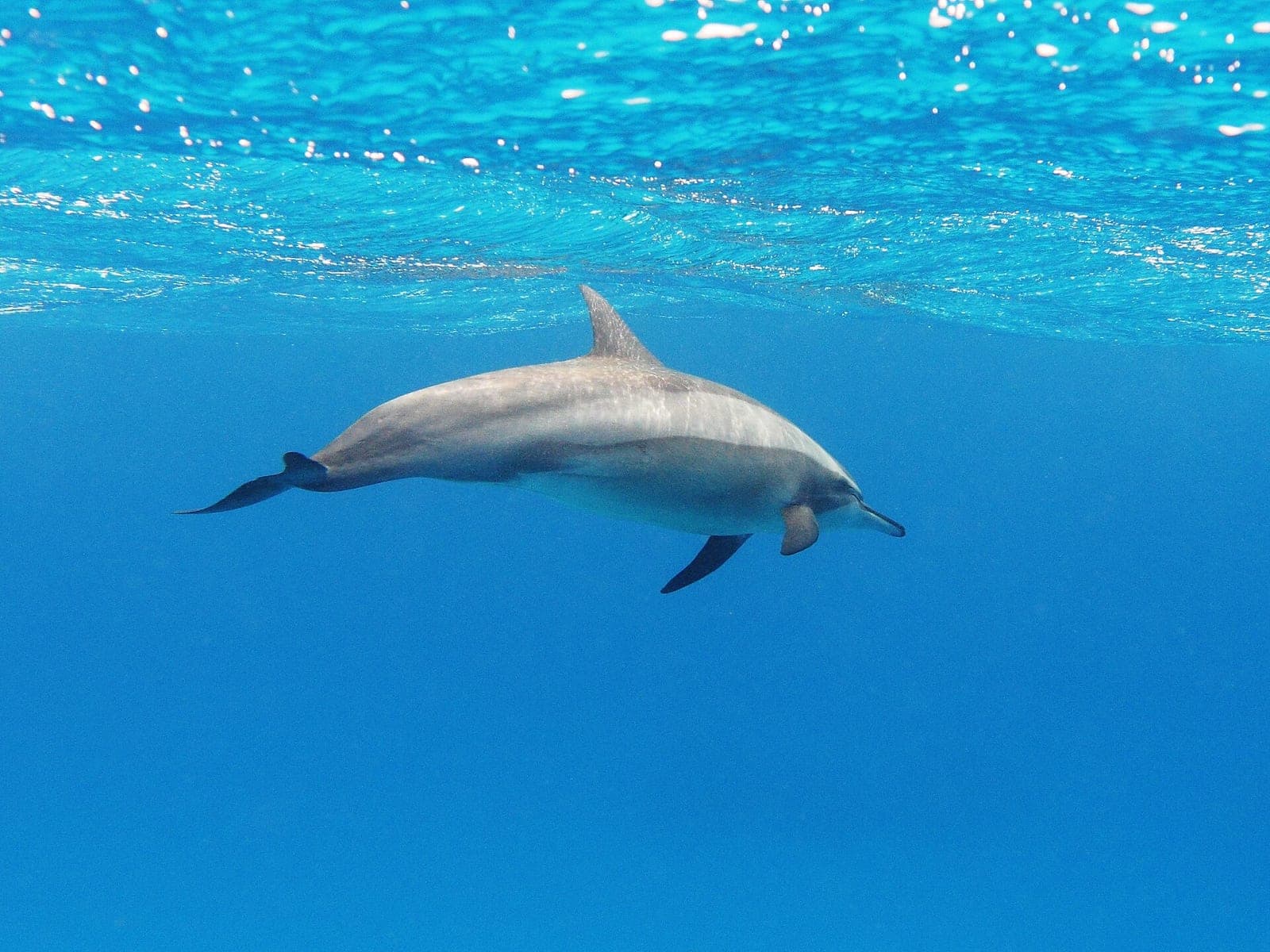
- Bottlenose dolphins — a resident pod that often approaches and makes repeated close passes, sometimes alongside the mantas
- Sharks — silvertip, Galapagos, scalloped hammerhead and silky sharks patrolling the blue and the pinnacle edges
- Humpback whales — seasonal (Jan-Apr), usually heard singing underwater, occasionally seen in the distance
- Reef life — clarion angelfish, jacks, tuna and clouds of smaller fish around the rock
Conditions and who it's for
This is an advanced dive site and operators treat it that way. Most Socorro liveaboards ask for an Advanced Open Water certification and around 50 logged dives, and that floor exists for good reason. Currents at The Boiler can be strong and change through the dive, and the shallow crown catches surge and swell that can toss you around near the top of the pinnacle. On calm days it can be forgiving; on lively days it demands solid buoyancy, comfortable finning against water movement, and easy blue-water orientation with no bottom in sight.
Water temperature runs roughly 20-28°C (68-82°F) across the season, coolest from February to May, so a 5 mm wetsuit — or 7 mm with a hood for the cooler months — earns its place across repetitive days of diving. Visibility is generally excellent, often beyond 30 m, though spring plankton blooms that feed the mantas can knock it down. If you are newly certified or shaky on your air and buoyancy, build experience elsewhere first; The Boiler is worth arriving ready for.
When to dive it
The Revillagigedo diving season runs from November to May, when seas are calmest and marine activity peaks; the archipelago is effectively closed to liveaboards outside these months. Within the season, the trade-offs are real and worth planning around.
Early season (November-December) brings the warmest water and typically the best visibility. The core winter months, January through March, are the sweet spot for big-animal action: the most interactive dolphins, reliable manta encounters, and the heart of humpback whale season, with peak whale activity from mid-January to mid-April. Later, April and May cool the water and can bring more plankton — sometimes trading a little visibility for very active, feeding mantas. There is no bad month here, only different strengths.
How you actually dive it
The Boiler is dived exclusively from a liveaboard — there is no shore or day-boat access, and the archipelago is a national marine park roughly 24 to 30 hours' crossing south of Cabo San Lucas. You reach the site by skiff from the mother vessel, and because anchoring on the pinnacle is not permitted inside the park, dives are run as live pickups: a negative entry off the tender, a prompt descent to get below the surface swell, then time worked around the rock and its cleaning stations.
The technique that pays off is patience. Pick a spot near a cleaning station, settle onto or just off the rock at a sensible depth, control your buoyancy and breathing, and wait. Mantas come to stillness, not to pursuit. Keep your hands to yourself — touching a manta damages the mucus layer that protects its skin — and stay clear of the cleaning station itself so the animals keep using it. Watch your depth and gas, because it is easy to lose track while an animal the size of a small car circles overhead. When the current builds, drift with it along the pinnacle rather than fighting it, and signal the skiff for pickup in the blue.
Faneca dives The Boiler aboard the Rocio del Mar on our Socorro / Revillagigedo liveaboard expeditions, which run only in the November-to-May season when the archipelago is open — the single practical way to reach this remote pinnacle.
The Boiler: common questions
What is the best season to dive The Boiler?
November to May; humpback whales January to April (peak mid-January to mid-April)
What experience level do I need for The Boiler?
Advanced — AOW with roughly 50+ logged dives typically required by operators; comfort in current and blue water essential
How deep is The Boiler?
Pinnacle rises from a base around 50 m (165 ft) to within 6-7 m (20 ft) of the surface; most diving is spent at 18-30 m
What marine life will I see at The Boiler?
Giant oceanic mantas (Mobula birostris), bottlenose dolphins, silvertip, Galapagos, hammerhead and silky sharks, clarion angelfish, seasonal humpback whales
