Cabo Pearce
A lava ridge that runs off Socorro's east coast into open ocean, where giant mantas queue at cleaning stations and dolphins come looking for you.
Some dive sites you visit; Cabo Pearce visits you back. This finger of volcanic rock on the eastern flank of Socorro Island is one of the standout dive sites in the Revillagigedo Archipelago, and one of the few places on Earth where a wild bottlenose dolphin will circle back for a second look at you. It is reachable only by liveaboard, it can throw serious current at you, and on the right day it delivers the kind of big-animal diving most divers only read about. Here is what Cabo Pearce is actually like, and how to dive it well.
Quick answer: Cabo Pearce is a rocky ridge / lava finger with cleaning stations, dived as a live-boat drop with blue-water hangs in Socorro (Revillagigedo). Best season: November to May (a few boats into June); January–March for humpback whales, spring for peak manta and shark action. Level: Advanced — typically AOW with 50+ logged dives; Nitrox recommended. Depth: Working depth 12–25 m (40–80 ft); the ridge and blue-water action sit mostly above 30 m. Typical visibility: Typically 20–30 m; drops during plankton blooms.
Facts verified September 2026
What makes Cabo Pearce special
Cabo Pearce is a finger of old lava that juts from Socorro's eastern shore and runs out into the prevailing current as a submerged ridge. You will spot it topside by the distinctive rock spur that gives the site its name. Underwater, that ridge is the whole story: it interrupts the open-ocean flow, and everything that hunts, cleans or plays in that flow ends up here.
The two things Cabo Pearce is famous for are its manta cleaning stations and its dolphins. Giant oceanic mantas, some past six metres wingspan, hang motionless over the rock while clarion angelfish and wrasse work them over. Unlike almost anywhere else, these mantas seem to seek out divers, coasting low over your head to catch the stream of your exhaled bubbles on their bellies. The resident bottlenose dolphins are just as forward. Pods regularly meet the tender before you even gear up and stay with you through the dive, making genuine eye contact rather than passing through.
Add schooling hammerheads out in the blue, a supporting cast of sharks, and the chance of humpback song filling the water in season, and Cabo Pearce earns its reputation as one of the best dives in Socorro.
What you'll see
This is oceanic, big-animal diving. The headliners are reliable in the right months, but nothing here is on a schedule, and part of the appeal is not knowing which way to point your camera.
- Giant oceanic mantas at the cleaning stations, often several at once, frequently interacting with divers
- Bottlenose dolphins that approach, circle and linger — some of the most sustained wild dolphin encounters in diving
- Scalloped hammerheads, usually schooling out in the blue off the ridge
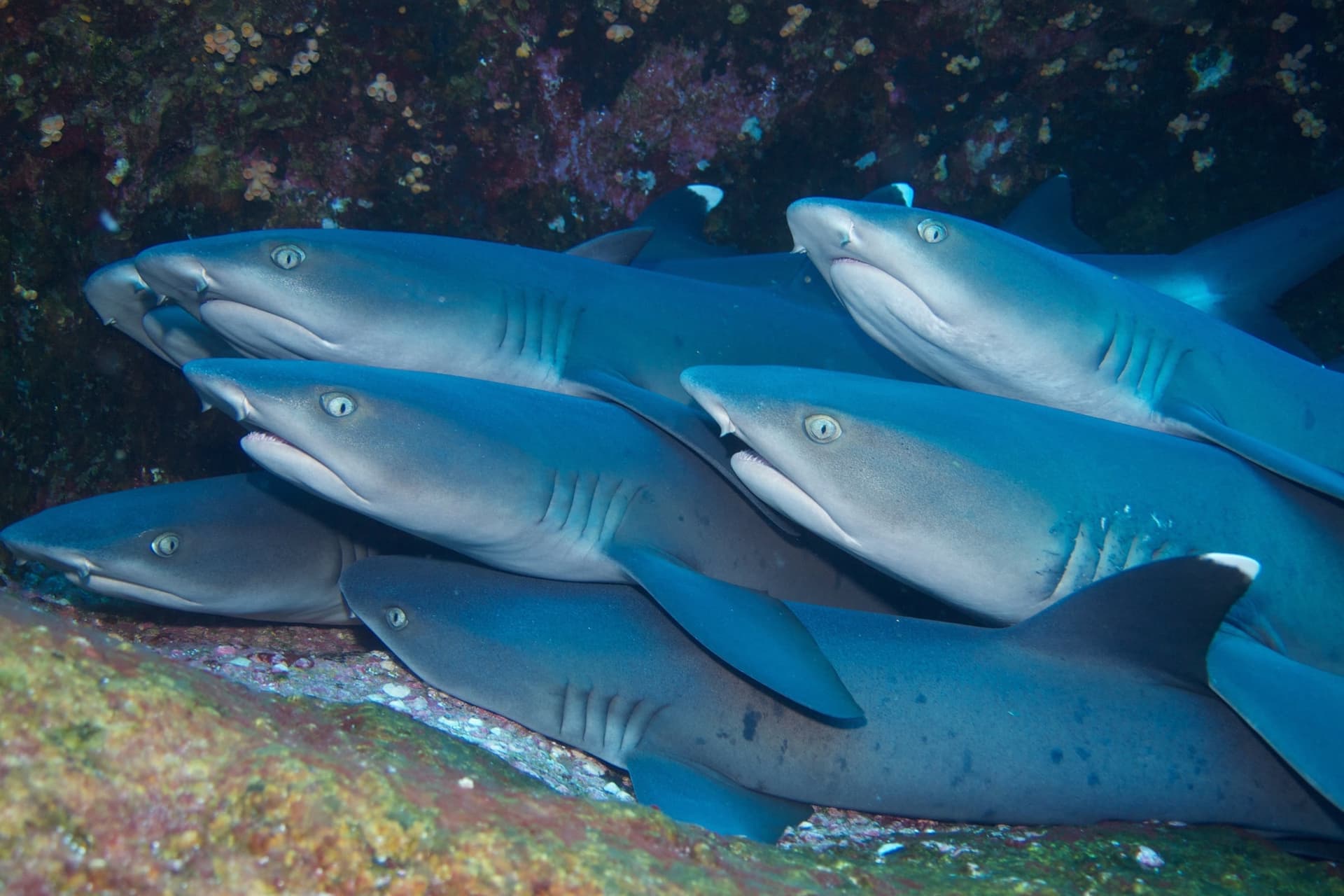
- Silky, Galapagos, silvertip, dusky and reef sharks; occasional tiger sharks and passing whale sharks
- Humpback whales January–April, with their song audible on many dives in February and March
- Green turtles, giant morays, octopus, lobster and dense schools of jacks and creolefish over the rock
Conditions and who it's for
Be honest with yourself before you book: Cabo Pearce is an advanced site. The current can run hard and shift without warning, upwellings and surge come through, and many descents are into deep blue water with no bottom in sight until the ridge rises to meet you. That combination rewards divers with solid buoyancy, comfort in current, and the composure to stay oriented when there is nothing below but blue.
Operators typically ask for an Advanced Open Water certification and 50 or more logged dives, and most strongly recommend Nitrox to extend your time in the productive 15–25 m zone across several dives a day. Water runs roughly 21°C in winter to 28°C in late summer, so plan on a 5 mm to 7 mm suit, with a hood and gloves welcome in the cooler, whale-season months. This is not a first-tropical-trip site, and it is not the place to be sorting out a new camera rig.
When to dive it
The Socorro liveaboard season runs from November to May, with a few boats into June, closing over the summer hurricane months. Within that window, the character of Cabo Pearce shifts.
January to March is whale season. Humpbacks migrate through the archipelago with calves, and their song carries on the water so clearly you will often hear it before you see anything. Water is a touch cooler, around 22–24°C, and the atmosphere underwater is unlike anywhere else. From spring into early summer the water warms, manta and shark activity peaks, and your odds of the full cast — mantas, dolphins, hammerheads and the rest — are at their best. There is no bad month here; there is only which encounters you are prioritising.
How you actually dive it
Cabo Pearce is dived from the liveaboard's tenders as a live-boat operation — you back-roll near the ridge, descend with purpose, and get onto the structure before the current carries you off it. Guides position you at or near a cleaning station and have you settle in, hold position out of the flow behind the rock, and let the animals come to you. Chasing mantas or dolphins here is pointless and counterproductive; the divers who stay calm and low get the closest passes.
Expect a negative or fast entry when there is current, and be ready to use the rock for shelter. Watch your gas and depth carefully, since it is easy to drift deep along the ridge while your attention is on a passing hammerhead. Most dives finish with a blue-water safety stop, which is often where the sharks show best, so keep looking out into the blue right to the end. A surface marker and audible signal are essential in this kind of open water.
Faneca Expeditions dives Cabo Pearce aboard the Rocio del Mar on our Socorro / Revillagigedo liveaboard expeditions; because the archipelago sits some 400 km offshore inside a protected national park, this site is reachable only by liveaboard and only during the November-to-May season.
Cabo Pearce: common questions
What is the best season to dive Cabo Pearce?
November to May (a few boats into June); January–March for humpback whales, spring for peak manta and shark action
What experience level do I need for Cabo Pearce?
Advanced — typically AOW with 50+ logged dives; Nitrox recommended
How deep is Cabo Pearce?
Working depth 12–25 m (40–80 ft); the ridge and blue-water action sit mostly above 30 m
What marine life will I see at Cabo Pearce?
Giant oceanic mantas, bottlenose dolphins, scalloped hammerheads, silky, Galapagos and silvertip sharks, occasional tiger and whale sharks, humpback whales (seasonal), turtles, morays
