Myanmar: Burma Banks & Mergui Archipelago — Diving's Last Frontier
There are destinations that everyone talks about — the Maldives, the Red Sea, Raja Ampat. And then there are places that make seasoned divers lean forward and whisper, "Have you heard of..." Myanmar is firmly in that second category.
The Burma Banks and the Mergui Archipelago are what every "off the beaten path" destination wishes it actually was. Dive sites where the fish genuinely don't know what a diver is. Seamounts that don't appear on most charts. Over 800 islands where you could dive for months and never visit the same reef twice. And on a busy week, you might see one other boat.
The Burma Banks: Seamounts in the Middle of Nowhere
The Burma Banks are a cluster of submerged seamounts rising from the deep Andaman Sea, roughly 250 kilometres west of the Myanmar coast. Getting there requires a serious bluewater crossing — the kind where you leave land behind entirely and just trust the captain. It's not for the faint of heart, and that's exactly the point.
The Key Sites
- Silvertip Bank: The most dived of the Banks, and for good reason. Silvertip sharks circle the summit at 18-25m, nurse sharks rest on the bottom, and the occasional whale shark cruises through during plankton blooms. The top of the seamount is flat enough to kneel and just watch the show.
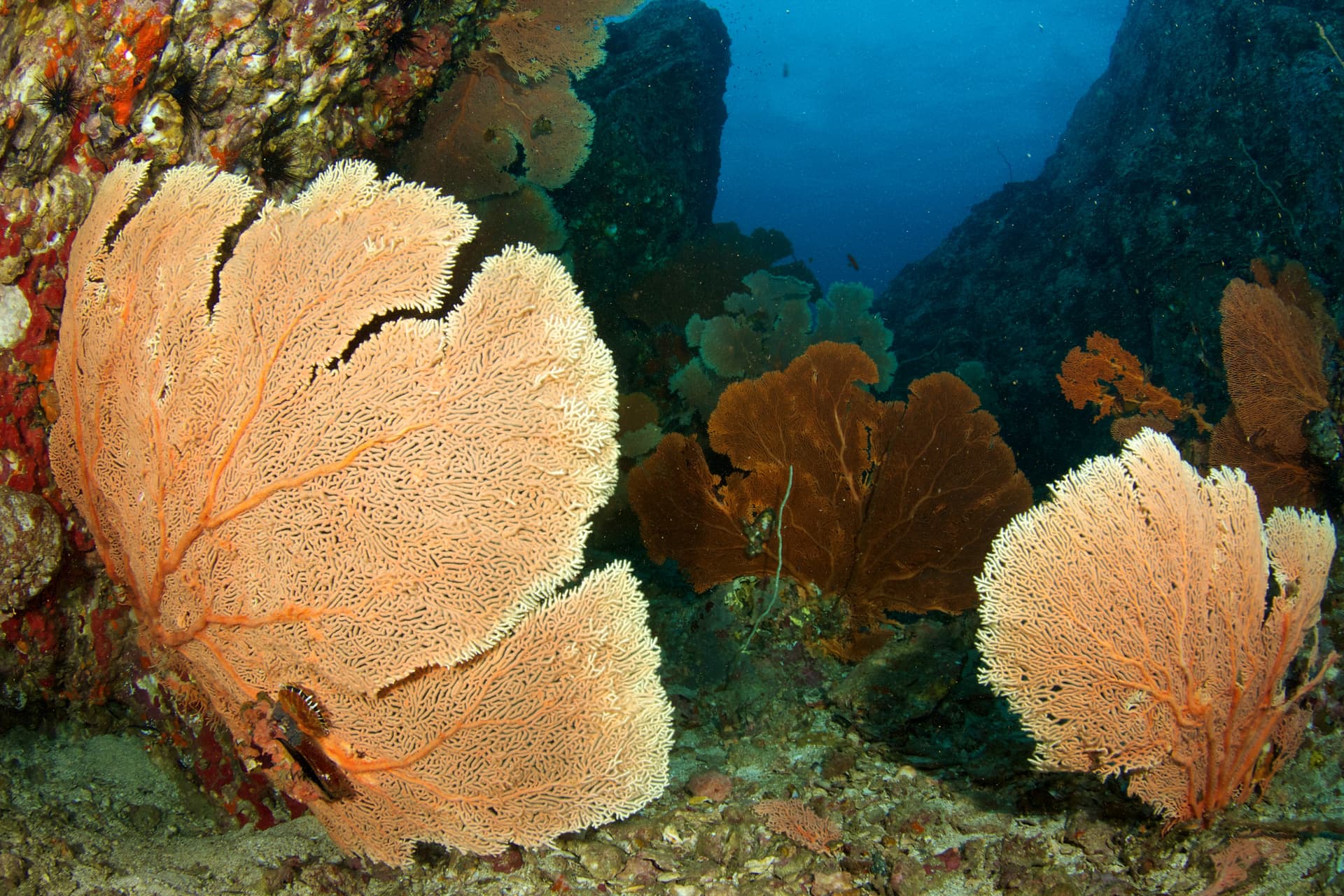
- Roe Bank: Shallower and better for macro. Ghost pipefish, nudibranchs, and reef structure that hasn't been picked over by decades of tourism. The sea fans here are enormous.
- Rainbow Reef: Softer corals, more sheltered, great second dive after a deep Banks morning.
- Limited competition: Most trips, you won't see another boat. Period.
The Diving
Depths range from around 15 metres on the tops of the shallower banks to walls that plunge into the abyss. Currents can be unpredictable — this is open ocean, after all — so the Banks are best suited for experienced divers comfortable with variable conditions. Advanced Open Water is the minimum; Nitrox certification is strongly recommended.
Visibility ranges from 15 to 30+ metres depending on conditions and plankton. Clear water means you can see the whole seamount. Murky water means the whale sharks are feeding. You win either way.
The Mergui Archipelago: 800 Islands of Nobody
The Burma Banks are the adrenaline. The Mergui Archipelago is the soul. This chain of roughly 800 islands stretches along Myanmar's southern coast, and most of them are completely uninhabited. No hotels, no beach bars, no Instagram influencers doing yoga at sunrise. Just limestone karsts, white sand, and water so clear it feels fake.
Key Mergui Sites
- Black Rock: Volcanic pinnacles covered in whip corals and sea fans. The rocks themselves are dark and dramatic — great contrast for wide-angle. Expect cuttlefish, banded sea kraits, and leopard sharks resting on the sand at 20m.
- North Twin Island: Walls dropping to 30m+ with healthy hard coral cover. Seahorses on the shallower sections, frogfish in the rubble. The macro here is world-class and largely undocumented.
- Shark Cave (Western Rocky): A swim-through at about 18m where nurse sharks stack up like firewood. Not deep, not technical, just surreal.
- Three Islets: Sheltered site with mild current, perfect for a relaxed third dive. Nudibranch species here may not even have names yet.
The Mergui generally offers easier diving than the Banks — sites are more sheltered, currents milder, depths manageable. Most itineraries alternate between the two: Banks mornings, Mergui afternoons.
When to Go
Season: November to May. This is non-negotiable. The southwest monsoon (June to October) closes everything down — seas are rough, visibility drops, and operators pull their boats out.
- November-December: Season opener. Seas calming down, visibility building, fewer boats
- January-March: Peak season. Best visibility (25-30m+), calmest seas, most reliable conditions
- April-May: Season winding down. Still good diving, but conditions become less predictable
Water temperature hovers around 27-29°C year-round, so a 3mm wetsuit is usually plenty. Bring a hood or thicker suit if you're a cold diver — deeper dives on the Banks can feel cooler.
Getting There and Visa Requirements
Most Myanmar liveaboards depart from Ranong in southern Thailand or from Kawthaung (also known as Victoria Point) just across the border in Myanmar. The logistics have gotten simpler over the years, but this still isn't a "fly in on Saturday, dive on Sunday" kind of trip.
The Visa Situation
Myanmar requires a visa for most nationalities. As of the time of writing, e-visas are available for many passport holders, but the political situation in Myanmar has created uncertainty. Check with your embassy and your liveaboard operator well in advance — they'll have the most current information on entry requirements and any travel advisories.
Important: Some operators handle the border crossing formalities as part of the trip package (departing from Ranong means you technically cross into Myanmar by sea). Clarify this when booking.
Flights
- Fly into Ranong (via Bangkok) for Thai-departing trips
- Or fly into Yangon, then connect to Kawthaung for Myanmar-departing trips
- From Portugal, expect 15-20 hours of total travel time via Bangkok
Why So Few People Go
Honestly? A combination of factors. The political situation in Myanmar has dampened tourism generally. The remoteness means higher operational costs for boat operators. The season is relatively short. And most divers simply haven't heard of it — they're busy booking their third trip to the Maldives.
But for divers who crave genuine exploration, Myanmar offers something that's becoming almost impossible to find: the feeling of diving somewhere truly wild. No moorings on most sites. No dive briefing placard. Just you, the reef, and whatever decides to swim past.
What You Need
- Certification: Advanced Open Water minimum; Nitrox strongly recommended
- Experience: 50+ logged dives recommended, especially for the Burma Banks
- Insurance: DAN or equivalent — there are no hyperbaric chambers nearby
- Fitness: You're a long way from medical facilities; be honest about your health
- Flexibility: Itineraries can change based on conditions. Embrace it.
The Bottom Line
Myanmar isn't for everyone. If you need Wi-Fi and a cocktail bar, look elsewhere. If you want comfort and convenience, the Maldives is calling. But if you want to see what the ocean looked like before humans got to it — before the moorings, the briefing boards, the twenty-boat traffic jams — this is it.
It won't stay this way. It never does. The window for genuine frontier diving in Myanmar is measured in years, not decades.
The Faneca team has sent divers to Myanmar and can walk you through the real logistics — which operators to trust, which departure port makes sense, and how to handle the visa situation. Reach out if you're serious about this one.
- Thailand's Similan Islands: A Complete Dive Guide — Nearby and often combined with Myanmar trips
- Solomon Islands Diving Guide — Another frontier diving destination
- How to Spot a Quality Liveaboard Operator — Especially important in less-regulated destinations
Related Articles
%20-%20Large.jpg&w=828&q=75)
Best Time to Dive: A Season-by-Season Guide
When to visit the world's top liveaboard destinations for the best conditions and marine life encounters.
Galápagos Diving: What to Expect on Your First Trip
Hammerhead highways, curious sea lions, and currents that demand respect — here's what awaits in the enchanted islands.