Western Rocky
A daylit tunnel bored clean through an island, with a fat nurse shark asleep in the middle of it.
Western Rocky is the kind of dive site that justifies the long haul out to Myanmar. It sits at the southern edge of the Mergui Archipelago, a lonely fin of rock in the Andaman Sea that hides one of the region's genuine set-pieces: a tunnel that runs the whole way through the island, lit at both ends by daylight, with nurse sharks stacked up on the sand inside. Around that centrepiece you get seahorses tucked in the cracks, painted lobsters bristling from every ledge, and current-swept walls that pull in passing pelagics. Diving Western Rocky is a Mergui liveaboard highlight for good reason, and this guide covers what the site actually delivers, how demanding it is, and when to go.
Quick answer: Western Rocky is a liveaboard-only wall, pinnacle, cavern and through-island tunnel dive in Myanmar. Best season: Late October to May, with December to April the prime window. Level: Intermediate to advanced; the through-tunnel is for experienced divers only. Depth: 5m in the caverns to around 35-40m on the deeper walls. Typical visibility: Variable, roughly 5-30m depending on plankton and current.
Facts verified September 2026
What makes Western Rocky special
Most dive sites give you one signature feature. Western Rocky gives you two, and they are both memorable. The first is the tunnel: a passage roughly 30 metres long that runs completely through the island, its entrance sitting at around 17 metres. Daylight reaches you the whole way along its length, so you are never in true blackout, but the walls close in and the roof drops in places. It reads as a cavern more than a cave, though it deserves respect. The second is a large southern cavern that opens at about 5 metres and drops to 25, broken by an archway swim-through where shafts of light cut down through the blue.
Wrap those features around a small island and you get variety in a single mooring: sheltered coral on one side, exposed wall and pinnacle on the other. That is what makes Western Rocky such a rewarding stop on a Myanmar liveaboard. You can spend one dive hunting macro in the shallows and the next hanging off a current-swept corner watching the blue, without ever moving the boat.
What you'll see
The tunnel's most famous residents are its nurse sharks. Several live here, and at least one is a genuinely broad, three-metre animal that sometimes settles across the passage and simply blocks the way through, leaving you to reverse out the way you came. That is part of the charm, not a fault. The ledges and cracks throughout the site are thick with painted spiny lobster, and the macro life is excellent for divers who slow down and look.
Out on the walls and points, the site changes character. Schooling barracuda hang in the current, fusiliers sweep the reef, and cuttlefish and big reef squid work the edges. In the plankton-rich months the exposed corners draw larger visitors passing through the archipelago.
Reliable residents: nurse sharks in and around the tunnel, painted spiny lobster, moray eels, cuttlefish and reef squid.
Macro in the cracks and rubble: seahorses, pipefish, harlequin shrimp, nudibranchs and the occasional frogfish.
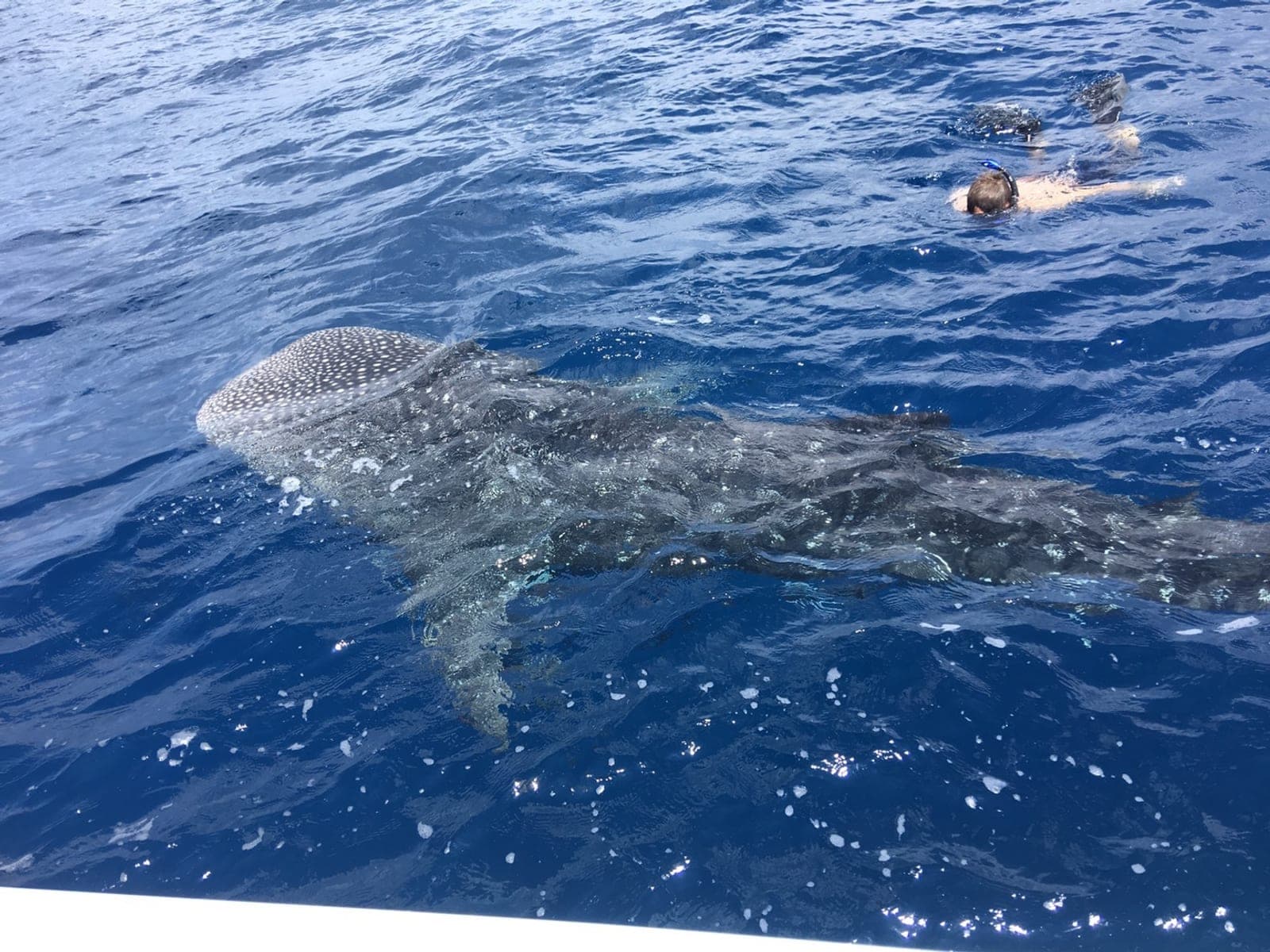
In the blue on the exposed sides: schooling barracuda, tuna and jacks, with occasional whale sharks and larger pelagics on the plankton blooms.
Conditions and who it's for
Be honest with yourself before you plan around the tunnel. The open reef, wall and cavern dives at Western Rocky suit a competent intermediate diver comfortable with depth and moving water. The through-island tunnel is a different proposition: it is narrow in sections, it can be blocked by a resting shark, and it rewards good buoyancy, calm gas management and ideally some overhead or cavern experience. If any of that is outside your comfort zone, the site still delivers on the outside, so there is no need to force the passage.
Current is the main variable. On the sheltered side it is often benign; on the exposed walls and points it can run, occasionally hard, and it stirs the water. Visibility follows suit, ranging from a murky few metres up to a clean twenty or thirty depending on the season, the tide and how much plankton is in the water. Depths reach 35 to 40 metres on the deeper structure, so nitrox and sensible profiles pay off across a multi-dive liveaboard day.
When to dive it
Myanmar diving runs from late October to May, bracketed by the northeast monsoon on either side. Outside that window the liveaboards do not operate, so there is no off-season workaround here. December through April is the prime stretch for settled weather and the best mix of conditions.
There is a genuine trade-off within the season. The later plankton-rich months, roughly February to May, bring the best odds of whale sharks and passing pelagics on the exposed corners, but that same plankton drops the visibility. If gin-clear water matters more to you than a big-animal roll of the dice, aim earlier; if you would trade some clarity for the chance of something large in the blue, aim later.
How you actually dive it
Western Rocky is liveaboard-only. There is no day-boat option and no shore access; the site sits at the far southern end of the Mergui Archipelago, well offshore from anything resembling a town. In practice you reach it on a multi-day safari departing from Thai ports, most commonly Ranong on the Thai-Myanmar border, or from Khao Lak or Phuket, and itineraries generally run five nights or more to justify the crossing.
This is remote, permit-controlled diving. Myanmar requires boats to carry the correct cruising and diving permits for the archipelago, which the operator arranges, and you will typically clear immigration formalities as part of the trip. Cell signal disappears, the nearest recompression chamber is a long way off, and dive insurance that covers evacuation is not optional. That remoteness is exactly why the reefs here still feel wild, and why a well-run boat with a competent crew matters more than usual.
Faneca dives Western Rocky on our Myanmar liveaboards through the Mergui Archipelago, running only in the late-October-to-May season and reached by multi-night cruises from the Thai side of the border, with permits and formalities handled as part of the trip.
Western Rocky: common questions
What is the best season to dive Western Rocky?
Late October to May, with December to April the prime window
What experience level do I need for Western Rocky?
Intermediate to advanced; the through-tunnel is for experienced divers only
How deep is Western Rocky?
5m in the caverns to around 35-40m on the deeper walls
What marine life will I see at Western Rocky?
Nurse sharks, seahorses, painted spiny lobster, cuttlefish, moray eels, schooling barracuda, occasional whale sharks and pelagics
