Tubbataha Reefs: The Complete Liveaboard Guide to the Philippines' Crown Jewel
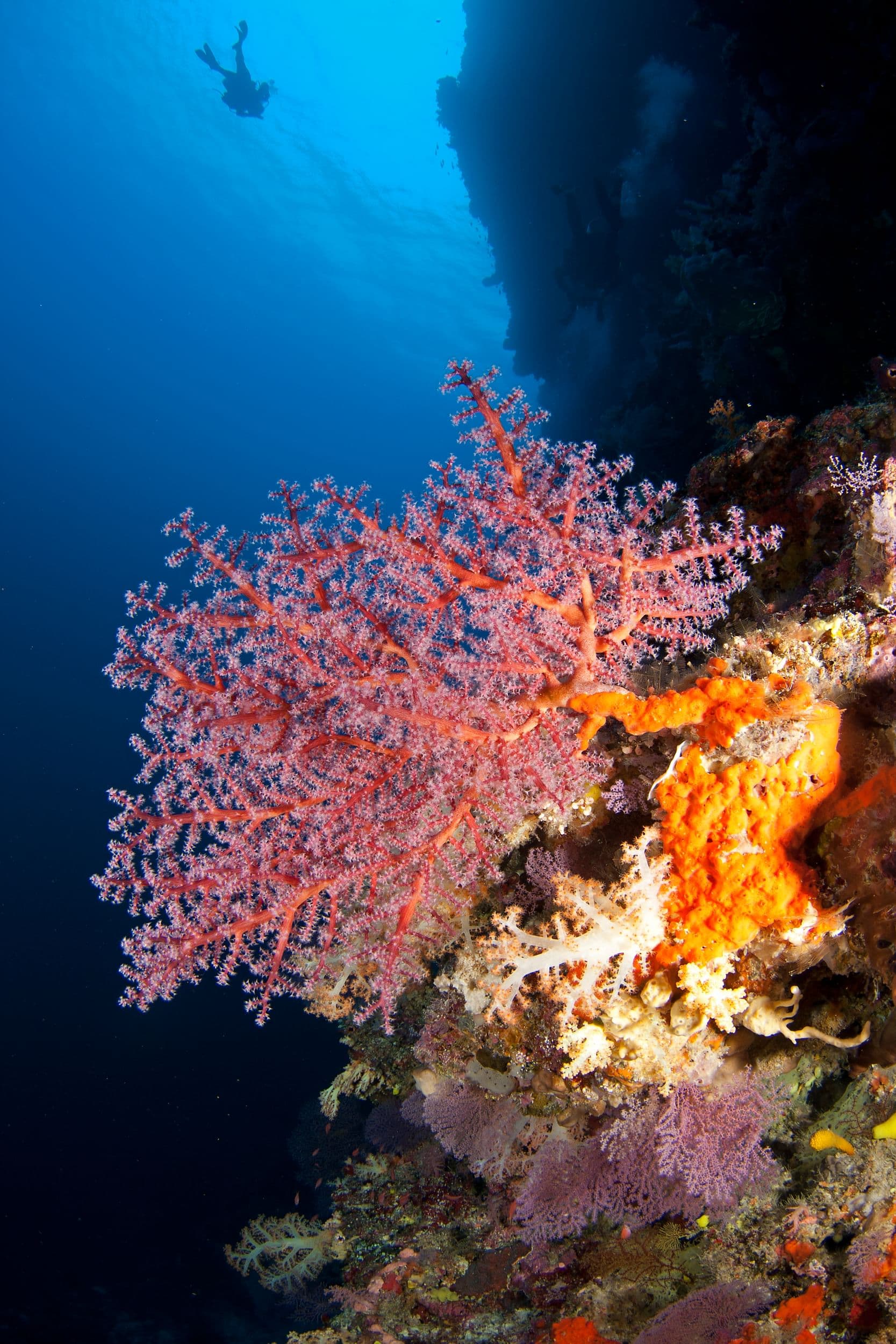
There are perhaps five dive destinations on Earth where the reef looks the way reefs looked a century ago. Tubbataha is one of them. Two remote atolls and a satellite reef in the middle of the Sulu Sea, 150 kilometres from the nearest port, protected as a UNESCO World Heritage Site since 1993 and patrolled by rangers who live on a lonely station in the middle of nowhere. No day boats. No resorts. No shore in sight.
That isolation is the whole point — and the whole logistical challenge. Here is what it actually takes to dive it, what it costs in 2027, and whether it deserves a place on your list this year or three years from now.
A season that lasts barely three months
Tubbataha is open to divers from mid-March to mid-June. That is not a marketing angle — it is the only window when the Sulu Sea is calm enough for the 10–12 hour open-water crossing from Puerto Princesa. Outside those dates, the northeast monsoon and then the southwest habagat make the sea genuinely dangerous for the crossing, and the park closes to tourism entirely.
The practical consequences of a three-month season:
- Roughly 12 weekly departures per boat, per year. That is the entire supply. Compare that with Komodo or the Red Sea, where boats run 40+ weeks.
- The best cabins on the best boats sell out 12–18 months ahead. Repeat guests rebook before they disembark.
- There is no shoulder-season discount logic. Early season (late March–April) tends to have slightly cooler water and occasionally bumpier crossings; May is the sweet spot for flat seas; June departures run a small risk of early weather cutting the trip's edges. Prices barely move across the window.
If you are reading this in the second half of the year hoping to dive Tubbataha next spring, you are already shopping the leftovers. That is not a scare tactic — it is the arithmetic of a short season, and it is the single most important fact in this guide.
Why it is liveaboard-only, and what that means for you
There is no land-based option. The nearest island with infrastructure is Palawan, half a day's sailing away. Every diver who enters the park does so from a licensed liveaboard that departs Puerto Princesa in the evening, crosses overnight, and spends the next days moored inside the park boundaries.
A typical itinerary is 6 days / 5–6 nights with around 18–20 dives: four dives a day across the North Atoll, South Atoll and Jessie Beazley Reef, with the overnight crossings eating the first and last nights. If you have never done a liveaboard before, it is worth reading our honest comparison of liveaboard versus resort diving first — Tubbataha is a wonderful trip but a demanding place to discover you get seasick or hate cabin life.
The crossing deserves honesty: 10–12 hours of open ocean, twice. In May it is usually gentle. In March it can be lumpy. Bring seasickness medication even if you have never needed it; the Sulu Sea does not care about your track record.
The atolls and the sites that matter
The park covers around 97,000 hectares but the diving concentrates on the walls and corners of the two atolls.
North Atoll holds the marquee shark action. The reef rises from several hundred metres to a shallow lagoon rim, and the walls are draped in the kind of hard-coral coverage — routinely measured among the healthiest on the planet — that most divers have only seen in archive footage. Amos Rock is the site people fly across the world for: a current-swept corner where grey reef and whitetip sharks stack in the blue, with regular visits from hammerheads and, in season, whale sharks passing through.
South Atoll is smaller, wilder, and home to the park's most famous single dive: the Delsan Wreck, where the scattered remains of a small vessel sit on a corner that concentrates everything — snapper tornadoes, barracuda walls, dozens of sharks riding the current line. On the right tide it is one of the great fish-density dives in Asia.
Jessie Beazley Reef, the small satellite reef north of the atolls, is usually dived on the first or last day. Do not write it off as a warm-up — its visibility is often the best in the park, 30–45 metres on a good day.
What you will see, plainly: sharks on nearly every dive (whitetips guaranteed, greys near-guaranteed, hammerheads and tigers possible), enormous schools of jacks and barracuda, frequent mantas and eagle rays, turtles in absurd numbers, and walls whose coral coverage does most of the talking. What you will not see: muck critters, wrecks of historical significance, or guarantees on any single big-animal species. Tubbataha is a healthy-ecosystem destination, not a single-species show like Malapascua's thresher sharks.
What it really costs in 2027
Plan around EUR 2,800–3,500 per person for the liveaboard itself on a quality mid-range to upper-mid boat, for a 6-day itinerary. Budget berths on simpler boats exist from around EUR 2,000–2,400; the luxury tier runs EUR 4,000+. On top of the boat price:
- Park conservation fee: around USD 145 per diver (roughly EUR 130), payable in-country and subject to change by the park authority. This funds the ranger station and patrols — it is the reason the reef looks the way it does, so pay it cheerfully.
- Nitrox: EUR 90–150 per trip where offered. Worth it on a four-dive-a-day schedule.
- Crew gratuities: customarily 5–10% of the trip price.
- Flights: international into Manila, then a short domestic hop to Puerto Princesa (book the domestic leg with generous buffer — a missed boat here is a missed year).
- A pre-trip hotel night in Puerto Princesa, which every sensible diver builds in.
All-in from Europe, a realistic 2027 budget is EUR 4,500–5,500 per person including flights. It is not a cheap trip. It is, dive-for-dive, one of the most defensible expensive trips in the sport.
Boats: how to choose without a spreadsheet
A dozen or so licensed liveaboards run the park each season. They cluster into three honest tiers:
- Established international operators (steel-hulled boats in the 16–26 guest range, EUR 3,000–3,500): polished operations, four guided dives daily, nitrox, strong safety culture. This is where we place most of our guests and where the price band in this guide sits.
- Filipino-run mid-range boats (EUR 2,400–3,000): often excellent diving and warmer hospitality than the brochures suggest, with more variance in cabin comfort and scheduling discipline. Great value if you choose carefully — choosing carefully is the hard part.
- Budget and charter boats (under EUR 2,400): fine for tough, experienced divers who prioritise bottom time over bedding. Check the tender arrangements and the guide-to-diver ratio before anything else.
Two questions matter more than the glossy photos: how many divers per guide (six or fewer is the standard you want in current) and how the boat handles the crossing (stabilised steel hulls earn their price twice per trip).
Experience level: this is not a first-trip destination
Most operators require Advanced Open Water (or equivalent) and 30–50 logged dives, and the better ones enforce it. The requirement is not gatekeeping. Nearly every dive is a wall or a current-swept corner; entries are negative descents from tenders; currents can switch mid-dive; and the nearest hyperbaric chamber is half a day's sailing away. You need to be comfortable with:
- Negative entries and quick descents as a group
- Deploying your own SMB in blue water (mandatory on every boat worth booking)
- Hooking in or holding position in moderate-to-strong current
- Managing your own gas and depth on walls with no bottom in sight
If you hold fewer than 30 dives or have never dived real current, spend a season getting there first — Komodo, the Visayas, or the Philippines more broadly offer superb training grounds. Tubbataha will still be magnificent in two years. It has been magnificent for several thousand.
Who should not book, plainly: new divers, divers who struggle with seasickness and know it, anyone who needs a guarantee of one specific animal, and travellers who want beach time bolted onto the trip — there is no beach, and the schedule has no slack.
When and how to book
The booking timeline, working backwards from a March–June 2027 trip:
- Now to 12 months out: full boat choice, best cabin choice. This is when to book.
- 9–6 months out: the good boats are largely full; you are choosing from remaining cabins and the odd cancellation.
- Inside 6 months: cancellation-watch territory. It works occasionally; it is not a plan.
Deposits typically run 20–30% with balance due 90 days before departure, and Tubbataha bookings are among the least refundable in dive travel — a cancelled berth in a 12-week season rarely resells late, and operators price that risk into their terms. Travel insurance that covers trip cancellation is not optional here.
You can see current Philippines departures we track on the live calendar. And if you want the shortcut — which boat actually fits your budget, your dive count and your tolerance for the crossing — that matching is precisely what our concierge does. We know these boats, we know which cabins to avoid above the engine room, and because operators pay our commission, the advice costs you nothing and the price is the same as booking direct.
The verdict
Tubbataha is the rare destination that survives its own reputation. The constraint that makes it inconvenient — twelve weeks, liveaboard-only, half a day from land — is exactly what has kept it intact. If you have the certification, the dive count, and the patience to book a year ahead, it belongs near the top of your list. If you do not yet, the honest move is to build toward it rather than squeeze in underprepared. The reef has waited this long. It will wait for you to be ready.
Related Guides
Related Articles
%20-%20Large.jpg&w=828&q=75)
Best Time to Dive: A Season-by-Season Guide
When to visit the world's top liveaboard destinations for the best conditions and marine life encounters.
Galápagos Diving: What to Expect on Your First Trip
Hammerhead highways, curious sea lions, and currents that demand respect — here's what awaits in the enchanted islands.