What a Palau Liveaboard Costs: Fares, Permits and Extras
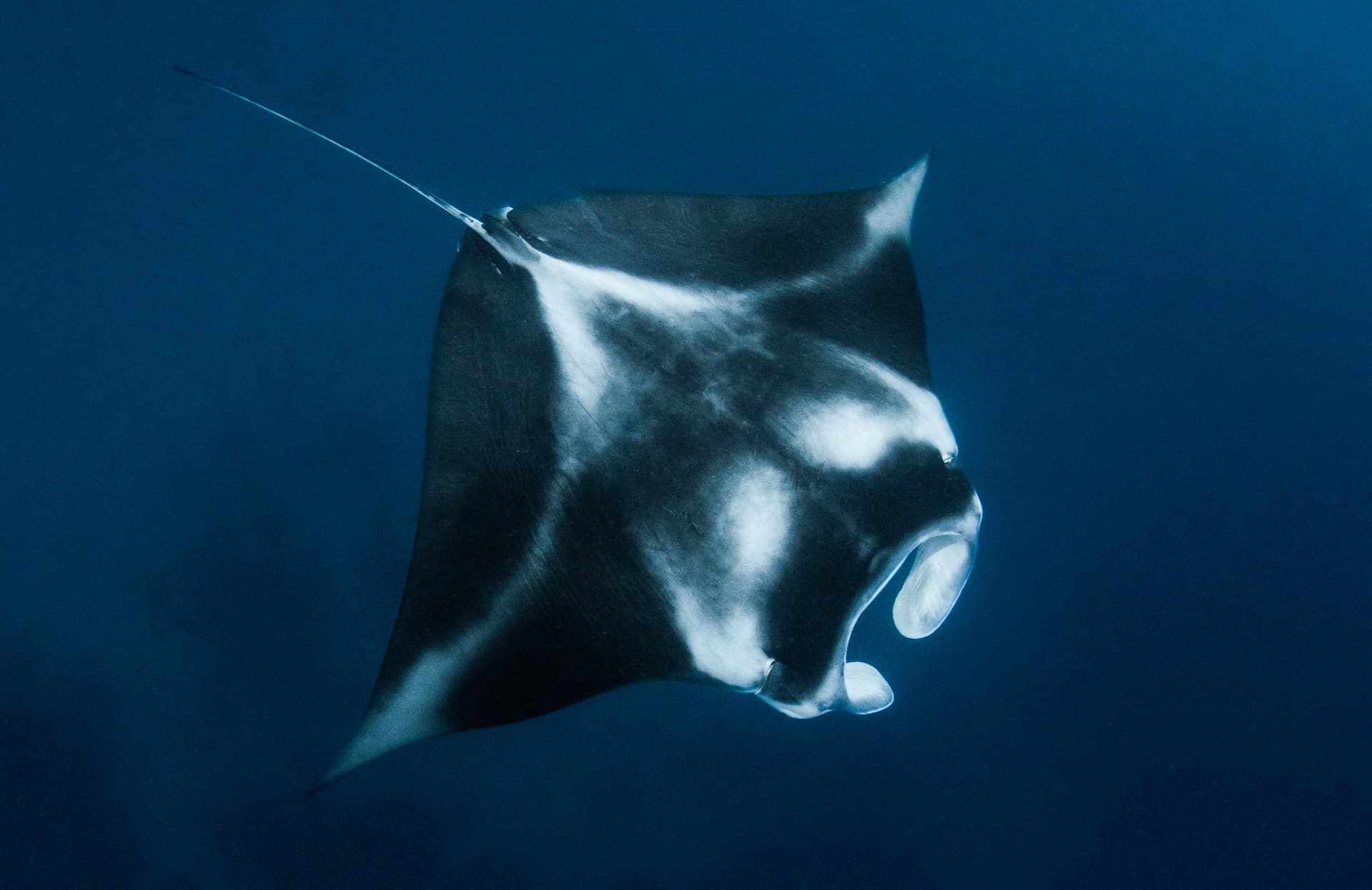
The Palau liveaboards we list start at €2,556 per person sharing, and a seven-night week of the classic sites starts at €2,556. On top come Palau's state permits, on some boats a fuel surcharge, the flights to Koror, a hotel night, and what you spend on board.
Every fare here is per person sharing a cabin, in euros. "From" means the lowest cabin category on a confirmed sailing that still has space. Where a boat has reduced a sailing, the reduced fare is the one shown.
The short answer: fares by trip length
We list 125 Palau sailings with space. All start and end in Koror and dive the same outer-reef sites.
| Trip | Nights | From | What to know |
|---|---|---|---|
| Short trip to the classic sites | 5 | on request | Rarely scheduled |
| Classic week | 7 | €2,556 | The standard trip, in every month |
| New-moon week: bumphead parrotfish spawning | 7 | €3,985 | Dated to the moon |
| Full-moon week: red snapper spawning | 7 | €3,985 | Deep, early dives in current |
| Spawning trip, longer | 9 | €5,362 | A few dates a year |
| Classic sites, long trip | 10 | €3,651 | More days at each site |
| Spawning trip, long | 10 | €4,391 | The classic sites and the spawning dawns |
Read each figure as a floor, not a typical price: the same week on another boat or in another month can cost well above it.
The classic week covers Blue Corner, German Channel and Ulong Channel, the caverns and the wrecks, with a day at Peleliu Corner when the tide and weather allow. Boats typically ask for Advanced Open Water and 30 to 50 logged dives, with some experience in current.
The spawning weeks add dawn dives on the bumphead parrotfish before the new moon or the red snapper before the full moon. Boats typically ask for 50 logged dives for these. Our Palau season guide has the moon dates.
What the fare includes
On the boats we sell, with differences that your confirmation spells out:
- Your berth in a shared en-suite cabin, with full board, drinking water, tea and coffee.
- The diving: three guided day dives and a sunset or night dive on most days. A seven-night week comes to about 20 dives.
- Tanks and weights: a standard tank of 11 or 12 litres with air fills.
- Transfers between hotels in the Koror area and the boat on the first and last day.
- Nitrox on one boat, for certified divers. On another it is charged by the trip.
- A reef hook and a surface marker buoy on one boat. On another you bring your own.
The fare does not include flights, hotel nights, the charges below, rental gear, alcohol, courses, dive insurance or crew tips.
What sits on top
Palau's fees and permits
The environmental fee. Every visitor pays the Pristine Paradise Environmental Fee of US$100. Since 2018 the airlines have collected it inside the international ticket, so there is nothing to pay at the airport.
The Koror State permit. Blue Corner, German Channel, Ulong Channel and most of the other classic sites lie in the Rock Islands Southern Lagoon, which Koror State manages. Every diver and snorkeller there needs its permit: US$50 for the Rock Islands, or US$100 with Jellyfish Lake, which is snorkel-only. Adding the lake to a Rock Islands permit later costs US$75. The Palau Visitors Authority gives the validity as five days, though some operators still quote ten. A week on board is longer than five days, which is why one boat we sell charges for two permits on every trip.
The Peleliu permit. Peleliu State, at the southern end of the lagoon, charges divers its own permit. Operators currently list it at US$60.
How the boats charge them. The permits are not in the fare on the boats we sell. One collects US$150 per person on board for marine park fees and taxes, and adds the Jellyfish Lake permit (US$75) and the Peleliu diving permit (US$60) only for guests who take them. Another collects US$230 per person for seven nights and US$300 for ten, for state permits and taxes. The states revise their fees from time to time.
Goods and services tax. Palau's 10% GST is not added to the fares we show. One boat adds it to what you buy on board, such as nitrox and rental gear.
Fuel surcharge
This is the operator's charge, not a tax. One boat we sell currently adds US$35 per person per night, paid on board, which is US$245 for seven nights. Another shows no surcharge for Palau at present. Either can change before you sail.
On board
Nitrox is in the fare on one boat and US$120 for seven nights or US$180 for ten on another. Our guide to nitrox on a liveaboard covers the course.
Rental gear, 15-litre tanks and alcohol are extra everywhere. Wi-Fi is included on one boat and charged by the trip on another.
Crew tips. A cash tip at the end of the trip is customary, and one boat suggests about a tenth of the fare. See our tipping guide.
Dive insurance. Boats typically ask for dive accident cover that includes evacuation. Palau's recompression chamber is at the national hospital in Koror. See our dive insurance guide.
Flights and the night before
Palau's international airport (ROR) is on Babeldaob, a short drive across the bridge from Koror and its port. Scheduled flights currently reach it from Guam, Manila, Taipei, Tokyo and Brisbane, and other Asian routes come and go by season. Most fly a few times a week, not daily, so the timetable sets your travel days as much as the boat does. From Europe the journey takes 20 hours or more with at least one connection, and the long-haul ticket is the largest extra. We do not sell or book flights; we tell you which arrival and departure days fit the boat.
Arrive at least the day before and budget a hotel night in Koror: with so few flights, a missed connection can mean a missed boat. On one boat the transfer between the airport and the port is a separate US$25 each way.
At the other end, DAN's guideline is at least 18 hours on the ground after several days of repetitive diving, and boats commonly recommend 24. The itineraries allow for it: the last dives are on the morning of the final full day, and you leave the boat the next morning. If the timetable only offers a flight early that morning, send it to us before you book it.
Entry rules
Most visitors need no visa in advance. The Palau Visitors Authority's guidance is a 30-day tourist stay granted on arrival, on a passport valid for at least six months and with proof of onward travel. Each traveller completes the Palau Entry Form online in the 72 hours before travelling, and signs the Palau Pledge stamped into the passport on arrival.
When fares are lowest and highest
The dry season runs from roughly November to April, with December to March the calmest and clearest months and the peak for mantas at German Channel. The wet season is at its core from June to September, with more rain, bumpier crossings and fewer boats on the sites. The spawning weeks follow the moon in every month. Our month-by-month Palau guide covers the weather and the moon dates.
Today's lowest seven-night fare in each part of the year:
| When | Season | Seven nights from |
|---|---|---|
| December to March | Dry season, manta peak | no week with space |
| April and May | End of the dry season | €3,985 |
| June to September | Wet season | €2,556 |
| October and November | Seas settling again | €3,985 |
| Christmas and New Year | Holiday weeks | no week with space |
Each figure is for the next time that period comes round. Where a row shows no week with space, look a year further on in the Palau calendar: the December-to-March weeks fill first, and the boats publish dates up to three years ahead.
The boats set fares in different ways. One charges the same fare for every week of a calendar year, spawning weeks included, adds about a tenth over Christmas and New Year, and prices each later year a little higher. Another sets bands by season: its lowest fares fall from June to August, a little over a tenth below the rest of the year, and the reduced sailings it has published have been in the wet-season months. It also adds a fee to its spawning trips, which is already inside the fare we show.
Liveaboard or a hotel in Koror with day boats
Palau is one of the destinations where staying ashore works well. Koror's dive centres reach Blue Corner, German Channel and Ulong by speedboat on day trips, about 45 minutes or more each way through the Rock Islands. They price by the day, for two or three dives with lunch, and the state permits and rental gear are added. The hotel, dinners and transfers are separate lines. It suits a couple where one person does not dive, and anyone who wants days off ashore.
What the boat adds is time on the reef. It is moored near the sites, so the first dive goes in ahead of the day boats and each dive can be timed to the tide. It runs up to four dives a day against two or three. And it reaches Peleliu without the long daily run, which day boats make only on some days, usually with a minimum number of divers and a supplement.
To compare them, divide each whole bill by the dives. Our guide to liveaboard or resort diving goes through the choice by destination.
Ways to spend less
- Travel between June and September. One boat's lower fare band and the reduced sailings sit there. Expect more rain, some rougher crossings and lower visibility after heavy rain.
- Share the lowest cabin category. Every fare here is per person sharing. Solo divers can usually share a twin with another guest of the same sex at that fare. A cabin to yourself, or a larger one, costs more for the same dives.
- Compare per night. The lowest seven-night fare is €2,556 and the lowest ten-night fare is €3,651. The flights cost the same either way.
- Count the whole bill. A fare that includes nitrox and Wi-Fi but adds a nightly fuel surcharge can end up level with one that charges for nitrox and a larger permit line.
- Bring your own computer, reef hook and nitrox card. Rental and courses are charged on top.
Palau dates with space
The next sailings with space, live:
| Date | Destination | Route | Nights | From |
|---|---|---|---|---|
| 8 Dec 2026 | Palau | Best of Palau | 10 | €5,653 |
| 13 May 2027 | Palau | Palau Snapper Spawning (Full Moon) | 10 | €6,228 |
| 19 May 2027 | Palau | Best of Palau | 7 | €3,985 |
| 5 Jun 2027 | Palau | Best of Palau | 7 | €3,985 |
| 12 Jun 2027 | Palau | Palau Snapper Spawning (Full Moon) | 7 | €3,985 |
| 19 Jun 2027 | Palau | Best of Palau | 7 | €3,985 |
| 20 Jun 2027 | Palau | Best of Palau | 10 | €3,651 |
| 26 Jun 2027 | Palau | Palau Bumphead Spawning (New Moon) | 7 | €3,985 |
Every date is on the Palau calendar, and the routes and boats are on our Palau liveaboards page.
Four questions
Are the permits included?
Not on the boats we sell. They are collected on board: US$150 per person on one boat, plus US$75 for Jellyfish Lake and US$60 for Peleliu if you take them, and US$230 for seven nights or US$300 for ten on another. The US$100 environmental fee is inside your air ticket.
How much should I budget on top of the fare?
For seven nights, the obligatory charges collected on board run from US$230 on one boat to about US$395 on another at today's fuel surcharge. Then come the optional permits, nitrox where it is charged, tips, drinks, any rental, a hotel night in Koror and the flights.
Liveaboard or land-based?
Land-based works well if you want two or three dives a day and time ashore. The boat suits divers who want up to four dives a day, the first dive ahead of the day boats, and Peleliu.
Do I pay in euros?
Yes. Every fare on our site is shown and charged in euros, and fares the boats set in US dollars are converted at the European Central Bank reference rate. Our invoice shows an admin and card processing fee of 3% as its own line, as the booking terms set out. Charges collected on board are paid in US dollars, the currency Palau uses. Bring cash for tips.
Send us your dates, your logged dives and a budget through the concierge, and we will set out in writing which sailings fit and what each one costs with its extras.
Related Guides
Related Articles
Palau Diving Season: Month by Month, Mantas and the 2027 Spawning Moons
When to dive Palau, month by month: the dry-season window for calm seas and German Channel mantas, what the wet months really cost you, typhoon facts, and the 2027 moon dates that set the spawning dives.
Diving the Azores: Blue Sharks, Mobulas and the North Atlantic's Largest Protected Network
In 2024 the Azores created the largest network of marine protected areas in the North Atlantic, about 287,000 km² of ocean that blue sharks, mobulas and sperm whales pass through. Here is why we think it is the most underrated diving in Europe, island by island and month by month.