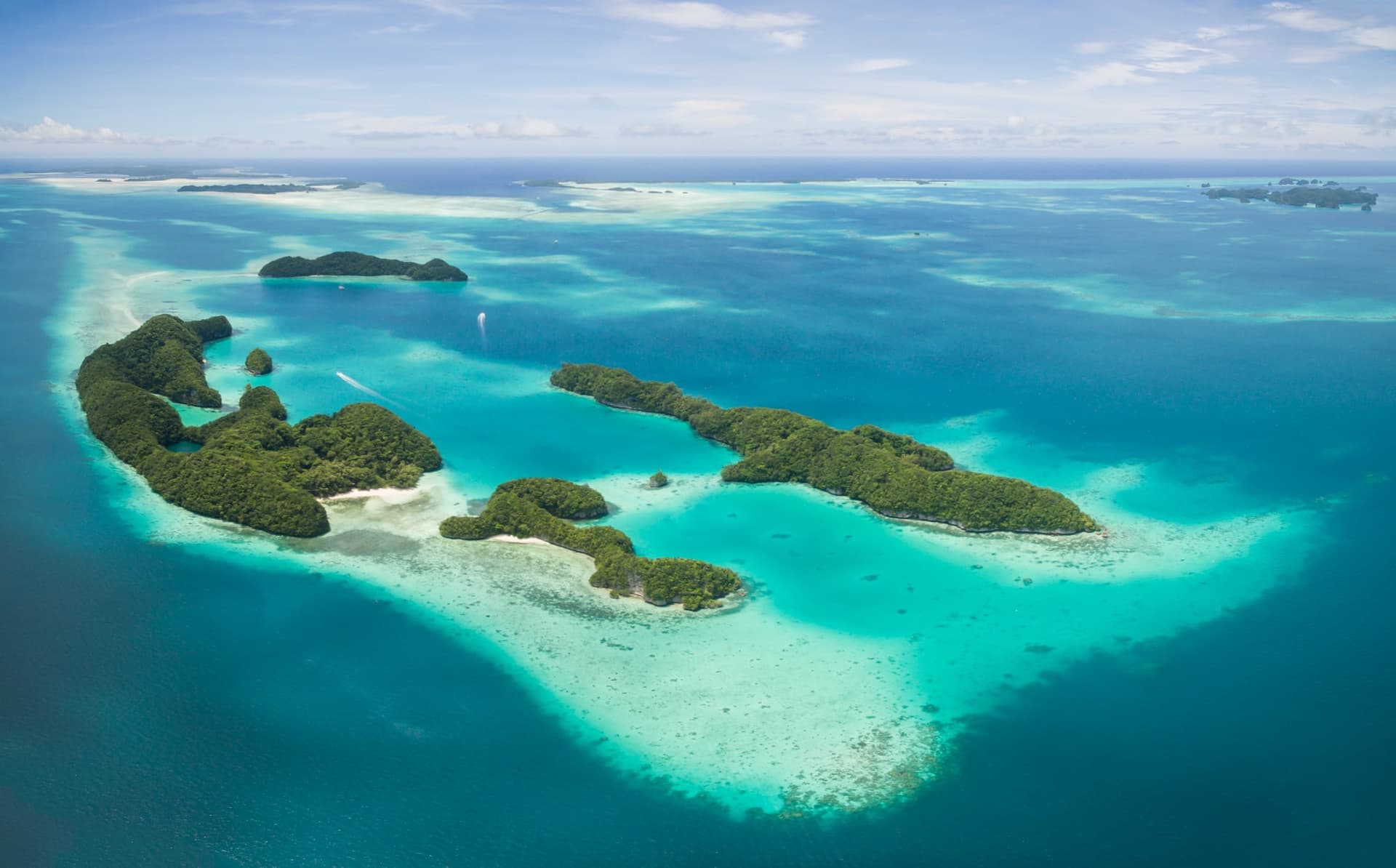
Ulong Channel
Hook in at the mouth, watch the sharks hang in the blue, then let go and fly.
Ulong Channel is the dive that defines Palau for a lot of people, and with good reason. It is a natural cut through the reef west of Ulong Island where nutrient-rich water funnels in from the open Pacific, dragging grey reef sharks, schools of jacks and spawning fish along with it. You start the dive anchored to the reef by a hook, spectating a wall of sharks in the current, and finish it drifting fast and low over one of the largest lettuce coral formations in the country. As a drift dive site, Ulong rewards divers who respect the current and read the tide, and it is a highlight of nearly every Palau liveaboard route.
Quick answer: Ulong Channel is a drift / channel dive with reef hook in Palau. Best season: Dry season Nov-Apr for conditions; grouper spawning before the new moon, late May-Jul. Level: Advanced — reef-hook drift-dive experience essential. Depth: Sandy channel floor roughly 3–12 m (10–40 ft); the entrance is deeper, and depths vary with where you drop in. Typical visibility: Typically 20-30 m (up to ~95 ft) on a clean incoming tide.
Facts verified September 2026
Why Ulong Channel is Palau's signature dive
Palau has walls, wrecks and Blue Corner, but Ulong Channel is the site divers keep coming back to. It is a wide, sand-floored cut through the barrier reef on the western side of Ulong Island, and it works like a pressure valve for the ocean. When the tide pushes in, cool nutrient-rich water pours through the gap and every animal that feeds on current stacks up in it. The result is a dive with genuine structure: a shark-filled entrance, a fast ride down the throat of the channel, and a coral finale, all in one drift.
The set-piece is the lettuce coral. Partway through the channel a huge garden of folded, leaf-like lettuce coral rises from the sand, and thousands of small reef fish shelter in its ruffles while you sweep past on the current. Hitting it at speed with the sharks still behind you is what makes the dive stick in memory.
What you'll see
The action is concentrated at the channel mouth, where the incoming current is strongest. Hook in here and the sharks come to you.
Deeper in and along the slopes the cast changes as you drift, and the seasonal spawning events are the real prize for anyone who can time them.
- Grey reef sharks patrolling the entrance in the current, often a dozen or more at once
- Whitetip reef sharks resting on the sand and cruising the edges
- Schools of bigeye jacks, snappers, barracuda and batfish riding the slopes
- Stingrays on the sandy floor and titan triggerfish nesting in season
- A giant lettuce coral bommie packed with anthias and small reef fish
- Camouflage grouper spawning aggregations in the days before the new moon, around late May to July
Conditions and who it's for
This is an advanced dive, and operators are right to gate it. The current at Ulong is strong and genuinely unpredictable — it can build, ease or reverse partway through a dive, and a run that starts gentle can turn into a real ride. You need to be comfortable with drift diving, confident deploying and stowing a reef hook, and calm about descending into moving water. If your buoyancy or air consumption are still settling, this is a dive to build up to rather than start with.
You will typically drop near the entrance and descend to the reef at the entrance, then hook onto dead reef or rubble at the mouth to watch the sharks without finning against the flow. When you unhook, you commit to the drift — the channel narrows and you move fast and low over the sand and coral until it opens out. Aborting mid-dive is a normal outcome here if the current misbehaves, so listen to your guide's briefing on bail-out points and stay close to your buddy.
When to dive it
Palau's dry season, roughly November through April, gives the most stable weather, calmest surface conditions and cleanest water, with visibility often in the 20-30 metre range and reaching up to about 95 feet on a good day. That is the sweet spot for comfortable, high-visibility diving.
Timing within the day matters as much as the season. Ulong is best on an incoming tide, when the current is strongest, the shark action is most reliable and clear oceanic water is flushing in — dive it on the wrong tide and you get murkier water and less to see. If your priority is spectacle over comfort, target the days before the new moon from late May to July, when camouflage grouper gather to spawn in numbers and the predators follow them in. Those dives can be busy and current-heavy, but they are unforgettable.
How you actually dive it
Ulong sits west of Koror, within day-boat range of the main dive centres, which is why it is usually done as a day trip from Koror or as a scheduled stop on a Palau liveaboard itinerary. A reef hook is mandatory kit — bring your own or confirm the boat supplies one, and practise clipping in and releasing before the trip if you are rusty.
A typical plan is a negative or quick descent to beat the current down, a hooked-in shark-watching phase at the entrance, then an unhooked drift through the channel past the lettuce coral, finishing with a safety stop in the calmer water where the channel spills out. Keep low, keep streamlined and keep your hook accessible. Because the current does the work, air lasts well and dives can run long — but that same current is why you follow the guide's line and do not wander off it.
Palau's drift dives: how Ulong Channel compares
Palau is one of the world's great drift-diving destinations, and a liveaboard week usually includes several of its classic current dives. They all reward an incoming tide and a reef hook, but each is a different dive. All of them are Advanced dives, at their most reliable in the drier months from November to April, so bring your own reef hook and practise setting it before the trip. Our Palau drift diving guide covers tides, reef hooks and all six classic drifts in detail.
- Blue Corner, southwest of Koror: the most famous. You hook onto the edge of a reef plateau and watch grey reef sharks, Napoleon wrasse and barracuda work the current.
- German Channel, in the Ngemelis area south of Koror: a sandy channel where reef mantas visit cleaning stations at around 18–20 m. Manta numbers are usually highest from December to March.
- Ulong Channel, west of Koror: the classic channel ride. Grey reef sharks gather at the mouth on the incoming tide, then you unhook and drift over a huge lettuce coral garden on a sandy floor of roughly 3–12 m.
- Peleliu Corner, at the southern tip of Peleliu: the most demanding. Currents regularly run over two knots, with down-currents, so it is for experienced drift divers only.
Faneca dives Ulong Channel on our Best of Palau liveaboard itinerary, timed for incoming tides so you get the strongest shark action and the cleanest water; the new-moon grouper spawning window (late May to July) is seasonal, so tell us if that is your target and we will build the trip around it.
Ulong Channel: common questions
What is the best season to dive Ulong Channel?
Dry season Nov-Apr for conditions; grouper spawning before the new moon, late May-Jul
What experience level do I need for Ulong Channel?
Advanced — reef-hook drift-dive experience essential
How deep is Ulong Channel?
Sandy channel floor roughly 3–12 m (10–40 ft); the entrance is deeper, and depths vary with where you drop in
What marine life will I see at Ulong Channel?
Grey reef and whitetip sharks, stingrays, jacks, snappers, barracuda, batfish, giant lettuce coral, grouper and snapper spawning aggregations