Palau Drift Diving: Tides, Reef Hooks and the Six Classic Drifts
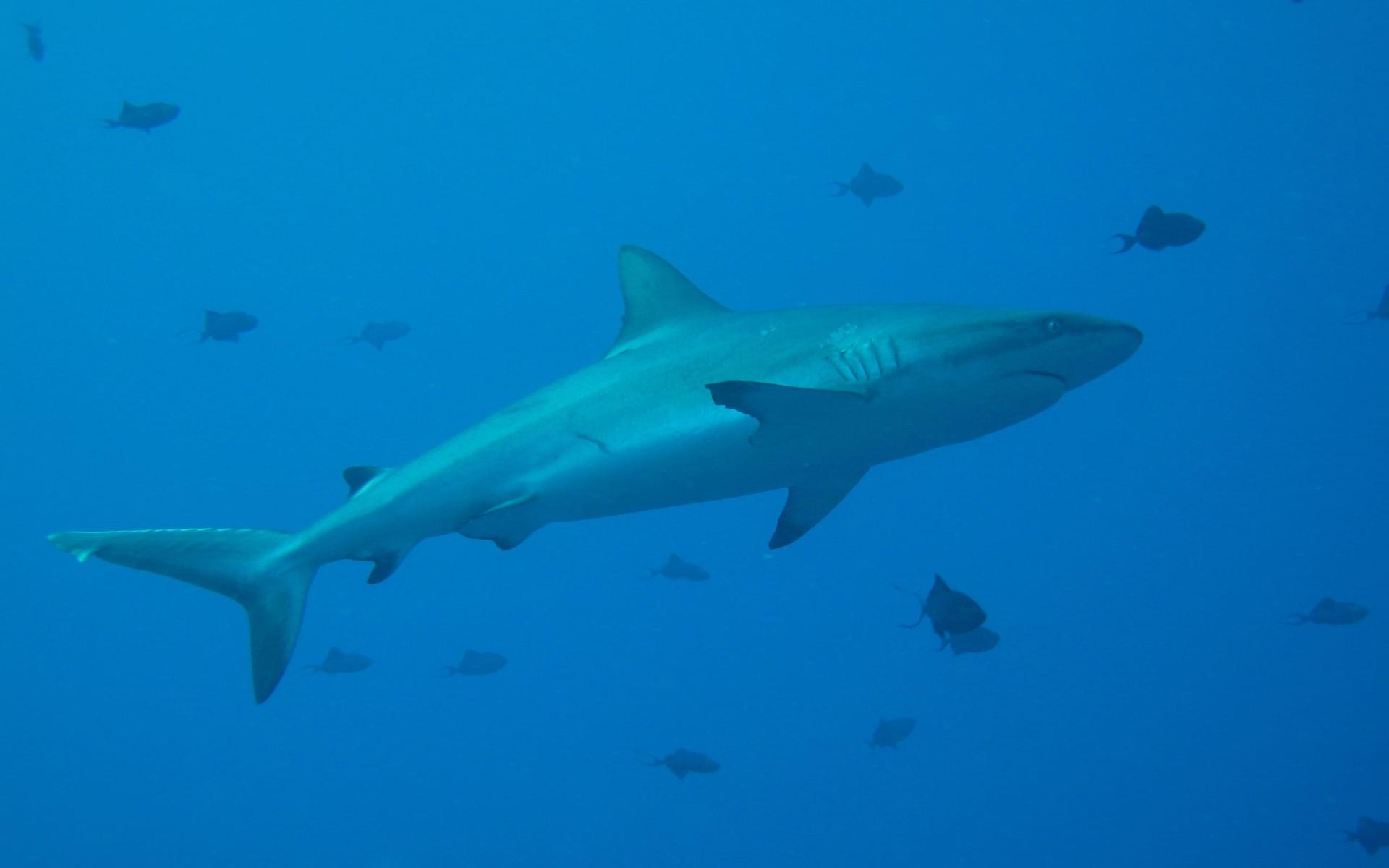
Photo: Tanaka Juuyoh, CC BY 2.0
Most of Palau's famous dives are drift dives. Blue Corner, Ulong Channel, German Channel, New Drop-off, Siaes Corner and Peleliu Corner all depend on water moving between the open ocean and the lagoon inside the barrier reef, and on the animals that gather where it moves fastest. Understand that water and the dives make sense.
This guide covers how the current works, the kit and skills Palau expects, and what each classic drift is like, with a table to compare them.
Why Palau's channels and corners drift
Palau's main islands sit inside a long barrier reef. Twice a day, roughly, the tide fills the lagoon and empties it again, and that water has to pass through gaps in the reef (the channels) or wrap around the points where the reef turns (the corners). Water squeezed through a gap speeds up, and water bending round a point accelerates along the edge and lifts up the wall.
That acceleration is the attraction. Plankton is carried past the reef edge, jacks and snappers hold in the flow to feed, and grey reef sharks patrol just off the drop-off. A channel gives you a defined path with walls either side. A corner gives you a plateau where the current hits hardest and the fish stack up in front of you.
Incoming versus outgoing
Incoming water comes from the open ocean, so it is usually the cleaner, bluer water, and it is the tide guides generally prefer for the shark-heavy sites. At Blue Corner and Ulong the incoming tide is the classic plan. Outgoing water drains the lagoon, and it can carry more sediment and plankton, so visibility often drops. That is not always a loss: some sites are dived on the outgoing tide by design, and the direction of flow decides which side of a corner you enter from.
Do not memorise a rule for every site. A good guide reads the day's tide table and changes the plan when the water does something unexpected.
Moon phase and current strength
The size of the tide follows the moon. Around new and full moon the tidal range is at its largest (spring tides) and the channels run hardest. In the weeks around the quarter moons the range is smaller (neap tides) and currents are generally gentler, though some guides find them less predictable then.
This matters when you book. Palau's spawning-timed trips run on the moon by definition: the bumphead parrotfish spawning around the new moon and the red snapper spawning around the full moon are spring-tide events, so those weeks pair the best fish action with the strongest water. If you are new to current, a week that sits between the two moons is the kinder introduction. Our Palau diving season guide maps the spawning moons to real months.
Reef hooks: how to use them, and where not to
The reef hook is Palau's signature piece of kit. It is a stainless hook on a short line, usually around two metres, clipped to a D-ring at your waist. You set it into the reef at the edge of a plateau, add a little air to your BCD so you float a metre or two above the bottom, and the current holds the line taut. You stop finning, your air lasts, and you watch the sharks instead of fighting the flow.
The rules that matter:
- Hook only into bare rock or dead coral. Look for grey, current-scoured limestone or dead coral skeleton. Never live coral, never soft substrate. The hook exists so that divers stop grabbing the reef, and a hook in living coral defeats the point.
- Keep everything else off the reef. Fins, knees, gauges and cameras stay clear. Streamline your kit and leash any camera.
- Hook and unhook with your buddy, where your guide can see you.
- Unhook in order. Vent air from your BCD first, then release the hook, then reel it in and stow it before you start drifting. Inflating while still clipped in can launch you upwards when the hook comes free.
- Practise before the trip. Fumbling with a new hook at the lip of a plateau costs you the best minutes of the dive. Many boats lend hooks, but your own, already rigged, is better.
Most of the classic sites need Koror State's Rock Islands use permit, and the Peleliu dives a separate Peleliu State dive permit. Your boat arranges both; the fees are set locally and change. Palau also bans sunscreens containing a list of reef-toxic chemicals, so pack a compliant one.
Negative entries, DSMBs and staying found
Many Palau drifts start with a negative entry: BCD empty, a quick roll off the tender, and straight down without regrouping on the surface. Waiting at the surface in a current means arriving at the reef somewhere other than the plan. Equalise early and often on the way down, and agree the target depth with your guide before you roll. Most open-water courses do not teach this, so if you have never done one, say so at the briefing.
At the end, the group drifts off the reef into the blue for the safety stop. A surface marker is required kit on Palau dives, and you should carry your own delayed SMB (DSMB) and reel, not rely on the guide's. Send it up from your safety stop, before you surface, so the boat can follow you while you are still underwater. A whistle or horn and a signalling mirror are cheap additions, and it is worth asking whether the boat issues electronic locator beacons.
In December 2024 a group swept off Peleliu Corner was found safe the next day about 30 miles to the north. Searchers spotted them by their safety sausage.
Experience, certification and nitrox
Palau's reef and cavern dives suit solid intermediate divers. The channel and corner drifts ask more. As a rule, operators want Advanced Open Water (or equivalent) plus some drift experience for Blue Corner, Ulong and Peleliu, and Peleliu Corner is for experienced current divers only. Dives in Palau are led by a local guide, and that guide can and will keep you off a site if the water is wrong for the group. That is good judgement, not a lost dive.
What makes the difference on the day is not the card. It is stable buoyancy, calm breathing when the current picks up, and a hook you can set without looking down at it. If your last dives were a while ago, a few current dives before the trip are worth more than a new certificate. Our guide to certification requirements by destination covers what boats ask for elsewhere.
Nitrox is offered on Palau liveaboards, usually as a paid extra. The classic drifts spend long periods between about 15 and 25 metres, often three or four dives a day, and enriched air extends your no-decompression time at those depths. It does not let you go deeper: on a typical EAN32 mix, plan on a maximum operating depth of 33 metres at the usual oxygen limit of 1.4, and some of these walls drop well past that. Watch your depth when the reef falls away under you, especially at Peleliu.
The six classic Palau drifts
Ulong Channel
West of Ulong Island, on the western barrier reef, Ulong Channel is the most complete drift in Palau. You hook in at the mouth to watch grey reef sharks hold in the incoming current, then unhook and fly through the channel over a sandy floor, past the large lettuce coral formation, and out into calmer water for the safety stop. On a neap tide it is one of the gentler hook dives in Palau and a common first one. Around the full and new moon it runs hard. Camouflage grouper aggregate here to spawn in the days before the new moon, around June and July, and the sharks follow them in.
German Channel
German Channel was cut through the southern barrier reef in the German colonial period, early in the 1900s, and the tide pumps plankton-rich water through it twice a day. It is the manta dive: you settle low on the sand near the cleaning-station bommies at roughly 15 to 20 metres, hook into rubble if the current is running, and wait. Guides usually aim for gentle incoming water for the cleaning stations, and the dive can turn into a drift along the channel when the tide strengthens. Mantas are most reliable from December to March.
Blue Corner
Blue Corner, on the Ngemelis outer reef, is the dive that made the reef hook famous. You drift along the wall, come up onto the plateau at the corner, and hook in at the lip at around 15 to 18 metres. Grey reef sharks patrol the edge in front of you, with jacks, barracuda, snapper and Napoleon wrasse in the same water. Grey reef sharks are there year-round and best on an incoming current. On some tides the dive starts at Blue Holes, a short way along the same wall. The current can change direction or develop a down-current, so treat the guide's turn signal as final.
New Drop-off
A short run from Blue Corner on the same Ngemelis reef system, New Drop-off is a wall and a reef point that juts into the current. It is often dived when Blue Corner is busy or the tide suits it better, with much of the same cast: grey reef sharks, barracuda, snapper, dogtooth tuna and turtles. It can be dived on both incoming and outgoing tides, sometimes both within one dive, and the water over the reef edge can pull downwards. Do not mistake it for the easy option.
Siaes Corner
On the western reef near Ulong, Siaes Corner is a reef edge with a plateau on top: the reef top is shallow, the action sits mostly between 10 and 20 metres, and the wall drops far deeper. You enter on whichever side the current dictates and hook into the plateau when it runs strongly. On an incoming tide, jacks, barracuda and grey reef sharks line the edge. It sees fewer boats than Blue Corner and is a good place to build hooking skills, though the current can still be strong.
Peleliu Corner (the advanced one)
At the southern tip of Peleliu the reef ends and the open Pacific takes over. Peleliu Corner, where the Peleliu Cut and the Peleliu Express wall drift meet, has some of the strongest and least predictable current in Palau, regularly over 2 knots, with real down-currents if the tide is wrong. Guides only take groups to the point when the flow is right, and many days they choose another site. When it works you hook in at the corner among grey reef and whitetip sharks, barracuda and trevally, then release into the blue for a long safety stop under your DSMB. Advanced divers only, and only with a guide who knows the site well.
Palau drift dives compared
| Site | Area | Main depth | Usual tide | Reef hook | Level | Known for |
|---|---|---|---|---|---|---|
| Ulong Channel | Western reef | Hook-in ~18 m, channel floor shallower | Incoming | At the mouth | Intermediate–advanced | Sharks at the mouth, lettuce coral, grouper spawning |
| German Channel | Southern reef | 15–20 m on sand | Gentle incoming | When current runs | Intermediate | Manta cleaning stations |
| Blue Corner | Ngemelis | Plateau edge 15–18 m | Incoming | Yes, at the lip | Advanced | Grey reef sharks, jacks, barracuda |
| New Drop-off | Ngemelis | Wall and point, mostly 15–25 m | Both | Often | Advanced | Sharks and pelagics, down-currents |
| Siaes Corner | Western reef | 10–20 m on the plateau edge | Incoming | On the plateau | Intermediate | Jacks, barracuda, sharks, fewer boats |
| Peleliu Corner | Southern tip of Peleliu | 20–27 m at the corner | Only when right | Yes, at the corner | Advanced only | Strongest current, big schools |
Depths are typical working depths. Every one of these sites has deeper water within reach.
When to dive Palau's drifts
Palau dives year-round in water of about 28 to 30°C, so a 3 mm suit is enough for most divers. The drier season, roughly November to April, brings the calmest seas and the best visibility, and makes the long runs to Peleliu more comfortable. Mantas at German Channel are best from December to March, often strongest in January and February. Grey reef sharks at Blue Corner are a year-round dive. The wetter mid-year months still dive well with fewer divers, though you give up some clarity and the odd day to weather.
Within any month, the moon decides how hard the water runs, so pick your week as carefully as your month.
Diving them from a liveaboard
A liveaboard's advantage in Palau is timing: moored near the sites, it can put you in on the right tide rather than when a day boat arrives from Koror, and reach Peleliu when conditions allow. Most Palau liveaboards run a week or so around these sites, with fares from €2,556 per person sharing. Fares change with dates.
| Date | Destination | Route | Nights | From |
|---|---|---|---|---|
| 8 Dec 2026 | Palau | Best of Palau | 10 | €5,653 |
| 13 May 2027 | Palau | Palau Snapper Spawning (Full Moon) | 10 | €6,228 |
| 19 May 2027 | Palau | Best of Palau | 7 | €3,985 |
| 5 Jun 2027 | Palau | Best of Palau | 7 | €3,985 |
| 12 Jun 2027 | Palau | Palau Snapper Spawning (Full Moon) | 7 | €3,985 |
| 19 Jun 2027 | Palau | Best of Palau | 7 | €3,985 |
Every date, including the spawning-moon trips, is on the Palau departure calendar.
Related Guides
Related Articles
Palau Diving Season: Month by Month, Mantas and the 2027 Spawning Moons
When to dive Palau, month by month: the dry-season window for calm seas and German Channel mantas, what the wet months really cost you, typhoon facts, and the 2027 moon dates that set the spawning dives.
Diving the Azores: Blue Sharks, Mobulas and the North Atlantic's Largest Protected Network
In 2024 the Azores created the largest network of marine protected areas in the North Atlantic, about 287,000 km² of ocean that blue sharks, mobulas and sperm whales pass through. Here is why we think it is the most underrated diving in Europe, island by island and month by month.