Muck Diving Explained: Why Divers Cross Oceans for a Black Sand Slope
You descend onto a slope of dark volcanic sand. There is no reef. Visibility is maybe eight metres, there's a sunken flip-flop to your left, and a fragment of fishing net half-buried ahead. Your first honest thought is: I paid for this?
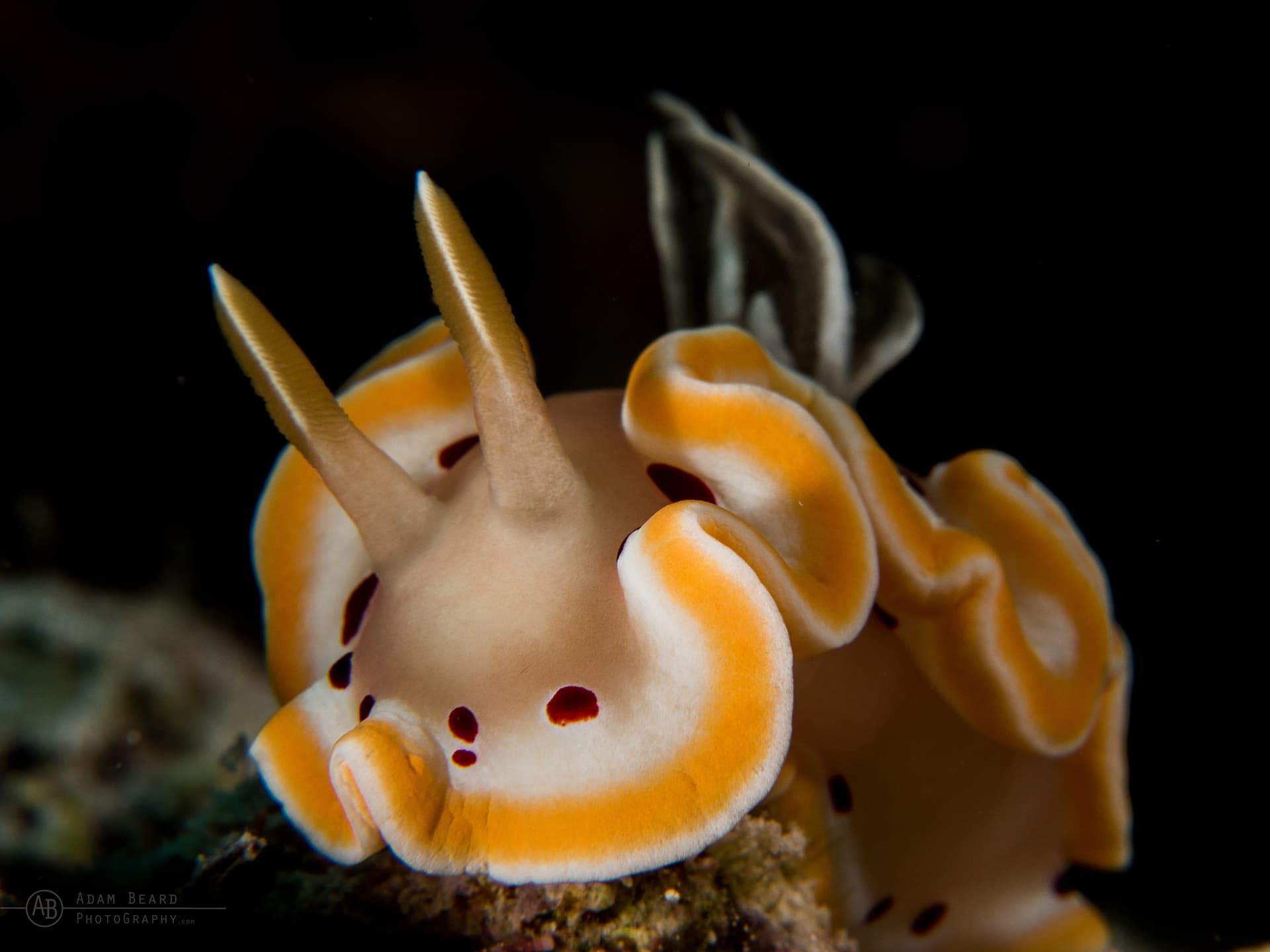
Then your guide taps their tank, points at what looks like a lump of algae, and the lump swivels an eye at you. It is a hairy frogfish, walking — not swimming, walking — across the sand on its fins. Twenty minutes later you have seen a coconut octopus carrying its shell home, a flamboyant cuttlefish strobing purple and yellow, and a nudibranch that looks like it was designed by someone on deadline at a Milanese fashion house. This is muck diving, and it ruins people. Divers who swore they only cared about sharks end up crossing oceans for a black sand slope.
What muck diving actually is
The name comes from Milne Bay, Papua New Guinea, where dive pioneer Bob Halstead anchored over a silty slope at Dinah's Beach in the 1980s, described the bottom as "muck," and accidentally founded a genre. Muck diving means diving on sediment — volcanic sand, silt, rubble, sometimes literal harbour debris — instead of coral reef, and hunting for the small, strange animals that live there.
The counterintuitive part: this apparently barren habitat holds some of the highest concentrations of rare marine life on the planet. On a reef, animals hide in a thousand crevices. On an open sand slope, there is nowhere to hide except camouflage and burrowing — so evolution went berserk. The result is a habitat where nearly everything you find is either a master of disguise, venomous, mimicking something venomous, or all three.
A few honest expectations to set:
- Visibility is often 5–15 metres, and it does not matter. You spend the dive looking at things smaller than your hand, from 30 centimetres away.
- Dives are shallow and long. Most of the action is between 5 and 20 metres, so 70–80 minute dives are normal.
- You will see rubbish. A tyre, a bottle, a sunken jetty piling. Critters colonise it — some of the best frogfish perches in Lembeh are discarded objects. It is part of the aesthetic, not a failure of it.
- Guides are everything. A world-class critter spotter finds ten animals per dive that you would have swum straight over. Muck destinations live or die on guide quality, which is why the famous ones stay famous.
The icons: what everyone crosses an ocean to see
Muck diving has a canon, and once you can recognise it you understand the obsession.
- Frogfish — the gateway drug. Anglerfish that walk on modified fins and swallow prey in one of the fastest strikes in the animal kingdom. Lembeh alone holds around eight species, including the hairy frogfish, which looks like a toupee with opinions.
- Rhinopias — the weedy and paddle-flap scorpionfish, arguably the most coveted fish in macro photography. Ornate, rare, and so prized that guides text each other when one is found. Ambon and Lembeh are the reliable places on Earth for them.
- Blue-ringed octopus — golf-ball sized, iridescent warning rings, and venom that can kill an adult human. Nobody touches it; everybody photographs it. Seeing one flash its rings is a career moment.
- Mimic octopus and wonderpus — long-armed octopuses that impersonate flatfish, lionfish and sea snakes. Discovered off Sulawesi in the 1990s; still most reliably seen on Indonesian and Philippine muck.
- Nudibranchs — sea slugs in several thousand species, coloured like nothing else in nature. Muck slopes hold absurd densities; serious "nudi nerds" log 40+ species in a week.
- Supporting cast — flamboyant cuttlefish, coconut octopus, ghost pipefish, mantis shrimp, stargazers buried to the eyeballs, seahorses down to the two-centimetre pygmies.
The first time a guide points at bare sand and a mimic octopus materialises out of it, the shark-versus-macro debate quietly ends for a lot of divers.
Where it's world-class
Four regions dominate, each with a different character.
Lembeh Strait, North Sulawesi, Indonesia — the self-declared and broadly undisputed critter capital of the world. A narrow strait of black volcanic sand with dozens of sites minutes apart. The greatest species density anywhere; hairy frogfish and mimic octopus are close to routine. Diveable year-round; July–September brings the calmest, clearest conditions, while the cooler months often produce more of the weird stuff. Mostly resort-based, which makes it an easy add-on before or after an Indonesian liveaboard.
Ambon Bay, Maluku, Indonesia — Lembeh's wilder rival, and the only place on Earth the psychedelic frogfish (discovered here in 2009) has been found. Rhinopias are seen with a regularity that borders on unfair. October to April is prime, and Ambon matters especially for liveaboard divers: it is the start or end port for most Banda Sea crossings, so many itineraries open or close with a day of world-class muck in the harbour before heading for hammerheads.
Dauin (Dumaguete), Philippines — a coastal strip of dark-sand shore dives on Negros, gentle and shallow, with frogfish peaking roughly February–June and octopus season (blue-ringed, mimic, wonderpus) running October–January. Its trump card is contrast: Apo Island's superb reefs sit 30 minutes away, and the thresher sharks of Malapascua are a domestic hop away, so a Philippines trip can stack sharks, reef and muck into one itinerary without a single long flight.
Milne Bay, Papua New Guinea, and the Solomon Islands — the historic original and its neighbour. Milne Bay's liveaboards run a tight season (roughly January–March) and mix Dinah's Beach and Samarai Jetty muck with pristine reefs and WWII history. The Solomons work the same way: nobody books the Solomons for muck, but the better itineraries drop a jetty or village-slope critter dive between reef days — mantis shrimp, ghost pipefish, nudibranchs — and those dives routinely end up in guests' trip highlights. Remote, uncrowded, and the muck comes bundled with everything else.
Honourable mentions: Anilao in the Philippines, Bali's Seraya slopes, and the critter sites tucked into Raja Ampat and Komodo itineraries between the big-animal dives.
Technique: buoyancy first, and the truth about muck sticks
Muck diving is the most skill-revealing diving there is, because the bottom punishes sloppiness instantly.
Buoyancy and trim are non-negotiable. One misplaced fin kick on a silt slope creates a brown cloud that kills visibility for the whole group and can bury the very animal everyone came to see. You want to be horizontal, slightly negative at most, moving with slow frog kicks or a modified flutter that directs thrust up and away from the bottom. If your buoyancy is shaky, say so — a good guide will position you accordingly, and a shallow sand slope is honestly a fine place to sharpen it.
The muck stick, honestly. Most guides carry a thin stainless pointer, and many photographers do too. Used properly, it has two legitimate jobs: pointing out camouflaged animals without touching them, and planting one finger-width of steel into bare, lifeless sand to steady yourself for a photo instead of crashing your whole body down. Used badly, it becomes a tool for prodding animals into "better" poses — and you will occasionally see this, including from guides under pressure to deliver shots. Be clear about where you stand. The ethical line is simple: the stick touches sand, never animals. No moving critters, no stressing an octopus until it displays, no flipping things over. If a guide manipulates animals on your behalf, a quiet word ends it — operators respond to what guests reward. The best photographs in this genre were all taken by people who waited.
Slow down. The divers who see the most cover the least distance. A productive muck dive might travel 80 metres in an hour. Pick a patch, actually look at it, and let your eyes recalibrate to the size scale — after 15 minutes, two-centimetre animals start appearing in sand that looked empty.
The photography side
You do not need a camera to love muck diving, but no habitat rewards one more. If you shoot:
- A 60mm-equivalent macro lens (or a compact/phone housing with a wet close-up lens) is the forgiving starting point — enough working distance for frogfish and octopus, wide enough to find subjects in the viewfinder.
- 100/105mm plus a +5 to +15 diopter is the specialist setup for shy subjects and super-macro — hairy shrimp, pygmy seahorses — but it is unforgiving on a first trip.
- One strobe or a good video light is plenty to start. Dark sand backgrounds are a gift: they swallow backscatter and make colours detonate.
- Shoot fewer subjects, longer. Ten minutes with one cooperative frogfish beats forty rushed frames of ten animals.
Non-photographers, one warning: buddy up thoughtfully. A dedicated shooter can spend an entire dive on one animal. Mixed groups work best when the guide manages rotation — another reason guide quality is the single most important variable in this niche.
How muck fits a liveaboard itinerary
Muck and liveaboards intersect in three ways, and knowing which one you are buying prevents disappointment.
- Dedicated muck itineraries — Lembeh-focused boats or Milne Bay seasons where critters are the headline. Book these only if you already know you love macro.
- Muck as punctuation — the most common pattern, and for most divers the best one. Banda Sea crossings that open in Ambon, Solomon Islands routes that slot jetty dives between reef days, Komodo boats that end a big-current day on a gentle critter slope. You get the icons without committing a whole trip to sand.
- Resort add-ons — three or four nights in Lembeh or Dauin stitched to the start or end of a liveaboard. Often the cheapest world-class diving you will ever buy, since muck operations charge for guides and boats, not infrastructure.
Who should not book a dedicated muck trip: divers who need blue water and big animals to feel a dive was worth it, anyone who genuinely dislikes long shallow dives, and — worth saying plainly — brand-new divers whose buoyancy is not yet stable, who will frustrate themselves and their group on silt. Do a muck day inside a mixed itinerary first. If you find yourself refusing to surface because the guide just found a blue-ring, you have your answer, and your next booking will make itself.
If you want help deciding whether that answer is a Banda Sea crossing, a Philippines combination or a full Lembeh immersion, talk to our concierge — matching divers to the right ratio of muck-to-reef is precisely the kind of judgement call we exist for. Or browse upcoming departures and see which itineraries pass through the famous slopes.
Related Guides
Related Articles
%20-%20Large.jpg&w=828&q=75)
Best Time to Dive: A Season-by-Season Guide
When to visit the world's top liveaboard destinations for the best conditions and marine life encounters.
Galápagos Diving: What to Expect on Your First Trip
Hammerhead highways, curious sea lions, and currents that demand respect — here's what awaits in the enchanted islands.