What a Maldives Liveaboard Costs: Fares, Green Tax and Extras
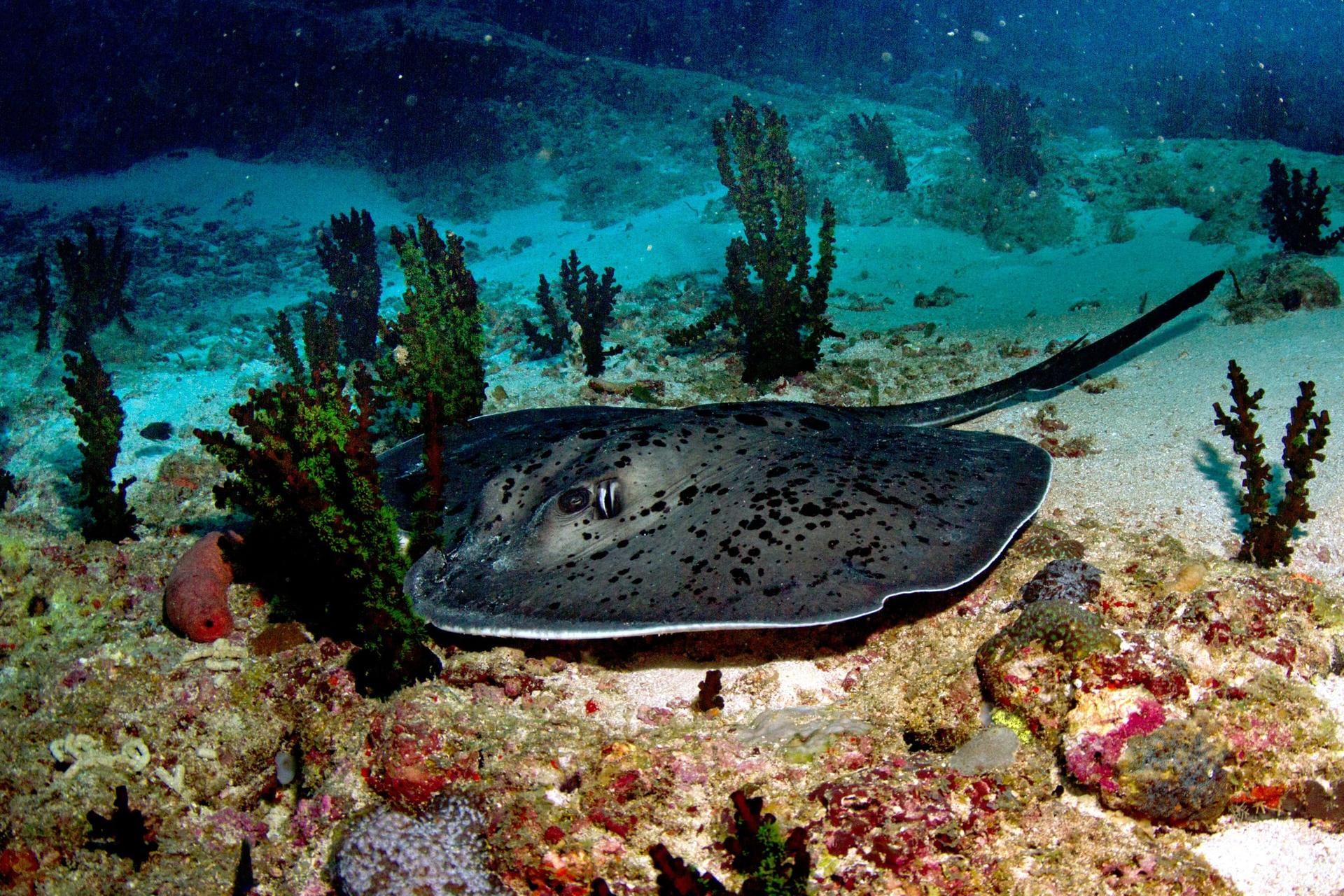
Photo: Tchami, CC BY-SA 2.0
The Maldives liveaboards we list start at €1,480 per person sharing, and a seven-night week starts at €1,795. The long routes to the far south and the far north cost more. On top of the fare come the green tax, on some boats a service charge and a fuel surcharge, your flights, and what you spend on board.
Every fare here is per person sharing a cabin, in euros. "From" means the lowest cabin category on a confirmed sailing that still has space.
The short answer: fares by route
We list 250 Maldives sailings with space. They fall into a few route families.
| Route | Usual nights | From | What moves the fare |
|---|---|---|---|
| One week, most often a loop of the central atolls (Malé, Ari, Vaavu) | 7 | €1,795 | The boat, the cabin and the month |
| Baa Atoll and Hanifaru Bay, manta season | 7 to 8 | €1,482 | Sails in the southwest monsoon only; a bay fee is added |
| Central atolls, longer loop | 10 | €2,565 | More nights, more atolls |
| Ari and the central atolls, longest loop | 11 | €1,480 | More nights, more of Ari Atoll |
| Deep south: Huvadhoo, Fuvahmulah, Addu | 7 to 14 | €3,077 | Dry-season fares, plus a domestic flight |
| Equatorial routes across the far south | 10 to 14 | €3,666 | Length and distance |
| Far north | 10 to 12 | €3,666 | Length; some trips need a domestic flight |
Read each figure as a floor, not a typical price. Within the same seven nights the spread is wide, because simple boats and large ones with suites sail the same channels.
The central atolls are the standard week and the cheapest to reach. The boat meets you at Malé airport, and you dive the channels and thilas of North and South Malé, Ari and Vaavu, among them Fotteyo Kandu. In the southwest monsoon some central weeks add Baa Atoll for the manta season, from €1,795. Hanifaru Bay itself is snorkel-only, by permit, and the Hanifaru Bay and Baa Atoll route page lists the manta-season sailings.
The deep south costs more in total. The boats go there in the dry season, mostly from January to March on our list, when their fares are in the upper band, and most trips start or end at a southern airport, so a domestic flight is added. The diving is more exposed: boats typically ask for Advanced Open Water and 50 or more logged dives. Our Deep South route page has the season, the flights and the live dates, and our Fuvahmulah guide describes the island.
What the fare includes
On the boats we sell, with differences from boat to boat that your confirmation spells out:
- Your berth in a shared cabin, with full board, drinking water, tea and coffee.
- The diving: up to three guided dives a day, with a night dive on some boats. A seven-night week usually comes to 16 to 18 dives.
- Tanks and weights: a standard tank of 11 or 12 litres with air fills, and weights.
- The dhoni. Most boats dive from a separate dive boat. It is part of the operation, not an extra.
- Airport transfers on the first and last day, between the boat and the airport it sails from.
- Nitrox on most of the boats we sell, for certified divers. On one it is charged by the week.
The fare does not include flights, the charges in the next section, rental gear and larger tanks, soft drinks and alcohol (one boat includes a house beer or glass of wine a day), courses, dive insurance or crew tips.
What sits on top
Green tax and other government charges
Green tax. The Maldives charges every tourist a green tax for each night of the stay. On tourist vessels, which is what a liveaboard is in law, the rate has been US$12 per person per night since 1 January 2025, when it doubled from US$6. The Maldives Inland Revenue Authority (MIRA) collects it, and children under two are exempt. A seven-night week comes to US$84. Whether you see it as a separate line depends on the boat: one of the boats we sell includes it in the fare, and the others add it, either with the booking or on board.
Goods and services tax. The tourism rate of GST has been 17% since 1 July 2025, up from 16%. None of the boats we sell adds it to the fare we show. At least one adds it to purchases made on board.
Service charge. Maldivian employment law requires tourism businesses, tourist vessels included, to levy a service charge of at least 10% and share it among their staff. One boat we sell collects 10% of the cabin's published rate on board. Another collects a flat US$150 for seven nights and US$200 for ten, in cash. The others do not list it separately.
Fuel surcharge. This is the operator's charge, not a tax. Many Maldives boats added or raised one during 2026. On the boats we sell that charge it, it is currently US$26 to US$30 a night, paid with the booking on one and on board on another. One boat includes fuel in the fare.
Site fees. Weeks that visit Hanifaru Bay add a fee for the snorkel in the bay, US$30 to US$50 depending on the boat. In the deep south, the tiger shark dive at Fuvahmulah, which is a baited dive, carries a fee of US$30 to US$50 where a boat offers it. Both are paid on board.
On board
Nitrox is in the fare on most of the boats we sell and about US$90 for the week on the one that charges. Some boats ask for a nitrox card on some or all routes, so it is worth having before you travel: our guide to nitrox on a liveaboard covers the course.
Equipment rental and 15-litre tanks are extra everywhere, and one boat expects guests to bring their own gear. Boats typically expect every diver to carry a computer and a surface marker buoy.
Crew tips. Where a boat collects a service charge, that is the crew's share and anything further is your choice. Where it does not, a cash tip at the end of the trip is customary, and one boat suggests US$10 a night. See our tipping guide.
Dive insurance. Boats typically ask for dive accident cover that includes evacuation. See our dive insurance guide.
Flights and the night before
The long-haul ticket to Malé's Velana International Airport (MLE) is the largest extra, and its price depends on where you start and when you book. The airport's departure tax and development fee are collected inside the airline ticket. We do not sell or book flights; we tell you which arrival and departure times fit the boat.
For the central atolls that is the whole journey. Most deep-south trips start or end at Kooddoo, in Huvadhoo Atoll, or Gan, in Addu, each about an hour or a little more from Malé by turboprop. Far-north trips can start or end at Hanimaadhoo, and some Baa Atoll weeks start and end at Dharavandhoo, a short hop from Malé. The domestic flight is not in the fare: we tell you which flights fit, and you book them. Check the baggage allowance on that leg, which can be lower than on your long-haul ticket.
If you land in the evening, or have a domestic connection the next morning, budget a night in Hulhumalé or Malé, both joined to the airport island by road. Green tax applies to that night too.
Visa
Tourists of all nationalities receive a 30-day visa on arrival, at no charge. Every traveller must also complete the Traveller Declaration on IMUGA, the Maldives Immigration portal, within the 96 hours before the flight arrives. The official form is free.
When fares are lowest and highest
The northeast monsoon, roughly December to April, is the dry season, with calm seas and the clearest water. The southwest monsoon, May to November, brings more wind, rain and plankton, lower visibility, and the manta feeding season in Baa Atoll, which peaks from July to October. Our month-by-month Maldives guide covers the diving.
Today's lowest seven-night fare in each part of the year, on any route:
| When | Season | Seven nights from |
|---|---|---|
| January to April | Dry season | €3,077 |
| May and June | Change of monsoon, mantas arriving in Baa | €1,795 |
| July to October | Southwest monsoon, manta season in Baa | €1,795 |
| November to mid-December | Change back to the dry season | €2,458 |
| Christmas and New Year | Holiday weeks | €3,291 |
Demand drives the pattern. The dry season falls in the European winter, so the boats fill. Some of the boats we sell set fare bands by season and list the same central route roughly 15 to 20% lower in the southwest monsoon than in the dry season. One adds a premium for the holiday weeks and much of January to April. One charges the same fare whatever the month. From January to March several boats move to the deep south at their upper fares, so fewer low-fare central weeks sail then.
Liveaboard or a resort with a dive package
A liveaboard fare covers the bed, the food, about three dives a day and the travel between atolls. A resort bill has more parts: the room by the night, a meal plan, the transfer to the island by speedboat, domestic flight or seaplane, and the diving, which resort dive centres price by the dive or in packages. Boat fees and equipment are often separate lines, and the service charge and GST are added on top. A resort usually runs two boat dives a day to sites within reach of its island.
Divide the whole bill by the dives. For someone who wants to dive three times a day, the liveaboard usually comes out lower per dive once the room, meals and transfers are counted, and it covers several atolls. For a couple where one person does not dive, or a diver who wants one dive a day and time ashore, a resort can be the better use of the money. Our guide to liveaboard or resort diving goes through the choice by destination.
Ways to spend less
- Travel in the southwest monsoon. The lower fare bands sit between about May and October. Expect some rain, wind and lower visibility.
- Share a cabin. Every fare here is per person sharing. Solo divers can usually share a twin with another guest of the same sex at that fare. A cabin to yourself costs a supplement that varies by boat.
- Take a lower-deck cabin. The "from" fare is the lowest category, usually a lower-deck twin. Upper-deck cabins and suites cost more for the same dives.
- Compare per night. A central trip from Malé needs no domestic flight, but shorter is not always cheaper. Five-night central trips start at €2,216, six nights at €2,663 and eleven at €1,480, on different boats.
- Bring your own computer and your nitrox card. Rental is charged on top, and a card earned at home saves the course fee on board.
- Count the whole bill. A fare that includes green tax, fuel and nitrox can come out below a lower fare that adds each of them on board.
Maldives dates with space
The next sailings with space, live:
| Date | Destination | Route | Nights | From |
|---|---|---|---|---|
| 23 Nov 2026 | Maldives | Heart of the Maldives | 7 | €2,458 |
| 26 Nov 2026 | Maldives | Central Atolls | 7 | €2,713 |
| 29 Nov 2026 | Maldives | Best of Central Atolls (7 nights) | 7 | €4,185 |
| 5 Dec 2026 | Maldives | Best of Central Maldives (Ari) | 11 | €1,480 |
| 20 Dec 2026 | Maldives | Deep South (Male to Gan) | 13 | €5,749 |
| 4 Jan 2027 | Maldives | Best of Central Atolls | 7 | €3,291 |
| 11 Jan 2027 | Maldives | Best of Central Atolls | 6 | €3,137 |
| 16 Jan 2027 | Maldives | Heart of the Maldives Adventure | 10 | €3,511 |
Every date is on the Maldives calendar, and the routes and boats are on our Maldives liveaboards page.
Four questions
Is the green tax included?
On one of the boats we sell, yes. On the others it is US$12 per person per night on top, charged with the booking or collected on board.
How much should I budget on top of the fare?
For a seven-night week, the fixed charges run from nothing, on the boat that puts everything in the fare, to about US$84 where green tax is the only addition, to several hundred US dollars where a fuel surcharge and a service charge are added. Then come tips, drinks, any rental, and the flights.
Is a liveaboard cheaper than a resort?
Per dive, usually, if you dive three times a day and count the room, meals and transfers. In total it depends on the resort and on how much you dive.
Do I pay in euros?
Yes. Every fare on our site is shown and charged in euros, and fares the boats set in US dollars are converted at the European Central Bank reference rate. Our invoice shows an admin and card processing fee of 3% as its own line, as the booking terms set out. Charges collected on board are paid in the currency the boat uses, usually US dollars, and often in cash.
Send us your dates, your logged dives and a budget through the concierge, and we will set out in writing which sailings fit and what each one costs with its extras.
Related Guides
Related Articles
When to Dive the Maldives: Month by Month
Two monsoons, different atolls, different animals. When to go depends entirely on what you want to see, and most operator websites will not tell you the real tradeoff. Here is the month-by-month for 2026.
Diving the Azores: Blue Sharks, Mobulas and the North Atlantic's Largest Protected Network
In 2024 the Azores created the largest network of marine protected areas in the North Atlantic, about 287,000 km² of ocean that blue sharks, mobulas and sperm whales pass through. Here is why we think it is the most underrated diving in Europe, island by island and month by month.