Fuvahmulah
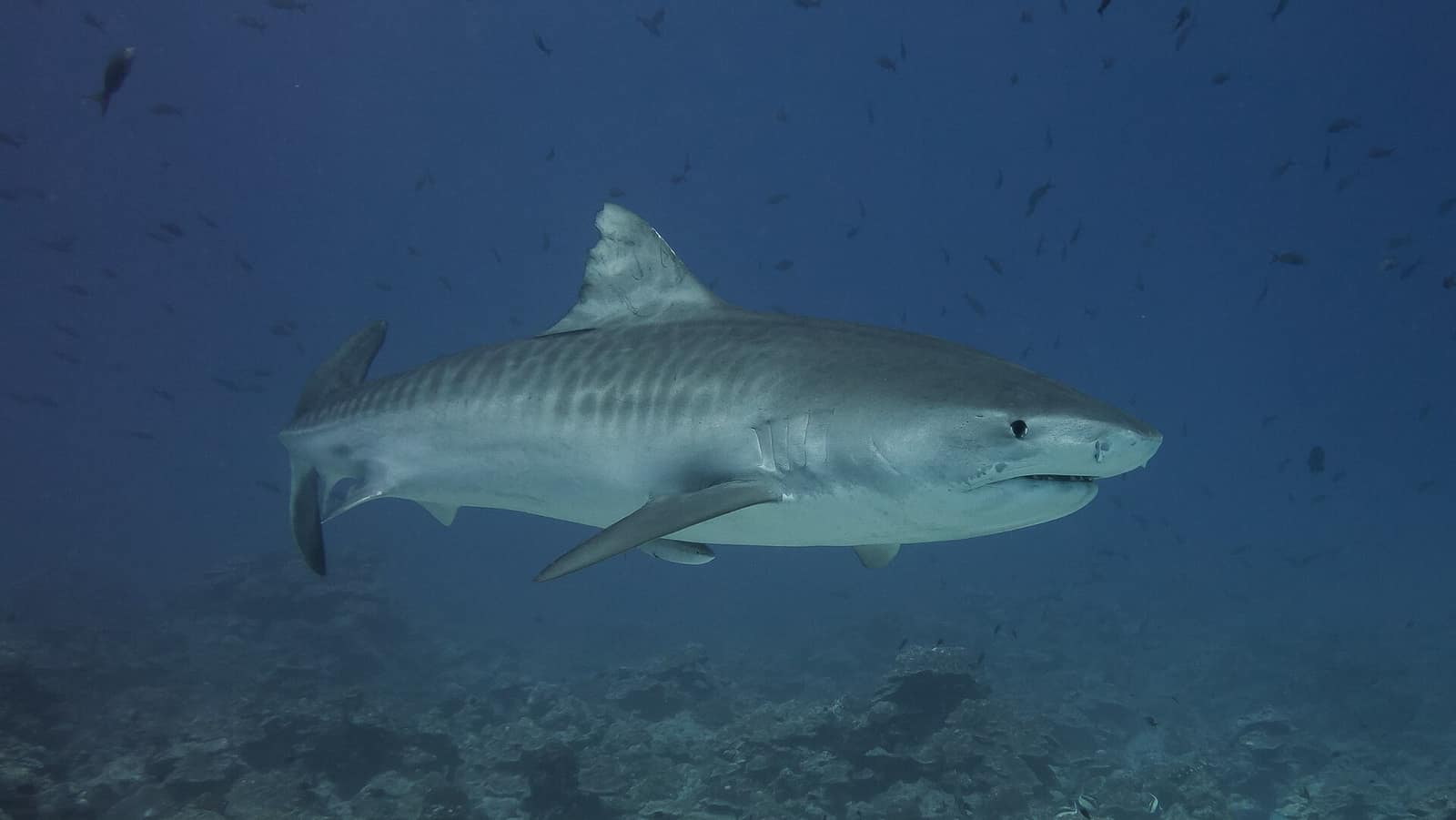
Nowhere else in the Maldives puts you knee-deep in a sandy shallow with a dozen tiger sharks cruising an arm's length away.
Fuvahmulah is the outlier of the Maldives — a single oceanic island with no protective atoll and no lagoon, dropping straight into blue water. That geography is why Fuvahmulah diving has become one of the most reliable big-shark encounters on the planet, with resident tiger sharks on almost every dive and a supporting cast of threshers, hammerheads and pelagics. It is exhilarating, genuinely wild, and not for everyone. Here is what it is actually like, and how to dive it well.
Quick answer: Fuvahmulah is a baited shark dive on a shallow sandy flat, plus reef walls, drop-offs and deep cleaning stations in Maldives. Best season: Dry season December-May, peak January-April; tiger sharks are present year-round, every day. Level: Tiger Harbour suits Open Water divers; thresher and hammerhead sites are Advanced-plus with real current. Depth: 6-10m at Tiger Harbour; 12-40m at thresher and hammerhead sites, with walls plunging into the open ocean. Typical visibility: 15m in the wet-season monsoon up to 40m+ at the dry-season peak; typically 20-40m.
Facts verified September 2026
What makes Fuvahmulah diving special
Most of the Maldives is a string of ring-shaped atolls with sheltered lagoons and channel diving. Fuvahmulah is nothing like that. It is one isolated island sitting alone in deep ocean, its reef falling away steeply on every side into thousands of metres of blue. There is no lagoon to soften the water and no neighbouring reef to break the pelagic highway. Big animals simply live here.
The result is a shark encounter that is consistent in a way few destinations can match. Tiger sharks are logged on almost every dive, all year, and researchers have photo-identified well over 240 individual resident tigers around the island. You are not hoping for a fleeting pass in the blue — you are sitting in the front row while animals you start to recognise by name cruise the sand in front of you.
What you'll see
Tiger sharks are the headline, but Fuvahmulah's open-ocean position stacks the deck with pelagics through the year. Depending on season and current, a week here can deliver several of the ocean's most sought-after species.
- Tiger sharks — the resident stars, 3-4m animals seen on the great majority of dives, year-round
- Thresher sharks — visiting shallow cleaning stations, best January-March and often on the morning high tide
- Hammerheads — schooling scalloped hammerheads and the occasional great hammerhead, current-dependent and peaking January-March
- Oceanic whitetips, silvertips and grey reef sharks patrolling the walls
- Seasonal giants — whale sharks, mola mola (oceanic sunfish), mantas and big pelagic schools of trevally and tuna
Conditions and who it's for
Be honest with yourself about experience here. The signature Tiger Harbour dive is genuinely accessible — a shallow 6-10m sandy flat on the island's eastern side, with mild current, where certified Open Water divers can comfortably kneel and watch. It is the shark proximity, not the diving, that is demanding, and good briefings and disciplined buddy behaviour matter enormously.
The rest of Fuvahmulah is a different animal. Thresher and hammerhead sites are deeper, colder and often swept by moderate-to-strong current that can turn washing-machine at exposed points like Farikede. Those dives call for solid Advanced-level skills, good air consumption and comfort holding position in current on a reef hook or negative-entry drop. Water sits at a warm 24-29C. Visibility ranges from around 15m in the monsoon to 40m-plus at the dry-season peak.
It is worth being clear-eyed about the tiger dives being baited. Guides do not hand-feed; fish carcasses are sunk and wedged under rocks for the sharks to work out and hunt, a practice rooted in the island's fishing heritage. It is a close, managed encounter with large predators — follow the briefing exactly, stay compact, keep your hands in, and never chase or touch.
When to dive it
The strongest window is the dry northeast-monsoon season from December to May, with January to April the sweet spot for calm seas, the best visibility and access to every site. That period also overlaps the prime January-March run for schooling threshers and hammerheads, so it is when Fuvahmulah is at its most complete.
The crucial point, though, is that the tiger sharks do not leave. They are resident and seen at Tiger Harbour every single day of the year, so even a wet-season trip built around the tigers rarely disappoints — you simply trade some visibility and the pelagic schools for fewer crowds and, often, lower prices.
How you actually dive it
Fuvahmulah is a shore-based, harbour operation, not a typical Maldives boat-hopping trip. You fly in on a short domestic flight from Malé, stay on the island, and dive with a local centre using small boats out of the harbour. On a tiger dive you descend along the reef wall and finning a few hundred metres to the sandy mouth of the harbour, where centres rotate through timed slots — roughly 30 minutes each with the sharks — to keep numbers controlled.
This is where honesty about access matters. Because Fuvahmulah sits alone in the far south with its own airport, the tiger diving is fundamentally a land-based experience; you cannot reliably do it from a passing liveaboard. Deep-south itineraries can position you in the region and some combine boat days with a Fuvahmulah stay, but plan the tiger sharks as a dedicated island base, not a drive-by stop.
Faneca reaches this corner of the Maldives on a specialised Deep-South expedition that pairs regional liveaboard days with a dedicated Fuvahmulah island stay for the tiger sharks — since the tiger diving is a land-based harbour operation and the best pelagic action is seasonal, talk to our concierge about timing it right.
Fuvahmulah: common questions
What is the best season to dive Fuvahmulah?
Dry season December-May, peak January-April; tiger sharks are present year-round, every day
What experience level do I need for Fuvahmulah?
Tiger Harbour suits Open Water divers; thresher and hammerhead sites are Advanced-plus with real current
How deep is Fuvahmulah?
6-10m at Tiger Harbour; 12-40m at thresher and hammerhead sites, with walls plunging into the open ocean
What marine life will I see at Fuvahmulah?
Resident tiger sharks (240+ individuals ID'd), thresher sharks, scalloped and great hammerheads, oceanic whitetips, silvertips, whale sharks, mola mola, mantas and pelagic schools
