Red Sea Liveaboard Routes: North, South, BDE, and Deep South
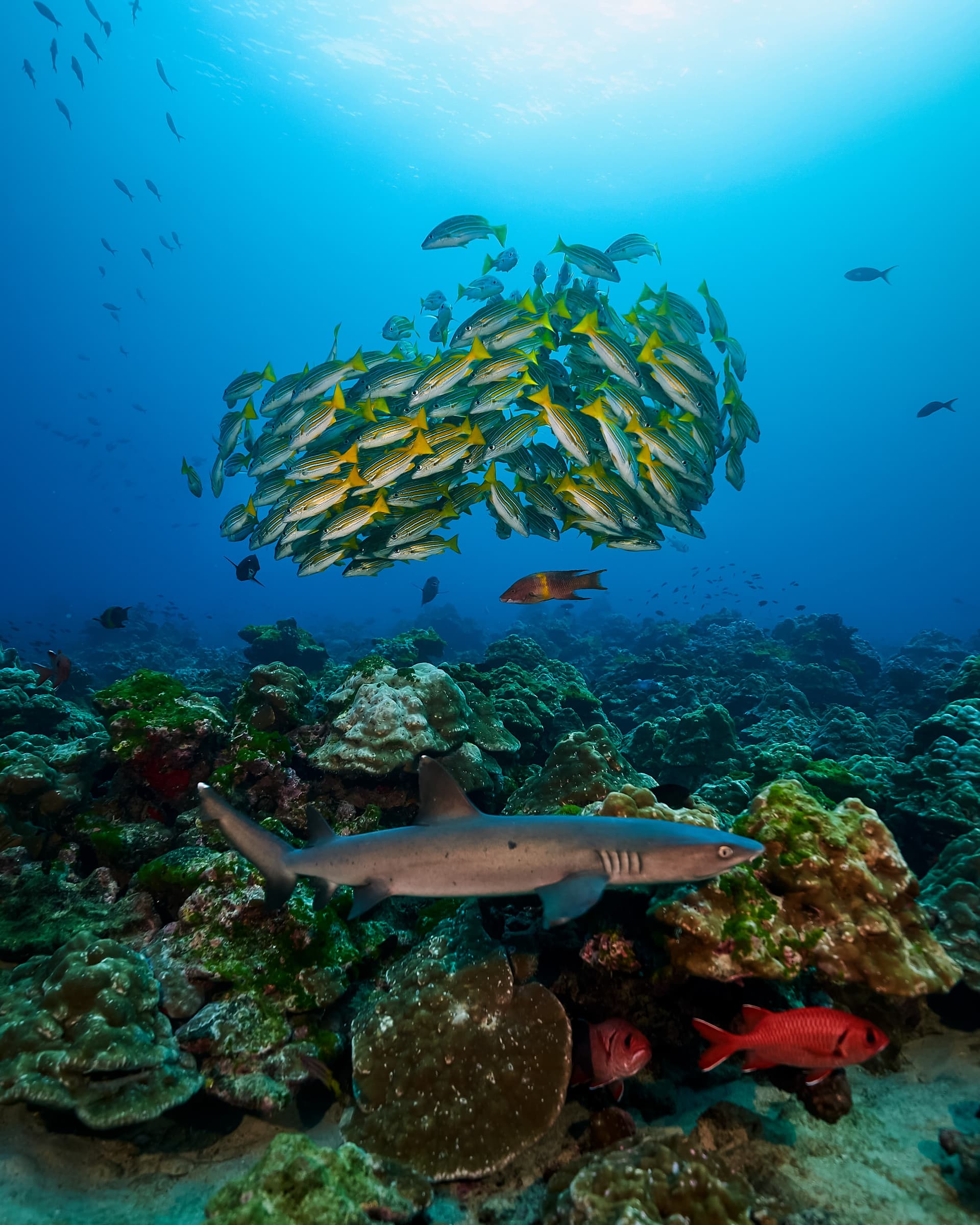
The Red Sea is one of those rare destinations where a liveaboard novice and a 5,000-dive veteran can both find exactly what they are looking for. The trick is choosing the right route.
Most Red Sea liveaboards depart from Egyptian ports — Hurghada, Port Ghalib, or Marsa Alam — and head to one of several distinct regions. Each route has its own character, its own highlights, and its own demands. Let us walk through them all.
Northern Routes
What You Get
The northern Red Sea is where many liveaboard careers begin, and for good reason. It is the most accessible, with generally mild conditions and some of the most famous dive sites in the world.
Key sites include:
- Ras Mohammed National Park: The jewel of the Egyptian Red Sea. Shark Reef and Yolanda Reef offer dramatic walls, schooling fish in absurd numbers, and the remains of the cargo ship Yolanda with its famous scattered toilets.
- Tiran Strait: Four coral-encrusted reefs (Jackson, Woodhouse, Thomas, Gordon) with strong currents bringing in pelagics. Hammerhead sightings possible at Jackson Reef.
- SS Thistlegorm: The most famous wreck in the Red Sea, possibly the world. A WWII British munitions ship with motorcycles, trucks, locomotives, and ammunition still in the holds. Sits at 30 metres and can be dived multiple times.
- Abu Nuhas: A ship graveyard with four wrecks in close proximity — the Giannis D, Carnatic, Chrisoula K, and Kimon M. The Giannis D alone is worth the trip.
Conditions
- Visibility: 20 to 30-plus metres
- Currents: Mild to moderate, though Tiran can have strong currents
- Temperature: 22 to 28 degrees Celsius depending on season
- Depth: 5 to 40 metres for most sites
Who It Suits
- Liveaboard first-timers
- Open Water and Advanced Open Water divers
- Wreck diving enthusiasts
- Divers who want a well-rounded mix of reefs, wrecks, and walls
Best Months
Year-round, but March to May and September to November offer the best balance of warm water and calm conditions. Winter (December to February) can be choppy with cooler water (22 to 24 degrees), though visibility often improves.
Brothers, Daedalus, and Elphinstone (BDE)
What You Get
This is where the Red Sea gets serious. The BDE route heads to three isolated offshore reef systems that are magnets for pelagic life. If you want sharks, this is your route.
Key sites:
- The Brothers (Big Brother and Little Brother): Two small islands surrounded by sheer walls dropping into the deep. Hammerhead sharks patrol Big Brother in the mornings, grey reef sharks circle the plateaus, and two intact wrecks (Numidia and Aida) cling to the walls. Little Brother has some of the best soft coral in the Red Sea.
- Daedalus Reef: A large oval reef far offshore, ringed by walls and topped with a lighthouse. Hammerhead schools, thresher sharks, oceanic whitetips, and occasionally silky sharks. The sheer volume of shark encounters here can be staggering.
- Elphinstone Reef: A long, narrow reef with two spectacular plateaus where oceanic whitetip sharks are regularly seen. The north and south plateaus are drift dives in current, and the wall diving along the sides is world-class.
Conditions
- Visibility: 25 to 40-plus metres (offshore water is wonderfully clear)
- Currents: Moderate to strong. These are exposed offshore reefs, and currents can shift quickly.
- Surface conditions: Open ocean crossings mean you may encounter swell. Seasickness medication is worth considering.
- Depth: Walls start shallow but drop beyond recreational limits. Hammerhead encounters often happen at 25 to 40 metres.
Who It Suits
- Advanced divers with strong current experience (minimum 50 to 100 dives recommended by most operators)
- Shark lovers and pelagic enthusiasts
- Underwater photographers chasing big animal encounters
- Divers comfortable with blue water and exposed conditions
Best Months
June to November is peak shark season, with the highest concentrations of hammerheads and oceanic whitetips. Water is warmest (27 to 30 degrees). October is often cited as the single best month. Winter trips still see sharks but in lower numbers.
Southern Routes (Fury Shoals, St. Johns)
What You Get
The southern Egyptian Red Sea is all about pristine reefs and relaxed diving. Less trafficked than the north, with healthier coral and a more laid-back atmosphere.
Key sites:
- Fury Shoals: A maze of shallow reef systems with incredible hard coral gardens. Sha'ab Claudio has a stunning cave system with light beams. Sha'ab Maksur offers huge table corals and resident turtles. Dolphin House (Sha'ab Samadai) is a protected bay where spinner dolphins rest — you can snorkel (not dive) with them.
- St. Johns Reef System: A vast network of reefs near the Sudanese border. Habili Ali has enormous gorgonian fans and soft coral walls. Gotta Kebir offers caverns and swim-throughs. The coral health here is some of the best in Egypt.
Conditions
- Visibility: 20 to 35 metres
- Currents: Generally mild, making this the most relaxed route
- Temperature: 24 to 30 degrees Celsius
- Depth: 5 to 30 metres for most sites, though walls extend deeper
Who It Suits
- All experience levels including newer divers
- Reef lovers and macro enthusiasts
- Divers who prefer relaxed conditions over adrenaline
- Underwater photographers who love corals and reef life
- Anyone wanting to swim with wild dolphins
Best Months
Year-round. Water is warmest June to September. For dolphins at Sha'ab Samadai, check the park opening dates as the site has seasonal closures for dolphin protection.
Deep South (Sudan Border and Beyond)
What You Get
The deep south routes push toward or into Sudanese waters, visiting reefs that very few divers ever see. This is expedition-style diving.
Key sites:
- Rocky Island and Zabargad: Rocky is an exposed offshore reef with dramatic walls, hammerheads, and big pelagics. Zabargad is a volcanic island with beautiful reef diving and a small wreck.
- Elba Reef: Near the Sudanese border, with pristine walls and pelagic action
- Sudanese wrecks: Some itineraries cross into Sudan, visiting sites like the Blue Belt wreck and the legendary Sha'ab Rumi — where Cousteau built his Conshelf II underwater habitat
Conditions
- Visibility: 25 to 40-plus metres
- Currents: Can be strong, especially at exposed reefs
- Remoteness: Long boat transits, limited rescue infrastructure
- Depth: Many of the best encounters happen at depth
Who It Suits
- Experienced divers only (200-plus dives recommended)
- Those who have already dived the northern and BDE routes and want something new
- Expedition-minded divers comfortable with remote conditions
- Divers with flexible schedules (trips are longer, typically 10 to 14 nights)
Best Months
May to October for the best pelagic encounters and warmest water. These are long trips — typically departing from Port Ghalib or Marsa Alam — and availability is limited.
Choosing Your Route
Here is the simple decision tree:
- First Red Sea liveaboard? Start with a Northern route. You will see the greatest hits and get comfortable with the liveaboard lifestyle.
- Want sharks? Go BDE. Nothing else in the Red Sea matches it for pelagic encounters.
- Want relaxation and beautiful reefs? Southern routes deliver pristine coral without the pressure of strong currents.
- Been to Egypt multiple times and craving something new? The deep south or a Sudanese border crossing will reignite your sense of exploration.
Many experienced Red Sea divers combine routes — perhaps BDE plus Brothers on one trip, then a southern route six months later. The Red Sea rewards repeat visits.
Need help choosing the right Red Sea route for your experience level? We have been there and can give you honest advice. Get in touch.
- Red Sea Route Deep Dive: Brothers Islands vs Northern Wrecks — Detailed comparison of the two main routes
- Red Sea Egypt: Wrecks, Reefs, and the Best Routes — Complete overview of Egyptian Red Sea diving
- Saudi Arabia: The Untouched Red Sea — The other side of the Red Sea
Related Articles
%20-%20Large.jpg&w=828&q=75)
Best Time to Dive: A Season-by-Season Guide
When to visit the world's top liveaboard destinations for the best conditions and marine life encounters.
Galápagos Diving: What to Expect on Your First Trip
Hammerhead highways, curious sea lions, and currents that demand respect — here's what awaits in the enchanted islands.