10 Mistakes First-Time Liveaboard Divers Make (And How to Avoid Them)

Your first liveaboard trip should be transformative. Life-changing. The kind of experience that rewires your brain and makes you spend the next six months planning the second one.
But first-timers almost always make the same handful of mistakes -- and while none of them are trip-ruining, all of them are entirely avoidable. Consider this your cheat sheet from the people who've seen it all.
Mistake #1: Overpacking
We once watched a couple arrive at a marina in Hurghada with two hard-shell Samsonites, a hanging garment bag, and a separate shoe bag. For a dive trip. The crew carried the cases up the gangway with the kind of polite silence that means they're absolutely roasting you in the galley later. The cases didn't fit under the bunk. They didn't fit on top of the bunk. One ended up in the corridor until a crew member "found space" for it in a storage hold three decks down -- accessible once per day if you asked nicely.
The fix: Pack in a soft duffel bag. Bring half of what you think you need. You'll live in swimwear and rashguards. That third pair of nice shorts? Nobody on this boat is wearing nice shorts. That "just in case" outfit? The "just in case" on a liveaboard is an extra mask strap and a spare torch battery, not a cocktail dress.
Experienced liveaboard divers can pack for a week in a bag that would embarrass a weekend traveller. That's not minimalism -- it's wisdom earned through the humiliation of dragging a rolling suitcase across a wooden dhoni while 15 people watched.
Mistake #2: Wrong Certification Level
A guest booked one of our Komodo trips last year -- Open Water certified, 12 dives logged, all in a calm Thai bay. The itinerary included Batu Bolong, where the current runs like a river and the dive starts at 30 metres. The guide had to tell her, gently, that she'd be sitting out three of the best sites on the trip. She was crushed. She'd spent months looking forward to those exact dives.
Most liveaboards list minimum certification requirements, but some are vague about it. And even when the boat accepts Open Water divers, specific dive sites on the itinerary may be off-limits to you.
The fix: Check the specific itinerary, not just the boat's general policy. If the trip features deep dives (below 18m), strong currents, or the words "advanced" or "drift," get your Advanced Open Water certification before you go. It takes two days and about 300 euros. That's a tiny price to avoid watching from the sundeck while everyone else descends to the site you travelled 10,000km to see.
Mistake #3: No Dive Insurance
A diver on a Red Sea trip got a mild DCS hit after a deep wreck dive -- tingling in his fingers, headache, fatigue. Classic symptoms. The boat radioed for a chamber transfer. He spent 5 hours in a hyperbaric chamber in Hurghada. The bill was around 3,000 euros. He had travel insurance. It excluded scuba diving below 10 metres. He paid out of pocket, on holiday, in a foreign country, while feeling terrible.
"I have travel insurance" is not the same as having dive insurance. Standard policies usually exclude scuba diving entirely, or cap coverage at depths your average liveaboard dive exceeds on the first morning.
The fix: Get DAN or equivalent dive-specific insurance. It costs about 60-80 euros per year -- less than your airport lunch and taxi combined. Get it months before your trip. Most liveaboards require proof of coverage at check-in, and filling out insurance forms on the dock while the crew waits is not the relaxed start to your trip you imagined.
Mistake #4: Ignoring Seasickness Until It's Too Late
Every trip has one. The person who says "I never get seasick" at dinner on night one, and by the first open-water crossing is draped over the stern railing like a damp towel, unable to eat, unable to dive, unable to enjoy anything except the horizon line.
The key word is "prevention." Once you're green-faced and horizontal, no amount of ginger tablets is saving you. Seasickness medication needs to be in your system before the boat starts moving.
The fix: Start taking your preferred remedy the night before departure. Not the morning of. The night before.
- Dramamine/meclizine: The classic. Can make you drowsy, but effective. Take it at bedtime.
- Scopolamine patches: Prescription in most countries. Apply behind your ear 8 hours before sailing. These are the gold standard for multi-day trips.
- Stugeron (cinnarizine): Available over the counter in much of Europe and Asia. Less drowsy than Dramamine. Popular with liveaboard crews themselves, which tells you something.
- Ginger: Milder, but some experienced sailors swear by it
- Sea-Bands: Acupressure wristbands. The science is thin, but they're harmless and the placebo effect is real.
Also: stay on deck in fresh air when the boat is moving, look at the horizon (not your phone), stay hydrated, and avoid the greasy fried breakfast before a crossing. The stern has less motion than the bow. The middle deck has less motion than the top deck. Learn these things before you need them.
Mistake #5: Not Tipping the Crew
The deckhand who carried your 15kg tank to the platform four times a day. The cook who made you a separate meal because you mentioned you're vegetarian. The dive guide who spotted the pygmy seahorse you'd have swum right past. The engineer who fixed the shower head in your cabin without being asked.
Liveaboard crews work 16-hour days, seven days straight. On many boats in Southeast Asia and Egypt, tips make up a third of their income. Not tipping -- or tipping a token amount -- is remembered. We hear about it from crews, and it colours how they feel about their work.
The fix: Budget $10-15 per person per day for crew tips. On a 7-night trip, that's $70-$105 per guest. Some boats have a communal tip box; others prefer envelopes distributed to the crew chief. Ask on day one what the custom is.
Bring cash in the appropriate currency (USD is widely accepted on international boats). An envelope with a short thank-you note goes a long way. These people just gave you the best week of your year on a schedule that would break most office workers -- acknowledge it.
Mistake #6: Camera Obsession (At the Expense of the Experience)
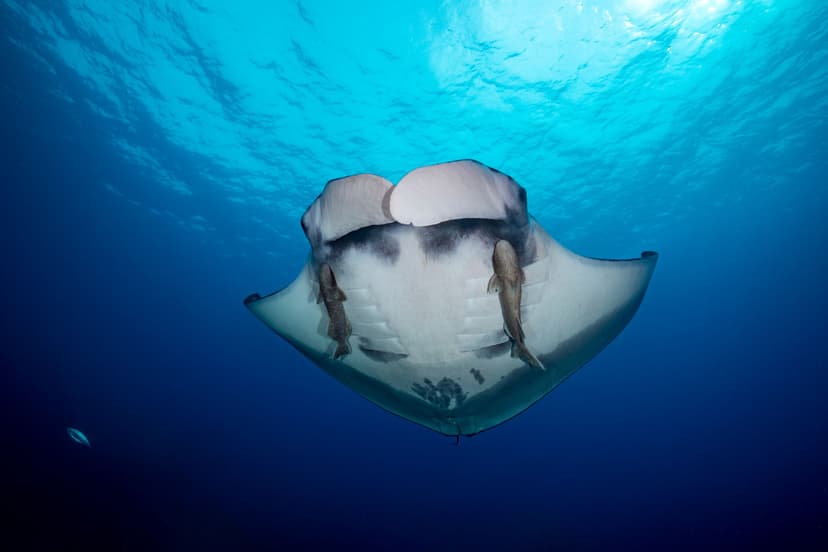
We watched a photographer on a Maldives trip spend an entire manta cleaning station dive hunched over his camera, adjusting strobe angles, chimping the LCD after every shot, changing lenses at 15 metres. Meanwhile, three mantas were doing barrel rolls directly above him. He never looked up. Not once. He got 200 technically adequate photos of manta bellies. He missed the moment when all three mantas lined up in formation and glided over the group in perfect synchrony. Everyone else saw it. He was changing his aperture.
The fix: For at least one dive per day, leave the camera on the boat. Just dive. Look around with your actual eyes. Watch how the light shifts as a cloud passes overhead. Feel the current change direction. Notice the cleaner wrasse working on a grouper's gills. These are the details you miss when you're composing shots.
The dives you remember most vividly five years later are rarely the ones with the best photos. They're the ones where you were fully present.
And if you must shoot every dive, at least spend the first 10 minutes just looking before you raise the viewfinder.
Mistake #7: Skipping the Safety Briefing
There's always one person who's "done this before" and spends the safety briefing fiddling with their camera or scrolling their phone at the back of the salon. On one of our Red Sea trips, a diver surfaced 200 metres from the boat in a current. The crew deployed the tender immediately. The diver, who had zoned out during the briefing, didn't know the protocol was to deploy his SMB and stay put -- he tried to swim back against the current and exhausted himself. Everyone was fine, but it took 40 minutes to recover him and the entire dive schedule shifted. The other 18 guests were not thrilled.
The fix: Listen. Every boat is different. Where is the emergency oxygen? Which side do you board the tender from? What's the lost-diver protocol? What's the recall signal? This takes 15 minutes. Pay attention. The briefing exists because something went wrong on a boat somewhere, and now there's a procedure to prevent it happening again.
Mistake #8: Not Staying Hydrated
By day three of every trip, someone is on the sundeck with a pounding headache, complaining they feel "off." Nine times out of ten, it's dehydration. They've been in 30-degree heat, doing 3-4 dives a day, breathing bone-dry compressed air for hours, sweating in neoprene, and drinking approximately one glass of water at meals.
Dehydration is a genuine risk factor for decompression sickness. It makes your blood thicker, reduces off-gassing efficiency, and turns an otherwise safe dive profile into a dice roll.
The fix: Drink water until you're annoyed by how much water you're drinking. Keep a reusable bottle on you and refill it between every dive. Most boats have water stations on the dive deck -- use them. Aim for 3+ litres per day in tropical climates. Your pee should be pale yellow. If it's dark, you're already behind.
Watch your alcohol intake too. A cold beer at sunset is part of the liveaboard ritual. Four beers the night before an early morning deep dive is how you end up in a hyperbaric chamber with a hangover. The crew won't stop you -- but the guide will quietly assess whether you're fit to dive in the morning, and if you're not, you're sitting it out.
Mistake #9: Wrong Expectations About Comfort
A guest once asked us, with complete sincerity, whether the liveaboard had a gym and a spa. Another wanted to know if room service was available after 10pm. A third was upset that the WiFi couldn't stream Netflix. On a boat anchored 60 nautical miles from the nearest cell tower.
A liveaboard is a boat. A good one. A well-maintained, comfortable, adventure-oriented boat. But not a floating resort. Even the nicest ones involve tight spaces, engine noise that vibrates through your pillow, and the occasional 2am swell that sends your toiletry bag skidding across the bathroom floor.
The fix: Calibrate your expectations before you board. You're trading thread-count sheets and infinity pools for access to dive sites that no day-boat can reach and no resort can offer. That trade-off is the entire point, and most people discover they prefer the boat life by day two.
That said, if personal space genuinely matters to you, invest in a higher cabin tier. The price difference between a standard twin bunk and a master cabin with its own bathroom is often only 20-30% more -- and for some people, having a private bathroom and a real bed transforms the trip from endurance test to genuine comfort.
Mistake #10: Booking the Wrong Season
A guest booked a Maldives trip for June specifically to see manta rays at Hanifaru Bay. The problem: Hanifaru's manta season peaks from August to November. He was two months early. He had a good trip -- the Maldives in June is still the Maldives -- but the mass manta feeding frenzy he'd watched on YouTube? That wasn't happening yet. He'd based his booking on a cheap flight, not the marine calendar.
Every destination has a peak season, and the difference is not subtle. The Red Sea in October delivers hammerhead schools at Brothers Island. The Red Sea in January delivers cooler water and quieter reefs. Both are fine -- but they're very different trips.
The fix: Research the seasonality of your destination before you book. When are the mantas in the Maldives? (August-November at Hanifaru, January-April in the central atolls.) When are the whale sharks? (August-November in the south.) When does Raja Ampat have the best visibility? (October-April.) When do the hammerheads school at Brothers? (September-November.)
If you're flexible on dates, ask your agency what the optimal window is for what you want to see. A single week's difference in timing can mean the difference between empty blue water and a cleaning station packed with mantas.
The Bonus Mistake: Not Booking the Next One
The biggest mistake of all? Going home, returning to normal life, and waiting too long to book your next trip. The post-liveaboard blues are real, and the only cure is planning the next one.
The best departures fill up 6-12 months in advance. Start looking before you've even finished unpacking.
First liveaboard and want to make sure you get it right? Faneca specialises in matching first-time liveaboard divers with the right trips -- the right boat, the right destination, the right time of year. Tell us what you're dreaming about, and we'll make sure the reality matches.
- First-Time Liveaboard: What to Expect Day by Day — The full day-by-day breakdown of life on board
- The Complete Liveaboard Packing Guide — Avoid the packing mistakes before they happen
- Best Liveaboard Trips for Beginners — Choose the right destination for your first trip
- What Happens After You Book a Liveaboard — The complete preparation timeline
Related Articles
The Complete Liveaboard Packing Guide
What to bring, what to leave behind, and the gear essentials that experienced liveaboard divers swear by.
First-Time Liveaboard: What to Expect Day by Day
Never done a liveaboard? Here's the inside scoop on the schedule, the meals, the diving, and the delightful chaos.