Christmas Point
Granite boulders fall away from the north-west corner of Island 9 into a run of arches and swim-throughs between about 18 and 25 metres.
Christmas Point is the north-western tip of Koh Ba Ngu, Island 9, the northernmost island of the main Similan chain. Here the granite boulders of the island's west coast tumble down to 35 or 40 metres before the bottom turns to sand and keeps sloping deeper. The draw is a series of arches and swim-throughs in the middle depths, with reef sharks resting on the sand below and schooling fish in the blue. It faces the open sea, the current can run, and the best of it is below 18 metres, so it suits divers with some experience. Boats often dive it first thing in the morning.
Quick answer: Christmas Point is a granite boulder site with arches, swim-throughs and channels, sloping onto sand in Thailand. Best season: The park is open from about 15 October to 15 May. November to April usually brings the calmest sea; from about February to April expect more plankton, softer visibility and cold-water pulses at depth. Level: Boats typically treat it as an intermediate to advanced dive: Advanced Open Water for the arches, and experience in current when it runs. Open Water divers stay above 18 m with the guide. Depth: From about 5 m at the island; boulders down to 35 to 40 m, then sand sloping deeper; arches and swim-throughs between about 18 and 25 m. Typical visibility: Usually 20 to 30 m; down to about 15 m when plankton is in.
Facts verified November 2026
Where it is and what it looks like
Koh Ba Ngu is Island 9, the last island of the main Similan chain before the sea opens up towards Koh Bon. Like the other Similans it has two different coasts. The sheltered east side is a gentle coral slope, Breakfast Bend, which is a popular night dive. The west side faces the open sea, and its north-western corner is Christmas Point.
The boulders are huge. They fall away from the island to about 35 or 40 metres, and where they lean against each other they leave arches, tunnels, gullies and crevices lined with soft coral and sea fans. Beyond the boulders the bottom is sand and rubble that keeps sloping well past recreational depth. Deeper still, a long finger of rock runs out across the sand at around 28 to 30 metres, and sharks and rays are often found along it.
The arches and swim-throughs
The arches are the signature of the site. Operators describe several at different depths, between about 18 and 25 metres: a small arch with a big sea fan in front of it, a triangular swim-through where groupers and sweetlips shelter, and a large archway at around 24 to 25 metres that most guides build the dive around. Sweetlips, rabbitfish and groupers hang inside it, out of the current.
All of them are deeper than the 18-metre limit of an Open Water card, so they are a reason to have Advanced Open Water before the trip or to take it on board. Swim through one at a time and keep your fins and hands off the walls, where the sea fans and soft corals grow.
What you will see
Christmas Point mixes reef life in the boulders with bigger fish off them. Keep an eye on the sand below and the blue beside you as well as the arches.
- Whitetip and blacktip reef sharks on the deeper sand and along the boulder edges, though some operators report fewer than in past years
- Leopard sharks resting on the sand now and then
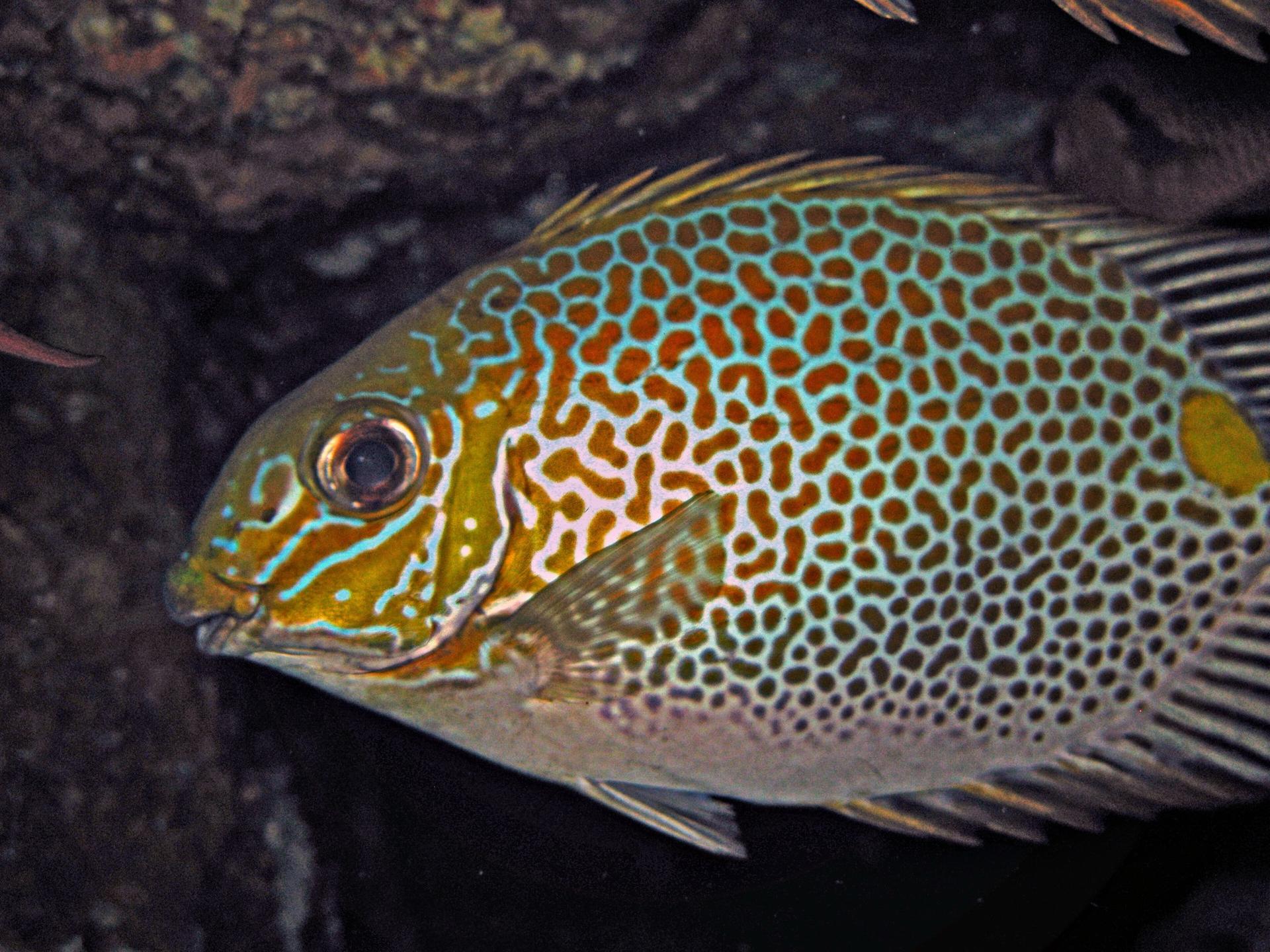
- Oriental sweetlips, groupers, rabbitfish and Napoleon wrasse around the arches
- Chevron barracuda, trevally, tuna and schooling fusiliers off the boulders
- Ribbon eels, nudibranchs, tiger cowries and garden eels on the sand and rubble
- Soft corals, sea fans and large gorgonians in the gullies and crevices
- Mantas and whale sharks occasionally, more likely when plankton is thick; never something to plan on
Conditions and who it is for
On a slack tide Christmas Point is a relaxed boulder dive in clear water. With current it is not. It usually runs along the island, from south-west to north-east or the reverse, and on strong days it pushes divers off the boulders and makes the deeper sand hard work. Stay in the lee of the rock with your guide, carry a surface marker buoy, and turn the dive if you are working hard to stay put.
Boats typically treat it as an intermediate to advanced dive. Advanced Open Water opens up the arches; Open Water divers can enjoy the upper boulders with the guide but should stay above 18 metres. The clear water makes depth hard to judge, and the sand below the boulders invites you to keep going down. Agree a maximum depth before you descend and watch your no-stop time, especially if you go out to the sand to look for sharks.
From about January to April, internal waves push colder water up the open western sides of the Similans. The temperature at depth can drop by several degrees in minutes and the water turns greener, so a full 3 mm suit is a sensible minimum.
When to dive it
Christmas Point is inside Mu Ko Similan National Park, which is open from about 15 October to 15 May and closed through the southwest monsoon. The park authority confirms the dates each year.
Within the season, November to April usually brings the calmest sea and the clearest water. From about February to April plankton thickens, which softens the visibility and brings the cold pulses but also makes a passing manta or whale shark a little more likely. December and January are the months to choose if clear water for wide-angle photography matters more to you than the chance of big animals.
How the dive runs
There is usually no mooring line, so you enter from the boat or tender, descend straight away and meet the guide near the main cluster of boulders at around 20 metres. The guide picks the entry by the current, starting at the up-current end so the flow carries the group along the boulders rather than against them.
A typical route works north through the swim-throughs to the big archway, looks out over the deeper sand if gas and no-stop time allow, then comes back shallower along the boulders. The site is too large to see in one dive, so let the guide choose a section rather than trying to cover it all. Finish with a safety stop at about 5 metres, drifting off the boulders under your surface marker buoy where the tender can see you.
On a Similan liveaboard Christmas Point is usually dived on the same day as the other Island 8 and Island 9 sites, such as Elephant Head Rock, before the boat heads north to Koh Bon and Koh Tachai.
Christmas Point is dived on the Similan days of our Similan and Surin liveaboards, often as an early-morning dive. The current decides the plan, so guides may move or swap it; if it matters to you, say so in your concierge brief. See the Thailand calendar for dates and when to dive the Similans for the month to choose.
Christmas Point: common questions
What is the best season to dive Christmas Point?
The park is open from about 15 October to 15 May. November to April usually brings the calmest sea; from about February to April expect more plankton, softer visibility and cold-water pulses at depth
What experience level do I need for Christmas Point?
Boats typically treat it as an intermediate to advanced dive: Advanced Open Water for the arches, and experience in current when it runs. Open Water divers stay above 18 m with the guide
How deep is Christmas Point?
From about 5 m at the island; boulders down to 35 to 40 m, then sand sloping deeper; arches and swim-throughs between about 18 and 25 m
What marine life will I see at Christmas Point?
Whitetip and blacktip reef sharks, leopard sharks on the sand, sweetlips, groupers, rabbitfish, Napoleon wrasse, barracuda, trevally and fusiliers; ribbon eels and nudibranchs on the rubble; mantas and whale sharks occasionally