Koh Bon
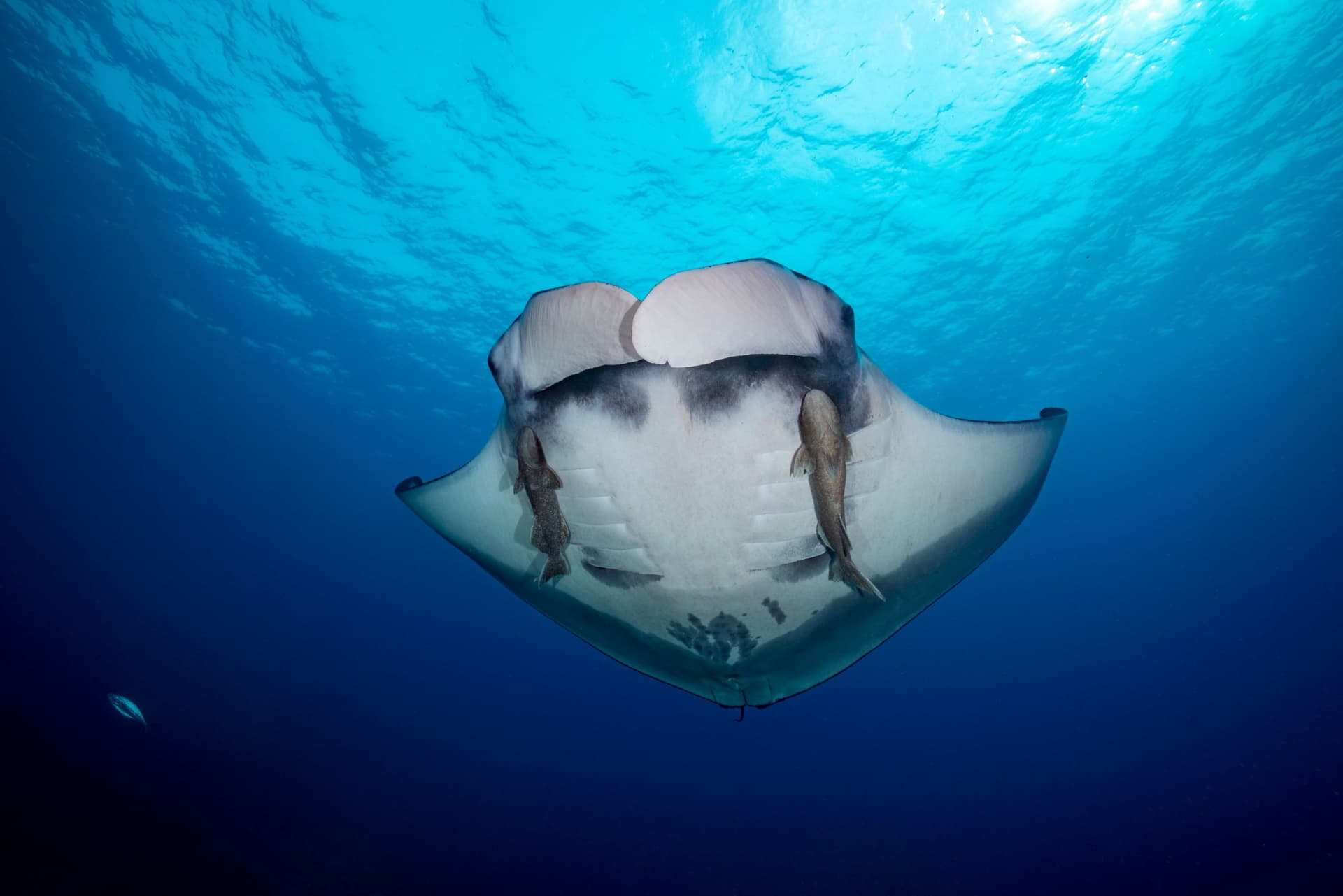
A lone granite spine on the edge of the Similans, and the most reliable place in Thailand to hang in the blue and wait for oceanic mantas.
Koh Bon is the dive that keeps Thailand liveaboard divers coming back. It is not a reef you potter over — it is a ridge you work, a wall you drop past, and a cleaning station where oceanic manta rays glide in from open water to be groomed by wrasse. Reached almost exclusively by liveaboard on the northern fringe of the Similan Islands, Koh Bon rewards patience, decent gas planning and a healthy respect for current. Get the conditions right and it delivers one of the best big-animal encounters in the Andaman Sea.
Quick answer: Koh Bon is a limestone-and-granite ridge, wall and exposed pinnacle — a big-animal drift/hook dive, not a wreck in Thailand. Best season: November to April, within the park's mid-October to mid-May open window; plankton-rich February–April is peak manta time. Level: Intermediate to advanced — the exposed pinnacle is advanced only. Depth: 5 to 40m+; the south wall drops to around 33–35m, the west ridge steps out beyond 40m. Typical visibility: Typically 20–40m+, dropping to around 15–25m in March–April when plankton blooms move in (the same blooms that bring the mantas).
Facts verified September 2026
What makes Koh Bon special
Most of the Similan sites are about granite boulder swim-throughs and vivid reef. Koh Bon is different. It is a single island with a thin ridge of rock — the West Ridge — that breaks the surface and then runs down into the blue past 40m. That geography is the whole point. The ridge juts into open water and into the current, and where current meets structure you get the two ingredients that draw big animals: cleaning stations and food.
This is, put simply, the most dependable manta ray dive site in Thailand. The wrasse and cleaner fish working the ridge and the south wall pull oceanic mantas in from the surrounding ocean, and a good encounter here means watching a three-to-four-metre animal bank slowly over a cleaning station a few metres away while you hold position and try not to blow bubbles into its face. When the mantas are absent, the site still earns the dive — the soft corals, sea fans and reef life on the sheltered western slope are excellent in their own right.
What you'll see
Koh Bon is a big-animal site first, but there is genuine variety across the ridge, wall and sandy flats. Keep one eye on the blue and one on the reef.
- Oceanic manta rays — the headline act, visiting the cleaning stations on the ridge and south wall; encounters are best but never guaranteed
- Leopard (zebra) sharks resting on the sandy patches, and whitetip reef sharks tucked along the wall
- Eagle rays and, in strong current, schooling giant trevally, tuna and barracuda hunting the ridge
- Dense soft corals in yellow and turquoise, plus large sea fans across the western slope
- On the sheltered cove night dive: octopus, decorator crabs, banded boxer shrimp and reef critters
Conditions, and who it's for
Be honest with yourself before you splash here. Surface conditions are usually calm but can turn choppy, and the current is the defining variable. It ranges from a gentle push to genuinely fierce, and it is common to find almost no movement inside the bay while the outer ridge is ripping. Down-currents do occur along the wall, where you may need to pull yourself along the rock to hold a line.
That makes Koh Bon an intermediate-to-advanced dive. Comfortable buoyancy, confident air management and experience holding position in current are non-negotiable, especially if you plan to wait out a manta. The separate Koh Bon Pinnacle, further west and fully exposed, is strictly for experienced divers in good conditions — skip it if the sea is up. If you are newly certified, dive the sheltered western slope, stay shallow, and treat the ridge as something to graduate to.
When to dive it
Access is seasonal and non-negotiable: Koh Bon sits inside Mu Ko Similan National Park, which is open only from around 15 October to 15 May. Through the southwest monsoon, from mid-May to mid-October, the park is closed and there is no legal diving here at all — plan around it.
Within the open window, November to April brings the calmest seas and the clearest water. The nuance is the plankton. February through April, richer plankton drifts in, visibility can drop from 30m-plus toward 15–25m, and that is precisely when manta sightings peak — the blooms that cloud the water are what the mantas come to feed on. In recent seasons mantas have been seen almost year-round, but if a manta is your priority, aim for late season and accept slightly softer visibility as a fair trade.
How you actually dive it
A typical plan starts on the south wall, which drops vertically to around 33–35m, then works out along the West Ridge. Many crews run a negative entry to get down and out of the surface current fast, and a reef hook is worth carrying — clipping in on the ridge lets you stop finning and simply watch the cleaning station without burning gas or drifting off the structure. Keep your profile in mind: the wall is deep, so this is easy to turn into a decompression dive if you chase depth for a shark.
When mantas are around, hold your position low and still, stay off the cleaning stations themselves, and let the animals come to you — chasing them just pushes them into the blue. If the outer ridge is too strong, retreat into the bay and the western slope, which stays diveable in most conditions and makes a relaxed second dive or a fine night dive in the cove.
Faneca dives Koh Bon aboard The Junk and Thailand Master on their Similan, Surin and Richelieu Rock liveaboard itineraries — the only realistic way to reach the ridge in the right conditions, and available only in the park's open season from roughly mid-October to mid-May.
Koh Bon: common questions
What is the best season to dive Koh Bon?
November to April, within the park's mid-October to mid-May open window; plankton-rich February–April is peak manta time
What experience level do I need for Koh Bon?
Intermediate to advanced — the exposed pinnacle is advanced only
How deep is Koh Bon?
5 to 40m+; the south wall drops to around 33–35m, the west ridge steps out beyond 40m
What marine life will I see at Koh Bon?
Oceanic manta rays, leopard (zebra) sharks, whitetip reef sharks, eagle rays, giant trevally, tuna, barracuda, soft corals and sea fans
