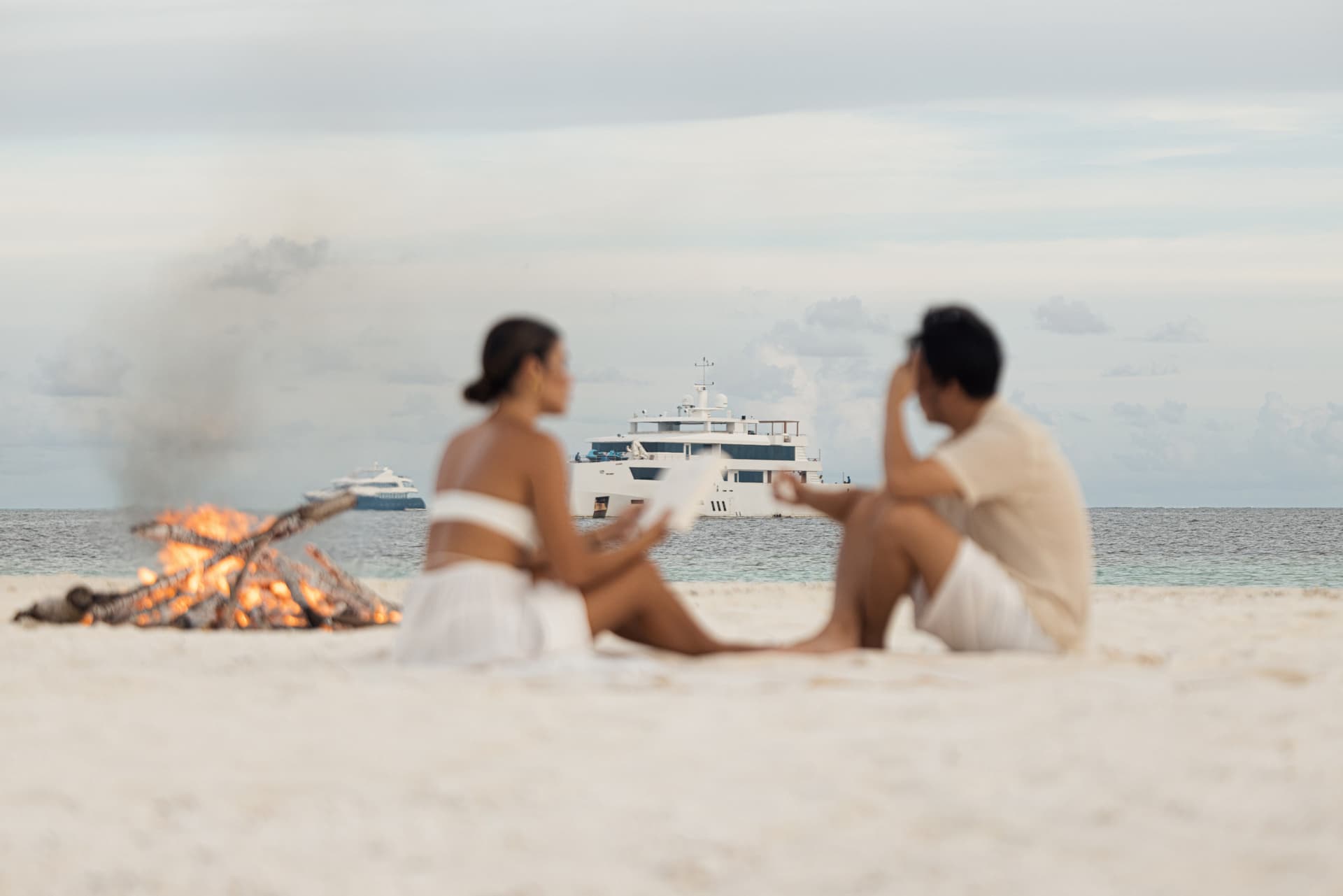
Romantic Scuba Vacations: Dive Escapes for Couples Who Both Love the Water
Most "romantic scuba vacations" listicles are written by people who have never had to share a 14-square-metre cabin with a partner after a 5am wake-up. We have. So let's skip the rose-petal stock photos and talk honestly about what actually makes a dive trip romantic for two people who both love the water — and where romance and serious diving genuinely pull against each other.
The short version: romance on a dive trip is built less from the destination and more from the shape of the trip. The boat, the cabin, the schedule, and the water temperature decide whether you come home closer or quietly furious. Get those right and almost any of our destinations becomes romantic. Get them wrong and even the Maldives feels like a logistics exercise.
What actually makes a dive trip romantic (and what's just marketed that way)
Here's the concierge thesis most articles skip. The things that make a dive trip feel romantic are mostly structural, not scenic.
What genuinely helps:
- A small boat, or a private charter. Romance does not survive 26 strangers and a tannoy. Boutique liveaboards carrying roughly 8–16 guests, or a fully private charter where you have the boat to yourselves, change the entire texture of the week. You get quiet deck corners, a crew that learns your names, and dinners that feel like dinners rather than a canteen sitting.
- An ensuite cabin with a real double bed. A twin-bunk lower-deck cabin with a porthole is fine for diving. It is not romantic. The cabin you want is a master or upper-deck suite with a proper double bed, a window rather than a porthole, and your own bathroom. More on the trade-offs in our cabin types guide — the gap between "budget bunk" and "master suite" is the single biggest comfort lever on the whole trip.
- A schedule that lets you sleep in at least some mornings. Hardcore liveaboards run four dives a day starting before dawn. That is wonderful for log-book obsessives and corrosive for couples. The romantic version does three relaxed dives, builds in a slow morning or two, and protects the late dinner.
- Warm, calm, clear water. Shivering is not sexy. Twenty-eight-degree water, gentle conditions, and an easy giant-stride entry keep diving feeling like a shared pleasure rather than an endurance test.
- A resort-plus-liveaboard split. One of the most underrated romantic formats: a few nights in a beach resort or overwater villa to decompress, bracketing a short liveaboard. You get the diving and a proper bed that doesn't move, plus a couple of dinners ashore.
What is mostly marketing:
- "Honeymoon packages" that are an ordinary trip with a fruit plate and a towel swan. Nice, not transformative.
- A famous destination name with no attention paid to the boat or route. A current-hammered shark itinerary on a 30-berth boat is not romantic just because the brochure says "Maldives."
- "Luxury" as a price tier rather than a layout. A pricey boat packed to capacity is still packed.
Key takeaway: pick the boat and cabin first, the destination second. The structure of the trip is what makes it romantic — the reef is the backdrop, not the romance.
The honest caveat: where romance and serious diving genuinely conflict
We are an independent agency — we don't own the boats, and you pay the same as booking the operator direct — so our only real value is telling you the truth. Here it is.
A genuinely demanding dive trip is not romantic, and pretending otherwise sets couples up to bicker at 30 metres. Open-ocean pinnacles with ripping current, pre-dawn shark dives in the blue, and 36-hour open-water crossings (the kind that get you to a place like Cocos Island) are extraordinary experiences. They are also cold-ish, tiring, task-focused, and occasionally a bit frightening. The mental bandwidth those dives demand is exactly the bandwidth romance needs.
So if one of you is gunning for big-current adrenaline and the other wants candlelit decompression, name that out loud before you book — not on the skiff. Often the fix is simple: pick a destination that offers both registers and choose the gentler route, or split the difference with a relaxed itinerary plus one optional "big" day.
If you are leaning toward the romantic end (and for an anniversary or getaway, most couples are), favour reef-and-channel diving in warm water over expedition shark-chasing. You give up a little adrenaline and gain a great deal of ease.
Match the trip to your couple type
Romance looks different depending on who's diving. Three honest archetypes, each tied to a real cabin type and a destination from our line-up.
Two experienced divers who want big water and big animals
You both dive, you both want to be in the ocean as much as possible, and a "lazy morning" to you means only three dives. Your romance is the diving — the shared adrenaline, the post-dive debrief over dinner.
- The trip: A channel-and-atoll route in the Maldives. You drift the kandus (the cuts between atoll and open ocean), hang on a reef hook at a manta cleaning station, and watch grey reef sharks patrol the current. It's action diving with reliable big-animal encounters, but on a relaxed liveaboard rhythm rather than an expedition footing.
- The cabin: Upper-deck cabin with a double bed and a window. You'll be in the water enough that you mostly want a comfortable, quiet place to crash — but spend the bit extra for the window and the double; you've earned it.
- The honest caveat: The exposed channels want Advanced certification and genuine comfort in current. If that's a stretch for either of you, ask us for the softer central-atoll loops around Malé and Ari, which are far more forgiving and still deliver mantas.
A mixed couple — one diver, one who'd rather snorkel, paddleboard, or read
This is the most common and most quietly fraught combination, and the one where boat choice matters most. The non-diving partner can have a wonderful week — if the boat and destination are chosen for them too, not just for the diver. We wrote a whole honest guide to making this work in our non-diver partner guide, and it's required reading before you book.
- The trip: The Maldives again, but for a very different reason — and timed for the southwest-monsoon window (roughly May to October). The non-diver gets the single best snorkel experience in the world: Hanifaru Bay in Baa Atoll, a UNESCO-protected core zone where the site is snorkel-only (diving is prohibited there to protect the aggregation), and where during peak season dozens — occasionally a reported hundred-plus — manta rays gather to feed, often with a whale shark or two. Your non-diving partner can be face-down in that while you're on a nearby channel dive, and you both surface with the same story.
- The cabin: Master suite, no debate. The non-diving partner spends more daytime hours aboard, so the comfort of the cabin and the boat's lounging spaces matters more, not less.
- The honest caveat: Hanifaru is a southwest-monsoon phenomenon, and that season trades some visibility (more like 15–25 metres versus the 25–40 of the dry season) for the plankton that draws the mantas in. If pristine visibility matters more to you than the aggregation, flip to December–April and accept a quieter snorkel. You genuinely can't have both peaks in one week — we'll help you choose.
The anniversary splurge — you want the trip to feel like an event
Neither the diving nor the budget is the point; the occasion is. You want warm water, beautiful surroundings, late dinners, and a sense that this was special.
- The trip: The Seychelles. The granite-boulder underwater landscape is unlike anywhere else, the topside is famously gorgeous, and the inner-islands diving is genuinely all-levels and easy. It lends itself perfectly to a resort-plus-liveaboard split: a few nights on Mahé or Praslin, then a short, relaxed liveaboard. This is the destination where the whole trip — not just the dives — feels like the anniversary.
- The cabin: The biggest suite the boat offers, and a sea-view room ashore. For an event trip, the room is part of the gift.
- The honest caveat: Be clear-eyed about seasons and routes. The remote outer atolls (Aldabra, Cosmoledo, the Amirantes) only open in narrow weather windows — roughly April–May and October–November — and reaching them is a real expedition with thermoclines and long crossings, not a romantic potter. For an anniversary, stay with the easy inner-islands diving (best in the calm November–March stretch) unless you're both seasoned and specifically want the wild stuff. Don't pay liveaboard rates to cross to the outer islands in the wrong season; the visibility payoff won't justify it.
A warm-water alternative with the most route flexibility: the Red Sea
If you want romance plus variety on a sensible budget, the Red Sea is the quiet overachiever. It's a short-ish flight from Europe, the water is warm for much of the year, and crucially it offers different trips in the same sea depending on the route — so you can deliberately pick the romantic register.
For a couple, the move is the northern wrecks-and-reefs route: the SS Thistlegorm, the Abu Nuhas ship graveyard, the reef walls of Ras Mohammed. It's photogenic, forgiving, and works well for mixed-experience pairs. We'd steer you away from the southern Brothers–Daedalus–Elphinstone shark route for a romantic trip — that's the open-water, high-current, exposure end we flagged earlier. Wonderful diving; not a date.
The real edge here is the resort-plus-liveaboard split. The northern hubs make it easy to bookend a short liveaboard with a few nights ashore, which is the format we recommend most often to couples who want diving and downtime.
When to go — a romantic-couples season cheat sheet
These are the windows we'd actually book a couple into, weighted for warm, calm, easy diving rather than peak-adrenaline conditions. Sea temperatures are typical ranges; always confirm current conditions and rates with us before you book, as seasons shift year to year.
| Destination | Best romantic window | Why | Typical water temp |
|---|---|---|---|
| Maldives (channels, easy diving) | December–April | Calmest seas, clearest water (~25–40 m vis), active manta cleaning stations | ~28–29°C |
| Maldives (Hanifaru snorkel for a non-diver) | June–October (within May–Nov) | Peak manta-and-whale-shark aggregation, snorkel-only | ~28–29°C |
| Seychelles (easy inner islands) | November–March | Calmest water, best visibility, relaxed all-levels diving | ~28–30°C |
| Red Sea (northern wrecks & reefs) | Roughly March–May and Sept–Nov | Warm water, calm seas, fewer crowds than peak summer | ~26–28°C in autumn; up to ~30°C in summer shallows; low-to-mid-20s°C in winter |
A couple of honest notes on the table. Red Sea winter (December–March) is still divable but cooler — expect low-to-mid-20s water and pack a 5mm (or thicker) wetsuit; not the most romantic temperature if either of you runs cold. And in the Maldives you cannot get both the dry-season visibility and the Hanifaru aggregation in a single week — they're in opposite monsoons. Pick the one that matters to your couple and we'll time it.
How we'd actually plan it for you
The pattern, every time: we start with the kind of trip you want — gentle and luxurious, or active and big-animal — and the gap between your two experience levels and appetites. Then we choose the boat and cabin layout to fit, and only then lock the destination and dates to the season that delivers what you're picturing.
Because we're independent, we'll happily talk you out of a destination that's wrong for your couple, steer you to the calmer route on a sea that has both, or suggest a resort split instead of a full liveaboard if that's the more romantic answer. Same price as booking direct; the honesty is the service.
Tell us who's diving, what "romantic" means to the two of you, and roughly when you can travel — and we'll come back with a real shortlist, not a brochure.
Related Guides
- Honeymoon Liveaboard Trips: Romantic Diving Destinations for Couples — the deeper destination-by-destination companion to this piece
- Liveaboard Diving for Non-Divers: Can My Partner Join? — essential reading for mixed diver/non-diver couples
- Liveaboard Cabin Types: Budget Bunk to Master Suite — what each cabin actually costs and gets you
- Maldives diving destination guide — channels, cleaning stations, and atoll routes in detail
Related Articles
%20-%20Large.jpg&w=828&q=75)
Best Time to Dive: A Season-by-Season Guide
When to visit the world's top liveaboard destinations for the best conditions and marine life encounters.
Galápagos Diving: What to Expect on Your First Trip
Hammerhead highways, curious sea lions, and currents that demand respect — here's what awaits in the enchanted islands.