Red Sea vs Maldives vs Raja Ampat: Which First Liveaboard Is Right for You
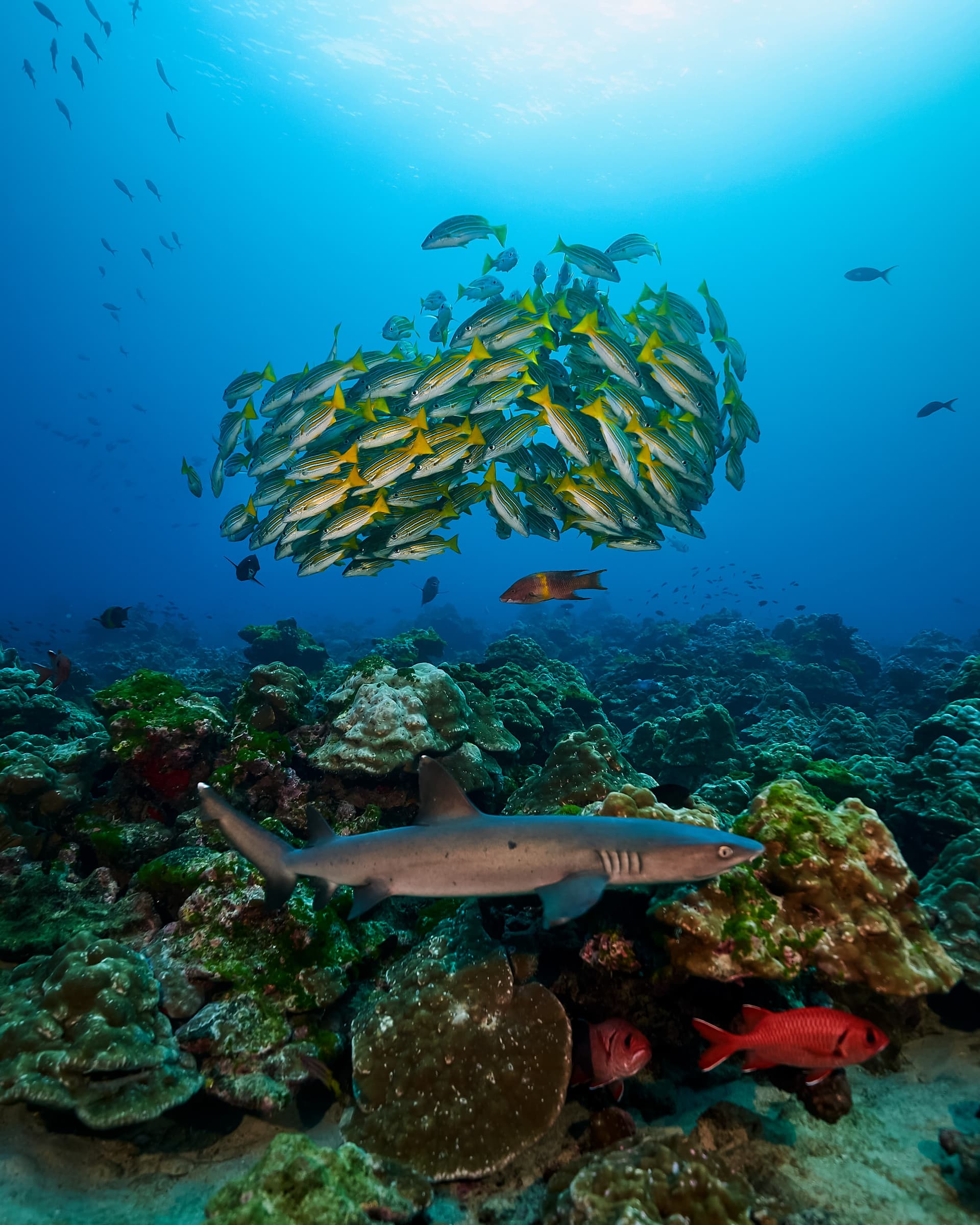
The three destinations most first-time liveaboard clients choose between are the Red Sea, the Maldives, and Raja Ampat. They are very commonly described as interchangeable warm-water reef-plus-pelagic destinations. They are not.
This guide walks through the honest comparison and ends with a simple decision matrix. If you're planning your first or second liveaboard, read it before booking.
At a glance
| Red Sea (Egypt) | Maldives | Raja Ampat | |
|---|---|---|---|
| Flight from Europe | 4–5 hrs | 9–11 hrs | 18–24 hrs |
| Water temperature | 22–29°C | 27–30°C | 28–30°C |
| Typical trip length | 7 nights | 7 nights | 10 nights |
| Typical cost (week) | €1,500–€3,000 | €2,500–€5,000 | €3,500–€7,500 |
| Entry-level reef diving | Excellent | Excellent | Excellent |
| Wreck diving | Best of the three | None | Minimal |
| Big sharks (offshore) | Yes (offshore routes) | Yes (seasonal) | Limited |
| Mantas | Occasional | Seasonal (Jun–Nov) | Seasonal (Dec–Mar) |
| Whale sharks | Rare | Seasonal (Jan–Apr, Aug–Nov) | Seasonal |
| Coral health | Good–excellent | Variable | World-class |
| Required experience | Open Water (entry) | Open Water (entry) | Open Water (entry) |
Red Sea: the default first liveaboard
What it delivers: arguably the best value in dive tourism. 4–5 hour flight from most European capitals, consistent operator infrastructure, reef diving plus world-class wrecks (Thistlegorm, Rosalie Moller) plus offshore pelagic routes (Brothers, Daedalus, Elphinstone) all accessible in a single country.
Strengths:
- Cheapest of the three by a significant margin
- Widest operator choice (hundreds of boats)
- Strongest infrastructure (flight, transfer, port, hospital if needed)
- Wreck diving at genuine global-significance level
- Works year-round (see our month-by-month guide)
- Mixed itineraries (wreck + reef + pelagic) possible in one week
Weaknesses:
- Less pristine coral compared to Raja Ampat
- Pelagic action seasonal and weather-dependent
- July–August extremely hot; surface intervals can be taxing
Book the Red Sea if: you want the best overall value, are doing your first or second liveaboard, have limited vacation time, want wrecks in your itinerary, or want flexibility to dive multiple trip styles in one destination.
Maldives: the warm-water channel diving specialist
What it delivers: the iconic tropical atoll experience. Clear water year-round, excellent reef diving, channel dives with current, seasonal big-animal action (mantas at Hanifaru, whale sharks at South Ari), and — with the right operator — an almost resort-like comfort on the boat itself.
Strengths:
- Warmest water of the three (3mm or rash guard all year)
- Manta aggregations in Baa Atoll (Hanifaru) are world-class
- Whale sharks reliable at South Ari
- Strong operator quality at mid-and-up tiers
- Very comfortable for first-timers — genuinely easy currents on most sites
- Exceptional for photographers (clear water, consistent conditions)
Weaknesses:
- Coral condition variable; bleaching events have affected some atolls
- Flight time longer than Red Sea, cost premium
- Wrecks minimal
- "Classic" atoll diving can feel repetitive after 5–6 days
- Peak season (Jan–Apr) prices are higher than most divers expect
Book the Maldives if: you want warm water, your target is mantas or whale sharks specifically, you're traveling with a partner who wants resort-level comfort, or you want easy conditions as a relatively new diver.
Raja Ampat: the biodiversity apex
What it delivers: the most biodiverse marine ecosystem on earth. Over 1,700 species of reef fish and 550+ hard coral species in one area. Dramatic reef structure, walls, muck diving, and seasonal manta aggregations in Dampier Strait.
Strengths:
- Single best reef diving on earth, defensibly
- Excellent macro and wide-angle photography
- Mantas December–March at Dampier Strait
- Genuinely remote feel (few crowds outside peak weeks)
- Misool Marine Protected Area produces some of the healthiest coral in the world
Weaknesses:
- Flight time is brutal (18–24 hours via Jakarta or Bali to Sorong)
- Most expensive of the three
- Strong seasonality — dry off-season June–September essentially closes most operations
- Remote logistics: domestic leg to Sorong is often the fragile part of the trip
- Marine park fees are additional
- Requires 10-night trip to be worth the flight cost
Book Raja Ampat if: reef biodiversity is your core motivation, you can commit 12+ days for travel plus diving, your budget is €5,500+ all-in, you've done one previous liveaboard and want the step up, or you're a photographer targeting coral and reef life over pelagic action.
The decision matrix
Answer three questions:
1. What's your total all-in budget for the trip?
- Under €3,500: Red Sea, comfortable tier.
- €3,500–€5,500: Red Sea premium tier, or Maldives mid-tier.
- €5,500–€8,000: Maldives premium, or Raja Ampat standard.
- €8,000+: any of the three at top tier.
2. How many vacation days can you block?
- 7–9 days: Red Sea (only option with viable short trips).
- 10–12 days: Maldives comfortably, Red Sea easily, Raja Ampat tight.
- 14+ days: all three viable.
3. What's your primary motivation?
- Wrecks + reef + pelagic combo: Red Sea, no contest.
- Warm water + easy conditions: Maldives.
- Mantas + whale sharks: Maldives (reliability) or Raja Ampat (add reef).
- Best reef biodiversity on earth: Raja Ampat.
- Shark encounters: Red Sea offshore routes in October–November.
- Value + first-timer friendly: Red Sea.
Our usual recommendation
For first-time liveaboard clients from Europe, Red Sea is the default answer about 70% of the time. It's cheaper, easier to reach, delivers on several dive styles, and sets you up to make a smart choice about destination #2 based on what you liked.
For second-time clients, Maldives typically comes up if they fell in love with warm tropical water and want to specialise toward big-animal seasons. Raja Ampat comes up if they want to commit to a proper trip to the biodiversity apex.
How we help
We ask you the three questions above, plus a few more about dive history, experience level, and partner considerations. The answer to "which destination" depends on your specific combination of budget, time, and priorities. We don't default-recommend anything.
Related Articles
The Complete Liveaboard Packing Guide
What to bring, what to leave behind, and the gear essentials that experienced liveaboard divers swear by.
First-Time Liveaboard: What to Expect Day by Day
Never done a liveaboard? Here's the inside scoop on the schedule, the meals, the diving, and the delightful chaos.