The Best Liveaboards for Couples & Honeymooners: A Diver's Guide (2026)
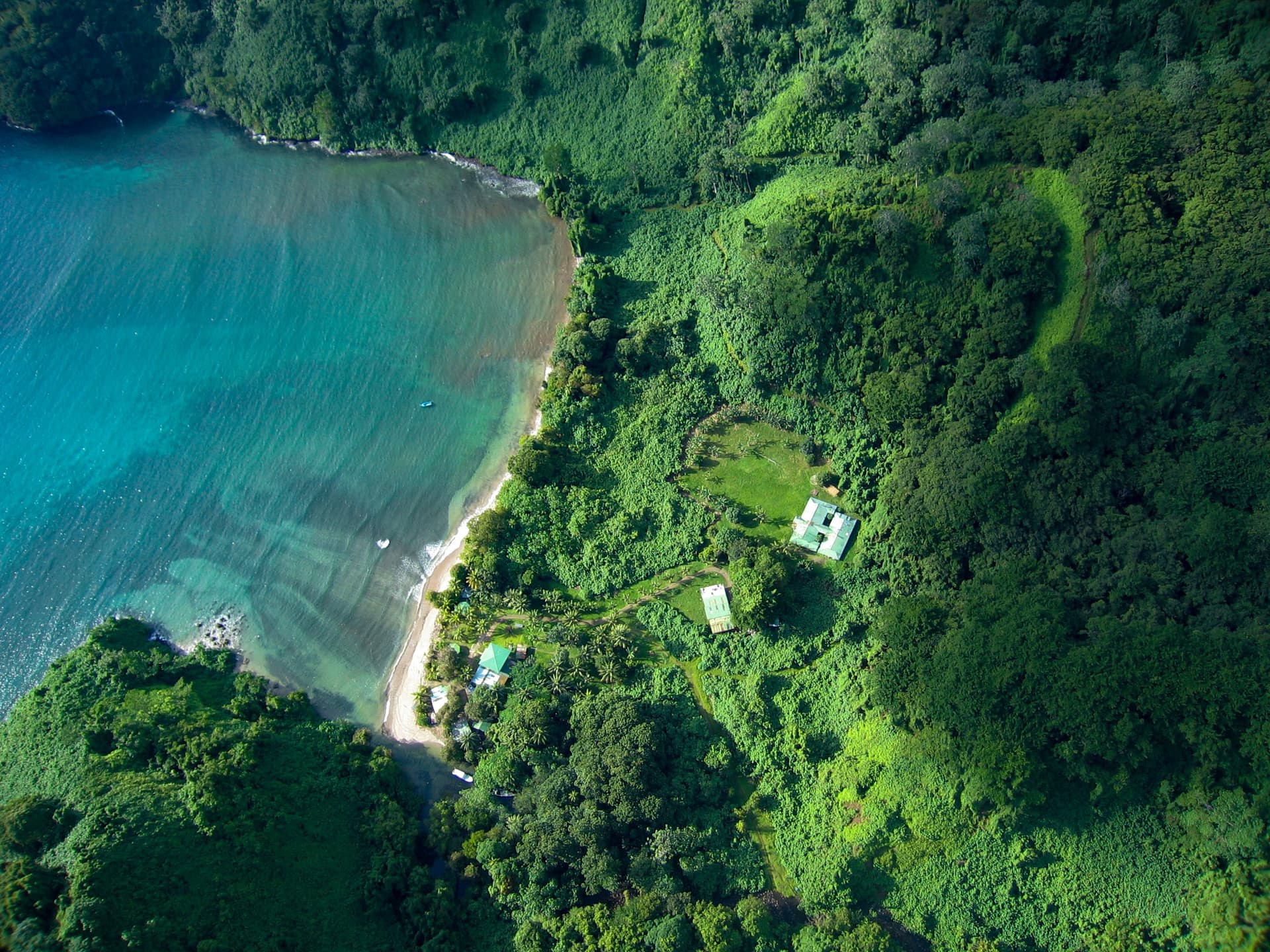
Picture the actual moment. It's 6:40am, the light is still low and gold, and you haven't gone anywhere — the boat spent the night moored directly over the reef you're about to dive. Coffee on the sundeck, wetsuits still damp from yesterday, and the two of you roll backward off the same platform into water so warm you barely register the change. That is a liveaboard honeymoon: four dives a day, no daily boat commute, and dinner on deck under a sky so thick with stars it looks fake. Romance isn't the pitch here. The diving is the pitch — and the romance is what happens to you while you're busy chasing mantas.
That distinction matters, because it's exactly why a liveaboard honeymoon works for some couples and quietly ruins the trip for others. This guide is for the first kind: two certified divers who'd genuinely rather be underwater than at a swim-up bar. If that's you, keep reading. If it isn't — and there's no shame in it — I'll tell you that honestly too, because the wrong couple on the wrong boat is a long week.
What a liveaboard honeymoon actually is (the honest version)
Aggregator sites sell you the sunset photo. Let me sell you the reality, because the reality is better and harder than the brochure.
The good first — and it's genuinely special:
- You wake up already there. No 90-minute RIB transfer, no queue at a dive centre. The reef is under the hull. You do the day's first dive before most resort divers have finished breakfast.
- Three to four dives a day, including a night dive. More bottom time in a week than most divers rack up in a year of weekend trips. If you both live to dive, this is the density you've been craving.
- The social rhythm is intimate. A good boat carries 12–24 guests. By day three you know everyone; by day six you've made friends you'll dive with again. Dinners are loud and happy, and then everyone drifts to the top deck to lie back and look up.
- The isolation is the romance. Anchored at an offshore reef, miles from the nearest light, with only the person you married and a horizon of black water — that does something a resort corridor never will.
Now the honest downsides, because candor is the whole point:
- The spaces are small and shared. Even a premium cabin is compact. You'll share a salon, a dive deck and a dinner table with strangers. If you need daily alone-time to recharge, a boat can feel relentless.
- The schedule runs the day, not you. Dive briefings, meal times and departure windows are fixed. You can skip a dive to nap in the sun — a good boat encourages it — but you can't move the boat because you fancy a lie-in.
- It only works if you both dive. This is the single biggest predictor of a happy liveaboard honeymoon. A non-diving partner spends a lot of hours watching other people get wet. More on that below — it's the most common question we get.
- Motion is real. Crossings can be rough. Starting a marriage green-faced in a bunk is a bad look; if either of you is prone to seasickness, pick a destination with short, sheltered runs and come armed with patches.
None of this is a warning against it. It's a filter. The couples who read that list and think yes, obviously are exactly the couples for whom a liveaboard beats a resort every single time.
Is a liveaboard right for your honeymoon? A quick checklist
Run through these together, out loud, before you book anything. If you're both nodding, you're the right couple.
- We are both certified and we both genuinely enjoy diving — not "one of us tolerates it."
- We'd rather have an adventure we'll retell for years than a week of doing very little.
- We're fine with compact quarters and a fixed daily rhythm.
- Neither of us needs a lot of solitude to stay sane.
- We're aligned on budget — including whether we're paying up for a private double cabin.
- We've talked honestly about seasickness and have a plan.
If you hit a "no" on the first two, stop — a liveaboard honeymoon isn't the move, and I'd rather you knew now. If your only "no" is the fifth or sixth, those are solvable. Everything after this section is about turning the "yeses" into the right boat, the right reef and the right week.
The decision framework: five axes that actually matter
Forget the marketing. Choosing a liveaboard honeymoon comes down to five variables. Get these right and the destination almost picks itself.
1. Certification. Ideally you're both Advanced Open Water. Many of the best honeymoon sites — Raja Ampat's currents, the Red Sea's offshore shark reefs, the Maldives' channel drifts — reward divers comfortable in current and beyond 18 metres. You can honeymoon on a liveaboard as a fresh Open Water diver, but your site list shrinks and you'll sit out the marquee dives. If one of you is newer, that's a real input, not a footnote.
2. Cabin. This is the honeymoon-specific one. You want a genuine private double (not two twins shoved together) with an ensuite bathroom. Not every boat has them, and the ones that do sell those cabins first. It deserves its own conversation — I've written a full breakdown of liveaboard cabins for couples and a wider guide to cabin types — but treat "confirmed double ensuite" as non-negotiable.
3. Season and marine life. The wildlife you're dreaming of runs on a calendar. Manta aggregations, whale shark season, viz and water temperature all swing by month. Book the reef for the animal, then book the honeymoon around the reef — not the other way around.
4. Boat comfort tier. Liveaboards run from cheerful-and-basic to genuinely luxurious — suites, panoramic windows, a sundeck jacuzzi, a chef who takes dietary requests seriously. For a normal dive trip, mid-tier is plenty. For a honeymoon, spending up one tier is the single best money you'll spend: it converts "a dive trip we did together" into "our honeymoon."
5. Budget. Be honest about the real number, flights and gear rental included. It sets the destination as much as anything else. The premium cabin on a premium boat typically runs 30–50% above the standard fare — worth it here, but only if it doesn't turn the whole trip into a running argument about money.
Hold those five axes in your head and the four destinations below sort themselves.
The best liveaboard honeymoon destinations
I've deliberately kept this short and curated. There are dozens of liveaboard regions; these four are the ones I'd actually put a honeymooning couple on, each for a different reason. This is where boutique curation beats an aggregator's endless list — the point isn't more options, it's the right one.
The Maldives — the warm-water, comfortable-boat default
If you want the honeymoon that looks like the honeymoon and dives like a serious trip, the Maldives is the safest brilliant choice. Water sits around 27–30°C, so you're diving in a 3mm and surfacing into sunshine. Crucially for couples, several Maldivian liveaboards were built with comfort in mind: real double cabins, ensuite bathrooms, sometimes a small balcony.
The diving delivers the two animals everyone puts on the list. Whale sharks cruise South Ari Atoll and can be encountered year-round, while the famous manta aggregations at Hanifaru Bay tend to peak with the southwest monsoon (roughly May–November) — though, honestly, plankton and mantas keep their own schedule and no operator can promise them. Channel dives put you in drift with grey reef sharks and eagle rays; the pace is varied enough to keep two experienced divers happy without overwhelming a slightly newer partner.
The Maldives is also the easiest place to build a hybrid honeymoon: a week on the boat, then a few nights in an overwater villa to decompress. If one of you wants a spa day, this is the destination that makes that painless.
Raja Ampat — the biodiversity peak and the romance of true remoteness
Raja Ampat is the most biodiverse marine region on the planet, full stop — more fish and coral species per square metre than anywhere yet surveyed. For a certain kind of couple, that fact alone is the honeymoon. But the sleeper romance here is the remoteness: limestone karst islands rising out of glassy emerald water, a boat that's often the only one in sight, and the sense you've sailed off the edge of the map together.
It's the more demanding pick. Getting there means flights through Sorong and often a long crossing; sites can carry current that rewards Advanced-level comfort. Prime season runs roughly October to April, when conditions are typically calmest and viz is at its best (again — the sea doesn't sign contracts). The premium phinisi — traditional Indonesian wooden schooners — here are gorgeous, and several run proper double cabins. If "we discovered somewhere wild, together" is the story you want to tell, this is your reef.
The Red Sea — the accessible, high-value, mixed-experience honeymoon
Don't overlook Egypt, especially if you're flying from Europe. The Red Sea is a 4–5 hour hop from most of the continent, the value is outstanding — you can do a full week for a fraction of a Pacific trip — and the range of itineraries means it flexes to your certification levels beautifully.
That flexibility is the Red Sea's honeymoon superpower. If one of you is Advanced and hungry for sharks while the other is newer and building confidence, this is the destination that serves both without compromise. Northern routes — reefs and wrecks like the Thistlegorm — are forgiving and endlessly interesting for a developing diver. Southern and offshore routes — the Brothers, Daedalus, Elphinstone — bring the oceanic whitetips, hammerhead schools and grey reefs, but usually require Advanced certification and a minimum number of logged dives. Water swings seasonally (roughly 22°C in winter to 28°C at the height of summer), so pack for it and pick your months.
Solomon Islands — the anti-Maldives, for couples who want it wild
If the idea of sharing a reef with three other boats makes you wince, the Solomon Islands is the antidote. This is the road less travelled — near-zero crowds, reefs that see a handful of divers a year, and WWII history layered under living coral. On many dives you'll be the only two people who have been there in weeks.
It isn't the easy choice. Logistics route through Honiara, the boat is your entire world for the week, and there's no resort to bolt on. Water stays warm (around 28–29°C), and while diving runs much of the year, the drier, calmer window tends to fall roughly April to November. Boats like Bilikiki and Solomons Master have long, loyal followings for exactly this reason. Choose the Solomons if your honeymoon fantasy is empty ocean and each other — nobody else in the frame. It's the least conventional pick on this list and, for the right couple, the most romantic.
The four at a glance
| Destination | Best for | Water temp | Rough peak window | Certification | Ballpark / person, 7 nights* |
|---|---|---|---|---|---|
| Maldives | Comfort + the classic honeymoon | 27–30°C | Mantas ~May–Nov; whale sharks year-round | Open Water OK, Advanced better | ~$2,500–4,500 |
| Raja Ampat | Peak biodiversity + remoteness | 28–30°C | ~Oct–Apr | Advanced recommended | ~$3,500–6,000+ |
| Red Sea | Value + mixed experience levels | 22–28°C | Sharks ~summer/autumn (south) | Open Water (north) → Advanced (south) | ~$1,200–2,200 |
| Solomon Islands | Wild, crowd-free, WWII wrecks | 28–29°C | ~Apr–Nov | Advanced recommended | ~$3,500–5,500 |
<small>*Boat fare only — excludes international flights, marine park fees, nitrox, gear rental and crew tips. Premium double-cabin boats sit at the top of each range. Treat these as planning brackets, not quotes.</small>
The cabin question, because it makes or breaks the week
I'll say it plainly: the cabin is where a honeymoon on a boat succeeds or fails. A dive trip forgives a bunk. A honeymoon does not. You want a real double bed, an ensuite you're not sharing with a corridor, and — if it's on offer — an upper-deck cabin for more light, more space and less engine hum.
Here's what to actually confirm before you pay a deposit:
- A genuine double, described as such — not "twins convertible to double," which sometimes means two singles with a gap.
- Ensuite bathroom, in writing.
- Cabin deck. Lower-deck cabins are cheaper and closer to the engine; upper-deck cabins are quieter and brighter. For a honeymoon, pay up for the upper deck if it exists.
- Boat size. A smaller boat (12–16 guests) means more privacy and a more intimate table than a 26-berth cruiser.
The full nuance — bed configurations, deck trade-offs, which layouts actually suit couples — is in the dedicated cabins-for-couples guide. Read it before you commit, because these details are frustratingly hard to reverse once you've booked.
"But my partner doesn't dive." Read this before you book.
This is the most common honeymoon question we get, and I'll be straight with you: a liveaboard is a diver's environment. A non-diving partner spends a lot of hours on a boat whose entire rhythm is built around getting people underwater. There are three honest ways to handle it.
Learn together first. If your partner is even slightly curious, getting certified before the trip is the best wedding gift you'll ever exchange. Suddenly the whole boat is yours, together. Many honeymoon destinations have calm, shallow sites perfect for a fresh certification.
Do the hybrid. Pair a shorter liveaboard leg with a resort stay — the Maldives and Indonesia are ideal for this. One of you dives the remote reefs; the other has the beach and the spa; you meet in the middle for the overwater-villa half. This is often the smarter honeymoon than a full week on the boat.
Snorkel the highlights. Some boats genuinely welcome snorkellers, and a lot of the magic — mantas at a cleaning station, whale sharks near the surface, shallow coral gardens — is spectacular from above. But confirm the boat is snorkeller-friendly before booking; many aren't, and a non-diver on a hardcore dive boat is a long, wetsuited week of watching.
If neither of you is sure diving is the centre of this trip, that's a signal — read the liveaboard vs resort comparison and the broader case for romantic scuba diving vacations for couples before you decide. There's no wrong answer, only a wrong-for-you one.
What it actually costs, and where the money goes
Couples consistently under-budget in the same places, so here's the honest anatomy of the spend beyond the headline fare:
- The cabin premium. The double ensuite is the most-booked cabin on the boat and usually the priciest. Budget for it — it's the difference between a dive trip and a honeymoon.
- Marine park and port fees. The Maldives, Raja Ampat and the Red Sea all levy park or permit fees that aren't always in the sticker price. Ask.
- Nitrox, gear rental, crew tips. Easily several hundred dollars combined over a week. Nitrox is worth it for the extra bottom time; tips are customary and appreciated.
- The premium-boat step-up. Going one tier up the comfort ladder for the honeymoon typically adds 30–50%. On a honeymoon, I think it's the best-spent money on the whole trip.
Spend up on the boat and cabin, and relax about the rest. Nobody remembers saving forty dollars on nitrox; everybody remembers a cramped cabin.
How to book a liveaboard honeymoon without gambling
Here's where a boutique agency earns its keep over an aggregator: not inventory breadth, but curation and a human who's actually been on the boats. A honeymoon isn't the trip to book blind off a comparison table with fifty results and no context.
Three concrete next steps:
- Start with the calendar. Check live departures to see which honeymoon-grade boats have double cabins open in your window. Real dates beat daydreaming.
- Take the two-minute matchmaker. If you're torn between the Maldives' comfort and Raja Ampat's wildness, the trip quiz sorts couples to destinations by experience level, vibe and season in about two minutes.
- Then talk to a human. Tell us your certification levels, your must-see animal, your budget and your dates, and we'll put together the actual trip — including the fiddly bit aggregators can't do: pairing a liveaboard leg with a resort stay, and confirming the specific double-ensuite cabin so you're not gambling your honeymoon on a booking-form footnote.
The ocean strips a honeymoon back to what matters — two people, a horizon and a reef neither of you will ever forget. Lead with the dive. The romance takes care of itself.
Related Guides
- Liveaboard Cabins for Couples — Which cabins actually suit two people, and what "double" really means
- Liveaboard vs Resort Diving — The honest trade-off, especially if one of you is on the fence
- Romantic Scuba Diving Vacations for Couples — The wider case for a diver-first honeymoon
- Maldives Diving — The warm-water, comfortable-boat default for couples
- Raja Ampat Diving — Peak biodiversity and the romance of true remoteness
Related Articles
The Complete Liveaboard Packing Guide
What to bring, what to leave behind, and the gear essentials that experienced liveaboard divers swear by.
First-Time Liveaboard: What to Expect Day by Day
Never done a liveaboard? Here's the inside scoop on the schedule, the meals, the diving, and the delightful chaos.