When to Dive Oman: Musandam, the Daymaniyats and Two Different Seasons
Ask five divers when to dive Oman and you will get five different answers, and the frustrating part is that all five can be right. Oman is not one destination with one season. It is two very different stretches of coastline — the Musandam fjords in the far north, and the Daymaniyat Islands off Muscat — each with its own weather, its own marine calendar, and its own trade-offs. The classic liveaboard season runs October to May for both. But the single most famous thing in Omani water, the Daymaniyat whale shark aggregation, happens in the middle of the sweaty, green-water summer, roughly July to September.
So the honest answer to "when should I go" depends entirely on what you want to see and what you are willing to put up with. This guide lays it out month by month, with real temperatures, realistic visibility numbers, and a clear picture of who should book which window — and who should skip Oman altogether.
The two Omans, briefly
Musandam is the exclave peninsula jutting into the Strait of Hormuz, separated from the rest of Oman by the UAE. The diving here is limestone fjord country: sheer walls, current-swept island corners, and dense fish action. The signature dive is Lima Rock, a slim island whose walls drop past 60 m and carry schooling trevally, barracuda and tuna most days, with leopard sharks on the slopes and mobula rays passing through. Nearby Octopus Rock is the other must-dive — a current magnet where the fish density can be genuinely absurd. Musandam is advanced-leaning diving: current, depth and offshore exposure are part of the deal.
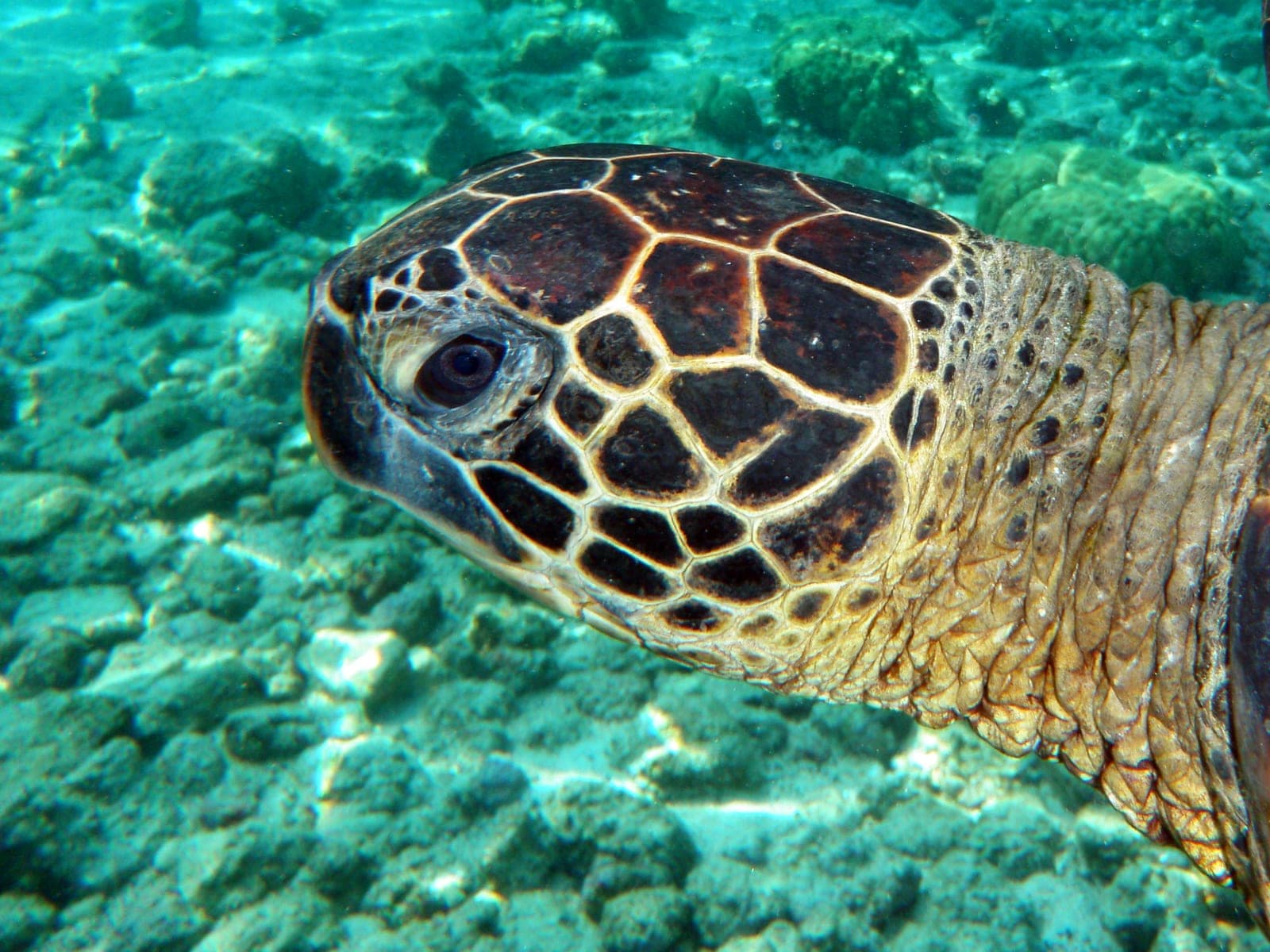
The Daymaniyat Islands sit about 18 km off the coast northwest of Muscat — nine small islands forming Oman's oldest marine nature reserve. The diving is gentler and prettier: hard-coral gardens in remarkable condition for the region, turtles everywhere (the islands are a major hawksbill and green nesting site), leopard sharks resting on sand, and reliable schooling fish. Sites like The Aquarium and Police Island suit anyone from fresh Open Water divers upward. Closer to Muscat itself, Fahal Island and the purpose-sunk wreck of the Al Munassir round out the area.
A liveaboard is the natural way to dive both properly — the Daymaniyats especially reward waking up inside the reserve before the day boats arrive from Muscat. If you are still weighing boat versus shore-based, the maths and the trade-offs are covered in our Oman liveaboard cost guide.
The prime season: October to May
This is when the liveaboards run, and for good reason.
- Water temperature: roughly 28 °C in October, cooling to a low of 22–23 °C in January and February, then climbing back through 25–26 °C by April. A 5 mm suit covers the whole window; in midwinter some divers add a hooded vest.
- Visibility: this is when Oman looks its best — 20–30 m is normal from late October through April, occasionally better in Musandam on a clean tide. But be honest with your expectations: Oman is not the Red Sea. Plankton pulses can knock viz back to 10–15 m for a few days at a time even in prime season. That plankton is exactly why the fish life is so dense, so treat green patches as the price of admission rather than bad luck.
- Topside: this is also simply when Oman is pleasant to be in. Muscat runs 25–30 °C by day from November to March. Summer, by contrast, regularly exceeds 40 °C.
October–November is arguably the sweet spot. The water is still warm (26–29 °C), visibility is opening up as summer plankton fades, and — crucially — whale sharks often linger at the Daymaniyats into September–November, so you get a realistic shot at the headline animal in genuinely good conditions. Seas are typically calm, which matters for the exposed Musandam sites.
December–February brings the coolest, clearest water. This is peak season for wall diving at Lima Rock and for photographers who want the 25 m-plus days. The trade-off is the temperature: 22–23 °C with thermoclines below (more on those shortly) means you will genuinely want that 5 mm, and surface intervals on deck can be breezy. Whale shark odds in these months are low — possible, never promised.
March–May warms steadily. April and May offer a lovely balance — 25–27 °C water, decent viz, quiet sites. By May the plankton is thickening again, visibility starts to compress, and the season winds down as boats prepare to stand down for summer.
The summer window: July to September, whale sharks and green water
Here is Oman's split personality in one sentence: the best months for whale sharks are the worst months for everything else.
From roughly July through September — peaking in August and September — whale sharks aggregate around the Daymaniyats to feed on plankton blooms. On good days it is not one shark but several; aggregations of ten or more animals have been recorded. Nowhere else in the region offers whale shark encounters this consistent for this little money and this few crowds.
The costs of that plankton, plainly stated:
- Visibility drops to 5–15 m, sometimes less. You are swimming in the soup that feeds the sharks.
- Surface water hits 30–32 °C — bath-warm — but strong thermoclines lurk beneath (see below).
- Air temperatures are brutal, 38–45 °C with heavy humidity. Surface intervals are an exercise in shade management.
- Liveaboards largely stand down. Summer diving in the Daymaniyats is mostly day boats out of Muscat and Al Mouj marina. Musandam operators keep running, but conditions there are similarly warm and green.
Who should book summer: divers and snorkellers for whom whale sharks are the entire point, who are happy with fish-focused, close-range diving and can tolerate serious heat. Who should not: anyone whose mental image of the trip involves 30 m visibility over coral gardens. You will not get both in the same week — that is the fundamental Oman trade-off, and no operator who tells you otherwise is being straight with you.
About those thermoclines
Oman deserves a specific warning here, because the thermoclines are sharper than most divers expect. The surface layer and the water at 18–25 m can differ by 5–8 °C, especially in summer and shoulder months when upwelling pushes cold water up the walls and slopes. It is entirely normal to drop through 30 °C water at the surface into a shimmering, blurry layer at 20 m that reads 22–24 °C.
Practical consequences:
- Do not dress for the surface reading. A 3 mm shorty that feels right on the swim step becomes miserable twenty minutes into a 24 m dive at Lima Rock. A 5 mm full suit is the sensible year-round default for repetitive diving; hardy divers get away with 3 mm in October–November.
- The thermocline layer itself blurs visibility for a few metres — that hazy band is normal, not your mask fogging.
- Cold water at depth also means the deeper slopes hold life you would not predict from the surface temperature, including the leopard sharks that rest below the mixing layer.
Protection, permits and the rules that matter
The Daymaniyat Islands are a formally protected nature reserve — Oman's oldest — and the rules are enforced, not decorative.
- Entry requires a permit from Oman's Environment Authority. Your operator or liveaboard arranges this and builds the fee (a few rials per person) into the trip price; you will not queue at a ministry counter, but the paperwork is real and rangers do check.
- Fishing is banned inside the reserve, boats use fixed moorings rather than anchors, and daily visitor numbers are capped with some zones closed entirely.
- Landing on the islands is prohibited from May through October to protect nesting seabirds and turtles. Diving and snorkelling continue — the closure applies to the beaches, not the water — but summer visitors should not expect a picnic ashore.
- The standard reef rules — no touching, no gloves, no collecting — apply with particular force around nesting turtles.
This protection is precisely why the Daymaniyats look the way they do. The hard-coral cover and turtle density are the direct product of thirty years of banning the things that flattened reefs elsewhere in the Gulf region. Musandam has no equivalent reserve status, though operators there run mooring-based diving at the established sites.
Month-by-month at a glance
- January–February: coolest water (22–23 °C), best visibility (20–30 m), calm seas. Peak Musandam wall season. Bring the 5 mm plus vest.
- March–April: warming to 25–26 °C, viz still good. Excellent all-round window, quieter boats.
- May: 27–28 °C, plankton building, viz sliding. Season winds down; island landings close.
- June: transitional, hot, green. The quietest month for good reason.
- July–August: whale shark season proper. 30–32 °C surface, sharp thermoclines, 5–15 m viz, extreme heat topside. Day boats only at the Daymaniyats.
- September: peak-to-late whale sharks, heat easing slightly, viz beginning to recover. A gambler's month that often pays off.
- October–November: the sweet spot. 26–29 °C, opening visibility, whale sharks often still around, liveaboards back in the water.
- December: prime conditions establish — clear, cool, calm.
Whale sharks, it must be said, are wild animals on no contract. Even in peak season a blank day happens; outside it, a surprise encounter happens too. Book the season, not the guarantee.
Who should book Oman — and who should not
Book Oman if you want dense fish action, healthy hard coral, leopard sharks and turtles as near-certainties, a real whale shark season, and prices well below the Maldives or Socorro — with short flights from Europe and almost no crowds. It remains one of diving's genuinely under-visited destinations, a case we make at length in our introduction to diving Oman.
Think twice if your priorities are guaranteed 30 m visibility (go in winter and hope, but the Red Sea is more reliable), warm water and clear water simultaneously (Oman makes you choose), or big pelagic variety beyond whale sharks — hammerheads and mantas are rare events here, not attractions.
If you are weighing the windows — winter clarity in Musandam versus summer sharks off Muscat, liveaboard versus Muscat-based day boats — this is exactly the kind of puzzle our concierge exists for. Tell us what you want to see and when you can travel, and we will tell you honestly whether Oman fits, and which itinerary and boat match. Current Oman departures are on the calendar, and the full destination picture lives on our Oman page.
Related Guides
Related Articles
%20-%20Large.jpg&w=828&q=75)
Best Time to Dive: A Season-by-Season Guide
When to visit the world's top liveaboard destinations for the best conditions and marine life encounters.
Galápagos Diving: What to Expect on Your First Trip
Hammerhead highways, curious sea lions, and currents that demand respect — here's what awaits in the enchanted islands.