Octopus Rock
A lone stack of rock, three kilometres off Lima, that packs more life onto its flanks than sites ten times its size.
Octopus Rock is the dive that quietly wins over everyone who thinks they have Musandam figured out. It is a modest thing on paper — a roughly circular pinnacle about 50 metres across, rising off a mixed rock-and-sand floor three kilometres offshore north of Lima, in the Musandam peninsula of Oman. But drop onto it and the scale of the place inverts. The walls and ridges are upholstered in coral and swarming with fish, the sand pockets hide seahorses and cuttlefish, and on a summer tide something enormous can cruise past out in the blue. Diving Octopus Rock rewards divers who slow down and read the rock, and it is one of the signature stops on a Musandam liveaboard.
Quick answer: Octopus Rock is a pinnacle dive, often as a drift; boat entry in Oman. Best season: October to May for the clearest water; May to October for the whale-shark and ray season. Level: Advanced — variable current, walls and navigation make this an experienced diver's site. Depth: 12–30 m on the main rock; ridges and gullies drop deeper toward 40 m. Typical visibility: Roughly 10 m in the warm low season (June–September), opening to 20–30 m October–May.
Facts verified September 2026
What makes Octopus Rock special
Most Musandam sites are big walls and headlands you fly along on the current. Octopus Rock is the opposite proposition: a single, self-contained pinnacle you can more or less circle, working the terrain rather than being swept past it. That geometry is the whole appeal. Ridges run out to the west and north and fold into gullies, the sides drop steeply to a seabed of rock and sand, and every surface — black coral, soft coral whips, feather stars, anemones — is doing something. Guides call it the marine zoo, and for once the nickname earns its keep.
The reason it works for so many kinds of diver is that it stacks two dives in one. There is a wide-angle site here — shoaling fish over the drop-offs, pelagics patrolling the blue edge — and there is a macro site down in the coral and sand, where the real treasure hunting happens. You rarely exhaust it in a single dive, which is why crews often work the same rock twice on a trip and find new things each time.
What you'll see
The headline is the small stuff. Octopus Rock is genuinely good for macro, and patient divers are rewarded with the animals that make the site's reputation. Seahorses cling to coral on the sand slopes; cuttlefish hover and colour-shift in the open; octopus tuck into the crevices that gave the rock its name.
Against that, the pinnacle also draws big schools and passing pelagics, and in the warmer months the ocean occasionally delivers something spectacular.
- Macro and reef life: seahorses, cuttlefish, octopus, scorpionfish, lionfish, moray eels, lobster, fanworms and feather stars
- Schooling fish: jacks, trevally, fusiliers, snappers, batfish and barracuda working the drop-offs
- Rays: torpedo (electric) rays on the sand, plus devil and eagle rays passing through
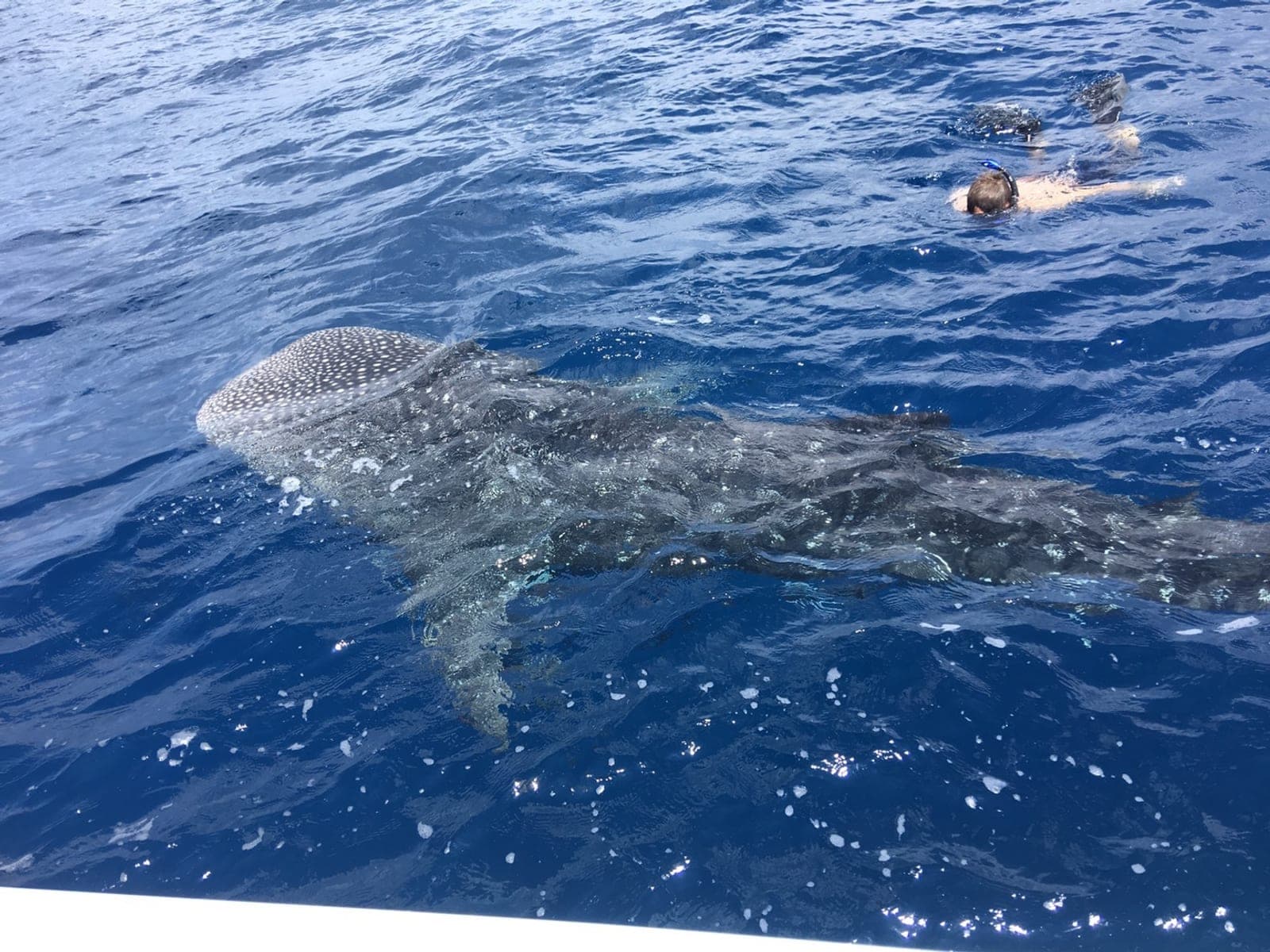
- Bigger visitors in season: leopard sharks, nurse sharks, and — with luck, in summer — whale sharks
- Turtles and, in the surrounding waters of Musandam, regular dolphin encounters on the surface intervals
Conditions and who it's for
Be honest with yourself about this one. Octopus Rock is an advanced site. The current is variable and tidal, and on the exposed flanks it can pick up quickly, which is exactly why a reef hook earns its place on your kit. Add the steep walls, the deeper gullies and the need to navigate around a rock rather than follow a wall, and this is not a site for a rusty or freshly certified diver.
Visibility is part of the honesty too. Musandam sits where nutrient-rich water meets the Strait of Hormuz, so the water is productive rather than gin-clear. Expect around 10 metres in the warm low season and 20–30 metres at the site's best — plankton-rich green water is normal here, and it is precisely that fertility that feeds the fish life you came to see. Good buoyancy, comfort in current and a sensible depth plan are the price of admission. Divers with an Advanced certification and some pinnacle or drift experience will get the most out of it.
When to dive it
There are two seasons at Octopus Rock, and which one you want depends on what you are chasing. October to May is the clear-water window — cooler, calmer, with visibility opening toward 30 metres and the most comfortable topside conditions. If your priority is photography and reliably pleasant diving, this is the stretch to book.
May to October is the warm, greener low season, and it is also the whale-shark and ray window. Visibility drops and the water warms, but the plankton that clouds it is the same plankton that brings the big filter-feeders and the ray action inshore. No operator can promise a whale shark — these are genuinely lucky encounters, not a scheduled show — but if that is your dream, summer is when the odds tilt your way. Musandam is diveable year-round; you are simply choosing between clarity and the chance of giants.
How you actually dive it
Octopus Rock sits in Omani waters off the Musandam peninsula, and almost everyone reaches it from the Dibba gateway — commonly via Dubai, then a road transfer to the port. From there it is boat access only, either as a long day trip or, far better, as part of a dhow liveaboard.
The liveaboard is the way to do this site justice. Traditional Omani dhows are converted for diving, and living aboard puts you on the remote pinnacles at the right state of tide, with multiple dives on Octopus Rock and its neighbours like Lima Rock rather than a single rushed pass. A typical plan is to time your entry with slack or a manageable current, drop onto the top of the rock, work down the ridges and gullies for the macro, then let the current carry you around the flanks watching the blue. Deploy a reef hook if it kicks up, keep an eye on your gas and depth in the gullies, and save air for a slow, thorough safety stop over the coral — that shallow finish is often where the cuttlefish put on their best show.
Faneca dives Octopus Rock on our Oman trips in Musandam, run by traditional dhow liveaboard out of Dibba — the format that lets you hit this remote pinnacle at the right tide and dive it more than once; talk to us about timing your trip for the clear-water months (October to May) or the summer whale-shark and ray season.
Octopus Rock: common questions
What is the best season to dive Octopus Rock?
October to May for the clearest water; May to October for the whale-shark and ray season
What experience level do I need for Octopus Rock?
Advanced — variable current, walls and navigation make this an experienced diver's site
How deep is Octopus Rock?
12–30 m on the main rock; ridges and gullies drop deeper toward 40 m
What marine life will I see at Octopus Rock?
Seahorses, cuttlefish, octopus, scorpionfish, moray eels; jacks, trevally, barracuda, fusiliers; rays and summer whale sharks
