Lima Rock
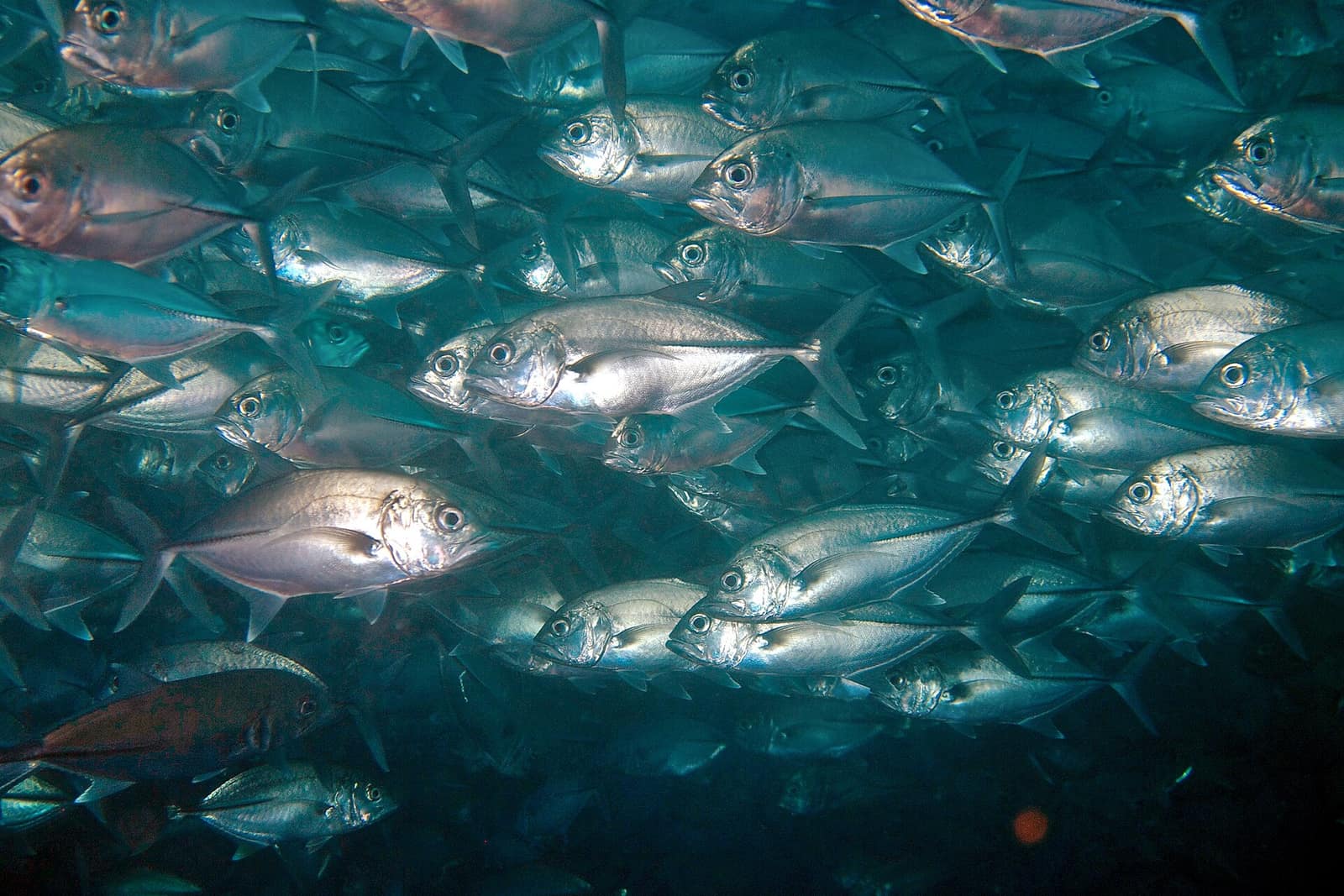
A limestone stack rising off Ras Lima on Musandam's Gulf of Oman coast, its walls hung with fans and patrolled by tuna — Lima Rock is the dive that makes Musandam worth the journey.
If you dive one site in Musandam, make it Lima Rock. This slim island north of Dibba drops as a sheer wall straight off the boat, its cliffs carpeted in soft coral and gorgonian and worked over daily by schools of trevally, barracuda and tuna. It is Oman diving at its most cinematic — and, with current and depth in the mix, its most demanding. Diving Lima Rock rewards divers who can hold a line, watch their gas and read the blue. Here is what to expect, and how to dive it well.
Quick answer: Lima Rock is an offshore wall / pinnacle dive, often a drift in Oman. Best season: October to May for the clearest, calmest water. Level: Advanced — current, depth and offshore exposure. Depth: Sheer wall from the surface to ~12m, then boulder slope to a sand floor past 60m; most dives run the 10–30m band. Typical visibility: Around 10m in the warm low season (Jun–Sep), opening to 20–30m from October to May.
Facts verified September 2026
What makes Lima Rock special
Lima Rock is a bare limestone island, roughly 300 metres long and only 200 wide, standing alone at the southern mouth of Lima Bay. It looks unremarkable topside — a jagged grey wedge in a big, exposed channel — and then you roll in and the seabed simply isn't there. The cliff that rises above the surface keeps going below it, dropping almost vertically to about 12 metres before breaking into a steep tumble of boulders that runs down to sand beyond 60 metres.
That vertical relief is the whole appeal. Nutrient-rich water from the Strait of Hormuz sweeps past the rock and feeds a wall that is genuinely alive: red and yellow gorgonian fans reaching into the flow, sheets of soft coral, and the constant motion of fish that only gather where current delivers food. It is the closest thing Musandam has to a signature dive, and for many divers it is the single image they carry home from Oman.
What you'll see
Lima Rock is a big-fish site first and a critter site second, though it quietly delivers on both. The headline act is the schooling pelagics that stack up in the blue and sweep along the wall, but spend time close to the rock and the macro life reveals itself between the fans.
On a good day expect a mix of the following:
- Dense schools of trevally, yellowtail barracuda and jacks holding in the current, with tuna cutting through them
- Leopard (zebra) sharks resting on the sand and boulder slope, plus blacktip reef sharks patrolling the drop-off
- Eagle rays and, in season, mobula (devil) rays passing in the blue; the occasional whale shark on the plankton-rich warm months
- Green and hawksbill turtles grazing the ledges, and torpedo (electric) rays half-buried on the sand
- Gorgonian sea fans, cup corals and nudibranchs along the wall for photographers working close
Conditions and who it's for
This is an advanced dive, and it is worth being honest about why. The wall offers no shallow bail-out near the corners, the bottom is well past recreational limits, and the current at the eastern and western tips can run hard — occasionally with a downward pull that will take an inattentive diver deep fast. Visibility is also moderate by tropical standards: think roughly 10 metres in the warm low season and 20–30 metres at its best, rather than the endless blue of the Red Sea.
Add a thermocline that can drop from around 30°C at the surface to 22°C by 30 metres and you have a dive that demands buoyancy control, gas discipline and comfort in moving water. A 5mm wetsuit is sensible year-round, and many divers want more in winter. If you are freshly certified, Lima Rock is a site to build towards, not to cut your teeth on. Experienced divers, though, will find it one of the most exhilarating walls in the region.
When to dive it
The Musandam season runs broadly from October to May, and that is the window you want for Lima Rock. Through those months the water is calmer, the air is bearable, and visibility opens up as the summer plankton clears — this is when the wall looks its cinematic best.
The warmer low season from June to September brings the trade-off diving Oman always offers: greener, plankton-thick water that cuts visibility, but also the richest feeding and the best odds of a whale shark passing through. If macro and big filter-feeders excite you more than gin-clear vistas, the shoulder months can be quietly rewarding. Note too that Lima Rock is exposed, and rough surface conditions can close it on any given day — one advantage of the site is that when current runs on one side, the sheltered side usually stays diveable.
How you actually dive it
Most operators run Lima Rock as a live drop onto the wall, often as a gentle drift, with the plan set by which way the tide is pushing. A typical profile hugs the drop-off in the 10–30 metre band, keeping the reef on one shoulder and the blue on the other, then working back up the wall into the shallows for a long, fish-rich safety stop where the fans and macro life are thickest.
The rock has a north and a south side, and skippers choose between them — and between the two ends of the island — based on current and swell, so no two days dive quite the same. Come with a delayed SMB and know how to deploy it: with pelagics pulling your eye into the blue and current on the corners, you can drift off the wall before you notice. Stay close to your guide, keep something on your gauge to spare, and let the wall come to you rather than chasing the school.
Faneca dives Lima Rock on our Oman trips, exploring Musandam by traditional dhow or small liveaboard out of Dibba — an offshore, current-swept site best suited to confident advanced divers, and best booked for the calm, clear October-to-May window.
Lima Rock: common questions
What is the best season to dive Lima Rock?
October to May for the clearest, calmest water
What experience level do I need for Lima Rock?
Advanced — current, depth and offshore exposure
How deep is Lima Rock?
Sheer wall from the surface to ~12m, then boulder slope to a sand floor past 60m; most dives run the 10–30m band
What marine life will I see at Lima Rock?
Schooling trevally, yellowtail barracuda, tuna and jacks; leopard (zebra) sharks, blacktip reef sharks, eagle and mobula rays, turtles, seasonal whale sharks; gorgonians, soft coral and nudibranchs on the walls
