The Aquarium
The signature reef of the Daymaniyat Islands, where a single shallow dive seems to hand you everything Oman has to offer.
Ask any guide working out of Muscat which site sold them on Oman, and a fair number will name The Aquarium. It is the poster reef of the Daymaniyat Islands Nature Reserve: shallow, sun-lit, absurdly fishy, and forgiving enough that you can spend the whole dive watching turtles instead of your computer. Diving The Aquarium is the closest the Daymaniyats come to a sure thing, which is exactly why it anchors most Oman liveaboard and day-boat itineraries out of Muscat.
Quick answer: The Aquarium is a day-boat reef dive (also night dive); part of some oman liveaboard routes in Oman. Best season: November–April for clearest water and calm seas; June–October for warm water and whale shark chances. Level: Open Water and up — genuinely suitable for all certified divers. Depth: 7–15 m over the plateau, dropping steeply to about 30 m at the edge. Typical visibility: Typically 15–30 m; best (often 25–30 m) in the Nov–April window.
Facts verified September 2026
What makes The Aquarium special
The name is not marketing. The Aquarium sits on the shallow flank of Al-Kharabah island in the heart of the Daymaniyat reserve, and the geography does all the work. An oval hard-coral plateau begins around 7 metres and rolls gently out to 15 before dropping away steeply toward 30. That shallow, structured shelf holds warmth and light, and fish stack onto it in a density you rarely see so close to the surface.
What sets this dive apart in the Daymaniyats is how little it asks of you. Many of Oman's best reefs come with a caveat — depth, current, a long crossing, a swell that turns the crossing green. The Aquarium is the opposite. It is the site you send a nervous Open Water diver to, the site you save for the golden last dive of the day, and the one you keep coming back to because the shallow blue never seems to run out of animals. That combination of easy access and genuine spectacle is why it is the reef most closely associated with diving Oman at all.
What you'll see
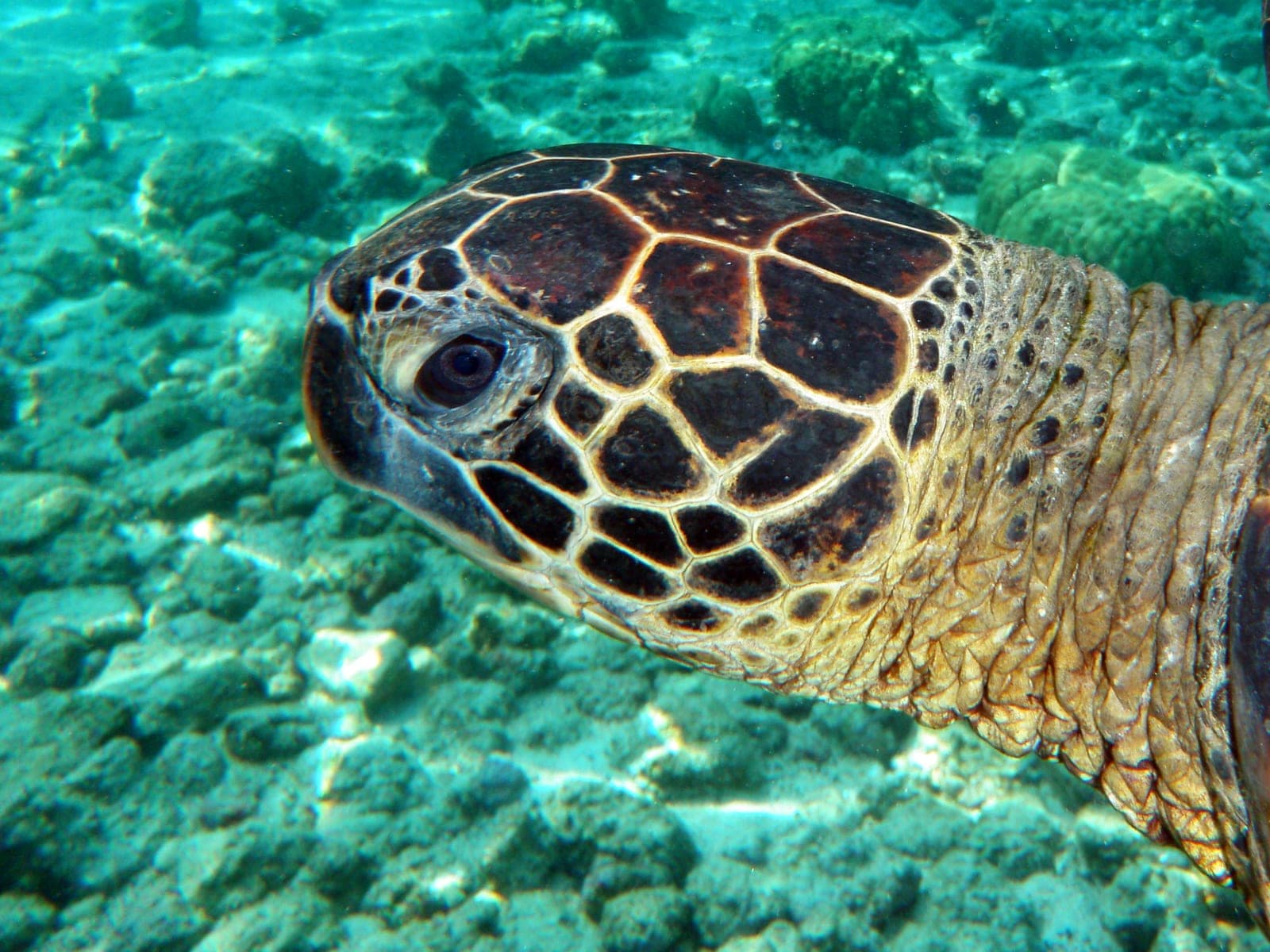
The headline act is green turtles. They are resident here year-round, feeding and resting on the plateau, and on a good day it stops being a question of whether you'll see one and becomes a question of how many. Around them the reef churns with life: dense clouds of snapper and fusilier hang over the coral, angelfish patrol the heads, and batfish drift up to inspect you with the confidence of animals that have never been hunted.
Look closer and the site keeps giving. Honeycomb morays lace through the coral, anemonefish guard their hosts, and squid and cuttlefish turn up in the shallows. The wall on the drop-off is a reliable hunt for nudibranchs — Jorunna funebris and several Hypselodoris species are regulars — making this as rewarding for a macro shooter as for someone who just wants big, busy scenes.
- Green turtles — resident and reliable, year-round
- Honeycomb morays tucked into the coral heads
- Eagle rays and stingrays cruising the sand and plateau edge
- Huge schools of snapper, fusiliers and batfish
- Arabian and emperor angelfish, parrotfish, anemonefish
- Nudibranchs, squid and cuttlefish for the macro-minded
- Seasonal whale sharks in the summer plankton months
Conditions, and who it's for
This is one of the most approachable serious dives in Oman. The working depth is shallow, so no-decompression time is generous and air lasts — you can comfortably spend an hour drifting the plateau. Current is usually mild, which makes The Aquarium a strong choice for training dives, refreshers, photographers who want to hover, and anyone easing back into the water.
Be honest with yourself about the exceptions, though. On the exposed corners and with a running tide the current can climb to moderate, and the nearby drop-off is a real wall — it is easy to sink below 30 metres chasing an eagle ray if you stop watching your gauge. Visibility is excellent in the cool season but drops when summer plankton blooms roll in (the same blooms that bring the whale sharks). None of this makes the site advanced; it just means you dive it with the usual attention rather than switching off entirely.
When to dive it
Oman has two distinct diving seasons and The Aquarium rewards both. The prime window runs November to April: seas are calm, water sits around 24–27°C, and visibility regularly reaches 25–30 metres. This is also the only period when boats are permitted to land on the islands themselves, so day trips in these months often pair the dive with a beach stop.
Summer, roughly June to October, is a different animal. The water stays warm but seas get livelier, visibility can drop, and cooler upwelling occasionally sharpens the temperature. The trade-off is pelagic action — whale sharks move through Omani waters in the warmer months, with the best odds typically from August into the autumn. Crucially, diving here continues year-round even though the islands close to landing from May to October to protect nesting turtles, so a summer trip is very much on the table if whale sharks are your goal.
How you actually dive it
The Daymaniyats are a protected marine reserve, and that shapes the logistics more than the diving. There is no independent access: every visitor needs an official government permit, daily numbers are capped, and you go with a licensed operator who arranges the paperwork as part of the trip. In practice this means a fast RIB or speedboat from Al Mouj Marina in Muscat, a 40-to-45-minute crossing to the islands, and typically two relaxed dives with a surface interval on the boat.
The Aquarium works beautifully as a first or last dive of the day, and it is one of the better night dives in the reserve when operators run them — the morays hunt, the coral comes alive, and the shallow depth keeps everything easy. Bring a 3 mm suit for the cool season (some divers want a 5 mm), a good torch, and a camera. You will not need much weight or much gas, but you will want the frames.
Faneca dives The Aquarium on our Oman diving trips, run as day-boat outings to the Daymaniyat Islands from Muscat's Al Mouj Marina rather than as a liveaboard — the reserve is a short speedboat hop offshore, so there's no need to sleep aboard. We favour the November-to-April window for the calmest seas and clearest water, and can build a summer trip around it if whale sharks are what you're chasing.
The Aquarium: common questions
What is the best season to dive The Aquarium?
November–April for clearest water and calm seas; June–October for warm water and whale shark chances
What experience level do I need for The Aquarium?
Open Water and up — genuinely suitable for all certified divers
How deep is The Aquarium?
7–15 m over the plateau, dropping steeply to about 30 m at the edge
What marine life will I see at The Aquarium?
Green turtles, honeycomb morays, eagle & stingrays, huge snapper and fusilier schools, angelfish, batfish, nudibranchs; seasonal whale sharks
