Manta Ray Diving: Where, When, and How to See Them
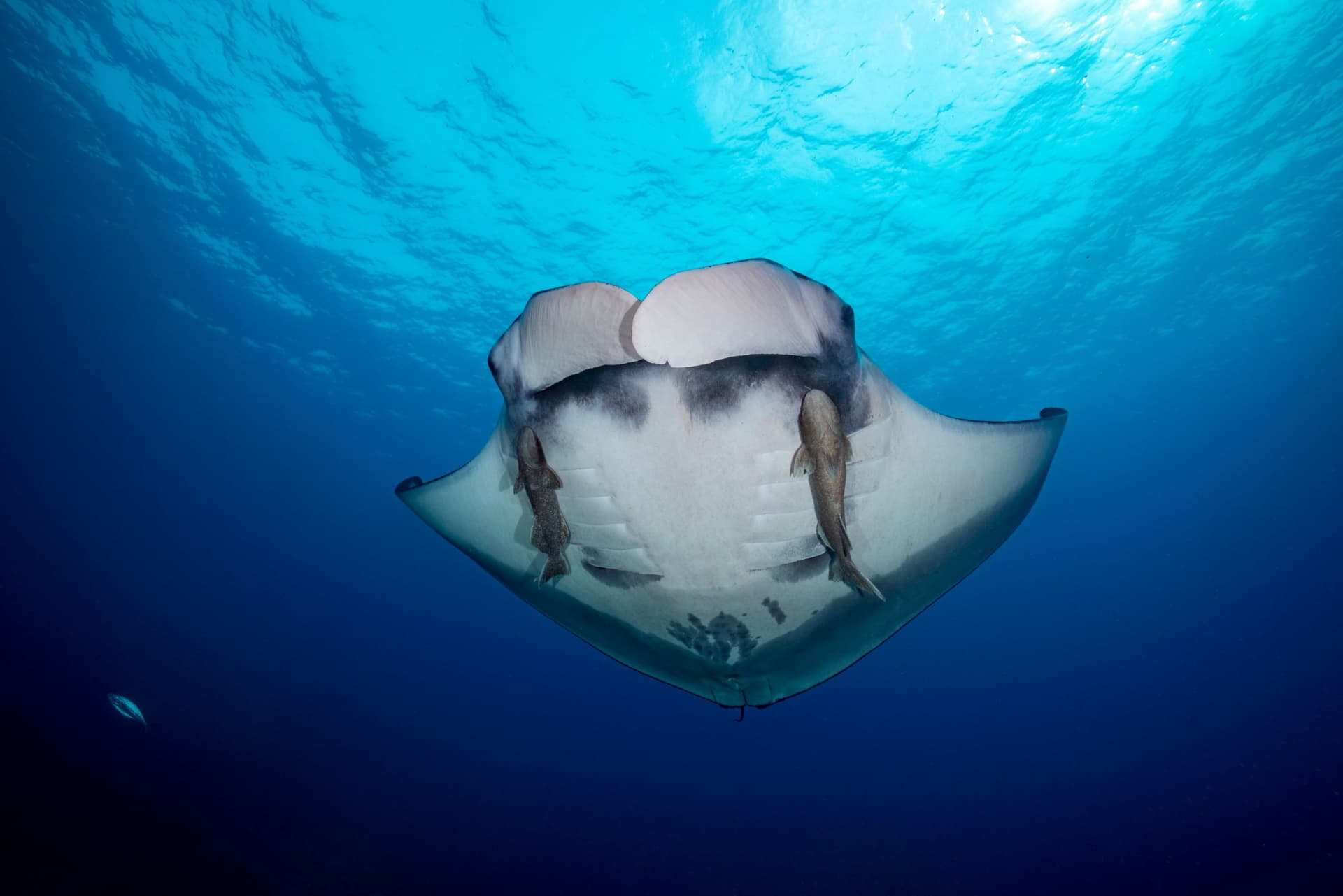
Mantas are the closest thing diving has to a religious experience. They don't rush. They don't startle. They glide in on 4-metre wingspans, bank directly over your head close enough that you could reach out and touch them (don't), and then circle back to do it again. They make eye contact. They seem curious about you. No other large marine animal interacts with divers this way.
But you need to be in the right place, at the right time, doing the right things. Here's the breakdown.
Reef Mantas vs Oceanic Mantas
Most divers don't realise there are two species, and the difference matters.
Reef mantas (Mobula alfredi): 3-4.5 metre wingspan, found in coastal waters, predictable patterns around cleaning stations and feeding areas. These are what you'll encounter at most tropical destinations. They're resident populations — the same individuals return to the same reefs year after year. Researchers can ID them by their belly markings, like fingerprints.
Oceanic mantas (Mobula birostris): 5-7 metre wingspan, pelagic, less predictable, found in deeper offshore waters. These are the giants. They show up at seamounts and offshore pinnacles, often in cooler, nutrient-rich water. Socorro is the gold standard for these.
The experience is different too. Reef mantas are relaxed around divers, often circling cleaning stations for extended visits. Oceanic mantas tend to do single passes — dramatic, awe-inspiring passes, but fleeting. You might get 30 seconds with an oceanic manta. You might get 30 minutes with a reef manta at a cleaning station.
The Best Destinations
Socorro, Mexico (November to May)
This is where you go for oceanic mantas, full stop. The Revillagigedo Archipelago — 400km southwest of Cabo San Lucas — hosts giant oceanic mantas with wingspans reaching 6-7 metres. These animals are famously curious and will approach divers directly. Some have been interacting with divers for decades and seem to genuinely enjoy the bubble contact.
Key dive sites: Roca Partida (a single rock in the middle of the Pacific, mantas cruise past the wall at 10-25m), San Benedicto (The Boiler — a submerged pinnacle where mantas come to be cleaned by clarion angelfish), and Socorro Island (Cabo Pearce, for both mantas and dolphins).
Water temp: 21-25°C. Visibility: 20-40 metres. Current: moderate to strong. Minimum certification: Advanced Open Water recommended. This is not a beginner destination — the sites are exposed, the currents are real, and the nearest hospital is a 24-hour boat ride.
Liveaboard is the only option. There's nothing on the islands — no resorts, no harbours, no infrastructure. Trips depart from Cabo San Lucas, 22-30 hours transit each way. Typical trip length: 8-10 days with 5-6 days of diving.
Komodo, Indonesia (Year-round)
Komodo delivers reef mantas with absurd reliability. The nutrient-rich waters of the Flores Sea sustain a healthy population that shows up at predictable sites throughout the year.
Manta Alley (south Komodo): A channel between two islands where mantas cruise in current, feeding on plankton. Best during the wet season (December-March) when plankton blooms peak. Depth: 8-18 metres. Current can be strong — hook in and watch the show.
Cauldron / Shotgun: A site where mantas glide through a channel between pinnacles. The current pushes you through like a conveyor belt, and mantas ride the same current above you. It's chaotic, fast, and brilliant.
Makassar Reef: The go-to cleaning station. Mantas visit at 5-12 metres depth to have parasites removed by wrasses. This is where you'll get the longest encounters — 20-40 minutes of mantas circling above you while you kneel on the sandy bottom.
Water temp: 24-29°C (varies significantly between north and south sites — south Komodo can be shockingly cold at 22°C on some dives). Visibility: 10-25 metres.
Maldives — Hanifaru Bay (June to November)
Hanifaru Bay in Baa Atoll is a natural amphitheatre where currents concentrate plankton into a dense soup. When conditions align — specific tides, moon phases, and current direction — reef mantas gather in feeding frenzies of 50-150+ individuals.
Read that again: over a hundred mantas, barrel-rolling through clouds of plankton, in water shallow enough to stand in.
This is snorkelling only. The Maldivian government banned scuba in Hanifaru Bay to protect the mantas and reduce diver impact. You float on the surface and watch the chaos unfold below. It's mesmerising.
The challenge: Hanifaru is weather-dependent and tidal-dependent. Some days deliver 100 mantas. Other days, zero. You can't force it. Liveaboard itineraries in the central atolls during this period will include Hanifaru when conditions look right, but no operator can guarantee the feeding frenzy.
Outside Hanifaru, Maldivian cleaning stations throughout the atolls deliver reliable manta encounters on scuba from January through April. Sites like Lankan Reef and Boduhithi Thila in North Male Atoll are consistent producers.
Hawaii — Kona Night Dive (Year-round)
This deserves its own section because it's unlike any other manta encounter on Earth.
The setup: hotels and restaurants along the Kona coast shine lights into the water after dark, attracting plankton. Reef mantas — 3-4.5 metre wingspans — show up to feed. Divers kneel on the sandy bottom at 10 metres depth, shining torches upward. The light concentrates the plankton, and the mantas barrel-roll through the beam, passing within centimetres of your head.
It happens nearly every night. Encounter rates are above 90%. The mantas are habituated to divers and seem unbothered by the lights — researchers suggest the light actually helps them feed more efficiently.
This isn't a liveaboard dive — it's a shore dive or day-boat trip from Kona. But if you're ever in Hawaii, it's one of the best single dives you can do anywhere. Water temp: 24-27°C. Visibility: 10-15 metres (at night, doesn't matter much). Suitable for Open Water divers.
How Cleaning Stations Work
Understanding cleaning stations will dramatically improve your manta encounters.
Mantas visit specific reef formations — usually shallow bommies or coral heads at 5-15 metres — to have parasites removed by cleaner wrasses, cleaner shrimp, and butterflyfish. The manta hovers or slow-glides over the station, gill slits open, while tiny fish pick parasites from its skin, gills, and mouth.
The manta visits are predictable. The same individuals return to the same stations on regular schedules — some daily, some every few days. Dive guides know which stations are active and at what times.
Your job: arrive at the cleaning station before the mantas, settle into a comfortable position on the sand (not on the coral), stay low, breathe slowly, and wait. The mantas will come to you.
How to Position Yourself
This is where most divers blow it.
DO: Kneel or lie flat on the sandy bottom, 3-5 metres from the cleaning station. Keep your profile low. Minimise bubble noise. Stay still.
DON'T: Hover mid-water above the cleaning station (you're blocking their approach). Chase a manta as it leaves (it'll come back; you're just burning air). Crowd closer when a manta arrives (it'll leave).
The best manta photos come from divers who park themselves in a good spot and don't move. The mantas will circle back, each pass closer than the last. The divers who get 30-minute encounters aren't the ones swimming after the manta — they're the ones the manta keeps choosing to fly over.
Depth tip: Position yourself below the manta's flight path so you're shooting upward against the blue water background. A manta silhouetted against the surface is infinitely more dramatic than a manta against a busy reef background.
Camera Settings
Wide angle is mandatory. A 4-metre manta at 3 metres distance fills a 10-17mm fisheye frame perfectly. Anything narrower and you're getting partial shots.
Settings: f/8, 1/160-1/250, ISO 200-400 in good light. Strobes on low power — you want to fill shadows, not blast the animal. Aim strobes outward to avoid backscatter.
For cleaning station shots, natural light often works better than strobes. The mantas are close, the water is shallow, and the ambient light is typically strong enough at 8-12 metres.
Shoot upward. Always upward. The belly pattern is the money shot for ID photos, and the silhouette against blue water is the dramatic shot for everything else.
Planning a manta-focused liveaboard trip? Faneca tracks manta seasons across all major destinations and can time your trip to maximise encounters. Tell us what months work for you.
- Swimming with Whale Sharks: The Complete Liveaboard Guide — The other gentle giant encounter
- Hammerhead Shark Diving: The World's Best Spots — For when you want teeth with your pelagic action
- Best Time to Dive: A Season-by-Season Guide — Seasonal planning for every major destination
- Underwater Camera Settings for Liveaboard Trips — Get your camera dialled before the trip
Related Articles
%20-%20Large.jpg&w=828&q=75)
Best Time to Dive: A Season-by-Season Guide
When to visit the world's top liveaboard destinations for the best conditions and marine life encounters.
Galápagos Diving: What to Expect on Your First Trip
Hammerhead highways, curious sea lions, and currents that demand respect — here's what awaits in the enchanted islands.