Diving with Sharks: What Every Liveaboard Diver Should Know
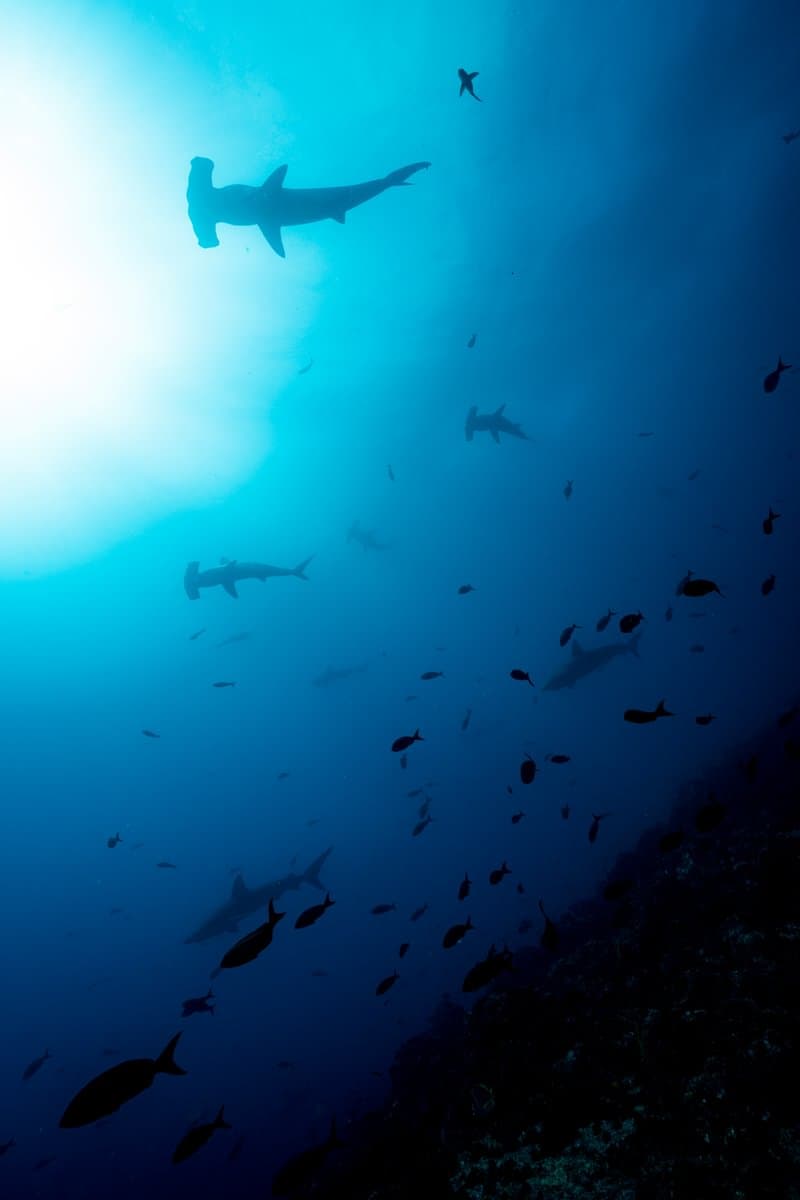
You're going to see sharks on your liveaboard trip. That's not a warning — it's a promise, and it's probably one of the reasons you booked the trip in the first place.
Sharks are, without exaggeration, the single most requested encounter among our divers. People will spend thousands of euros and travel halfway across the world for thirty seconds with a hammerhead. And honestly? It's worth every cent.
But let's have an honest conversation about what shark diving actually involves, how to behave when you're sharing the water with apex predators, and why the biggest danger is almost never the shark itself.
Let's Start With the Truth
Sharks are not interested in eating you. Period. Full stop. End of discussion.
You are bony, awkwardly shaped, covered in neoprene, and blowing noisy bubbles. You are, from a shark's perspective, deeply unappealing. The global statistics back this up: you're more likely to be killed by a vending machine, a cow, or a champagne cork than by a shark.
On liveaboard trips, divers encounter sharks on thousands of dives every single day across the world's oceans. Incidents are vanishingly rare, and when they do happen, they almost always involve spearfishing, provocation, or extremely poor visibility — none of which apply to responsible liveaboard diving.
Understanding Shark Behaviour
Sharks communicate through body language. Learning to read it makes you a better diver and keeps everyone — you and the shark — comfortable.
Relaxed Shark Behaviour
- Swimming in smooth, fluid motions
- Following a consistent path or patrol route
- Showing curiosity with slow, wide passes
- Maintaining distance while observing you
This is what you'll see 99% of the time. Enjoy it. This is the good stuff.
Agitated Shark Behaviour
- Hunched posture (pectoral fins angled downward)
- Erratic, jerky swimming
- Jaw gaping (opening and closing the mouth)
- Quick, tight turns
- Direct approach with increasing speed
If you see these signs, calmly create distance. Don't thrash, don't turn your back, and don't swim away frantically. Slow, deliberate movements. Face the shark and back away.
In a liveaboard context with experienced guides, you'll almost never encounter agitated behaviour. Your guide will brief you on what to expect and how to behave before every dive.
Common Species You'll Encounter
Reef Sharks (Whitetip and Blacktip)
The bread and butter of tropical liveaboard diving. Curious but not aggressive, usually under 1.5 metres. You'll see these everywhere from the Red Sea to Raja Ampat. They're often resting under coral ledges during the day — whitetip reef sharks are one of the few species that can pump water over their gills without swimming.
Grey Reef Sharks
Larger, more assertive, and wonderfully photogenic. Common in Palau, the Maldives, and Polynesia. They patrol reef walls and channels, often in groups. Respectful distance is key — these are the species most likely to show the "hunched" warning posture if they feel crowded.
Hammerheads (Scalloped and Great)
The holy grail for many divers. Scalloped hammerheads school in enormous numbers at places like the Galápagos, Malpelo, and the Red Sea's Brother Islands. They're typically shy and maintain distance, which makes getting close a real achievement. Early morning dives and cleaning stations offer the best chances.
Oceanic Whitetips
The open-water legends. Once the most abundant large predator on Earth, now critically endangered. The Red Sea (particularly around Elphinstone Reef) is one of the last reliable places to encounter them. They're bold, curious, and utterly mesmerising. Maintain calm, hold your position, and let them come to you.
Whale Sharks
Technically sharks, but they eat plankton, not divers. Gentle, enormous, and profoundly moving to encounter. The Maldives, Galápagos, and Thailand's Similan Islands are prime spots. Keep a 3-metre distance and never touch them.
Thresher Sharks
Those extraordinary long-tailed sharks that use their tail to stun prey. Malapascua in the Philippines is famous for early-morning encounters at cleaning stations. Increasingly seen on liveaboard routes through the Visayas.
Best Liveaboard Destinations for Shark Encounters
The A-List
- Galápagos: Schooling hammerheads, Galápagos sharks, whale sharks. Cold water, strong currents, but the sheer biomass is unmatched
- Red Sea (Brothers, Daedalus, Elphinstone): Oceanic whitetips, hammerheads, grey reefs, the occasional thresher
- Palau: Grey reef sharks in staggering numbers at Blue Corner, plus bulls and leopard sharks
- Maldives: Whale sharks, grey reefs, whitetips on every dive, plus seasonal hammerheads
The Dark Horses
- Komodo, Indonesia: Whitetip and blacktip reefs on virtually every dive, plus occasional mantas
- Truk Lagoon: Reef sharks patrolling the wrecks — a combination that's hard to beat visually
- Socorro, Mexico: Schooling hammerheads, silky sharks, and the friendliest giant mantas on the planet
How to Behave Around Sharks
These rules are simple, but they matter:
Do
- Stay calm: Slow breathing, minimal movement. You're a guest in their home
- Maintain eye contact: Sharks respect awareness. Looking away can be interpreted as prey behaviour
- Stay in the group: Sharks are more wary of groups than individuals
- Keep your hands close: Dangling fingers can resemble fish. Tuck them in
- Follow your guide: They know these sharks. Trust their briefings
- Enjoy the moment: You're doing something extraordinary. Be present
Don't
- Chase sharks: You'll never catch them, and you'll annoy everyone else on the dive
- Touch or grab: This should be obvious, but it bears repeating
- Use flash photography at close range: It startles them and produces terrible photos anyway
- Wear shiny jewellery: Reflections can resemble fish scales. Leave the bling on the boat
- Thrash or splash: Quick, erratic movements trigger investigatory behaviour
- Corner or block: Always leave the shark an exit path
The Real Risks (Hint: It's Not the Sharks)
On liveaboard shark dives, the actual risks are usually:
- Strong currents: Shark hotspots tend to be in current-exposed areas. Be honest about your ability
- Blue water descents: Dropping into open water to meet pelagic species can be disorienting
- Nitrogen narcosis: Deep shark dives at 30+ metres affect your judgement. Know your limits
- Other divers: Overeager photographers and chasers can create chaos. Be the calm diver
Final Thoughts
Sharks are not monsters. They're not mindless killers. They're ancient, elegant predators that have survived five mass extinction events, and we're privileged to share the water with them.
Every shark encounter on a liveaboard is a gift. Some divers wait years for a hammerhead sighting. Others stumble into a wall of grey reefs on their very first dive. That's the ocean — unpredictable, generous, and endlessly humbling.
Be respectful, be calm, be ready. The sharks are waiting.
Want to plan a trip around a specific shark encounter? The Faneca Expeditions team can match you with the right destination, season, and boat. Just tell us what's on your bucket list.
- Galápagos: Diving with Hammerheads and Marine Iguanas — The ultimate hammerhead destination
- Cocos Island: The Definitive Guide to Hammerhead Heaven — Schooling hammerheads and whitetip frenzies
- Socorro: The Definitive Guide to Giant Mantas and Humpback Whales — Big animal encounters in the Pacific
Related Articles
Essential Safety Guide for Liveaboard Diving
Everything you need to know about staying safe on liveaboard trips, from pre-dive checks to emergency procedures.
Dive Insurance Explained: What You Actually Need
Cutting through the confusion about dive insurance — coverage types, providers, and what to look for.