Zabargad Island
A remote island of coral towers, clear bays and a wreck whose story nobody can confirm.
Zabargad rises out of Foul Bay as a hilly island of about four and a half square kilometres, the largest in its little group and a landmark from miles away. Its bays are sheltered from the prevailing northerly winds, which makes it the natural overnight base for boats working the deep south, and the diving around it is gentler and more varied than the walls of Rocky Island next door. Coral towers, sandy slopes and a mysterious Soviet-era wreck make it a place to slow down and look properly. Here is what the island offers, and what is known about the wreck.
Quick answer: Zabargad Island is a coral pinnacles, sloping walls, sheltered bays and a wreck in Red Sea. Best season: Most deep-south departures run late spring to autumn, with water around 26–29°C in summer. Level: Open Water with experience for the sheltered southern bays and the wreck; Advanced for the exposed corners. Depth: Bays and pinnacles 5–30 m; the wreck lies in around 24 m. Typical visibility: Typically 20–40 m.
Facts verified September 2026
An island with a long history
Zabargad is also known as St John's Island, which causes some confusion with the St John's Reefs further south; they are separate places, though many itineraries visit both. The island has been mined for peridot, the green gemstone, since antiquity, and the old workings are still visible on its slopes. Today it is uninhabited and protected, and green and hawksbill turtles nest on its beaches in summer. Treat the island itself as off-limits unless your crew tells you a landing is permitted.
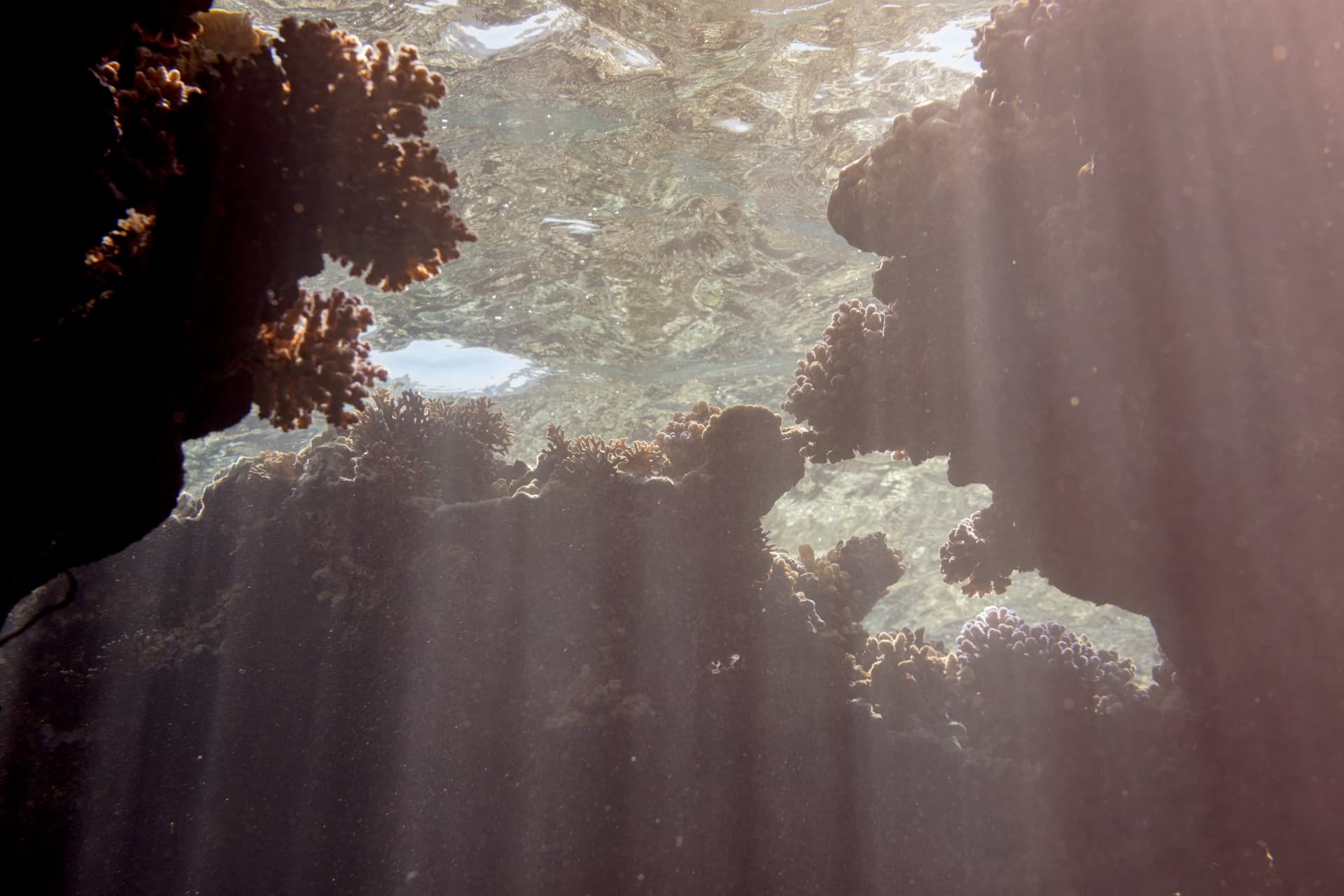
Underwater, most diving happens along the southern shore, where the island blocks the northerly winds. A small wall drops to about 15 metres, then the reef slopes gently to around 30 metres before falling away. The sandy slopes are dotted with coral pinnacles and towers, some rising almost to the surface, with overhangs, small caverns and swim-throughs between them.
The wreck off Zabargad
The island's wreck is usually called the Russian wreck or the Khanka. It is a Soviet-era vessel identified by its design as a Moma-class ship, a type used for survey and intelligence work, and it sits fairly upright in around 24 metres, close in to the island, with its mast reaching close to the surface. How and when it sank is not reliably documented, and the Khanka name has never been confirmed by public records. Operators even disagree about which side of the island to describe it on, so let your guide's briefing be the authority.
What is certain is that it is a good dive. The hull is encrusted with corals and sponges, the bridge and engine room areas can be seen, and glassfish fill the sheltered spaces. Only go inside with a guide who knows the layout, and with the training and light that any overhead environment needs.
What you'll see
Zabargad is more about the reef than the big animals, though the drop-off can surprise you. On a typical day the pinnacles and bays give you:
- Coral towers covered in hard and soft corals, alive with anthias and damselfish
- Glassfish clouds in the overhangs and on the wreck
- Crocodilefish and bluespotted rays on the sand, octopus in the reef
- Turtles in the bays, especially in the summer nesting season
- Napoleon wrasse, barracuda and occasional mantas and sharks off the deeper slope
Conditions and who it suits
Zabargad is the most forgiving site in the deep south. The southern bays are usually calm with little current, which makes them a good place for the first dive after the crossing and for divers who want a break from the walls of Rocky Island. The exposed corners are a different matter, and current there can be strong. Operators running deep-south trips generally ask for a minimum of around 30 logged dives, and many prefer Advanced certification and more experience, because of the sites that come with it on the same itinerary.
Visibility is usually excellent. Summer water is warm, at around 26°C to 29°C, so a 3 mm or 5 mm suit is enough for most people. As everywhere in the deep south, remember how remote you are and keep your profiles conservative.
How you actually dive it
Zabargad is liveaboard-only, usually on a seven-night deep-south route from Port Ghalib or Marsa Alam that combines it with Rocky Island and often St John's. Boats moor in the island's sheltered bays, and diving is from the zodiacs or straight from the boat for the closest sites. Night diving is restricted at the protected offshore sites, so ask the crew what is allowed on your trip.
Most itineraries give you two or three dives here, typically the wreck, a pinnacle dive in the southern bay and a drift along a slope. That rhythm, alternating Zabargad's calm bays with the open walls of Rocky Island, is what makes the deep-south week work.
Faneca dives Zabargad on our Deep South itineraries, Zabargad & Rocky Island and Secrets of Zabargad, using the island's sheltered bays as the overnight base between days on the open walls of Rocky Island.
Zabargad Island: common questions
What is the best season to dive Zabargad Island?
Most deep-south departures run late spring to autumn, with water around 26–29°C in summer
What experience level do I need for Zabargad Island?
Open Water with experience for the sheltered southern bays and the wreck; Advanced for the exposed corners
How deep is Zabargad Island?
Bays and pinnacles 5–30 m; the wreck lies in around 24 m
What marine life will I see at Zabargad Island?
Coral towers with glassfish and anthias, crocodilefish, bluespotted rays, octopus, turtles, Napoleon wrasse, barracuda; occasional mantas and sharks off the drop-off
