Unkai Maru
One of the oldest ships in the lagoon: a coal-burning steamer launched in England in 1905.
The Unkai Maru No. 6 was launched in north-east England in 1905 as the Venus, a small coal-burning steamer that spent more than twenty years under Japanese owners. By 1944 she was nearly forty years old and working for the navy. She burned through the first day of the American raid and sank on the second, and she now sits upright on the sand, small enough to see most of in one dive. Her bow gun, the army boots and gas masks in her forward hold, and a tight little steam engine room make her a good change from the big transports. This guide covers her story, what you will see, the conditions, when to go and how you dive her.
Quick answer: Unkai Maru is a wwii shipwreck sitting upright on sand; deck, holds and a small engine room in Truk Lagoon. Best season: December to April (dry season) for the calmest seas and best visibility; diveable year-round. Level: Advanced Open Water with nitrox and some deep-diving experience; the engine room is a tight penetration for wreck-trained divers. Depth: Deck around 30m; seabed roughly 39–44m (sources vary); the masts and superstructure rise well above the deck, and the average dive depth is around 25m. Typical visibility: Typically 18–30m; silt inside the holds and engine room.
Facts verified November 2026
Why the Unkai Maru is special
She was built by William Gray & Co. at West Hartlepool and launched in 1905 as the Venus. She later passed to Japanese owners and became Unkai Maru No. 6; accounts give 1911 or 1921 for the sale. She was a small ship, about 3,200 gross tons and under 100 metres long, and an old-fashioned one: a coal-burning steamer, among the oldest vessels sunk in the lagoon.
The navy chartered her again in January 1944 (she had also worked for it from 1941), and she reached Truk shortly before the raid; apart from army gear in her forward hold, her holds were empty. On 17 February, the first day of Operation Hailstone, carrier aircraft bombed her and set her on fire; she was still burning, and still afloat, when they left. More bombs on the second day finished her, and she settled upright on the sand.
Her age is what sets her apart. She was already more than thirty years old when the Fujikawa Maru was completed in 1938, and her engine room, with its steam piping and gauges, belongs to an earlier generation of ships than most of the fleet around her.
What you'll see on the wreck
She is compact, so you can see the main features in a single dive:
- The gun on the bow
- Army gear in the forward hold: boots, gas masks and bottles
- The bridge and the accommodation around it, with several easy swim-throughs
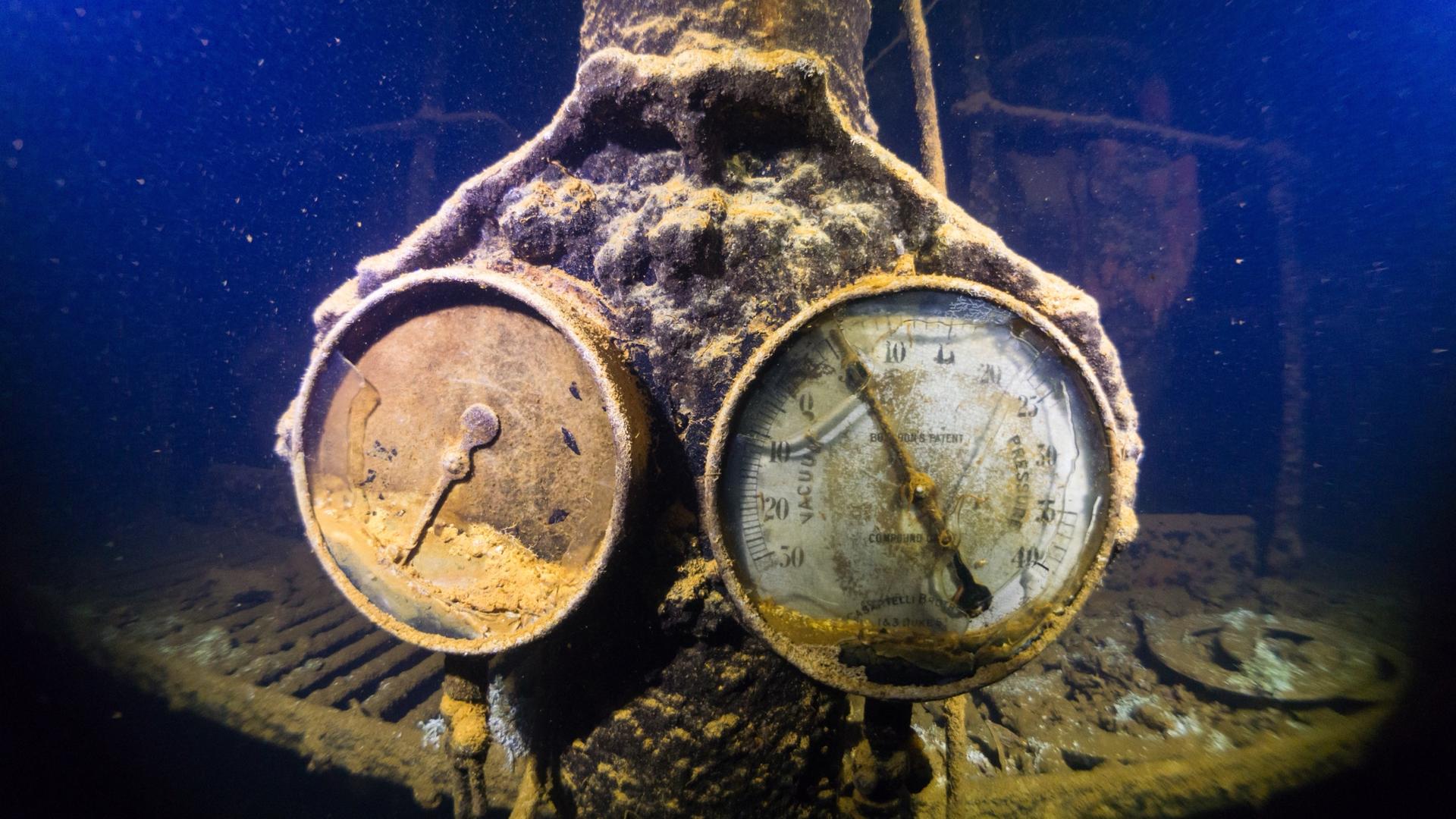
- A small, tight engine room with steam piping and gauges
- Cargo winches on deck and the empty after holds
- Coral and sponge on the masts and rails, the best place to finish the dive
Conditions and who it's for
The deck is around 30 metres and the seabed around 40, so although the ship is small, the Unkai Maru is a deep dive for recreational divers. An Advanced Open Water diver with deep experience can see the bow gun, the forward hold and the bridge on nitrox, but no-stop time at deck level is short: plan it, and watch your computer.
The engine room is small and tight, an overhead space with little room to turn, for wreck-trained divers with a primary torch, a backup and a guide. Water is 28 to 30°C all year and current is usually mild. Look, don't touch and take nothing: removing anything from the Truk wrecks is against Chuuk law.
When to dive it
Truk is diveable all year. The drier months from about December to April usually give the calmest surface and the best visibility; June to November is wetter and more variable, and August to November carries the most typhoon risk, although the lagoon shelters the wrecks from swell.
At 30 metres on the deck, the Unkai Maru gains a lot from clear water: on a good day you can see from the bow to the bridge, which makes it easy to plan the dive as you go.
How you dive the Unkai Maru
Descend to the bow first and look at the gun and the forward hold while your no-stop time is longest. Then work aft at a slightly shallower level past the bridge and the superstructure, and finish up the masts for a slow ascent and safety stop.
If your guide takes a small group into the engine room, go only if you are trained for it, and go early in the dive, before the silt in the holds has been stirred up by others.
We sell 8 to 10-night Truk Lagoon liveaboards that board off Weno, and the Unkai Maru is one of the lagoon's regular stops. The day-by-day wreck plan is set on board around conditions and the group, so if she matters to you, tell us when you book. Her deck is around 30 metres, so tell us your certification and how much deep diving you have done when you enquire; if you want to run decompression, ask us before you book.
Unkai Maru: common questions
What is the best season to dive Unkai Maru?
December to April (dry season) for the calmest seas and best visibility; diveable year-round
What experience level do I need for Unkai Maru?
Advanced Open Water with nitrox and some deep-diving experience; the engine room is a tight penetration for wreck-trained divers
How deep is Unkai Maru?
Deck around 30m; seabed roughly 39–44m (sources vary); the masts and superstructure rise well above the deck, and the average dive depth is around 25m
What marine life will I see at Unkai Maru?
Coral and sponge growth on the masts, rails and deck fittings, with reef fish around the superstructure