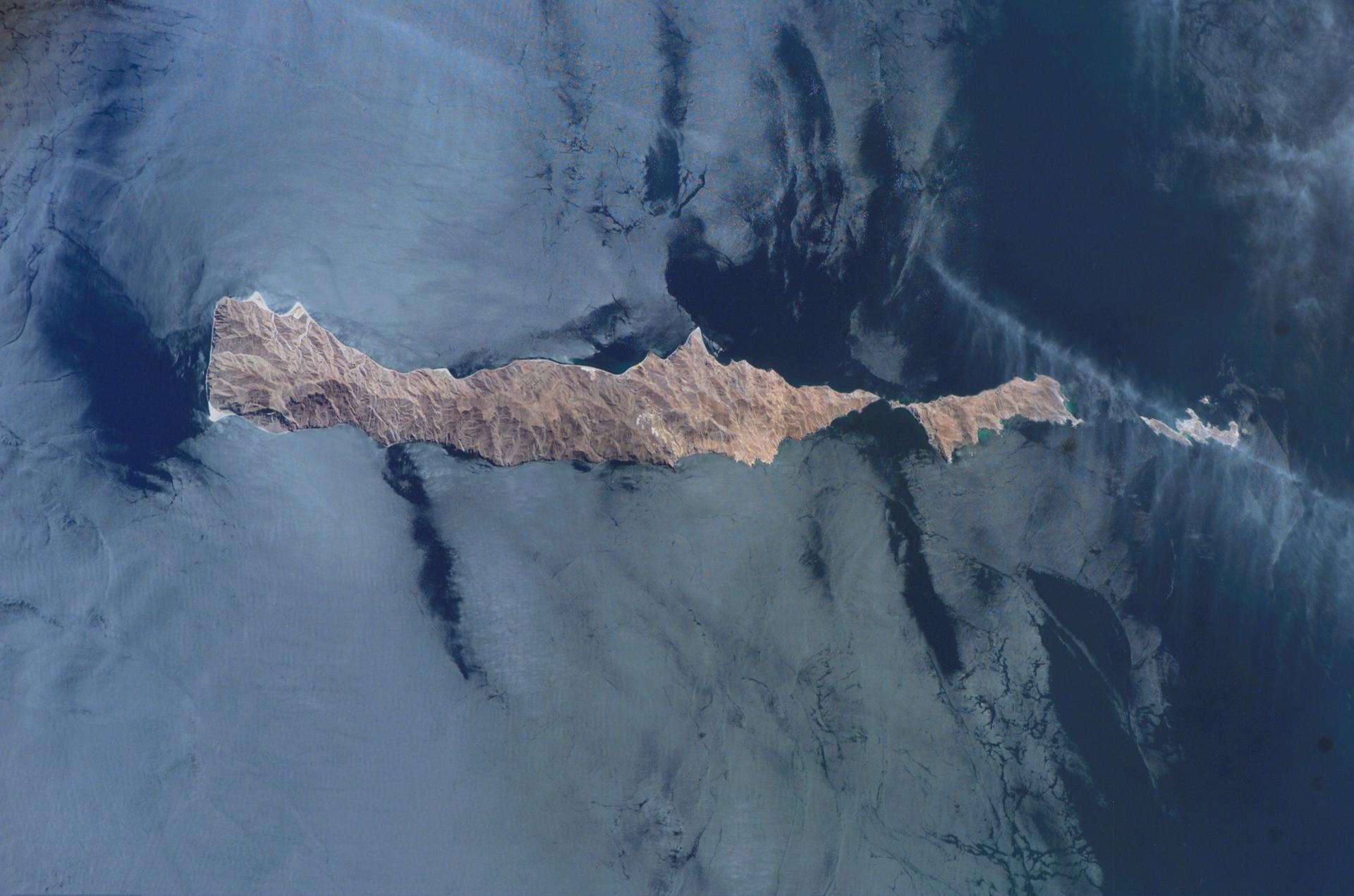
Salsipuedes & Las Ánimas (Midriff)
Two small islands at the north end of the San Lorenzo chain, between channels more than a kilometre deep where the tide does the work.
Salsipuedes and Las Ánimas sit at the northern end of the San Lorenzo archipelago, the chain of islands that runs south-east from Bahía de los Ángeles across the middle of the Gulf. Both lie inside a marine national park, between channels that drop past 600 m, and the tides that push water through them feed huge numbers of sardines, seabirds and sea lions. On our Midriff week they get one full day: three dives and a night dive. This Las Ánimas is not the pinnacle of the same name near La Paz; it is a different island, more than 400 km further north.
Quick answer: Salsipuedes & Las Ánimas (Midriff) is a rocky reef, walls and boulder slopes from tenders; night dive in Sea of Cortez. Best season: Our trips run July to mid-September; warmest water mid-August to mid-September. Level: Open Water with at least 10 logged dives; good buoyancy, as some sites run with the tide. Depth: Most dives 5–25 m; black coral from about 20 m; channels beside the islands fall to 600–1,500 m. Typical visibility: Typically 10–20 m; lower during plankton blooms.
Facts verified September 2026
Where these islands are, and why the water is so rich
Salsipuedes, Las Ánimas and the long ridge of San Lorenzo form a line of islands between the Canal de Salsipuedes and the open Gulf. Las Ánimas sits right against the north-west tip of San Lorenzo, and much of it is volcanic rock laid down as the Gulf opened. The channels around them are deep, from about 600 m to 1,500 m, and the San Lorenzo sill to the south, about 400 m deep, controls how water moves between the northern Gulf and the deep basins further south. The name Salsipuedes translates as "get out if you can", which tells you what the tides through these passes can do.
All that moving water makes this one of the most productive stretches of the Gulf. The sardines and anchovies it supports feed the seabird colonies on the islands, the brown pelicans that breed on Salsipuedes, sea lions, and the fish-eating bat found only in Mexico. Since 2005 the waters around the archipelago have been a national park, the Parque Nacional Zona Marina del Archipiélago de San Lorenzo, with Las Ánimas and San Lorenzo inside a core zone where fishing is banned and only low-impact tourism such as diving is allowed.
What you'll see
These islands are less written about than San Pedro Mártir, and reports vary: some divers rate the day good rather than spectacular, others come back talking about sea lions. The common thread is the Midriff mix of rocky reef, black coral and life in the water column, shaped by whatever the tide brought in that day.
- California sea lions, which haul out on the rocks of Las Ánimas; you often hear them before you see them, and young animals may swim over to look at divers
- Black coral from about 20 m down, which divers have found on almost every Midriff site, with gorgonians and big sponges on the current-swept faces
- Schools of sardines and baitfish, and the jacks and seabirds working them
- King and Cortez angelfish, groupers, morays, rays and jawfish on the reef and sand
- Night dive: octopus, crustaceans, sleeping fish and, often, swarms of krill in your light
- From the tender: brown pelicans, boobies and gulls, and dolphins in the channels
Conditions and who it's for
The operator takes Open Water divers with at least 10 logged dives, and the guides choose sheltered sides of the islands to match the tide. Even so, this is channel country: current can build around points and between islands, and a dive can start calm and finish as a drift. Stay with your guide, carry your surface marker buoy, whistle and computer, and be ready for a pickup by tender away from where you went in.
Water on our trips runs from about 22–26°C in July to 26–29°C by late August and September, with thermoclines that can drop the temperature by several degrees in a few metres. The operator recommends a 5 mm wetsuit with a hooded vest for July and the first week of August, then a 3 mm with a hooded vest, plus a light hood for the night dive, when krill gathers in torch beams. Visibility is usually 10–20 m, lower in a plankton bloom.
Let the sea lions come to you. Stay low and still, keep your hands in, and don't follow them back towards the rocks.
The park rules
Recreational diving in the park has to be run by an operator authorised by CONANP, Mexico's park authority, with certified divers in small guided groups. Boats must stay at least 50 m from sea lion breeding and resting sites and 200 m from seabird nesting colonies, at no more than four knots, and keep to four knots wherever divers are in the water. Feeding, harassing or disturbing wildlife is banned throughout the park, and nothing may be taken.
Large vessels are not allowed to anchor or transit in the core zone around Las Ánimas and San Lorenzo, or in the Salsipuedes zone, so dives there are run from the tenders. The national park fee is collected by the boat.
When to go and how the day is run
Our Midriff departures run from early July to mid-September. Early July has the coolest water and the most plankton; mid-August to mid-September is warmest and usually clearest. Late summer is tropical storm season, so the captain may swap days around the islands to stay out of the wind.
On the operator's itinerary, day six is Salsipuedes and Las Ánimas, with three dives and a night dive, after two days at San Pedro Mártir and before the whale shark stop in Bahía de los Ángeles. The guides decide the sites on the day from the tide table and the wind, so expect a short briefing on currents before each dive and listen for the pickup plan.
Salsipuedes and Las Ánimas are the sixth day of our 7-night Midriff liveaboards from Puerto Peñasco, July to mid-September, between San Pedro Mártir and the whale sharks of Bahía de los Ángeles. Weather can change the order, and we'll be straight with you about what each week is likely to bring.
Salsipuedes & Las Ánimas (Midriff): common questions
What is the best season to dive Salsipuedes & Las Ánimas (Midriff)?
Our trips run July to mid-September; warmest water mid-August to mid-September
What experience level do I need for Salsipuedes & Las Ánimas (Midriff)?
Open Water with at least 10 logged dives; good buoyancy, as some sites run with the tide
How deep is Salsipuedes & Las Ánimas (Midriff)?
Most dives 5–25 m; black coral from about 20 m; channels beside the islands fall to 600–1,500 m
What marine life will I see at Salsipuedes & Las Ánimas (Midriff)?
California sea lions, black coral, gorgonians, schooling sardines and reef fish, rays, morays, nudibranchs; brown pelicans and other seabirds above