Los Islotes
A rocky islet off Espiritu Santo where curious sea lion pups turn an easy shallow dive into the most joyful twenty metres in the Sea of Cortez.
Los Islotes is the dive that converts skeptics. A pair of guano-white rock stacks at the northern tip of Isla Espiritu Santo shelters one of the most interactive California sea lion colonies on Earth, and diving Los Islotes means sharing shallow water with animals that genuinely want your attention. It is the marquee sea lion encounter of any Sea of Cortez liveaboard or La Paz day trip: easy on paper, unforgettable in practice, and honest fun for divers of almost every level.
Quick answer: Los Islotes is a shallow rocky reef / islet dive with arches, boulders and swim-throughs; day boat or liveaboard tender in Sea of Cortez. Best season: September to May (site closed to diving June 1 - August 31 for the breeding season); October-November is the all-round sweet spot. Level: Open Water and up; a genuinely beginner-friendly site. Depth: 5-18 m (16-59 ft); the main action sits in 8-15 m. Typical visibility: 10-30 m; typically 15-25 m, peaking at 25-30 m in December-February.
Facts verified September 2026
What makes Los Islotes special
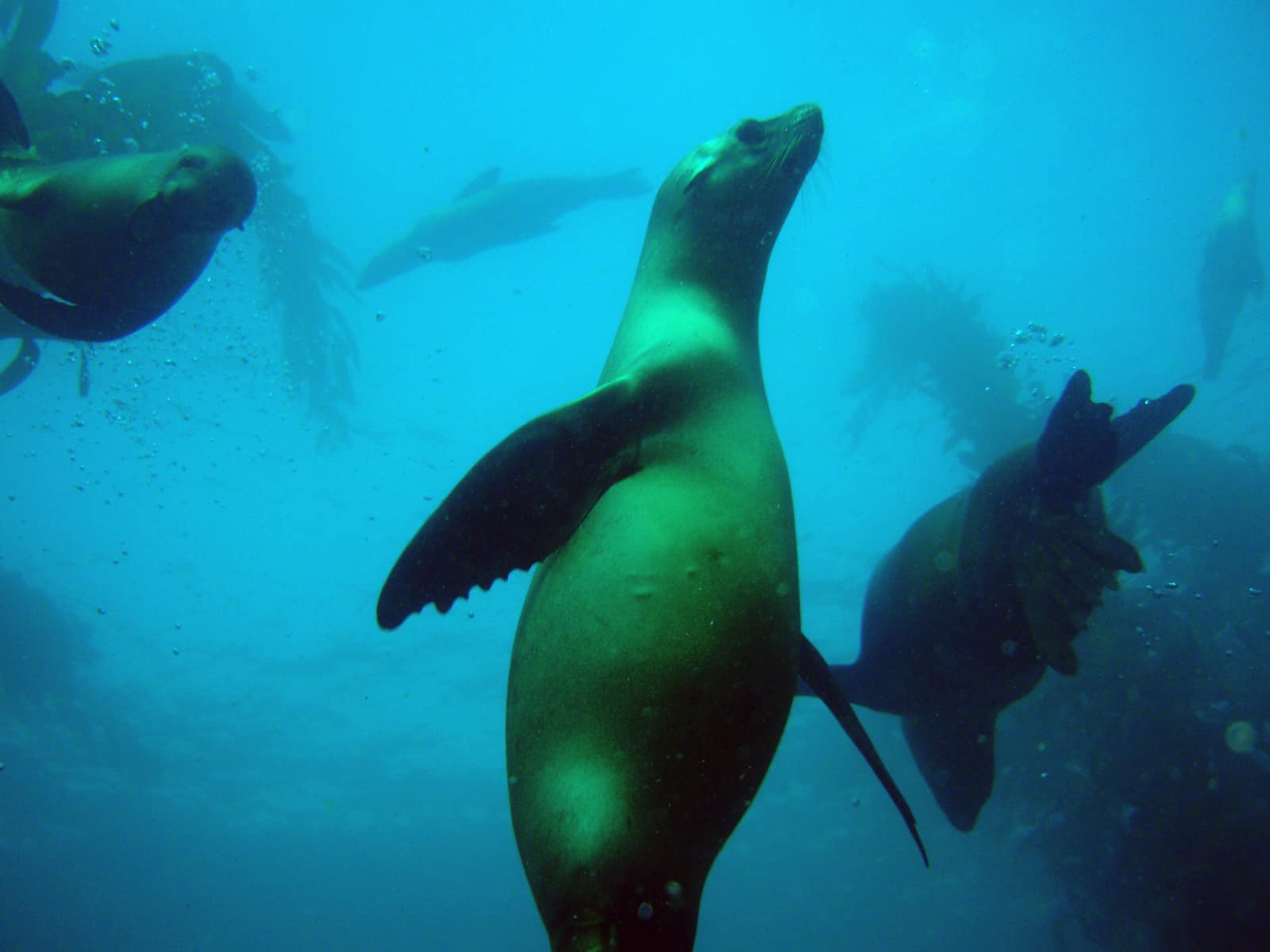
Most wildlife dives ask you to be patient and lucky. Los Islotes asks you to relax and play along. The two small islets hold a permanent colony of roughly 600 to 700 California sea lions, the southernmost breeding rookery in the Gulf of California, and they live here year round. The adults haul out on the sun-warmed rock and bark; the pups and juveniles come down to meet you.
This is not a distant, look-but-do-not-touch encounter. Young sea lions will loop around your head, mouth your fins, hang upside down inches from your mask and blow bubble rings back at you. They know the arches and boulders far better than you do and they use them, threading through gaps and swim-throughs and waiting on the other side to see if you follow. The site itself is modest, a shallow tumble of granite and sand, but the animals turn it into one of the most charismatic dives in the Sea of Cortez.
What you'll see underwater
The sea lions are the headline act, and they earn it, but Los Islotes is a healthy little reef in its own right. Expect the supporting cast that makes Baja worth the flight.
- California sea lions - the resident colony, with curious juveniles doing the interacting while big bulls patrol and posture (give them space)
- King angelfish, Cortez angelfish and schooling grunts massing in the cracks between boulders
- Jacks and the occasional passing school of larger fish riding the current line
- Moray eels tucked into the rock, plus scorpionfish and reef life across the boulder field
- Regional pelagic bonus: La Paz Bay hosts whale sharks roughly October to April, usually as a separate snorkel rather than at Los Islotes itself
Conditions and who it's for
This is one of the most accessible signature dives in Mexico, and I say that honestly rather than to flatter it. Depths run from about 5 to 18 metres with the real action in 8 to 15, so no-decompression time is generous and gas lasts. Currents are usually mild but can strengthen to moderate around the exposed rock depending on tide and season, which is the one variable to respect - a briefing and a competent guide handle it easily.
Certified Open Water divers with basic buoyancy will be comfortable here, and it is a superb site for newer divers precisely because the depth is forgiving and the reward is enormous. The skill that matters is not depth management but restraint: hover, keep your hands to yourself, and let the pups come to you. Do not chase, corner or reach for them, and read the bulls - a head-bob, an open mouth or a fast approach means back off. Water is warm and welcoming in early season (around 30 C in September) and drops to a bracing 16 to 19 C by mid-winter, so match your exposure suit to the month.
When to dive Los Islotes
Timing here is not negotiable, so plan around it. The colony is closed to in-water diving from June 1 to August 31 every year for the sea lion breeding and pupping season - a sensible conservation measure, and one no reputable operator will break. The diving season therefore runs September 1 to May 31.
October and November are the all-round sweet spot: water still warm at roughly 22 to 28 C, visibility a comfortable 15 to 25 metres, and this year's pups grown just enough to be boldly, hilariously curious. December through February trades warmth for clarity, with visibility peaking around 25 to 30 metres over cooler 16 to 19 C water. Early September is the warmest water of all but can bring the lowest visibility. There is no bad month in the open window; there is only the trade you prefer between warmth and clarity.
How you actually dive it
Los Islotes is a boat dive, reached in about an hour from La Paz. On a Sea of Cortez liveaboard it is a tender drop straight from the mothership; on a day trip it is a run out from town with a surface interval on the water. Either way you giant-stride in near the rocks, drop onto the boulder slope and let the colony find you - which rarely takes long.
Because it is shallow and relaxed, it works beautifully as a two-dive morning, and many divers happily repeat it. Buoyancy and awareness are everything: a calm, still diver gets mobbed by pups, while a thrashing one gets ignored. Bring a wide lens rather than a macro setup - the encounters are fast, close and full-frame - and shoot upward toward the sun-dappled surface for the shots this place is famous for. Keep off the reef, keep clear of the hauled-out adults, and let the sea lions set the pace.
Faneca dives Los Islotes on our Sea of Cortez (Baja California) liveaboards out of La Paz - honestly, though, the site's September-to-May open season means the best sea lion trips run in the autumn and spring shoulders rather than high summer, so we plan Baja itineraries around that window to guarantee you in-water time with the colony.
Los Islotes: common questions
What is the best season to dive Los Islotes?
September to May (site closed to diving June 1 - August 31 for the breeding season); October-November is the all-round sweet spot
What experience level do I need for Los Islotes?
Open Water and up; a genuinely beginner-friendly site
How deep is Los Islotes?
5-18 m (16-59 ft); the main action sits in 8-15 m
What marine life will I see at Los Islotes?
Resident California sea lion colony (playful juveniles), king angelfish, schooling grunts and jacks, moray eels, reef fish
