Las Animas
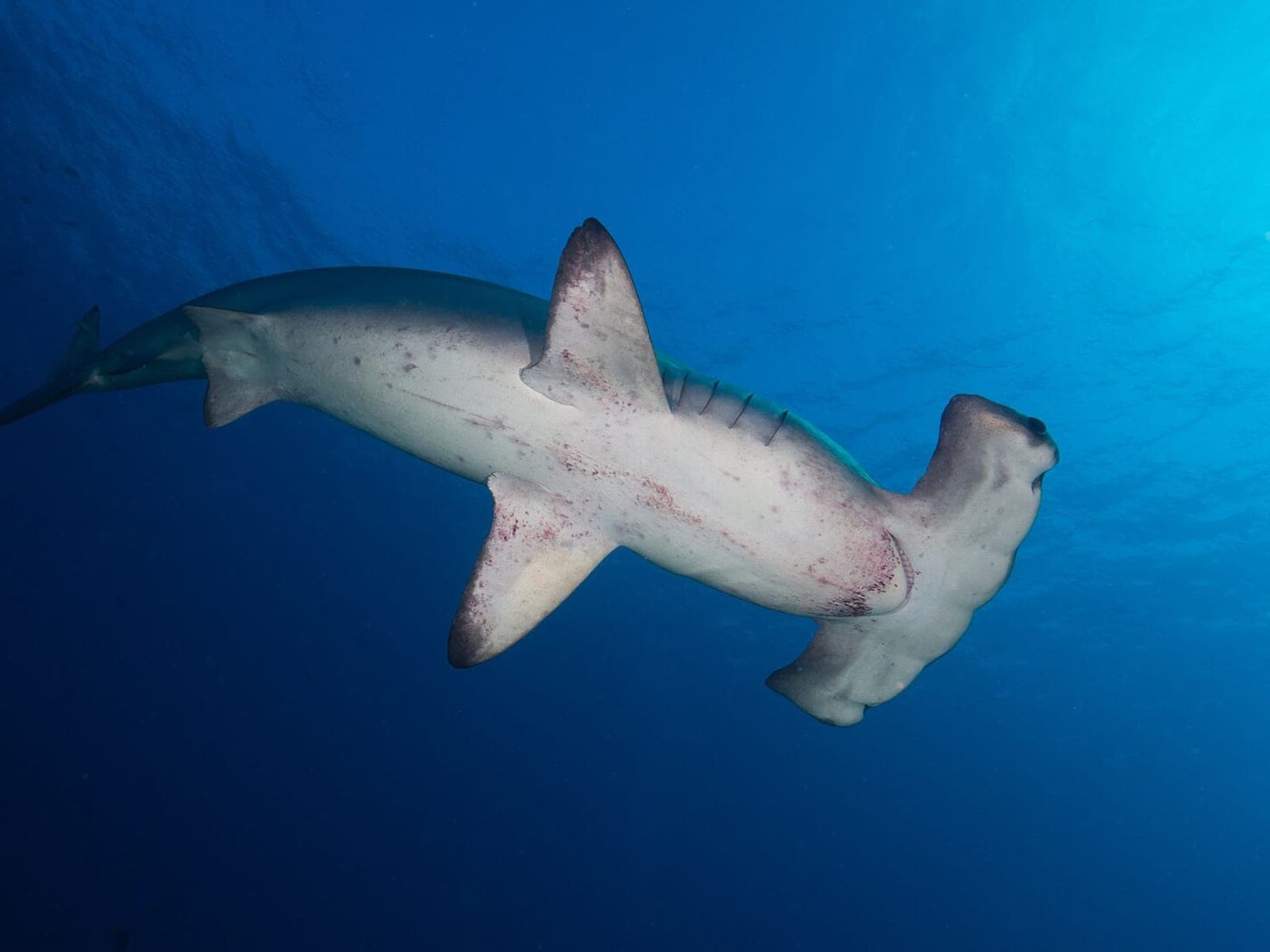
A bare knuckle of rock two hours out from La Paz, wrapped in current and, on the right day, a slow-turning wheel of hammerheads.
Las Animas is the Sea of Cortez at its most committing: a remote seamount-and-islet cluster where big schools of jacks, mobula rays and scalloped hammerheads gather over current-swept pinnacles. Diving Las Animas rewards experienced divers who accept the long boat run, the open water and the honest fact that the pelagics do not always show. This guide covers the depths, the marine life, the real conditions and how a Sea of Cortez liveaboard puts you on it.
Quick answer: Las Animas is a boat dive: drift and multi-level pinnacle diving, plus a sheltered sea lion colony dive in Sea of Cortez. Best season: Late summer through autumn (roughly July-November) for warmest water and best visibility; spring for hammerhead and tuna schools. Level: Advanced — open-water seamount diving in current, not for the newly certified. Depth: Pinnacle tops at 18-22 m (59-72 ft); drift and search dives run down to around 30 m (98 ft). Typical visibility: Typically 15-30 m (50-100 ft), best in the warm season; thermoclines can drop it sharply.
Facts verified September 2026
What makes Las Animas special
Most Sea of Cortez diving happens on friendly, close-in reefs and sea lion rookeries a short hop from La Paz. Las Animas is the opposite proposition. It sits far offshore, east of Isla San José, a small islet ringed by a few rock teeth with seamounts rising from deep water all around it. The name translates loosely as the souls, or the souls of the dead, after the sound the wind and swell make around the rocks. It has a lonely, end-of-the-map feel, and that isolation is exactly why it dives the way it does.
The pinnacles here interrupt open-ocean current, and that upwelling concentrates life. When the conditions line up, Las Animas delivers the kind of big-animal seamount diving that Baja was famous for decades ago: walls of jacks, cruising tuna and, on the right day, schooling hammerheads. It is a genuine pelagic site rather than a reef, and it asks something of you in return for the payoff.
What you'll see diving Las Animas
The headline animal is the scalloped hammerhead, which historically schooled over these seamounts in numbers that rivalled Cocos Island. Be honest with yourself before you go: decades of fishing pressure have thinned those schools dramatically, and hammerhead sightings at Las Animas are now variable and never guaranteed. When they do appear, it is often as a slow, high wheel of sharks passing over the pinnacle or hanging at a cleaning station, and it is unforgettable. Treat it as a bonus, not a booking.
What is far more dependable is the rest of the cast. Bigeye trevally stack up in shimmering schools that genuinely block the light, yellowtail surgeonfish and needlefish patrol the shallows, and clouds of Cortez wrasse, scissortail damsels, Cortez and king angelfish work the rock. Big groupers hold station in the caverns and ledges. Seasonally, mobula rays pass through in migrating squadrons, and a resident sea lion colony on the island gives you a playful, reliable second dive.
Reliable regulars:
Bigeye trevally and other jack schools
Yellowfin tuna and bonito passing in the blue
Sea lions at the island colony
Groupers, Cortez and king angelfish, wrasse and damsels
Healthy sea fans and gorgonians, with gobies and nudibranchs for the macro-minded
Seasonal and weather-dependent:
Scalloped hammerheads (variable, best odds in spring)
Mobula ray aggregations
The occasional passing whale shark or larger pelagic
Conditions and who it's for
This is an advanced dive, and the rating is not decoration. Las Animas is exposed open water with moderate to strong current that can shift direction and pick up without much warning. The pinnacle tops sit around 18 to 22 metres, and drift and search dives regularly take you to 30 metres as you follow the structure or the animals, so solid air consumption, buoyancy and comfort in blue water matter. You should be confident with negative entries, current hooks or reef hooks where allowed, and drifting away from the boat for a mid-water pickup.
Visibility is usually good, in the 15 to 30 metre range and best in the warm season, but thermoclines are a feature of the Sea of Cortez and can knock it back sharply and chill you at depth. Water runs from the low 20s Celsius in the cool months to the high 20s in late summer, so plan your exposure protection for a cold layer below the surface warmth. If you are newly certified or rusty, this is a site to build up to, not to cut your teeth on.
When to dive Las Animas
The broad Sea of Cortez liveaboard season runs from around July into November, when the water is warmest, the visibility is at its best and the offshore seamounts are most comfortably reachable. That window also overlaps the sea lion pupping-into-play months of late summer, so the colony dive is at its liveliest.
For the pelagic gamble, spring tends to bring the better odds of schooling hammerheads and yellowfin tuna, while mobula rays move through Baja in two pulses, roughly late spring to early summer and again in the late autumn. No month guarantees the sharks. Because Las Animas is a remote outer site, the deciding factor on any given day is less the calendar than the wind and the current, and a good skipper will call it on the morning conditions.
How you actually dive it
Las Animas is a boat dive and a long one. From La Paz it is roughly 55–60 nautical miles, about two and a half hours each way, so day operators run it as a committed full-day, two-tank outing with lunch aboard, and only when the forecast cooperates. A liveaboard working north from La Paz has the real advantage here: it can position overnight, wait for a calm window and dive the site early before the wind builds.
In the water you typically drop onto or near a pinnacle, work the current-facing and down-current sides of the rock where the schools hold, and either hover on the structure or drift with the flow while the divemaster tracks the animals. A reliable second or surface-interval dive at the sheltered sea lion colony rounds out the day and gives everyone a guaranteed encounter regardless of what the blue water served up.
Faneca reaches Las Animas on our Sea of Cortez (Baja California) liveaboards, which range north from La Paz to work the offshore seamounts; because it is a weather- and current-dependent outer site, we treat it as a conditions-permitting highlight rather than a guaranteed stop, and pair it with the region's calmer reefs and sea lion colonies.
Las Animas: common questions
What is the best season to dive Las Animas?
Late summer through autumn (roughly July-November) for warmest water and best visibility; spring for hammerhead and tuna schools
What experience level do I need for Las Animas?
Advanced — open-water seamount diving in current, not for the newly certified
How deep is Las Animas?
Pinnacle tops at 18-22 m (59-72 ft); drift and search dives run down to around 30 m (98 ft)
What marine life will I see at Las Animas?
Scalloped hammerheads (variable), bigeye trevally, yellowfin tuna, mobula rays, sea lions, groupers, Cortez angelfish, gorgonians and macro
