Rocky Island
A speck of fossil coral in Foul Bay with walls that fall into the deep and sharks in the blue.
Rocky Island is small enough to circle by zodiac in a few minutes, and from the surface it looks like very little: a low, bare lump of fossil coral off the larger island of Zabargad. Underwater it is one of the most exciting sites in Egypt. The shallow plateau around the island ends abruptly in walls that drop into very deep water, current sweeps the corners, and the open water off the north and east sides is where the deep south's sharks show up. It is a site for confident divers, and one that rewards a calm, disciplined approach.
Quick answer: Rocky Island is a wall and drift dives around a small, isolated island, with zodiac drops and open-water pickups in Red Sea. Best season: Most trips run late spring to autumn; hammerheads most likely Jun–Aug, oceanic whitetips late summer to autumn. Level: Advanced with drift and blue-water experience; the south side suits less experienced divers on calm days. Depth: Shallow plateau 5–20 m; dives usually 10–30 m; walls fall away into very deep water. Typical visibility: Typically 20–30 m, often more.
Facts verified September 2026
Why Rocky Island has its reputation
Rocky Island sits alone in Foul Bay, uninhabited and a long way from the mainland. A narrow shelf of reef rings the island, between roughly 5 and 20 metres, and then the walls go straight down. That combination of shallow reef, sheer wall and open ocean is what draws big animals in close, and it is why the island features on almost every deep-south itinerary.
The island is usually dived as three sites. The south side is the most sheltered, with an average depth of around 18 metres and overhangs and swim-throughs in the reef. The east side is a sheer, exposed wall where the water can be turbulent. The north side takes the full force of the prevailing weather and gives fast drift dives; it is where many oceanic whitetip sightings happen and where only experienced divers should be.
What you'll see
The walls are a reason to come in their own right: hard corals on the plateau, then black coral, whip corals and large gorgonian fans as you go deeper. Reef fish crowd the edge, and barracuda and snapper hang in the current off the corners. Most divers, though, spend half the dive looking outwards.
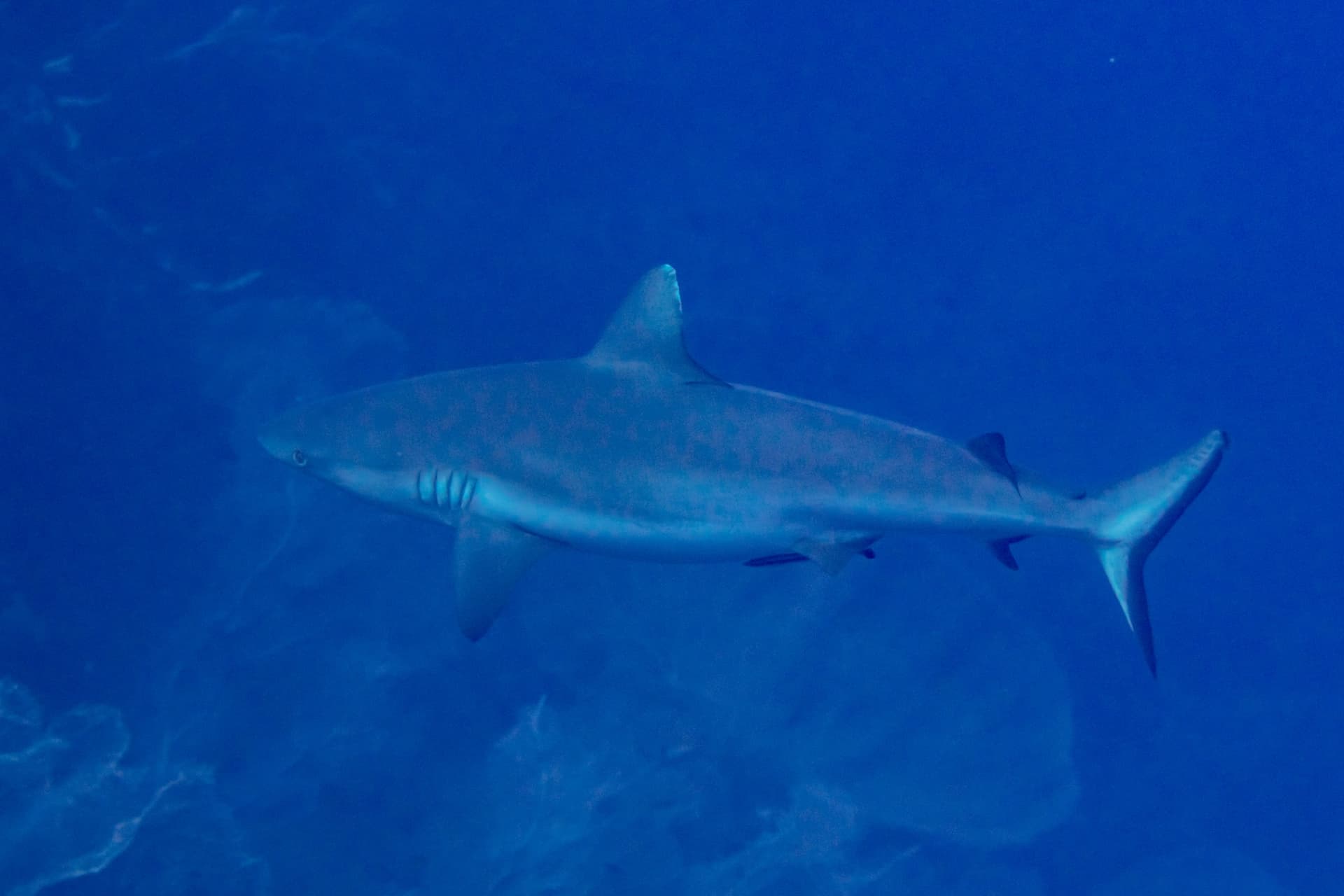
Shark encounters are seasonal and never guaranteed, but the possibilities are good:
- Grey reef and silvertip sharks patrolling the walls for much of the year
- Oceanic whitetips off the north and east sides, most often from late summer into autumn
- Scalloped hammerheads in the warmer months, usually deeper and early in the day
- Napoleon wrasse, groupers and giant morays on the plateau
- Turtles, occasional mantas and pods of dolphins passing the island
Conditions and who Rocky Island suits
Current is the defining feature. It usually runs from the north or north-east, but it can switch and come from the south, and it changes with the tide. The crew will check the direction before every dive and choose the side accordingly. Expect negative or quick descents from the zodiac, drift dives along the wall and pickups in open water, sometimes some distance from the island.
Most operators ask for Advanced certification and around 50 logged dives for the deep south, and Rocky Island is a good illustration of why. Buoyancy control in moving water, an SMB you can deploy at depth, and the discipline to keep your profile conservative while there are sharks below you are all essential. The nearest recompression chamber and medical help are many hours away. Water temperatures run from the low 20s Celsius in winter to around 29°C in late summer, and a 5 mm suit suits most divers.
When to go
Deep-south trips run mainly from late spring to autumn, when crossings are calmer and the water is warm. The calendar shapes the sharks you are most likely to meet. Hammerheads are a summer possibility across the southern offshore reefs, with the best odds from June to August. Oceanic whitetips start to appear in early summer and become more likely as the season goes on, with October and November the strongest months across the Red Sea.
Winter crossings are less common, and when they do run, the north side of the island is often too rough to dive.
How you actually dive it
Rocky Island is liveaboard-only. Boats usually leave from Port Ghalib or Marsa Alam and pair it with Zabargad, a few kilometres away, often spending two or three days between the two. All diving is from zodiacs, which drop you on the up-current side and follow your SMB. Marine park rules do not allow night dives at these protected offshore sites, so any night dives on the trip happen elsewhere on the route.
Plan on at least three dives here so you can see the island from different sides as the current allows. The first dive is often on the south side to settle in, with the north and east saved for when conditions and the group are ready.
Faneca dives Rocky Island on our Deep South itineraries, including Zabargad & Rocky Island and Secrets of Zabargad, with several days in Foul Bay so the crew can choose the right side of the island for the current.
Rocky Island: common questions
What is the best season to dive Rocky Island?
Most trips run late spring to autumn; hammerheads most likely Jun–Aug, oceanic whitetips late summer to autumn
What experience level do I need for Rocky Island?
Advanced with drift and blue-water experience; the south side suits less experienced divers on calm days
How deep is Rocky Island?
Shallow plateau 5–20 m; dives usually 10–30 m; walls fall away into very deep water
What marine life will I see at Rocky Island?
Grey reef and silvertip sharks, seasonal oceanic whitetips and scalloped hammerheads, Napoleon wrasse, barracuda, turtles, large gorgonians and black coral
